
If you love cooking, you know how important good cookware is. But have you ever wondered what makes All Clad cookware so special?
Understanding what All Clad cookware is made of can help you decide if it’s the right choice for your kitchen. You’ll discover the materials behind All Clad’s quality, why they matter, and how they can improve your cooking experience. Keep reading to learn what sets All Clad apart and how it can make your meals better every time.
Materials Used
All Clad cookware is known for its high quality and durability. The secret lies in the materials used to build each piece. These materials work together to deliver excellent heat distribution, resistance to rust, and long-lasting performance. Understanding what All Clad cookware is made of helps you see why it stands out in the kitchen.
Stainless Steel Layers
Stainless steel forms the outer layers of most All Clad cookware. This metal is popular because it does not react with food, making it safe and easy to clean. All Clad uses a specific type called 18/10 stainless steel, which contains 18% chromium and 10% nickel.
This stainless steel offers several benefits:
- Durability: It resists scratches and dents.
- Corrosion resistance: It does not rust or stain easily.
- Non-reactive surface: It keeps the flavor of food pure.
The stainless steel layers also give the cookware its shiny, polished look. They protect the inner core, which is often made of metals that conduct heat well but can be softer or prone to damage.
| Feature | Benefit |
|---|---|
| 18/10 Stainless Steel | Strong, shiny, corrosion-resistant surface |
| Non-reactive | Prevents food flavor changes |
| Easy to clean | Maintains cookware’s look over time |
Aluminum Core
Inside the stainless steel layers is an aluminum core. Aluminum is a great heat conductor. It spreads heat quickly and evenly across the pan’s surface. This helps food cook more uniformly and avoids hot spots.
All Clad uses a thick layer of aluminum for the core. This improves heat control and energy efficiency. Cookware heats up faster and uses less fuel or electricity.
- Fast heating: Saves cooking time.
- Even heat: Prevents burning or undercooking.
- Energy efficient: Requires less heat source power.
The aluminum core is sealed between the stainless steel layers. This keeps the aluminum protected from scratching and reacting with acidic foods. The combination of aluminum and stainless steel makes All Clad cookware strong and reliable.
Copper Variants
Some All Clad cookware lines feature copper in their construction. Copper is one of the best metals for heat conduction. It heats and cools very fast, giving precise temperature control.
These copper variants usually have a layer of copper either on the outside or as part of the core. This design is popular among chefs who need quick adjustments while cooking.
Benefits of copper in All Clad cookware include:
- Superior heat response: Adjust heat almost instantly.
- Elegant appearance: Copper has a warm, rich color.
- Durability: Copper is strong but requires some care to avoid tarnish.
Here is a simple comparison:
| Material | Heat Conductivity | Care Required |
|---|---|---|
| Stainless Steel | Moderate | Low |
| Aluminum | High | Low |
| Copper | Very High | Moderate (polishing needed) |
Choosing copper variants offers excellent heat control but requires gentle cleaning. All Clad balances these materials carefully to give professional performance and lasting quality.

Credit: www.youtube.com
Construction Process
The construction process of All-Clad cookware is key to its outstanding performance and durability. This process involves carefully joining different metals to create a pan that heats evenly and lasts a lifetime. Each step in the manufacturing ensures the cookware delivers excellent heat conduction and cooking control. Understanding this process helps appreciate why All-Clad remains a trusted name in kitchens worldwide.
Bonding Techniques
All-Clad uses a special bonding technique called cladding to fuse multiple metal layers. This method joins metals without welding or soldering, which could weaken the cookware. The layers are pressed and bonded under high heat and pressure, creating a single, solid piece.
The bonding process includes:
- Cleaning: Metal sheets are cleaned to remove impurities.
- Stacking: Different metals are stacked in a specific order.
- Heating: The stack is heated to a precise temperature.
- Pressing: Heavy rollers press the metals together.
This technique ensures strong adhesion between layers, preventing peeling or separation during cooking. The result is cookware with excellent heat transfer and resistance to warping. It also allows All-Clad to combine metals like stainless steel and aluminum, using each metal’s best qualities.
Layer Configuration
All-Clad cookware features a unique layer configuration designed for optimal cooking. The most common type is called tri-ply, but other configurations exist for different needs.
A typical tri-ply pan has three layers:
| Layer | Material | Function |
|---|---|---|
| Inner layer | Stainless steel | Safe, non-reactive cooking surface |
| Core layer | Aluminum | Even heat distribution and quick heating |
| Outer layer | Stainless steel | Durability and compatibility with induction cooktops |
Other configurations include 5-ply and copper-core models. These add extra layers of metal for better heat control and responsiveness. The layers are bonded tightly to create cookware that cooks food evenly and prevents hot spots.
- 5-ply cookware adds stainless steel and aluminum layers for strength.
- Copper-core models include a copper layer for superior heat conduction.
Quality Control
All-Clad uses strict quality control throughout production to maintain high standards. Every piece undergoes tests to check the bonding, finish, and performance before it reaches customers.
Key quality control steps include:
- Visual inspection: Checking for surface defects or uneven bonding.
- Dimensional checks: Ensuring correct thickness and size.
- Heat tests: Verifying even heating and no warping.
- Handle strength tests: Confirming handles are secure and durable.
Each stage uses both machine measurements and skilled human inspection. This combination helps catch any flaws early. The result is cookware built to last and perform reliably.
All-Clad also uses traceability systems, tracking each pan from raw materials to finished product. This ensures accountability and consistent quality across all cookware lines.
Benefits Of Material Choices
All Clad cookware is known for its high-quality construction using multiple layers of metal. The choice of materials in this cookware affects how it cooks, lasts, and interacts with food. Each metal layer serves a specific purpose, creating a balance of performance and safety. Understanding the benefits of these material choices helps to appreciate why All Clad cookware is popular among home cooks and chefs alike.
Heat Distribution
All Clad cookware uses a core made from aluminum or copper sandwiched between stainless steel layers. This design improves heat flow across the pan’s surface. Good heat distribution means food cooks evenly without hot spots. Even cooking helps prevent burning and undercooking.
Key features of All Clad’s heat distribution:
- Aluminum core quickly absorbs and spreads heat.
- Stainless steel outer layers provide strength and smooth cooking surface.
- Multiple metal layers ensure steady heat from edge to center.
Here is a simple comparison of metals used for heat conduction:
| Material | Heat Conductivity (W/mK) | Role in Cookware |
|---|---|---|
| Aluminum | 237 | Core for fast, even heat |
| Copper | 401 | Core in some models for superior heat conduction |
| Stainless Steel | 16 | Outer layer for durability and smooth surface |
The combination of these metals allows All Clad cookware to heat quickly and uniformly. This ensures better cooking results for all types of dishes.
Durability
All Clad cookware is built to last many years under frequent use. Stainless steel is the main outer layer, known for its strong and corrosion-resistant properties. This metal resists dents, scratches, and rust, making the pans sturdy and reliable.
Durability benefits include:
- Resistance to warping from high heat.
- Easy cleaning without damage to the surface.
- Maintains appearance after years of use.
Aluminum and copper cores are protected inside the steel layers. This protects the softer metals from damage and keeps the cookware shape intact. The triple-layer construction also improves impact resistance.
Care tips to keep durability:
- Avoid metal utensils that may scratch stainless steel.
- Hand wash or use gentle dishwasher cycles.
- Do not overheat empty pans to prevent warping.
This durability means All Clad cookware is an excellent investment for the kitchen. It can withstand daily cooking and stay in good condition for decades.
Non-reactive Surfaces
One key benefit of All Clad cookware is the non-reactive cooking surface. The stainless steel layers do not react with acidic or alkaline foods. This ensures no unwanted flavors or chemicals mix with your food.
Advantages of a non-reactive surface:
- Safe cooking for all types of food including tomatoes, citrus, and vinegar-based sauces.
- Preserves the natural taste and color of ingredients.
- Prevents metal ions from leaching into food.
Unlike some other metals, stainless steel does not cause discoloration or metallic taste. The smooth surface also reduces food sticking and allows easy cleaning. This helps maintain healthy cooking habits.
In summary, All Clad’s material choices combine to create cookware that cooks evenly, lasts long, and keeps food pure. These benefits explain why many chefs trust All Clad in their kitchens.
Different All Clad Collections
All Clad cookware is known for its quality and durability, made from layers of metal bonded together. The brand offers different collections, each designed with specific materials and layering techniques. These collections provide various benefits for cooking, such as even heat distribution and strong construction. Understanding the differences helps choose the right set for your kitchen.
D3 Stainless
The D3 Stainless collection features three layers of metal. It has a stainless steel interior and exterior, with an aluminum core sandwiched between. This design offers good heat conduction and durability.
- Stainless steel is resistant to rust and stains.
- Aluminum core spreads heat evenly across the pan.
- Cookware heats quickly and maintains temperature well.
D3 is a popular choice for home cooks who want reliable performance without extra weight. It works on all stovetops, including induction. The stainless steel surface is non-reactive, so it won’t change the taste of food.
| Layer | Material | Purpose |
|---|---|---|
| Outer | Stainless Steel | Durability, easy cleaning |
| Core | Aluminum | Heat conduction |
| Inner | Stainless Steel | Non-reactive cooking surface |
D3 offers a balance of weight and heat control. It is ideal for everyday cooking tasks like sautéing, frying, and simmering. The handles stay cool, and the pans have a polished finish for a sleek look.
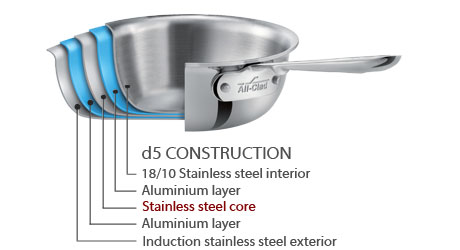
D5 Stainless
The D5 Stainless collection adds two extra layers to the D3 design, totaling five layers. This layering creates stronger heat retention and even cooking. The layers alternate between stainless steel and aluminum.
- Five layers improve heat distribution and reduce hot spots.
- Stainless steel on the inside and outside for durability.
- Aluminum layers in the middle provide excellent heat conduction.
D5 cookware is slightly heavier than D3 but offers better temperature control. It is perfect for cooking delicate dishes that need consistent heat, like sauces or custards. The thicker construction also adds to the pan’s strength.
| Layer | Material | Function |
|---|---|---|
| Outer | Stainless Steel | Durability, polished look |
| 2nd | Aluminum | Heat spread |
| Middle | Stainless Steel | Strength, heat retention |
| 4th | Aluminum | Heat spread |
| Inner | Stainless Steel | Non-reactive surface |
The D5 series suits serious cooks who want precise control and long-lasting cookware. Its design reduces warping and improves performance on all cooktops, including induction.
Copper Core
The Copper Core collection features a unique five-ply construction with a thick copper core at its center. Copper conducts heat faster and more evenly than aluminum, making this collection ideal for precise cooking.
- Thick copper core ensures rapid and uniform heat distribution.
- Surrounded by layers of aluminum and stainless steel for strength.
- Stainless steel interior is safe and easy to clean.
Copper Core pans respond quickly to temperature changes. This makes them perfect for recipes that need careful heat adjustments, like sauces and searing. The copper layer also adds a beautiful shine to the cookware’s exterior.
| Layer | Material | Benefit |
|---|---|---|
| Outer | Stainless Steel | Durability, polished finish |
| 2nd | Aluminum | Heat conduction |
| Core | Copper | Fast, even heat |
| 4th | Aluminum | Heat conduction |
| Inner | Stainless Steel | Safe cooking surface |
Copper Core is the best choice for cooks who want top heat performance and style. Its higher price reflects the premium materials and complex construction. These pans work well on all cooktops except induction without special base designs.
Comparing All Clad To Other Cookware
All Clad cookware is known for quality and durability. Many people wonder how it compares to other brands. Understanding the differences helps choose the right set for your kitchen. This section explains how All Clad’s materials and performance stand out against other cookware options.
Material Differences
All Clad cookware uses a combination of metals to deliver strength, heat control, and durability. The most common material is stainless steel bonded with aluminum or copper layers. This multi-layer design is called “cladding.” It offers the best features of each metal.
- Stainless Steel: The cooking surface is usually made of high-grade stainless steel. It resists rust, stains, and scratches.
- Aluminum Core: The middle layer is often aluminum. It spreads heat quickly and evenly.
- Copper Core (in some models): Copper provides excellent heat conductivity but is more expensive.
Other cookware brands might use:
- Single-layer stainless steel without aluminum core (less heat distribution).
- Non-stick coatings (can wear out over time).
- Cast iron (heavy and slower to heat).
- Aluminum alone (can warp and react with acidic foods).
| Cookware Type | Material | Heat Distribution | Durability |
|---|---|---|---|
| All Clad | Stainless steel + Aluminum/Copper core | Excellent and even | Very high |
| Basic Stainless Steel | Stainless steel only | Poor to moderate | High |
| Non-stick | Aluminum with coating | Good but uneven | Moderate |
| Cast Iron | Cast iron | Slow and uneven | Very high |
All Clad’s layered metals provide a balance of strength, heat control, and resistance. Other types focus on one or two features but may lack overall performance.
Performance Factors
Performance is a key reason many choose All Clad cookware. The multi-metal construction affects heat speed, retention, and evenness. These factors influence cooking results and ease of use.
- Heat Distribution: The aluminum or copper core spreads heat across the pan quickly. This prevents hot spots and burning.
- Heat Retention: Stainless steel holds heat well, maintaining steady cooking temperatures.
- Durability: The sturdy construction resists warping and dents, lasting for years.
- Maintenance: All Clad pans clean easily and are dishwasher safe.
- Compatibility: Works on all cooktops, including induction.
Other cookware types may struggle with:
- Uneven heating causing burnt or raw spots.
- Warping after heavy use or high heat.
- Non-stick coating wearing off and losing effectiveness.
- Heavy weight making handling difficult.
Here is a quick comparison of performance features:
| Performance Aspect | All Clad | Basic Stainless Steel | Non-stick | Cast Iron |
|---|---|---|---|---|
| Heat Distribution | Fast and even | Slow and uneven | Moderate | Slow |
| Heat Retention | High | Moderate | Low | Very high |
| Durability | Very high | High | Moderate | Very high |
| Ease of Cleaning | Easy | Moderate | Easy but careful | Hard |
| Weight | Light to moderate | Light | Light | Heavy |
All Clad offers consistent cooking results and long life. Its material and design give it an edge in performance over many common cookware types.

Credit: www.all-clad.com
Credit: cookswarehouse.com
Frequently Asked Questions
What Materials Are Used In All Clad Cookware?
All Clad cookware is made from high-quality stainless steel and aluminum. The core is usually aluminum for even heat. The exterior is polished stainless steel for durability and a sleek look.
Is All Clad Cookware Made Of Stainless Steel?
Yes, All Clad cookware features a stainless steel exterior. This makes it resistant to rust and corrosion. The stainless steel also provides a non-reactive cooking surface.
Does All Clad Use Aluminum In Its Cookware?
All Clad incorporates aluminum cores in most cookware lines. Aluminum helps distribute heat evenly across the pan. This reduces hot spots and improves cooking performance.
Are All Clad Cookware Layers Bonded Or Cladded?
All Clad cookware uses bonded or cladded construction. Multiple metal layers are bonded together for optimal heat conduction. This technique enhances durability and cooking efficiency.
Conclusion
All Clad cookware uses layers of different metals. These metals work together for even heat and durability. The core usually contains aluminum for quick heat spread. Stainless steel layers provide strength and a smooth surface. This mix helps food cook evenly without sticking.
You get cookware that lasts for many years. Choosing All Clad means choosing quality materials made to perform. Simple, strong, and built to last. Perfect for home cooks who want reliable pots and pans.

Hello, This is Annie Walker, a 38-year-old blogger, founder, and editor of Cookware Guider from NY, USA. I am a cookware fanatic and passionate cooker. I love to cook with different types of cooking appliances (example: all types of cookware, rice cookers, slow cookers, etc) almost every day in my kitchen. I love to share my experience with my readers in my blog. Also, I enjoy helping people to solve their problems through my website. You can follow me on Twitter & Pinterest. To know details about my blog please check the about us page.