
Cooking perfect rice in a saucepan might seem simple, but many people end up with sticky, mushy, or undercooked results. If you’ve ever struggled to get fluffy, separate grains every time, you’re not alone.
The good news is, with a few easy steps, you can master this basic skill and make rice that complements any meal. You’ll discover how to cook rice in a saucepan the right way—so your rice is always just right, no matter what dish you’re making.
Keep reading, and you’ll never worry about your rice again!

Credit: www.recipetineats.com
Choosing The Right Rice
Choosing the right rice is an important step in cooking rice in a saucepan. Different types of rice behave differently during cooking. The texture, taste, and cooking time depend on the rice variety. Selecting the right rice helps you get perfect, fluffy rice every time.
Types Of Rice
Rice comes in many types, each with unique features. The main types are long-grain, medium-grain, and short-grain rice. They differ in size, starch content, and texture after cooking.
- Long-grain rice: Grains are slender and long. It stays separate and fluffy when cooked. Examples include Basmati and Jasmine rice.
- Medium-grain rice: Slightly shorter and wider than long-grain. It is moist and tender but less sticky.
- Short-grain rice: Almost round and plump grains. It becomes sticky and clumps together. Sushi rice is a common example.
Besides grain size, rice differs by processing:
- White rice: Husk, bran, and germ removed. Cooks faster but less nutritious.
- Brown rice: Only the husk is removed. Bran and germ remain, giving more fiber and nutrients.
- Parboiled rice: Partly boiled in the husk. It is firmer and less sticky.
| Rice Type | Texture After Cooking | Common Uses |
|---|---|---|
| Long-grain | Fluffy and separate | Side dishes, pilaf, fried rice |
| Medium-grain | Moist and tender | Paella, risotto, casseroles |
| Short-grain | Sticky and clumpy | Sushi, rice pudding, sticky rice dishes |
Best Rice For Saucepan Cooking
Choosing rice that cooks well in a saucepan is key. Some rice types need special care or cooking methods. For beginners, easy-to-cook rice types are best.
Long-grain white rice is popular for saucepan cooking. It cooks evenly, becomes fluffy, and separates well. Basmati rice is a favorite because of its aroma and texture.
Brown rice needs more water and longer cooking time in a saucepan. It gives a nutty flavor and more nutrients but requires patience.
Parboiled rice is great for saucepan cooking. It holds its shape and does not become mushy easily.
- Use a tight-fitting lid to keep steam inside.
- Measure water carefully. Too much makes rice mushy; too little leaves it hard.
- Rinse rice before cooking to remove surface starch. This helps grains stay separate.
- Let rice rest after cooking. This lets moisture spread evenly.
| Rice Type | Water Ratio (per cup rice) | Cooking Time | Best For |
|---|---|---|---|
| Long-grain white | 2 cups water | 15-20 minutes | Fluffy, separate grains |
| Brown rice | 2.5 cups water | 40-45 minutes | Nutty flavor, chewy texture |
| Parboiled rice | 2 cups water | 20-25 minutes | Firm texture, holds shape |
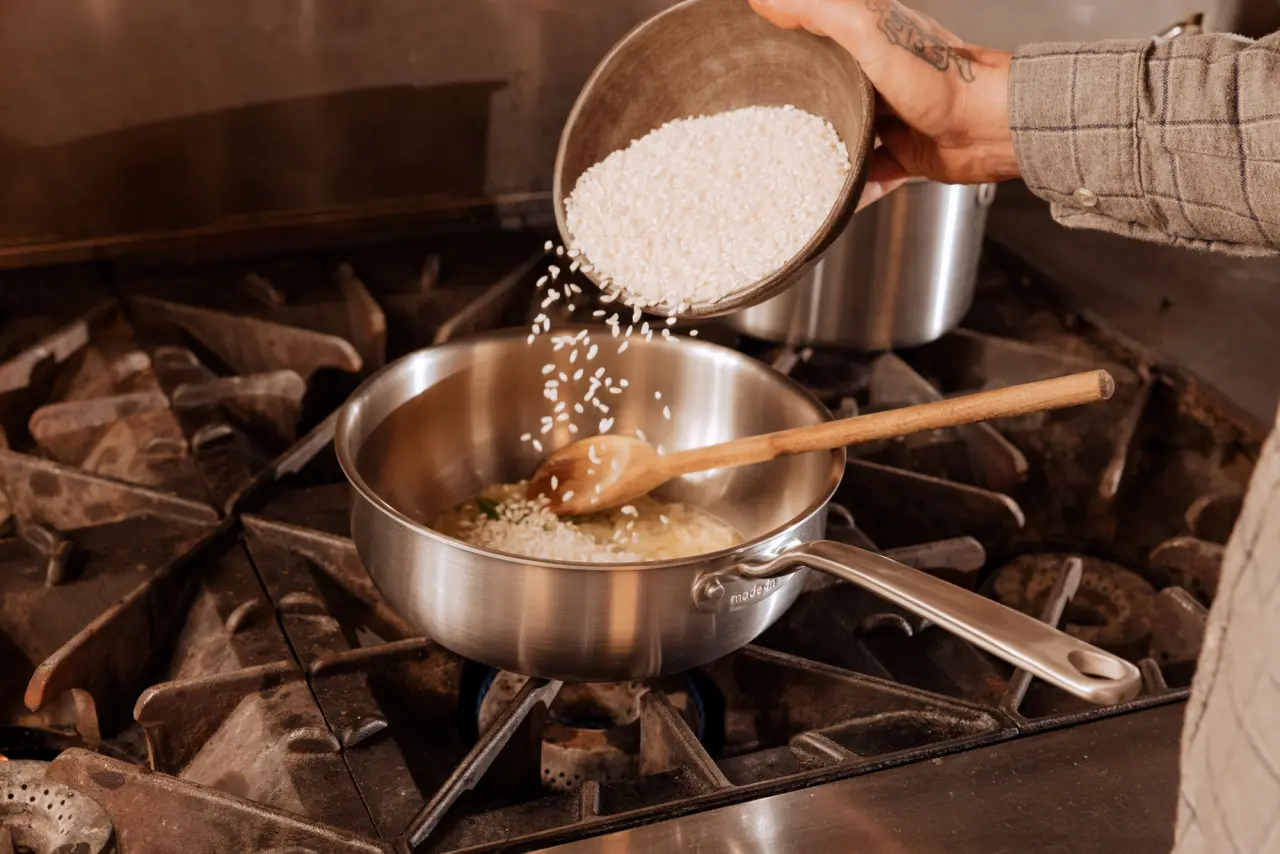
Credit: madeincookware.com
Preparing The Rice
Cooking rice in a saucepan starts with properly preparing the rice. Preparing rice well helps it cook evenly and taste better. This step includes washing, rinsing, and sometimes soaking the rice. These simple actions remove extra starch and impurities. They also improve the texture, making the rice fluffy and soft. Take your time here for great results.
Washing And Rinsing
Washing rice removes dust, dirt, and excess starch. This step prevents the rice from becoming sticky or clumpy during cooking. Follow these easy steps for washing rice:
- Place the rice in a large bowl or directly in the saucepan.
- Fill the bowl with cold water until the rice is covered.
- Use your hand to gently stir the rice in the water.
- Pour out the cloudy water carefully, keeping the rice inside.
- Repeat the process 3 to 4 times until the water is mostly clear.
Tip: Use cold water to keep the grains firm. Warm water can start cooking the rice unevenly.
| Step | Action | Purpose |
|---|---|---|
| 1 | Rinse rice with water | Remove dust and dirt |
| 2 | Stir gently | Loosen surface starch |
| 3 | Drain cloudy water | Reduce stickiness |
| 4 | Repeat until water clears | Ensure clean rice |
Washing rice well improves the final texture. It helps the grains stay separate and light.
Soaking Tips
Soaking rice is optional but useful. It helps the grains absorb water before cooking. This cuts cooking time and makes rice softer. Follow these tips for soaking rice:
- Use clean, cold water to soak the rice.
- Soak for 20 to 30 minutes for white rice.
- For brown rice, soak for 45 minutes to 1 hour.
- Drain the soaking water before cooking.
- Do not soak for too long; over-soaking can make rice mushy.
Soaking also helps rice cook evenly. The grains absorb water and swell. This reduces the chance of hard centers after cooking.
Quick soaking method:
1. Boil water. 2. Pour hot water over rice in a bowl. 3. Let it soak for 15 minutes. 4. Drain and cook immediately.This method saves time and improves texture.
Measuring Rice And Water
Measuring rice and water correctly is a key step in cooking perfect rice in a saucepan. The right balance ensures rice cooks evenly and has the ideal texture—neither too dry nor too mushy. Using accurate measurements helps avoid common problems like undercooked or soggy rice. This section explains how to measure rice and water properly, focusing on rice-to-water ratios and how to adjust them for different rice types.
Rice-to-water Ratios
The basic rule for cooking rice in a saucepan is to use the right amount of water for the amount of rice. A common ratio is 1 part rice to 2 parts water. This means if you use 1 cup of rice, you add 2 cups of water. This ratio works well for most white rice types.
Here are key points to remember:
- Use a measuring cup for accuracy.
- Rinse rice before measuring to remove excess starch.
- Water amount can slightly change depending on cooking time and rice type.
| Rice Amount | Water Amount | Result |
|---|---|---|
| 1 cup | 2 cups | Soft and fluffy rice |
| 2 cups | 4 cups | Perfect for serving 4 people |
| ½ cup | 1 cup | Small portion, ideal for one person |
Using this ratio helps prevent rice from burning or sticking to the pan. Start with this as a guide, then adjust based on your taste and experience.
Adjusting For Different Rice Types
Different rice types need different water amounts. The rice grain size, texture, and processing affect how much water it needs to cook well. Here is a simple guide for common rice types:
- White long-grain rice: Use a 1:2 ratio (rice to water).
- Basmati rice: Use a bit less water, about 1:1.5 ratio for fluffier grains.
- Jasmine rice: Use 1:1.75 ratio for soft and sticky texture.
- Brown rice: Needs more water and longer cooking time. Use 1:2.5 ratio.
- Wild rice: Use 1:3 ratio due to its tough outer shell.
| Rice Type | Rice-to-Water Ratio | Cooking Notes |
|---|---|---|
| White long-grain | 1:2 | Standard cooking, fluffy texture |
| Basmati | 1:1.5 | Rinsing recommended for fluffiness |
| Jasmine | 1:1.75 | Sticky and soft, great for Asian dishes |
| Brown rice | 1:2.5 | Longer cooking time, chewy texture |
| Wild rice | 1:3 | Needs soaking and longer cooking |
Adjust water carefully. Less water can cause hard rice, while too much water creates mushy rice. Experiment with small portions to find the perfect ratio for your preferred rice type.
:max_bytes(150000):strip_icc()/how-to-make-jasmine-rice-3217510-ADD-V1-BIG-FINAL-V2-6ad75cb18e604ae486f113e1d1c356dd.png)
Credit: www.thespruceeats.com
Cooking Process
Cooking rice in a saucepan is a simple and effective way to prepare this staple food. The cooking process involves a few key steps to ensure the rice turns out fluffy and tender. Understanding each stage helps avoid common problems like mushy or undercooked rice. This guide explains the critical steps: bringing water to a boil, simmering with a cover, and timing the cooking precisely. Follow these instructions carefully to get perfect rice every time.
Bringing Water To A Boil
Start by measuring the correct amount of water for your rice. Typically, the ratio is 2 cups of water for every 1 cup of rice. Pour the water into the saucepan and place it on the stove over high heat.
- Use fresh, cold water for the best taste.
- Add a pinch of salt if desired to enhance flavor.
- Optional: Add a small amount of oil or butter to prevent sticking.
Watch the water as it heats up. It will first form small bubbles on the bottom and sides of the pan. Soon, it will reach a rolling boil, where large bubbles rise quickly to the surface. This stage is important because boiling water helps the rice absorb moisture evenly.
| Step | What to Look For | Tip |
|---|---|---|
| Start Heating | Water is still clear and calm | Use medium-high heat to avoid burning |
| Small Bubbles | Bubbles form on pan edges | Wait patiently; do not stir yet |
| Rolling Boil | Water bubbles vigorously | Ready to add rice or move to next step |
Simmering And Covering
Once the water boils, add the rinsed rice to the saucepan carefully. Stir the rice once to separate the grains. Then, reduce the heat to low to allow gentle simmering.
Cover the saucepan with a tight-fitting lid. This traps steam and heat, which helps the rice cook evenly and prevents water from evaporating too quickly.
- Do not lift the lid while the rice cooks; steam escapes.
- Keep the heat low to avoid burning the rice at the bottom.
- Simmering means small bubbles will gently rise, not a fast boil.
The steam inside the covered pan cooks the rice grains by softening them and allowing moisture to absorb fully. This slow cooking process is key to fluffy rice.
Timing The Cooking
Timing is crucial to cook rice perfectly. The usual cooking time is about 15 to 20 minutes for white rice. Brown rice takes longer, around 40 to 45 minutes. Set a timer to avoid overcooking or undercooking.
Follow this simple timing guide:
- After simmering starts, set a timer for 15 minutes (white rice).
- Do not remove the lid or stir during this time.
- After the timer goes off, turn off the heat but keep the lid on.
- Let the rice rest for 5 to 10 minutes to finish cooking with steam.
This resting period helps the rice grains firm up and separate. The final texture should be soft, moist, and fluffy without being sticky or mushy.
| Type of Rice | Simmering Time | Resting Time |
|---|---|---|
| White Rice | 15 – 20 minutes | 5 – 10 minutes |
| Brown Rice | 40 – 45 minutes | 10 minutes |
| Jasmine Rice | 12 – 15 minutes | 5 minutes |
Checking Rice Doneness
Cooking rice in a saucepan is simple, but knowing when it is done can be tricky. Checking rice doneness is key to getting perfect, fluffy rice every time. Rice that is undercooked or overcooked changes the taste and texture of your meal. You need to look for specific signs to tell if the rice is cooked right. This section helps you understand how to check rice doneness and what to do if it needs more cooking.
Texture And Moisture
The texture and moisture of rice tell a lot about its doneness. Perfectly cooked rice is soft but not mushy. Each grain should be separate and tender. Too much water makes rice soggy and sticky. Too little water leaves rice hard and dry.
Use these tips to check rice texture and moisture:
- Feel the grains: Take a small amount of rice and press it between your fingers. It should be soft and break easily.
- Look at the grains: Rice grains should be swollen and plump, not shriveled or hard.
- Taste a bite: The rice should be tender with a slight chew. No crunchiness.
- Check moisture: There should be no excess water in the bottom of the pan.
| Sign | Meaning |
|---|---|
| Soft and separate grains | Rice is perfectly cooked |
| Sticky and mushy | Too much water or overcooked |
| Hard or crunchy grains | Undercooked, needs more time |
| Wet with water at bottom | Water not fully absorbed |
Fixing Undercooked Rice
Undercooked rice happens if there is not enough water or cooking time. It feels hard or crunchy. Fixing it is easy with a few simple steps. Add more water and cook a little longer.
Steps to fix undercooked rice:
- Check how much water is left in the pan.
- Add 2 to 4 tablespoons of hot water to the rice.
- Cover the saucepan tightly with a lid.
- Cook on low heat for 5-10 minutes.
- Turn off heat and let rice sit covered for 5 minutes.
This method lets rice absorb the extra water slowly. Avoid stirring the rice. Stirring breaks grains and makes rice sticky. Use a fork to fluff rice after resting.
If rice is still hard, repeat the process carefully. Add small amounts of water to prevent overcooking. Keep checking the texture every few minutes.
| Problem | Fix |
|---|---|
| Rice hard or crunchy | Add hot water, cover, cook on low 5-10 mins |
| Rice dry on top but wet below | Stir gently, add water if needed, cook more |
| Water left in pan | Cook uncovered on low to evaporate water |
Resting And Fluffing
Resting and fluffing are key steps after cooking rice in a saucepan. These steps help achieve the perfect texture and avoid mushy or sticky rice. Resting lets the rice finish steaming evenly. Fluffing separates the grains, making the rice light and airy. Skipping these steps can leave rice clumped together and dense. Follow these simple methods to improve your rice every time.
Allowing The Rice To Rest
After the saucepan is removed from heat, let the rice sit covered for 10 to 15 minutes. This resting time allows the moisture to spread evenly through the grains. Without resting, the rice might be wet or unevenly cooked inside.
Benefits of resting rice:
- Even moisture distribution: Steam continues to cook the rice gently.
- Better texture: Grains become tender but firm.
- Prevents sticking: Rice cools slightly, reducing clumping.
Keep the lid on tightly to trap steam. Do not lift the lid during this time, or steam will escape. Place a clean kitchen towel under the lid if the saucepan lid doesn’t fit tightly. This helps keep the moisture inside.
| Resting Time | Effect on Rice |
|---|---|
| 5 minutes | Rice is warm but slightly sticky |
| 10-15 minutes | Best texture and moisture balance |
| More than 20 minutes | Rice cools and may dry out |
Resting rice is a simple step that improves the final dish. It requires patience but results in fluffy, well-cooked rice every time.
Using A Fork To Fluff
Fluffing rice with a fork breaks up clumps and makes each grain separate. Use a fork instead of a spoon or spatula. A fork’s tines gently lift the grains without smashing them.
Steps for fluffing rice:
- Hold the saucepan steady on a flat surface.
- Use a fork to gently lift and turn the rice from the edges to the center.
- Continue lifting and separating the grains until the rice looks light and fluffy.
Tips for best fluffing:
- Do not stir vigorously; this breaks grains and makes rice mushy.
- Fluff rice just before serving to keep its texture.
- If rice is sticky, fluffing helps release trapped steam.
Fluffing also helps cool the rice slightly, making it easier to serve. This step improves texture and appearance. Fluffy rice looks more appetizing and feels better in the mouth.
Remember, fluff rice gently and only after it has rested. This two-step process ensures perfectly cooked rice from your saucepan.
Common Mistakes To Avoid
Cooking rice in a saucepan seems simple, but small errors can cause big problems. Many people face issues like mushy rice, burnt bottoms, or undercooked grains. Avoiding common mistakes helps achieve fluffy, perfect rice every time. This section highlights key errors to watch for and how to prevent them.
Too Much Water
Using the right amount of water is critical. Adding too much water makes rice soggy and sticky. The grains absorb excess moisture and lose their shape. The result is often mushy rice that lacks texture. Follow these tips to avoid adding too much water:
- Measure accurately: Use a measuring cup for both rice and water.
- Follow rice type guidelines: Different rice types need different water amounts. For example, white rice usually requires 1.5 to 2 cups of water per cup of rice.
- Adjust for altitude and stove type: High altitudes or gas stoves may need slight water changes.
Here is a simple guide for common rice types:
| Rice Type | Water per Cup of Rice |
|---|---|
| White Rice (Long Grain) | 1.5 to 2 cups |
| Brown Rice | 2 to 2.5 cups |
| Jasmine Rice | 1.25 to 1.5 cups |
| Basmati Rice | 1.5 cups |
Too much water also increases cooking time and can cause rice to stick to the pan. To fix over-watered rice, try spreading it on a baking sheet and letting it dry for a few minutes. Remember, less water means firmer rice; more water means softer rice. Start with the recommended ratio and adjust over time.
Lifting The Lid Too Often
It is tempting to check rice while it cooks, but lifting the lid repeatedly harms the cooking process. Rice cooks by steaming inside the saucepan. Every time the lid opens, steam escapes. This loss of steam changes the temperature and moisture balance.
When the lid lifts:
- Heat escapes, lowering cooking temperature.
- Steam leaves, drying the rice unevenly.
- The rice takes longer to cook.
These effects lead to undercooked or unevenly cooked rice. The grains may stay hard in some parts and mushy in others. Avoid lifting the lid except at the very end of cooking. Use a timer to track cooking time instead.
Try these tips for better results:
- Place the lid tightly on the saucepan to trap steam.
- Cook rice on low heat for even cooking.
- Wait until the rice is done before checking.
Patience is key. Let the rice cook undisturbed. This method creates fluffy, well-cooked rice with separate grains. Remember, the lid keeps the heat and moisture inside, which rice needs to cook perfectly.
Enhancing Flavor
Cooking rice in a saucepan is simple, but adding flavor makes it special. Plain rice can be bland, so enhancing its taste improves your meals. Small changes in ingredients can give rice a rich, tasty boost. Flavoring rice while cooking saves time and effort compared to adding sauces later. Let’s explore easy ways to enhance flavor while cooking rice in a saucepan.
Adding Salt And Spices
Salt is the most basic way to bring out rice’s natural taste. Add salt to the water before cooking to season the rice evenly. Use about 1/2 teaspoon of salt for every cup of rice. Too much salt can overpower the flavor, so start small and adjust next time.
Spices add aroma and complexity to rice. Try these options for different flavors:
- Bay leaves: Add 1-2 leaves for a subtle, earthy taste.
- Cinnamon sticks: Use a small stick for warm, sweet notes.
- Cardamom pods: Crush slightly and add 2-3 pods for a floral aroma.
- Cloves: Add 2-3 whole cloves for a spicy, strong flavor.
- Black peppercorns: Use 5-6 peppercorns for mild heat.
Put spices directly into the water before cooking. This allows the rice to absorb their flavor fully. For a quick guide, see the table below:
| Spice | Quantity (per 1 cup rice) | Flavor Profile |
|---|---|---|
| Bay leaf | 1-2 leaves | Earthy, mild |
| Cinnamon stick | 1 small stick | Sweet, warm |
| Cardamom pods | 2-3 pods | Floral, aromatic |
| Cloves | 2-3 whole | Spicy, strong |
| Black peppercorns | 5-6 pieces | Mild heat |
Mixing salt and spices creates a flavorful rice base. Adjust amounts for your taste. This method gives rice a warm, inviting aroma and taste.
Cooking With Broth Instead Of Water
Using broth instead of water adds deep flavor to rice. Broth is liquid made by simmering meat, vegetables, or bones. It contains natural seasonings that make rice tasty without extra effort.
Types of broth include:
- Chicken broth: Adds a light, savory flavor.
- Beef broth: Gives a rich, hearty taste.
- Vegetable broth: Perfect for vegetarians with mild, fresh flavor.
Choose a broth that matches your dish. Use the same amount of broth as you would water. Follow the regular rice-to-liquid ratio for cooking. For example:
1 cup rice + 2 cups brothBroth can be store-bought or homemade. If using store-bought, check the salt level first. Some broths are very salty. Reduce added salt in your rice recipe to avoid oversalting.
Benefits of cooking rice with broth:
- Richer flavor: Rice absorbs broth taste during cooking.
- Better aroma: Broth adds inviting smells.
- Simple preparation: No need for extra seasoning after cooking.
For a quick flavor boost, try adding fresh herbs like parsley or thyme to the broth before cooking. This step makes rice even more delicious and fresh.
Frequently Asked Questions
How Much Water Is Needed To Cook Rice In A Saucepan?
Use 2 cups of water for every 1 cup of rice. This ratio ensures the rice cooks evenly and absorbs enough moisture. Adjust water slightly based on rice type for perfect texture. Always rinse rice before cooking to remove excess starch.
How Long Should Rice Simmer In A Saucepan?
Simmer rice for about 15 to 20 minutes on low heat. Avoid lifting the lid during cooking to retain steam. Once water is absorbed, turn off heat and let rice rest covered for 5 minutes before serving.
Can I Cook Different Rice Types In One Saucepan?
Yes, but cooking times and water ratios vary by rice type. For example, brown rice needs more water and longer cooking. Adjust accordingly to ensure all rice cooks evenly without becoming mushy or undercooked.
Should I Rinse Rice Before Cooking In A Saucepan?
Yes, rinsing rice removes excess starch and prevents stickiness. Rinse under cold water until it runs clear. This step improves texture and helps rice grains remain separate after cooking.
Conclusion
Cooking rice in a saucepan is simple and quick. Use the right water-to-rice ratio for best results. Keep the lid closed while rice cooks to trap steam. Let rice rest a few minutes after cooking for fluffiness. Stir gently before serving to separate grains.
This easy method fits everyday meals and saves time. With a little practice, you will cook rice perfectly every time. Enjoy soft, tasty rice that goes well with many dishes. Give this method a try and see the difference.

Hello, This is Annie Walker, a 38-year-old blogger, founder, and editor of Cookware Guider from NY, USA. I am a cookware fanatic and passionate cooker. I love to cook with different types of cooking appliances (example: all types of cookware, rice cookers, slow cookers, etc) almost every day in my kitchen. I love to share my experience with my readers in my blog. Also, I enjoy helping people to solve their problems through my website. You can follow me on Twitter & Pinterest. To know details about my blog please check the about us page.