
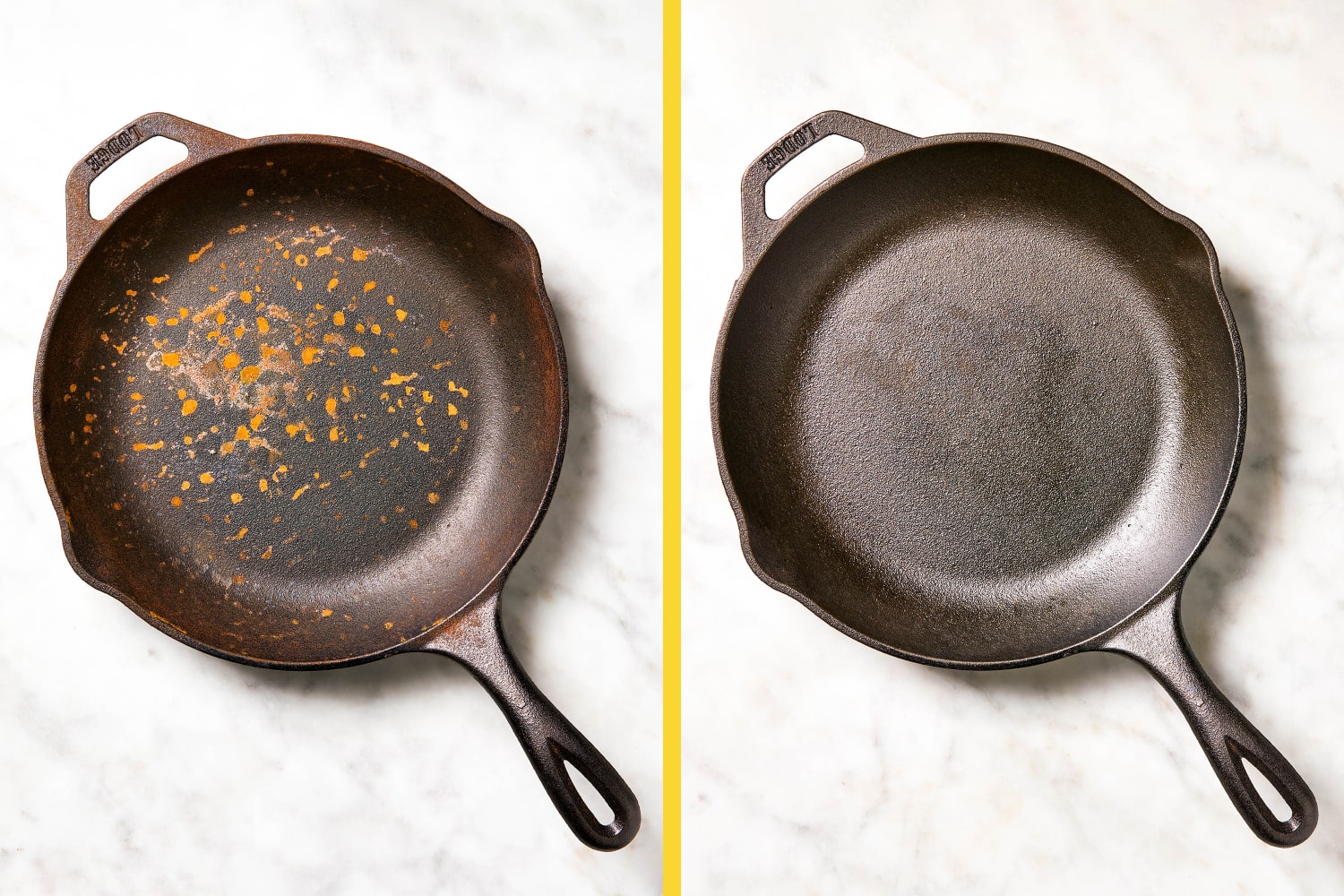
Rust on your cast iron cookware can feel like a big problem, but it doesn’t have to be. If you’ve noticed those annoying orange spots or rough patches on your favorite pan, you’re probably wondering how to fix it without ruining your investment.
The good news is that removing rust is easier than you think, and with the right steps, your cast iron can look and work like new again. Keep reading to discover simple, effective methods that will bring your cookware back to life—and make cooking with it a joy once more.
Causes Of Rust On Cast Iron
Rust forms on cast iron cookware due to several factors. Understanding these causes helps keep your pans in good shape. Rust appears when iron reacts with water and air. This weakens the cookware and changes its surface. Knowing what triggers rust can help avoid damage.
Common Triggers
Rust starts from tiny scratches or worn spots on the pan. These spots expose the metal beneath the protective layer. Cooking acidic foods can also wear down this layer. Leaving the pan wet or storing it in damp places invites rust too. Each of these triggers starts the rusting process.
Impact Of Moisture
Water is the main cause of rust on cast iron. Even small amounts of moisture can cause rust. After washing, if the pan stays wet, rust may form fast. High humidity in the kitchen or storage area also adds moisture. Moisture and air together cause iron to oxidize.
Role Of Improper Care
Not drying cast iron properly leads to rust. Skipping oiling after cleaning removes the protective layer. Using harsh soaps or scrubbing too hard can strip seasoning. Storing the pan in a closed, damp space also harms it. Proper care keeps rust away and extends pan life.
Credit: www.thekitchn.com
Tools And Materials Needed
Removing rust from cast iron cookware needs the right tools and materials. Using correct supplies makes the cleaning easier and safer. Gather everything before starting the process to save time. Here are the main items you will need.
Essential Cleaning Supplies
Steel wool or a stiff brush works well to scrub rust. Coarse salt acts as a gentle abrasive for cleaning. Mild dish soap helps remove dirt and grease. A plastic scraper can lift rust without scratching the surface. Paper towels or clean cloths are useful for drying and wiping.
Household Items That Help
White vinegar soaks can dissolve rust effectively. Baking soda makes a paste to scrub stubborn spots. Vegetable oil or flaxseed oil is perfect for seasoning after cleaning. Lemon juice can brighten the cast iron and reduce rust. Warm water helps soften rust for easier removal.
Protective Gear
Wear rubber gloves to protect your hands from harsh scrubbing. Use an apron to keep your clothes clean and dry. Safety glasses guard your eyes from splashes during scrubbing. A mask may help if you are sensitive to dust or strong smells.
Step-by-step Rust Removal Methods
Removing rust from cast iron cookware restores its strength and cooking quality. This process involves a few simple steps anyone can follow. Choose a method based on the rust level and materials available. Each method cleans rust without damaging the cookware.
Using Vinegar Soak
Fill a container with equal parts white vinegar and water. Submerge the cast iron in the solution. Let it soak for up to one hour. Check the rust progress frequently. Remove the cookware before the metal starts to dissolve. Rinse thoroughly with water. Dry the cookware completely to prevent new rust.
Scrubbing With Steel Wool
Use fine steel wool to scrub the rust spots gently. Apply firm pressure but avoid scratching deeply. Work in circular motions for better rust removal. Rinse the pan with warm water. Dry it with a clean towel immediately. Repeat if rust remains until the surface feels smooth.
Applying Baking Soda Paste
Mix baking soda with a small amount of water to form a thick paste. Spread the paste over rusted areas. Let it sit for 15 minutes. Scrub the paste off with a soft brush or sponge. Rinse well with warm water. Dry the cookware fully to stop rust from returning.
Using Salt And Potato Scrub
Cut a potato in half and dip the cut side in coarse salt. Rub the salted potato on rust spots firmly. The salt acts as an abrasive, while the potato releases cleaning juice. Continue scrubbing until rust fades. Rinse with warm water and dry completely. This method is gentle and eco-friendly.
Seasoning After Rust Removal
After removing rust from your cast iron cookware, seasoning is the next crucial step. Seasoning protects the surface and brings back the non-stick quality. It forms a strong layer that stops rust from coming back. Proper seasoning also improves cooking performance and food flavor.
Why Seasoning Matters
Seasoning creates a natural, protective coating on cast iron. It stops moisture and air from touching the metal. This prevents rust from forming again. It also makes the pan easier to clean. Food slides off smoothly, reducing the need for extra oil. Seasoning keeps your cookware safe and lasts longer.
Best Oils For Seasoning
Choose oils that handle heat well and dry hard. Flaxseed oil is popular because it forms a tough, durable layer. Grapeseed oil and canola oil also work well. Avoid oils that smoke too much or have low smoke points. Olive oil is not the best choice for seasoning. Use fresh, pure oils for the best results.
Proper Seasoning Techniques
Start with a clean, dry pan. Apply a thin, even layer of oil all over. Don’t use too much oil; it should not drip. Place the pan upside down in a hot oven at 450°F (230°C). Put a sheet of foil below to catch drips. Bake for one hour, then turn off the oven. Let the pan cool inside the oven. Repeat this process 2-3 times for a strong coating.
Preventing Future Rust
Preventing rust on cast iron cookware keeps it safe to use and extends its life. Rust forms when moisture stays on the pan too long. Taking small steps after each use stops rust from forming. You can enjoy your cast iron for years with simple care.
Cleaning Tips After Use
Clean your cast iron right after cooking. Use warm water and a soft brush or sponge. Avoid harsh soaps that remove seasoning. Dry the pan completely with a towel. Heat the pan on low heat to remove any leftover moisture.
Storage Best Practices
Store cast iron in a dry place. Keep the lid off or place a paper towel inside. This lets air flow and stops moisture build-up. Avoid stacking pans without protection to prevent scratches and rust spots.
Regular Maintenance Routines
Apply a thin layer of oil after each clean. Use cooking oil or special cast iron oil. Heat the pan slightly to help oil soak in. Check your pan often for signs of rust. Re-season your pan as needed to keep its surface smooth and rust-free.

Credit: www.youtube.com
When To Replace Cast Iron
Rust can often be removed from cast iron cookware, restoring it to good use. Yet, there are times when rust damage is too severe. Knowing when to replace cast iron helps keep cooking safe and efficient. This section guides you on spotting signs of irreparable damage and evaluating safety and performance.
Signs Of Irreparable Damage
Deep pits or holes in the cast iron surface mean serious damage. Rust that eats through metal weakens the pan structure. Cracks or warped shapes also show the pan cannot hold heat well. Flaking or large chunks missing from the cookware are clear signs to stop using it. These damages cannot be fixed by cleaning or reseasoning.
Evaluating Safety And Performance
Check if rust removal leaves the surface uneven or rough. Uneven surfaces cause food to stick and cook poorly. Sharp edges from chips or cracks can hurt your hands during use. If the pan no longer heats evenly, it affects cooking results. Unsafe or poorly performing cookware needs replacement to avoid accidents and bad meals.

Credit: www.youtube.com
Frequently Asked Questions
How Can I Remove Rust From Cast Iron Cookware?
To remove rust, scrub the cookware with steel wool or a stiff brush. Use mild soap and warm water. Dry it thoroughly, then re-season the pan with oil to restore its protective coating.
What Household Items Remove Rust From Cast Iron?
White vinegar and baking soda effectively remove rust. Soak the pan in vinegar for an hour, scrub with baking soda paste, then rinse and dry. Re-season the cookware to prevent future rust.
Is It Safe To Use Soap On Rusty Cast Iron?
Yes, using mild soap to clean rusty cast iron is safe. Scrub the rust off gently, rinse well, dry completely, and re-season the pan. Avoid harsh detergents that strip seasoning layers.
How Do I Prevent Rust On Cast Iron Cookware?
Always dry cast iron immediately after washing. Apply a thin coat of oil to the surface. Store in a dry place. Avoid soaking the pan for long periods to prevent rust formation.
Conclusion
Rust on cast iron cookware can be removed with simple steps. Use gentle scrubbing and natural ingredients like vinegar or baking soda. Dry the cookware well to stop rust from coming back. Season the pan after cleaning to keep it smooth and safe.
Taking care of your cast iron keeps it strong for years. Clean and dry it right after use. Enjoy cooking with your rust-free cast iron every day.

Hello, This is Annie Walker, a 38-year-old blogger, founder, and editor of Cookware Guider from NY, USA. I am a cookware fanatic and passionate cooker. I love to cook with different types of cooking appliances (example: all types of cookware, rice cookers, slow cookers, etc) almost every day in my kitchen. I love to share my experience with my readers in my blog. Also, I enjoy helping people to solve their problems through my website. You can follow me on Twitter & Pinterest. To know details about my blog please check the about us page.