
Burnt hard anodized cookware can be frustrating to deal with, especially when you want your kitchen tools to last and look good. If you’ve ever struggled to remove those stubborn burnt spots without damaging your cookware, you’re not alone.
The good news is, cleaning burnt hard anodized pans doesn’t have to be a headache. You’ll discover simple, effective methods to restore your cookware’s shine and keep it performing like new. Ready to bring your pots and pans back to life?
Let’s dive in and make cleaning easy for you.
Why Burnt Residue Happens
Burnt residue on hard anodized cookware happens when food or liquids stick and cook at high heat. This residue can be tough to remove if left for a long time. Understanding why it forms helps in cleaning it better and avoiding damage to your cookware.
Cooking at too high a temperature often causes food to burn and stick. Hard anodized cookware heats evenly but can still burn food if the heat is too strong or if food stays too long on the surface. Burnt bits get stuck and create a tough layer.
Using too little oil or fat can also cause burning. Food needs a thin layer of oil to prevent sticking. Without it, food touches the hot surface directly and burns. This burnt food becomes hard to clean later.
Leaving burnt food on the cookware for days worsens the problem. Residue becomes harder and darker with time. Early cleaning helps stop this buildup and keeps your cookware in good shape.
High Heat And Burnt Residue
High heat makes food cook fast but also burns it easily. Hard anodized cookware can handle heat but not extreme temperatures. Burnt residue forms when food cooks too long on high heat.
Insufficient Oil Or Fat
Oils create a barrier between food and pan. Without enough oil, food sticks and burns. Burnt residue forms from stuck, cooked-on food bits.
Leaving Burnt Food On Cookware
Burnt food left on the surface hardens over time. It gets darker and harder to remove. Cleaning soon after cooking prevents tough residue buildup.
Safety Tips Before Cleaning
Cleaning burnt hard anodized cookware requires care. Safety must be the first step before any cleaning process. This helps protect your hands, eyes, and cookware from damage.
Follow these safety tips to avoid accidents and keep your cookware in good shape.
Wear Protective Gloves
Always wear gloves to protect your hands. Burnt residue can be tough and may irritate your skin. Gloves also shield your hands from strong cleaning agents.
Ensure Proper Ventilation
Clean in a well-ventilated area. Cleaning products may release strong fumes. Good airflow helps avoid breathing in harmful chemicals.
Allow Cookware To Cool
Never clean hot cookware. Let it cool completely. Cleaning hot pans can cause burns or damage the surface.
Use Mild Cleaning Products
Choose gentle cleaners made for hard anodized surfaces. Harsh chemicals can ruin the cookware’s coating. Mild products clean effectively without harm.
Test Cleaning Solution First
Try your cleaner on a small area. Check for any adverse reactions. This prevents damage to the entire pan.
Basic Cleaning Supplies Needed
Cleaning burnt hard anodized cookware requires specific supplies. These help remove tough stains without damaging the surface. Having the right tools makes the process easier and faster. Below are the basic cleaning supplies needed for the job.
Soft Sponge Or Non-abrasive Scrubber
A soft sponge or non-abrasive scrubber cleans gently. It removes burnt food without scratching the cookware. Avoid steel wool or hard scrubbing pads. They can ruin the hard anodized finish.
Baking Soda
Baking soda is a natural cleaning agent. It helps lift burnt residue and neutralizes odors. Sprinkle it over the burnt areas for better results. It’s safe and cheap for regular use.
White Vinegar
White vinegar breaks down tough stains and grease. Use it diluted with water to soak the cookware. It also helps restore the surface’s shine. Vinegar is a simple, effective cleaning liquid.
Dish Soap
Dish soap cuts through grease and leftover food. Use a mild formula to protect the cookware’s coating. It works well with warm water for everyday cleaning. Choose gentle soap to avoid damage.
Plastic Or Wooden Scraper
A plastic or wooden scraper removes stuck-on food safely. It avoids scratching the cookware’s surface. Metal tools can cause permanent damage. Use gentle scraping motions for best results.
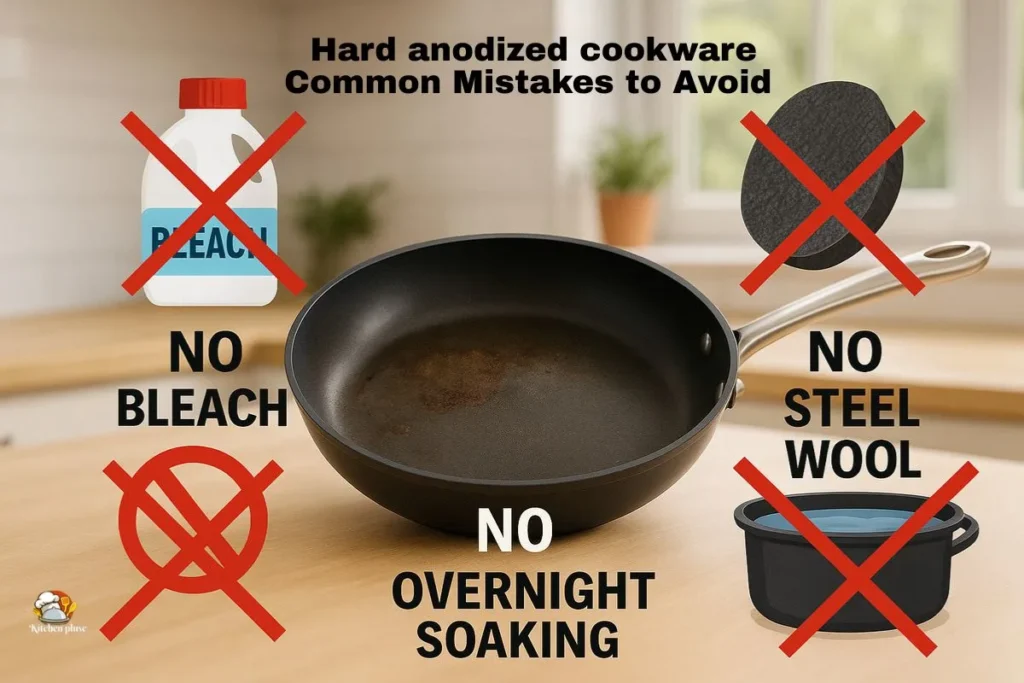
Credit: kitchenpluse.com
Soaking Techniques For Stubborn Burnt Spots
Stubborn burnt spots on hard anodized cookware can be tough to remove. Soaking is a gentle way to loosen burnt food without damaging the surface. This method saves time and effort while protecting your cookware’s finish.
Soaking softens burnt residue, making it easier to clean. Using the right soaking solution is key. It helps break down burnt food and grease effectively.
Soaking With Warm Water And Dish Soap
Fill the cookware with warm water and add a few drops of dish soap. Let it soak for at least 30 minutes. The warm water helps lift burnt food, and soap breaks down oils. After soaking, scrub gently with a soft sponge.
Using Baking Soda Paste For Soaking
Mix baking soda with a little water to form a thick paste. Spread the paste over burnt areas. Leave it for 1 hour to loosen burnt spots. Baking soda is mildly abrasive and safe for hard anodized surfaces. Rinse well and wipe clean after soaking.
Vinegar Soak For Tough Burnt Spots
Pour enough white vinegar to cover the burnt area. Vinegar’s acidity helps dissolve burnt food and mineral deposits. Let the cookware soak for 20 to 30 minutes. After soaking, scrub gently with a sponge to remove loosened residue.
Combining Soaking Solutions For Deep Cleaning
For very stubborn spots, mix vinegar and baking soda. Add vinegar first, then sprinkle baking soda on the burnt area. The fizzing action helps lift burnt food. Let it soak for 15 to 20 minutes. Rinse thoroughly and scrub gently afterward.
Natural Cleaning Methods
Cleaning burnt hard anodized cookware does not require harsh chemicals. Natural cleaning methods use simple ingredients found at home. These methods are safe and gentle on your cookware. They help remove burnt stains without scratching the surface. Let’s explore two effective natural cleaning techniques.
Using Baking Soda And Vinegar
Baking soda and vinegar create a natural cleaning duo. First, sprinkle baking soda over the burnt areas. Then, pour a small amount of vinegar on top. The mixture will bubble and fizz, helping to lift burnt residue. Let it sit for 10-15 minutes. After soaking, scrub gently with a soft sponge. Rinse well with warm water. This method removes tough stains and deodorizes your cookware.
Lemon And Salt Scrub
Lemon and salt work well to clean burnt spots naturally. Cut a lemon in half and dip the cut side in salt. Use the lemon to scrub the burnt areas of your cookware. The acid in lemon breaks down burnt food. Salt acts as a mild abrasive to scrub off residue. Rinse the cookware with warm water after scrubbing. This method leaves your cookware fresh and clean without damage.
Commercial Cleaners For Hard Anodized Cookware
Cleaning burnt hard anodized cookware can be tough. Commercial cleaners offer a simple and effective solution. These cleaners are made to remove tough stains without harming the cookware’s surface. They save time and effort compared to home remedies.
Using commercial cleaners ensures your cookware stays safe and lasts longer. Choose one that is safe for hard anodized surfaces. Follow the instructions carefully for the best results.
Types Of Commercial Cleaners For Hard Anodized Cookware
There are several types of commercial cleaners available. Some come as sprays, while others are powders or gels. Each type targets burnt food and stains differently. Sprays are easy to apply and good for light stains. Powders and gels work well on heavy burnt spots. Always check the label for hard anodized compatibility.
How To Use Commercial Cleaners Safely
Read the instructions before use. Wear gloves to protect your hands. Apply the cleaner only on the burnt areas. Let it sit for the time mentioned on the label. Use a soft sponge or cloth to scrub gently. Rinse thoroughly with water. Avoid steel wool or harsh scrubbers that can scratch the surface.
Benefits Of Commercial Cleaners
Commercial cleaners remove tough burnt stains quickly. They help maintain the cookware’s non-stick properties. These cleaners prevent damage to the anodized layer. They also save your cookware from discoloration. Using the right cleaner keeps your pots and pans looking new longer.
Tools To Avoid Scratches
Cleaning burnt hard anodized cookware needs care. Using the wrong tools can cause scratches. Scratches damage the cookware’s surface. It makes cleaning harder later. Choosing the right tools keeps your cookware safe. It also helps clean burnt food easily.
Soft Sponges And Cloths
Soft sponges are gentle on the surface. Avoid rough scrubbers that scratch easily. Microfiber cloths work well for light cleaning. These tools remove dirt without damage. Use warm water and mild soap with them.
Plastic Or Silicone Scrapers
Plastic scrapers help remove stuck food safely. They do not harm the hard anodized layer. Silicone tools also work well for scraping. Avoid metal scrapers that can cause deep scratches. Use gentle pressure to avoid damage.
Non-abrasive Cleaning Pads
Non-abrasive pads clean tough stains without scratching. Look for pads labeled safe for non-stick or anodized surfaces. These pads remove burnt bits effectively. Avoid steel wool or abrasive brushes. They ruin the cookware’s finish quickly.

Credit: www.youtube.com
Step-by-step Cleaning Process
Cleaning burnt hard anodized cookware can seem tough. The right steps make it easier. This guide breaks down the process into simple actions. Follow each step carefully for the best results.
Patience helps. Avoid harsh scrubbing that may damage the surface. Use gentle tools and common household items instead. Let’s start with the cleaning process.
Gather Your Cleaning Supplies
Collect basic items: baking soda, white vinegar, dish soap, a soft sponge, and warm water. Avoid steel wool or metal scrubbers. These can scratch the cookware.
Soak The Cookware
Fill the cookware with warm water. Add two tablespoons of baking soda. Let it soak for 30 minutes. This softens burnt food and grime.
Scrub Gently
After soaking, use a soft sponge. Scrub the burnt areas with light pressure. Baking soda acts as a mild abrasive to lift stains.
Add Vinegar For Tough Stains
Pour a small amount of white vinegar on burnt spots. It reacts with baking soda and bubbles up. Wait five minutes, then scrub again gently.
Rinse And Wash
Rinse the cookware with warm water. Wash with mild dish soap to remove residue. Dry with a soft cloth or towel.
Repeat If Needed
Stubborn stains may need a second treatment. Repeat soaking and scrubbing steps. Avoid harsh chemicals to protect the anodized surface.
Tips To Prevent Future Burnt Residue
Preventing burnt residue on hard anodized cookware saves time and effort. It keeps your pans looking new and working well for years. Small changes in cooking habits can stop food from sticking and burning. A clean pan also cooks food evenly and tastes better.
Use Medium Or Low Heat
High heat causes food to burn quickly. Hard anodized pans hold heat well. Using medium or low heat controls cooking better. It stops food from burning and sticking. Heat settings make a big difference in cleaning later.
Preheat The Pan Properly
Let the pan warm up slowly before adding food. A hot pan helps food cook evenly. It also prevents sticking and burning. Avoid heating an empty pan too long. Preheating right keeps your cookware safe.
Use Enough Cooking Oil
Oil creates a barrier between food and pan surface. Use enough oil to cover the cooking area. This helps food slide off easily. It reduces burnt bits left behind. Choose oils with high smoke points for best results.
Stir And Turn Food Often
Moving food while cooking stops it from sticking. Stir or turn food regularly. This spreads heat evenly and prevents burning. It also helps food cook faster. A little attention goes a long way.
Clean Cookware Soon After Use
Cleaning soon stops food residue from hardening. Warm water and mild soap work well. Avoid harsh scrubbers that damage the surface. Regular cleaning keeps pans smooth and non-stick. It reduces future burnt spots.

Credit: prudentreviews.com
When To Seek Professional Help
Cleaning burnt hard anodized cookware can be tricky. Sometimes, home methods are not enough. Knowing when to seek professional help saves your cookware and effort.
Professionals have tools and skills for tough stains and damage. They can restore your cookware safely without causing harm. This saves money in the long run.
Signs Your Cookware Needs Professional Cleaning
Deep, stubborn stains that won’t lift after scrubbing. Burn marks that cover the entire surface. Warped or damaged cookware that affects cooking. Persistent odors from burnt food that won’t go away. These signs show it’s time for expert care.
Risks Of Diy Cleaning On Hard Anodized Cookware
Using harsh chemicals can strip the anodized layer. Scrubbing too hard may scratch or damage the surface. Wrong cleaning agents might cause discoloration. Trying unsafe methods leads to permanent damage. Professionals avoid these mistakes and protect your cookware.
How Professionals Restore Burnt Hard Anodized Cookware
Experts use safe, tested cleaning agents tailored for anodized surfaces. They apply special tools to remove burnt residues gently. Professionals repair minor damage and restore finish shine. Their methods extend the life of your cookware.
Frequently Asked Questions
How Do I Remove Burnt Residue From Hard Anodized Cookware?
To remove burnt residue, soak the cookware in warm soapy water for 15-30 minutes. Use a non-abrasive sponge to scrub gently. Avoid steel wool to prevent damage to the surface.
Can Baking Soda Clean Burnt Hard Anodized Pans?
Yes, baking soda is effective. Make a paste with water and apply it to burnt areas. Let it sit for 15 minutes, then scrub gently with a soft sponge. Rinse thoroughly afterward.
Is Vinegar Safe For Cleaning Burnt Hard Anodized Cookware?
Yes, vinegar helps dissolve burnt food. Mix equal parts water and white vinegar, boil in the pan for a few minutes, then let it cool. Scrub gently and rinse well to remove residue.
How Often Should I Clean Hard Anodized Cookware To Prevent Burns?
Clean your cookware after every use to avoid burnt buildup. Regular cleaning prevents tough stains and prolongs the cookware’s lifespan. Always dry thoroughly before storing.
Conclusion
Cleaning burnt hard anodized cookware is simple with the right steps. Use gentle scrubbing and natural ingredients to protect the surface. Avoid harsh tools that can scratch or damage your pan. Regular care keeps your cookware looking new and lasting longer.
A clean pan cooks food better and tastes fresher. Try these easy tips to save time and effort. Your kitchen will stay neat and your meals delicious. Small actions make a big difference in cookware care.

Hello, This is Annie Walker, a 38-year-old blogger, founder, and editor of Cookware Guider from NY, USA. I am a cookware fanatic and passionate cooker. I love to cook with different types of cooking appliances (example: all types of cookware, rice cookers, slow cookers, etc) almost every day in my kitchen. I love to share my experience with my readers in my blog. Also, I enjoy helping people to solve their problems through my website. You can follow me on Twitter & Pinterest. To know details about my blog please check the about us page.