
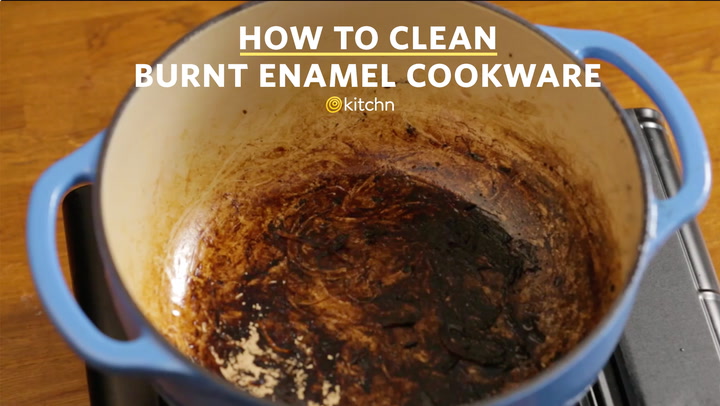
Have you ever struggled with stubborn burnt stains on your enamel cookware? Those tough marks can make your favorite pots and pans look old and worn out, no matter how careful you are.
But don’t worry—cleaning them doesn’t have to be a frustrating chore. You’ll discover simple, effective methods to restore your enamel cookware to its original shine. Keep reading, and you’ll learn easy tricks that save you time and effort, making your kitchen cleanup a breeze.
Your cookware—and your cooking—will thank you!
Credit: www.thekitchn.com
Causes Of Burnt Stains
Burnt stains on enamel cookware happen because of heat and food residue. These stains make pots and pans look old and dirty. Understanding why these stains form helps to clean them better. Knowing the causes also helps to avoid new stains in the future.
Common Reasons For Burnt Residue
Burnt residue forms mostly from cooking at high temperatures. Food left too long on heat can stick and burn. Sugar and sauces with sugar burn easily and leave dark stains. Not stirring food regularly causes it to stick and burn. Cooking with too little oil can also cause burning. Using the wrong utensils may scratch the enamel, making stains stick more.
How Enamel Reacts To High Heat
Enamel is a glass-like coating on metal. It does not like very high heat. When the heat is too strong, enamel can crack or chip. Burnt food can stick harder to these cracks. Enamel can also change color under strong heat. These changes make cleaning burnt stains much harder.
Safety Precautions
Cleaning burnt stains off enamel cookware needs care and attention. Safety is important to protect your skin, eyes, and lungs. Chemicals and scrubbing tools can cause injury if not handled right. Follow safety steps to clean safely and avoid harm.
Protective Gear To Use
Always wear gloves to protect your hands from harsh cleaners. Use rubber or latex gloves that fit well. Wear safety glasses to shield your eyes from splashes. If you use strong chemicals, a mask can stop you from breathing harmful fumes. Long sleeves help protect your skin from scratches and spills.
Handling Chemicals Safely
Read labels on cleaning products before use. Use only the amount needed for the job. Never mix different chemicals; this can create dangerous gases. Work in a well-ventilated area to avoid breathing fumes. Store chemicals away from children and pets. Rinse your cookware thoroughly after cleaning to remove all residues.
Basic Cleaning Methods
Basic cleaning methods are the first step to restore your enamel cookware. These methods use simple household items and little effort. They help remove burnt stains without damaging the surface. Start with gentle techniques before trying stronger solutions.
Soaking With Warm Soapy Water
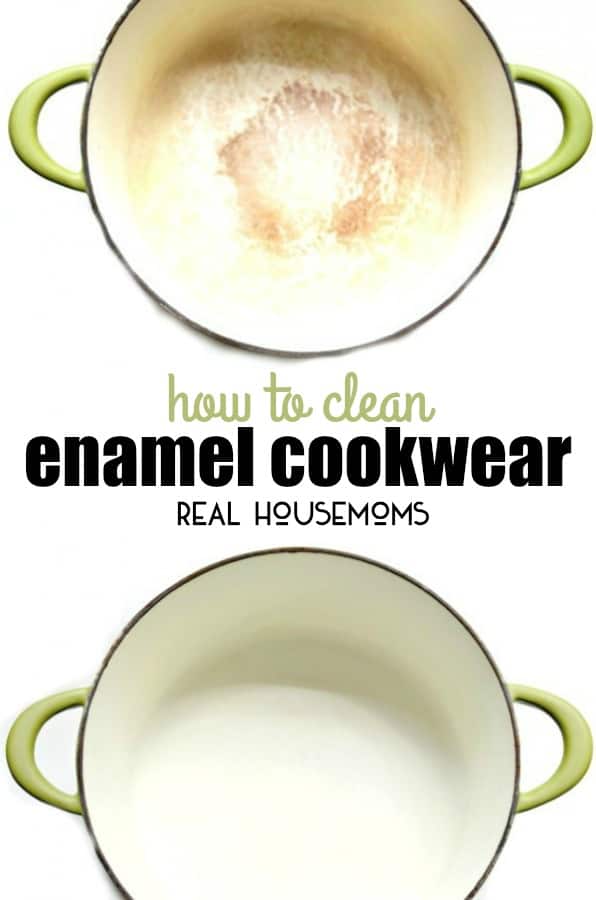
Fill the cookware with warm water and add dish soap. Let it soak for at least 30 minutes. The warm water softens burnt food stuck on the surface. Use a soft sponge to scrub gently after soaking. Avoid steel wool as it can scratch the enamel. Rinse well and dry with a clean cloth.
Using Baking Soda Paste
Mix baking soda with a small amount of water to form a thick paste. Spread the paste over the burnt areas of the cookware. Let it sit for 15 to 20 minutes to break down stains. Use a soft sponge or cloth to scrub the paste gently. Rinse thoroughly to remove all residue. This method helps lift stubborn stains without harsh chemicals.
Credit: realhousemoms.com
Natural Remedies
Natural remedies offer a safe way to clean burnt stains on enamel cookware. They use common household items. These methods avoid harsh chemicals. They protect the enamel surface and restore its shine.
Vinegar And Baking Soda Combo
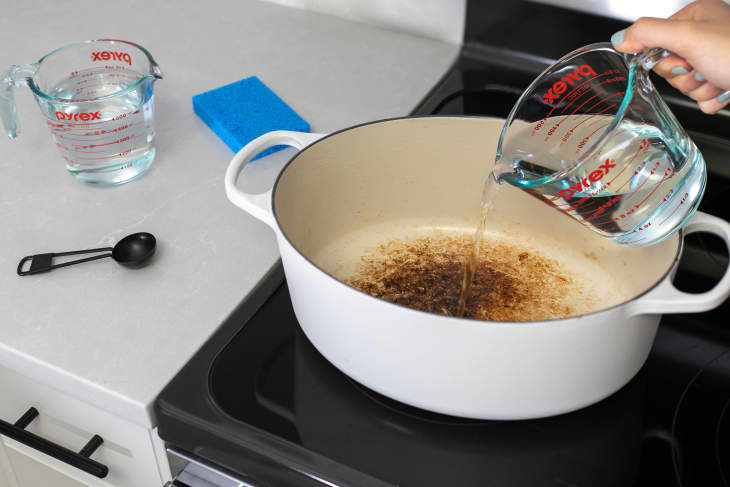
Mix equal parts of vinegar and water. Pour the solution into the burnt cookware. Let it sit for 10 minutes. Then, sprinkle baking soda over the stained area. The mixture will bubble and lift the burnt residue. Use a soft sponge to scrub gently. Rinse with warm water and dry. Repeat if needed for tough stains.
Lemon Juice Applications
Squeeze fresh lemon juice on the burnt spots. The natural acid helps break down the stains. Let the juice sit for 15 minutes. Use the lemon rind as a scrubber. Rub the burnt areas lightly. Rinse the cookware with warm water. Dry with a clean cloth. Lemon juice also adds a fresh scent to your cookware.
Commercial Cleaners
Commercial cleaners are useful for removing burnt stains from enamel cookware. They contain special ingredients that break down tough grime without harming the enamel surface. Using these products can save time and effort compared to home remedies.
Many commercial cleaners come in powders, sprays, or gels. Each type targets burnt stains differently. Choosing the right one ensures better cleaning results and protects your cookware.
Choosing The Right Cleaner
Select a cleaner made specifically for enamel cookware. Avoid harsh abrasives that scratch the surface. Look for products labeled as safe for enamel or non-abrasive.
Check the ingredients for gentle acids or mild detergents. These help lift burnt food without damage. Avoid bleach or strong chemicals that can dull the finish.
Read product reviews to find cleaners that work well on burnt stains. Trusted brands often offer reliable and safe options. Choose one that fits your stain severity and cookware type.
Application Tips For Best Results
First, rinse your cookware with warm water to remove loose debris. Apply the cleaner evenly over the burnt areas. Use a soft sponge or cloth to spread the product gently.
Allow the cleaner to sit for the time stated on the label. This lets the ingredients break down the burnt stains. Avoid scrubbing hard, which can damage enamel.
Rinse thoroughly with warm water after cleaning. Repeat the process if stains remain. Dry the cookware completely before storing to prevent rust or stains.
Preventing Future Stains
Preventing future stains on enamel cookware helps keep it looking new. Stains and burns can ruin the smooth finish. Taking simple steps can save time and effort later. Proper care protects your investment and improves cooking results.
Proper Cooking Techniques
Use medium or low heat to avoid burning food. High heat can cause food to stick and stain. Stir food regularly to stop it from settling and burning. Add enough liquid to prevent drying during cooking. Avoid cooking empty pots on high heat. This can damage the enamel surface quickly.
Routine Maintenance Tips
Clean cookware immediately after use to stop stains from setting. Use soft sponges or cloths to avoid scratches. Avoid metal scrubbers or harsh cleaning powders. Dry the cookware well to prevent water spots. Store cookware in a dry place with lids off for air circulation. Regularly check for chips or cracks in the enamel.
Troubleshooting Stubborn Stains
Burnt stains on enamel cookware can be tough to remove. These marks often resist regular cleaning methods. Stubborn stains need careful treatment to protect the enamel surface. Using the right tools and techniques is key to restoring your cookware’s look.
Using Steel Wool And Scrubbers Safely
Steel wool can help remove tough burnt stains. Choose fine-grade steel wool to avoid scratching. Always test on a small hidden area first. Use gentle pressure and scrub in circular motions. Avoid harsh scrubbing that can chip the enamel. Non-abrasive scrubbers are a safer choice for delicate spots. Clean the cookware well after scrubbing to remove residue.
When To Seek Professional Help
Some stains stay despite your best efforts. Deep stains or damaged enamel need expert care. Professional cleaners use special tools and solutions. They can fix chips and restore shine. Contact a professional if stains worsen or enamel peels. This helps keep your cookware safe and lasting longer.
Credit: www.thekitchn.com
Frequently Asked Questions
How Do I Remove Burnt Stains From Enamel Cookware?
To remove burnt stains, soak the cookware in warm soapy water for 30 minutes. Use a non-abrasive sponge with baking soda to scrub gently. Avoid metal scrubbers to protect the enamel surface and repeat if necessary for tough stains.
Can Vinegar Help Clean Burnt Enamel Pots?
Yes, vinegar effectively loosens burnt food. Mix equal parts vinegar and water, boil it in the pot, then let it cool. Scrub gently with a soft sponge and rinse well. Vinegar’s acidity breaks down burnt residues safely.
Is Baking Soda Safe For Enamel Cookware Cleaning?
Baking soda is safe and gentle for cleaning enamel cookware. It acts as a mild abrasive to lift stains without scratching. Make a paste with water, apply to the stain, let sit, then scrub softly and rinse thoroughly.
How To Prevent Burnt Stains On Enamel Cookware?
Avoid high heat and always use medium or low heat settings. Stir food regularly and use enough oil or liquid. Clean cookware promptly after use to prevent residue buildup and staining on the enamel surface.
Conclusion
Cleaning burnt stains off enamel cookware is easier than it seems. Use gentle scrubbing and natural cleaners for best results. Avoid harsh tools to protect the enamel surface. Regular care keeps your cookware looking new longer. Small efforts save money and reduce waste.
Try these tips next time stains appear. Your pots and pans will shine again. Simple steps bring back that fresh look. Cooking feels better with clean tools. Give your enamel cookware the care it deserves.

Hello, This is Annie Walker, a 38-year-old blogger, founder, and editor of Cookware Guider from NY, USA. I am a cookware fanatic and passionate cooker. I love to cook with different types of cooking appliances (example: all types of cookware, rice cookers, slow cookers, etc) almost every day in my kitchen. I love to share my experience with my readers in my blog. Also, I enjoy helping people to solve their problems through my website. You can follow me on Twitter & Pinterest. To know details about my blog please check the about us page.