
Cooking rice on the stove might seem simple, but getting it just right can be tricky. You want fluffy, perfectly cooked rice every time—not mushy or burnt.
If you’ve ever struggled with sticky or undercooked rice, you’re not alone. The good news is, with a few easy steps, you can master the art of stove-top rice cooking. You’ll learn clear, foolproof tips that anyone can follow. By the end, you’ll feel confident making rice that tastes great and complements any meal.
Ready to become a rice-cooking pro? Let’s dive in!
:max_bytes(150000):strip_icc()/how-to-make-jasmine-rice-3217510-ADD-V1-BIG-FINAL-V2-6ad75cb18e604ae486f113e1d1c356dd.png)
Credit: www.thespruceeats.com
Choosing Rice Types
Choosing the right type of rice is important for cooking perfect rice on the stove. Different rice types have unique textures, flavors, and cooking times. Picking the right one helps achieve the dish you want. This guide explains the main differences between rice types so you can cook rice that fits your meal well.
Long Grain Vs Short Grain
Long grain rice has slender, long grains. It cooks up light and fluffy. Each grain stays separate after cooking. It works well for dishes like pilaf, fried rice, and plain steamed rice.
- Texture: Firm and dry
- Grain length: About 4-5 times longer than wide
- Common types: Basmati, Jasmine, American long grain
Short grain rice has short, almost round grains. It is sticky and clumps together when cooked. This makes it perfect for sushi, risotto, and rice pudding.
- Texture: Soft and sticky
- Grain length: About twice as long as wide
- Common types: Sushi rice, Arborio, Calrose
| Feature | Long Grain Rice | Short Grain Rice |
|---|---|---|
| Grain shape | Long and slim | Short and round |
| Texture after cooking | Fluffy, separate grains | Sticky, clumps together |
| Best uses | Side dishes, pilaf, fried rice | Sushi, risotto, desserts |
White Rice Vs Brown Rice
White rice has the husk, bran, and germ removed. It cooks faster and has a mild flavor. White rice is softer and less chewy than brown rice. It is common in many recipes.
- Cooking time: 15-20 minutes
- Texture: Soft and fluffy
- Flavor: Mild and neutral
Brown rice keeps the bran and germ. It has more fiber and nutrients. Brown rice takes longer to cook and has a chewy texture and nutty taste.
- Cooking time: 40-50 minutes
- Texture: Chewy and firm
- Flavor: Nutty and earthy
| Feature | White Rice | Brown Rice |
|---|---|---|
| Processing | Husk, bran, and germ removed | Only husk removed, bran and germ kept |
| Cooking time | Short (15-20 minutes) | Long (40-50 minutes) |
| Texture | Soft and fluffy | Chewy and firm |
| Nutrition | Less fiber and nutrients | More fiber and nutrients |
Preparing Rice For Cooking
Cooking rice on the stove starts with good preparation. Preparing rice properly helps it cook evenly and taste better. This step includes rinsing, soaking, and measuring rice and water carefully. Taking time here makes the final dish fluffy and delicious.
Rinsing And Soaking
Rinsing rice removes excess starch, dirt, and impurities. This stops the rice from becoming sticky or clumpy after cooking. To rinse rice:
- Place the rice in a fine-mesh strainer or bowl.
- Run cold water over the rice or fill the bowl with water.
- Swirl the rice gently with your hand to loosen starch.
- Drain the water and repeat 2-3 times until the water runs clear.
Soaking rice before cooking helps grains absorb water. It cuts cooking time and improves texture. Soak rice for 15-30 minutes in cold water. This step is especially good for long-grain and basmati rice.
Here are the benefits of rinsing and soaking:
| Step | Benefit |
|---|---|
| Rinsing | Removes starch to prevent clumping and stickiness |
| Soaking | Softens grains and reduces cooking time |
Skipping rinsing or soaking can make rice sticky or unevenly cooked. These simple steps make a big difference in the final dish.
Measuring Rice And Water
Correct measurement of rice and water is key to perfect rice. Too much water makes rice mushy. Too little water leaves rice hard or undercooked. Use a standard measuring cup for accuracy.
The general water-to-rice ratio depends on the rice type:
| Rice Type | Water Ratio (cups) |
|---|---|
| Long-grain white rice | 2 cups water for 1 cup rice |
| Basmati rice | 1.5 cups water for 1 cup rice |
| Brown rice | 2.5 cups water for 1 cup rice |
Measuring tips:
- Use the same cup for both rice and water.
- Adjust water slightly for softer or firmer rice.
- Remember that soaking rice reduces water needed.
Follow these simple measurements to avoid overcooked or dry rice. Measuring well is a small step with a big impact on your meal.
Cooking Methods On Stove
Cooking rice on the stove involves simple but effective methods that produce fluffy, tasty rice. Each method uses heat and water differently to cook the rice grains perfectly. Understanding these methods helps control the texture and taste of your rice. Three common techniques stand out: boiling, simmering, and steaming. Each has unique steps and benefits.
Boiling Method
The boiling method is quick and easy. It uses a large amount of water to cook the rice, similar to cooking pasta. This method is best for long-grain rice or when you want to rinse away excess starch.
- Step 1: Bring a large pot of water to a rolling boil.
- Step 2: Add the rice to the boiling water.
- Step 3: Stir once to prevent sticking.
- Step 4: Boil uncovered until rice is tender, usually 10-12 minutes.
- Step 5: Drain the rice using a fine mesh strainer.
- Step 6: Let rice sit for a few minutes before serving.
This method flushes out extra starch, resulting in less sticky rice. It works well for salads or recipes needing separate grains.
| Advantage | Disadvantage |
|---|---|
| Quick cooking time | Uses more water than other methods |
| Rice grains remain separate | Some nutrients may wash away |
Simmering Method
The simmering method uses less water and involves cooking rice slowly with a lid on. It is the most common and traditional way to cook rice on the stove. This method keeps the rice soft and moist.
- Measure rice and water using a 1:2 ratio (1 cup rice to 2 cups water).
- Rinse rice under cold water to remove extra starch.
- Bring water to a boil in a pot.
- Add rice and stir once.
- Lower heat to a gentle simmer and cover the pot.
- Cook for 18-20 minutes without lifting the lid.
- Turn off heat and let rice rest for 5 minutes.
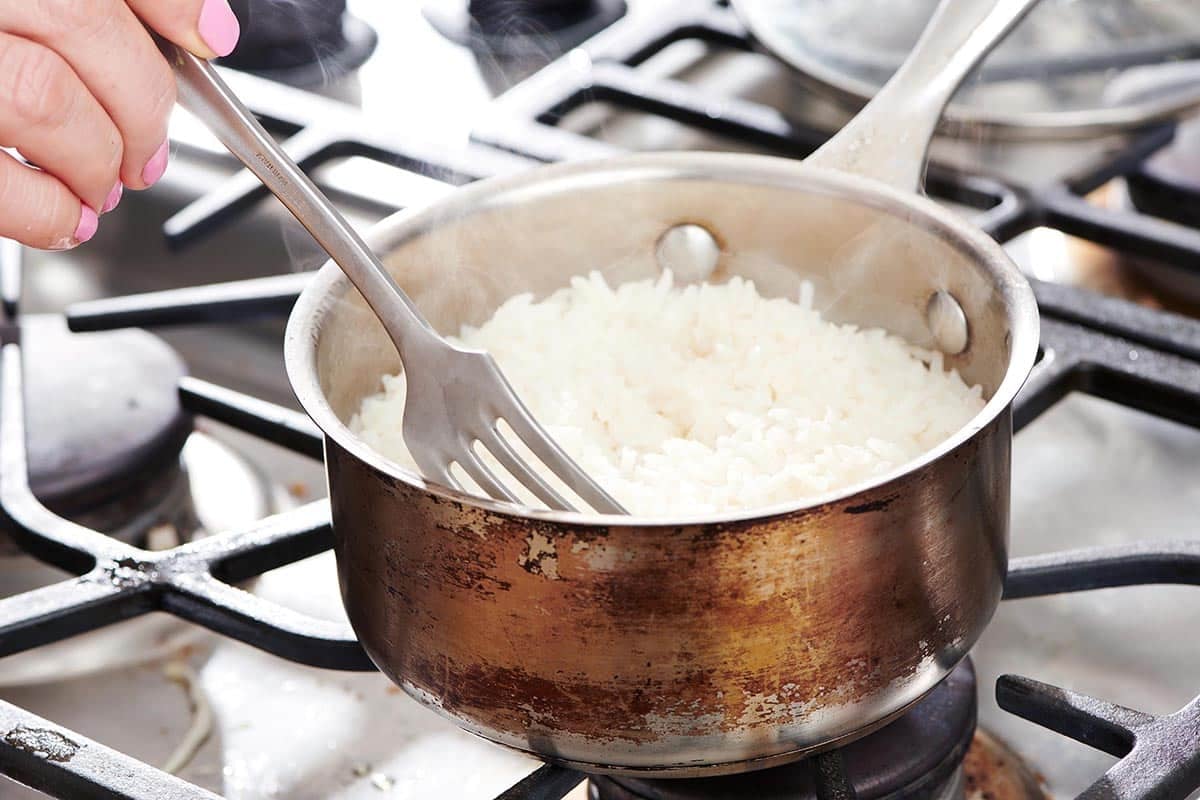
- Fluff rice with a fork before serving.
This method produces tender, fluffy rice with a soft texture. It also saves water and energy compared to boiling.
| Advantage | Disadvantage |
|---|---|
| Uses less water | Longer cooking time than boiling |
| Rice absorbs flavors well | Needs careful heat control |
Steaming Method
The steaming method cooks rice using steam heat instead of direct boiling. This method is gentle and keeps rice grains intact and fluffy. It works well for sticky or aromatic rice types.
- Rinse rice thoroughly to remove starch.
- Soak rice in water for 30 minutes to soften grains.
- Drain rice and place it in a steamer basket.
- Bring water to a boil in the pot below the steamer.
- Cover and steam rice for 20-25 minutes.
- Check rice for tenderness; steam more if needed.
- Fluff rice gently with a fork before serving.
This method preserves nutrients and flavor better than boiling. It produces soft, slightly sticky rice ideal for Asian dishes.
| Advantage | Disadvantage |
|---|---|
| Preserves nutrients and flavor | Takes longer than boiling and simmering |
| Rice grains stay separate and fluffy | Needs special steaming equipment |

Credit: www.recipetineats.com
Cooking Tips And Tricks
Cooking rice on the stove is simple but needs some tips for the best results. Knowing how to avoid sticky rice, use the lid correctly, and adjust heat well makes a big difference. These cooking tips and tricks help you get fluffy, tasty rice every time.
Avoiding Sticky Rice
Sticky rice can happen if the grains stick together or get mushy. To avoid this, start by rinsing the rice in cold water. Rinse until the water runs clear. This removes extra starch on the surface. Starch makes rice sticky.
Use the right amount of water. Too much water makes rice mushy. Too little water leaves it hard. A common ratio is 1 cup rice to 1.5 cups water, but it varies by rice type.
- Rinse rice 2-3 times before cooking
- Use fresh water for cooking
- Measure water carefully
- Don’t stir rice while cooking
- Let rice rest after cooking for 5-10 minutes
| Rice Type | Water Ratio | Cook Time |
|---|---|---|
| White rice | 1 : 1.5 | 15-20 minutes |
| Brown rice | 1 : 2 | 40-45 minutes |
| Jasmine rice | 1 : 1.5 | 15-20 minutes |
Using Lid Correctly
Using the lid properly helps steam the rice evenly. Keep the lid on tight during cooking. This traps steam and cooks rice fully. Avoid lifting the lid often. Each time you lift it, steam escapes and cooking time increases.
Choose a lid that fits your pot well. A loose lid lets steam out. A tight lid keeps moisture inside. If your lid is loose, cover the pot with foil before placing the lid.
- Place lid firmly before heating
- Do not open lid until cooking ends
- Use foil to seal if lid is loose
- After cooking, keep lid on while rice rests
Resting rice with the lid on lets steam finish cooking the grains. It also makes rice fluffier. Remove the lid after 5-10 minutes of resting and fluff rice with a fork.
Adjusting Heat Levels
Heat control is key to cooking rice well. Start by heating water and rice on medium-high heat. Once water boils, reduce heat to low. Let rice simmer gently.
High heat after boiling can burn the rice or dry it out. Low heat keeps water simmering slowly, so rice cooks evenly and absorbs water well.
- Start with medium-high heat to boil
- Reduce to low heat once boiling
- Simmer gently; avoid rapid boiling
- Use a burner size that matches pot size
- Turn off heat after cooking, keep lid on to rest
Adjust heat if you see water boiling too fast or rice burning. Lower heat more to keep a gentle simmer. This helps rice cook perfectly without sticking or drying out.
Flavoring And Enhancements
Cooking rice on the stove is simple, but adding flavor can make it much better. Flavoring and enhancements turn plain rice into a tasty side dish or main meal base. Small changes during cooking boost the taste and aroma. Using basic ingredients like salt, spices, or broth adds depth to rice. These easy tricks make your rice more exciting without extra effort. Try different options to find your favorite flavors.
Adding Salt And Spices
Salt is essential for flavoring rice. It brings out the natural taste of the grains and balances other flavors. Add salt to the water before cooking for even seasoning. Usually, use about ½ teaspoon of salt for every cup of rice. Adjust salt to match your preference or dietary needs.
Spices add aroma and taste. You can use whole or ground spices. Common choices include:
- Cumin seeds – add a warm, earthy flavor
- Bay leaves – give a subtle herbal aroma
- Cinnamon sticks – provide a sweet and spicy note
- Cardamom pods – offer a fresh, citrusy scent
- Cloves – bring a strong, warm flavor
Try adding one or two spices to the cooking water. Here’s a simple guide:
| Spice | Quantity per 1 cup rice | Flavor Effect |
|---|---|---|
| Cumin seeds | ½ teaspoon | Earthy, warm |
| Bay leaf | 1 leaf | Herbal aroma |
| Cinnamon stick | 1 small stick | Sweet, spicy |
| Cardamom pods | 2-3 pods | Citrusy, fresh |
| Cloves | 2-3 whole cloves | Strong, warm |
These spices infuse the rice during cooking. Remove whole spices before serving for a smooth texture. Experiment with combinations to find your best blend.
Using Broth Instead Of Water
Replacing water with broth instantly adds rich flavor to rice. Broth contains herbs, vegetables, and sometimes meat flavors. This makes rice more savory and tasty. Use chicken, beef, vegetable, or mushroom broth based on the dish you want.
Here are benefits of using broth:
- Enhances taste: Broth adds depth and umami
- Adds nutrients: Contains vitamins and minerals
- Easy to use: Substitute 1:1 for water in recipes
Choose low-sodium broth to control salt levels. Heat broth before adding rice for even cooking. Follow these steps:
- Measure broth equal to rice and pour into pot
- Add rice and stir gently
- Bring broth to a boil, then reduce heat
- Cover pot and simmer until rice absorbs broth
- Fluff rice with a fork before serving
Different broths give unique flavors:
| Broth Type | Flavor Profile | Best Paired With |
|---|---|---|
| Chicken broth | Mild, savory | Chicken dishes, light vegetables |
| Beef broth | Rich, hearty | Beef meals, stews |
| Vegetable broth | Fresh, light | Vegetarian dishes, salads |
| Mushroom broth | Earthy, deep | Pasta, roasted vegetables |
Broth changes rice flavor more than spices alone. Use broth for a quick, tasty upgrade to plain rice.
Credit: themom100.com
Troubleshooting Common Issues
Cooking rice on the stove is simple, but sometimes things do not go as planned. Problems like mushy, undercooked, or sticky rice can happen. These issues make your meal less enjoyable. This section helps fix common rice cooking problems. Follow these tips to get perfect rice every time. Understanding these problems saves time and prevents waste.
Rice Too Mushy
Mushy rice means it has too much water or cooks too long. It becomes soft and sticky, losing its texture. To avoid mushy rice, control water and cooking time carefully.
- Measure water precisely: Use 1.5 to 2 cups of water per cup of rice, depending on the rice type.
- Reduce cooking time: Turn off heat once water is absorbed; do not overcook.
- Use a tight lid: Keep steam inside for even cooking without adding extra water.
Here is a quick guide to avoid mushy rice:
| Problem | Cause | Fix |
|---|---|---|
| Mushy Rice | Too much water, overcooked | Use less water, reduce cooking time |
Let rice rest off heat for 5-10 minutes after cooking. This helps steam finish the cooking gently. Fluff rice with a fork to separate grains.
Rice Undercooked
Undercooked rice is hard or crunchy because it lacks enough water or cooking time. It needs more heat or moisture to cook fully.
- Add more water: Pour a few tablespoons of hot water on rice, cover, and cook 5-10 minutes longer.
- Check heat level: Cook on low heat after boiling to avoid burning and allow rice to absorb water.
- Let it steam: After cooking, keep rice covered for 10 minutes to finish cooking in steam.
Use this checklist to fix undercooked rice:
| Problem | Cause | Fix |
|---|---|---|
| Undercooked Rice | Not enough water, short cooking time | Add hot water, cook longer on low heat |
Stir rice gently when adding water to prevent breaking grains. Always cover the pot to trap steam during cooking.
Rice Sticking To Pot
Rice sticking to the pot means the heat is too high or there is no oil or butter to prevent sticking. It can burn rice and make cleaning hard.
- Use non-stick pot or heavy-bottomed pan: Distributes heat evenly to prevent burning.
- Add a little oil or butter: Coat the pot surface before cooking rice.
- Cook on low heat: High heat causes rice to stick and burn.
- Do not stir rice during cooking: It breaks grains and causes sticking.
Here is a simple table to avoid sticky rice:
| Problem | Cause | Fix |
|---|---|---|
| Rice Sticking | High heat, no oil, wrong pot | Use oil, low heat, non-stick pot |
Let rice rest for a few minutes after cooking. Use a wooden spoon or spatula to loosen rice gently before serving.
Frequently Asked Questions
How Much Water Is Needed To Cook Rice On Stove?
Use 2 cups of water for every 1 cup of rice. This ratio ensures perfectly cooked, fluffy rice every time on the stove.
How Long Does It Take To Cook Rice On Stove?
Cooking rice on the stove usually takes 18 to 20 minutes after boiling. Let it rest for 5 minutes afterward.
Should I Rinse Rice Before Cooking On Stove?
Yes, rinse rice under cold water until clear. This removes excess starch and prevents rice from becoming sticky.
Can I Cook Brown Rice The Same Way On Stove?
Brown rice requires more water and longer cooking time. Use 2. 5 cups water per 1 cup brown rice and cook 40-45 minutes.
Conclusion
Cooking rice on the stove is simple and quick. Use the right water-to-rice ratio. Keep the heat low after boiling. Let the rice steam for the best texture. Fluff it gently with a fork before serving. Practice a few times to find what works best for you.
This method fits many types of rice and meals. Enjoy soft, tasty rice every time you cook.

Hello, This is Annie Walker, a 38-year-old blogger, founder, and editor of Cookware Guider from NY, USA. I am a cookware fanatic and passionate cooker. I love to cook with different types of cooking appliances (example: all types of cookware, rice cookers, slow cookers, etc) almost every day in my kitchen. I love to share my experience with my readers in my blog. Also, I enjoy helping people to solve their problems through my website. You can follow me on Twitter & Pinterest. To know details about my blog please check the about us page.