
Have you ever noticed stubborn oil stains on your stainless steel cookware that just won’t come off? These marks can make your favorite pots and pans look dull and dirty, even after washing.
But don’t worry—you don’t have to replace your cookware or spend hours scrubbing. You’ll discover simple and effective ways to remove those tough oil stains quickly. Keep reading, and you’ll have your stainless steel shining like new in no time.

Credit: www.boroughkitchen.com
Causes Of Oil Stains On Stainless Steel
Oil stains on stainless steel cookware can be frustrating. They spoil the shine and look dirty. Understanding the causes helps prevent and remove these stains easily.
Oil stains happen when oil heats up and sticks to the metal. This creates a film that is hard to clean. Knowing the reasons behind these stains helps keep your cookware spotless.
Overheating Oil
When oil gets too hot, it breaks down. This causes a sticky residue on the cookware’s surface. The burnt oil leaves dark stains that are tough to remove.
Cooking With High-fat Foods
Foods with high fat release more oil during cooking. This oil splatters and settles on the cookware. Over time, it builds up and creates stains.
Using The Wrong Cooking Temperature
Cooking at very high heat can cause oil to burn quickly. The burnt oil sticks to the stainless steel. This leads to stubborn, greasy stains.
Not Cleaning Immediately
Leaving oil on cookware for a long time makes stains worse. The oil hardens and becomes difficult to remove. Cleaning soon after cooking helps stop stains.
Daily Cleaning Tips
Daily cleaning helps keep stainless steel cookware free from oil stains. It prevents build-up and makes cooking easier. Simple steps can maintain the shine and cleanliness every day.
Using Dish Soap And Warm Water
Start by filling your sink with warm water. Add a few drops of mild dish soap. Soak the cookware for a few minutes. Use a soft sponge to scrub gently. Focus on oily spots to remove grease. Rinse with clean water to wash off soap. Dry the cookware with a towel to avoid water marks.
Wiping With Microfiber Cloth
Use a microfiber cloth for quick cleaning. It picks up oil and dirt well. Dampen the cloth with warm water or a light soap solution. Wipe the cookware in circles to lift stains. Avoid rough cloths that may scratch the surface. Finish by drying with a clean, dry microfiber cloth. This keeps the cookware shiny and oil-free.
Natural Remedies
Natural remedies offer a safe and effective way to remove oil stains from stainless steel cookware. These methods use common household items that are gentle on your cookware but tough on stains. They help restore shine without harsh chemicals.
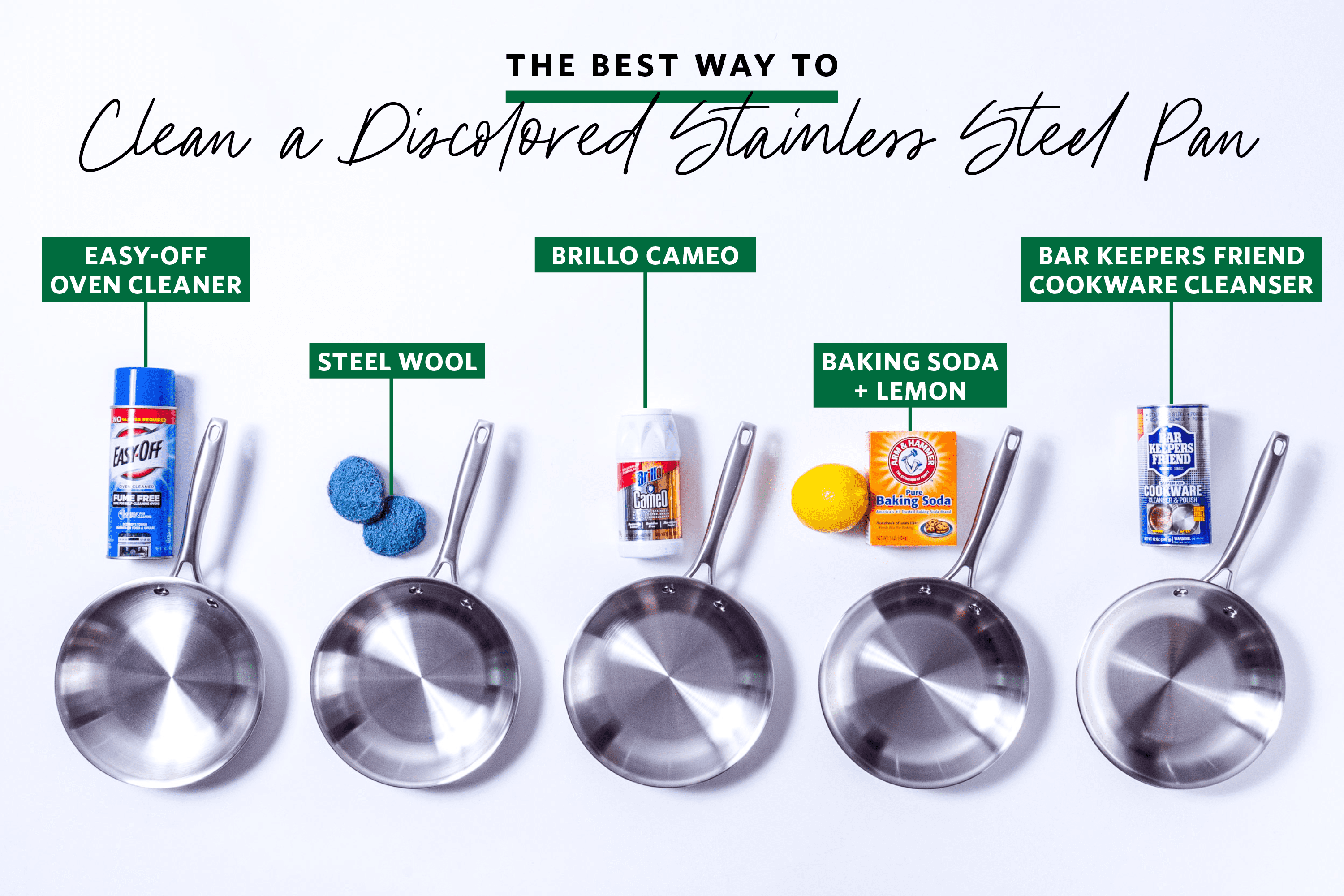
Baking Soda Paste
Baking soda is a mild abrasive that lifts oil stains easily. Make a paste by mixing baking soda with a little water. Apply the paste to the stained areas. Let it sit for 10 to 15 minutes to break down the oil.
Use a soft cloth or sponge to scrub gently. Rinse the cookware with warm water. Repeat if needed for stubborn stains. Baking soda also deodorizes and brightens stainless steel surfaces.
Vinegar Soak
White vinegar dissolves oil and grease quickly. Pour enough vinegar into the cookware to cover the stains. Let it soak for 30 minutes to an hour. The acid in vinegar cuts through the oil build-up.
After soaking, scrub the surface lightly with a sponge. Rinse thoroughly with water. Vinegar leaves a streak-free shine and removes any oily residue. It is safe and natural for regular cleaning.
Credit: www.thekitchn.com
Commercial Cleaners
Commercial cleaners offer a quick way to remove oil stains from stainless steel cookware. These products are designed to tackle tough grease and leave surfaces shiny. Choosing the right cleaner and applying it safely is important. This ensures the cookware stays in good condition without damage.
Choosing The Right Product
Select a cleaner made specifically for stainless steel. Avoid harsh chemicals like bleach or ammonia. Look for non-abrasive formulas that remove oil but do not scratch. Check labels for safety instructions and ingredient lists. Products with natural ingredients can be gentler and effective. Pick a cleaner with good reviews for stain removal.
Safe Application Techniques
Apply the cleaner to a soft cloth or sponge, not directly to the cookware. Rub gently in the direction of the steel grain. Rinse the surface with warm water after cleaning. Dry the cookware with a soft towel to avoid water spots. Test the cleaner on a small area first to check for reactions. Wear gloves to protect your skin during use.
Removing Stubborn Stains
Stubborn oil stains on stainless steel cookware can be tough to remove. These marks often stick after cooking greasy foods. Cleaning them quickly helps keep your cookware shiny and fresh. Simple household items work well to lift these tough stains. Below are easy methods to try at home.
Using Lemon And Salt
Cut a lemon in half and sprinkle salt on the stained area. Rub the lemon gently in circles over the stain. The acid in lemon breaks down oil, while salt scrubs away grime. Let it sit for five minutes before rinsing with warm water. Repeat if necessary. This natural method is safe and eco-friendly.
Applying Cream Cleanser
Choose a mild cream cleanser designed for stainless steel. Apply a small amount to a damp cloth. Gently rub the stained spots using circular motions. The cleanser helps dissolve oil without scratching the surface. Rinse the cookware thoroughly and dry with a soft cloth. This method restores shine and removes residue effectively.
Preventing Future Oil Stains
Preventing oil stains on stainless steel cookware saves time and effort. Clean cookware lasts longer and looks better. Simple habits help keep your pots and pans spotless. Follow easy steps to protect your cookware from stains.
Proper Cookware Maintenance
Clean cookware after every use. Use warm water and mild soap for washing. Avoid harsh scrubbers that scratch the surface. Dry your cookware thoroughly to stop water spots. Store cookware in a dry place. Regular care keeps your pans shiny and stain-free.
Avoiding High Heat Residue
Cook on medium or low heat to prevent oil burns. High heat can cause oil to stick and stain. Use oils with high smoke points for frying. Preheat cookware before adding oil to reduce residue. Adjust heat to keep your cookware clean and smooth.
Drying And Polishing Tips
After removing oil stains from stainless steel cookware, drying and polishing are important steps. These steps help keep the cookware looking new and shiny. Proper drying stops water spots and streaks. Polishing brings out the bright, smooth finish of the steel.
Using Soft Cloths
Use soft cloths to dry and polish stainless steel cookware. Microfiber or cotton cloths work best. They do not scratch the surface. Avoid rough or abrasive materials that can damage the finish. Gently wipe the cookware in the direction of the steel grain. This helps remove any leftover moisture and oils. Soft cloths also prevent streaks and water marks.
Maintaining Shine
To maintain shine, polish cookware regularly after cleaning. Use a small amount of stainless steel cleaner or olive oil. Apply it with a soft cloth and rub gently. This restores the natural shine and removes dull spots. Polishing also creates a protective layer that helps repel future stains. Regular care keeps your cookware looking clean and new for longer.

Credit: www.reddit.com
Frequently Asked Questions
How Do I Remove Oil Stains From Stainless Steel Cookware?
To remove oil stains, apply baking soda and water paste on the stain. Scrub gently with a soft cloth. Rinse well with warm water and dry with a clean towel.
Can Vinegar Effectively Clean Oil Stains On Stainless Steel?
Yes, white vinegar cuts through oil stains. Spray vinegar on the stain, let it sit 10 minutes, then wipe with a soft cloth. Rinse and dry the cookware afterward.
Is Baking Soda Safe For Stainless Steel Cookware Cleaning?
Baking soda is safe and gentle for stainless steel. It removes oil stains without scratching. Use a paste with water, scrub lightly, then rinse thoroughly for best results.
How Often Should I Clean Oil Stains From Cookware?
Clean oil stains immediately after cooking. Frequent cleaning prevents buildup and maintains cookware shine. Wipe with warm soapy water and dry after each use.
Conclusion
Removing oil stains from stainless steel cookware is easier than you think. Use common household items like baking soda and vinegar. Apply gentle scrubbing with a soft cloth for best results. Avoid harsh chemicals that can damage the surface. Regular cleaning helps keep your cookware shiny and safe.
Clean cookware lasts longer and looks great in your kitchen. Try these simple steps to maintain your pots and pans. Enjoy cooking with spotless, fresh cookware every day. Easy care makes a big difference!

Hello, This is Annie Walker, a 38-year-old blogger, founder, and editor of Cookware Guider from NY, USA. I am a cookware fanatic and passionate cooker. I love to cook with different types of cooking appliances (example: all types of cookware, rice cookers, slow cookers, etc) almost every day in my kitchen. I love to share my experience with my readers in my blog. Also, I enjoy helping people to solve their problems through my website. You can follow me on Twitter & Pinterest. To know details about my blog please check the about us page.