
Are you thinking about upgrading your kitchen tools and wondering if Granitestone cookware is the right choice for you? Choosing the perfect cookware can feel overwhelming, especially with so many options out there.
You want something that heats evenly, lasts long, and is easy to clean. Granitestone promises all that and more, but does it really deliver? Keep reading to discover the truth about Granitestone cookware and find out if it fits your cooking style and needs.
Your next great meal might depend on it!
Granite Stone Cookware Features
Granite Stone cookware offers a range of features that appeal to many home cooks. It combines style, convenience, and practical benefits in one set. Understanding the key features helps decide if this cookware suits your kitchen needs. Below, the main features of Granite Stone cookware are explained in detail to give a clear picture of what to expect.
Material Composition
Granite Stone cookware is made from a blend of materials designed to provide even heating and durability. The core typically consists of aluminum, which is lightweight and an excellent heat conductor. This helps the cookware heat up quickly and distribute heat evenly across the surface.
On top of the aluminum base, there is a layer that looks like granite. This is actually a coating designed to imitate the appearance of real granite. It adds a strong, protective layer that also contributes to the cookware’s non-stick properties.
Key points about the material composition:
- Aluminum core for fast, even heating
- Granite-look coating for durability and style
- Usually has a heavy base to prevent warping
- Handles often made of heat-resistant materials for safety
| Material | Function | Benefit |
|---|---|---|
| Aluminum Core | Heat conduction | Quick and even cooking |
| Granite-like Coating | Surface protection | Durable and attractive finish |
| Heat-resistant Handles | Safe handling | Comfort and safety while cooking |
The combination of these materials makes Granite Stone cookware a practical choice for everyday cooking tasks.
Non-stick Coating
One of the most praised features of Granite Stone cookware is its non-stick coating. This coating allows food to cook without sticking to the surface, making cooking and cleaning much easier. The coating is usually free from harmful chemicals like PFOA, which adds safety for health-conscious users.
Benefits of the non-stick coating:
- Easy food release for healthier cooking with less oil
- Simple cleaning, often requiring just a soft sponge
- Scratch resistance helps maintain the surface quality
- Non-toxic and safe for everyday use
Granite Stone’s non-stick layer is made from multiple layers of coating. This layered approach improves durability and prevents peeling or flaking. It also helps distribute heat more evenly, reducing hot spots that can burn food.
Users report less need to soak or scrub the cookware after use. This saves time and effort in the kitchen. The coating also works well with various types of cooking utensils, especially those made from wood or silicone, to keep the surface intact longer.
Durability And Scratch Resistance
Durability is a critical factor in cookware choice. Granite Stone cookware is designed to resist scratches and maintain its look over time. The strong granite-like coating plays a major role in this aspect. It protects the cookware from everyday wear and tear caused by stirring, flipping, or using metal utensils.
Scratch resistance is enhanced by the multi-layer coating system. This system creates a tough surface that can handle regular use without damage. While it is best to avoid metal tools to prolong life, Granite Stone cookware tolerates light metal contact better than many other non-stick pans.
Durability highlights:
- Multi-layer coating improves surface toughness
- Heavy base reduces warping and damage
- Handles firmly attached for long-lasting use
- Resistance to chipping and peeling under normal use
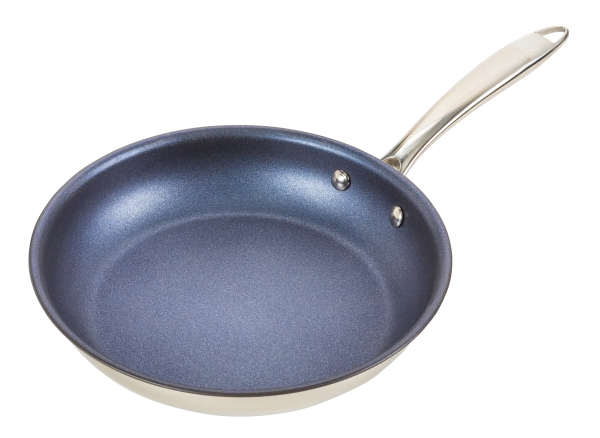
Users often note that the cookware keeps its non-stick quality after months of use. The cookware’s ability to withstand scratches and maintain even heating makes it a reliable option for busy kitchens.
Credit: www.consumerreports.org
Performance In Cooking
Performance in cooking is a key factor when choosing cookware. Granitestone cookware offers a blend of design and functionality that affects how food cooks. This section explores how well Granitestone performs in heat distribution, cooking versatility, and ease of cleaning. Understanding these aspects helps decide if this cookware fits daily cooking needs.
Heat Distribution
Granitestone cookware is known for its ability to spread heat evenly across the cooking surface. This even heat distribution prevents hot spots, which can cause food to burn or cook unevenly.
- Material: The cookware has a heavy aluminum core that conducts heat well.
- Coating: Its granite-like coating helps keep the heat steady and reduces sticking.
- Base design: The thick base ensures heat is spread uniformly.
Here is a simple table showing heat conduction comparison:
| Cookware Type | Heat Distribution | Hot Spots Risk |
|---|---|---|
| Granitestone | High | Low |
| Regular Non-stick | Medium | Medium |
| Cast Iron | Medium | High |
Even heat means food cooks faster and better. It also helps save energy and reduces the chance of burning food. This makes Granitestone cookware a reliable choice for many cooking styles.
Cooking Versatility
Granitestone cookware can handle many cooking tasks. It works well on different heat sources such as gas, electric, and ceramic stoves.
- Types of cooking: Sautéing, frying, simmering, and boiling are all possible.
- Oven safe: Some pieces can go into the oven, usually up to 350°F (177°C).
- Suitable foods: From eggs and pancakes to meats and vegetables.
The cookware’s non-stick surface allows cooking with less oil or butter. This helps make healthier meals. It also means delicate foods like fish or eggs won’t stick or break apart.
Here is a list of cooking methods supported by Granitestone:
- Stir-frying
- Searing
- Sautéing
- Simmering
- Braising
Its lightweight design makes it easy to handle during cooking. Overall, Granitestone covers most cooking needs in a home kitchen.
Ease Of Cleaning
Cleaning Granitestone cookware is simple and quick due to its non-stick coating. Food particles do not stick strongly, which reduces scrubbing time.
- Hand wash recommended: Use warm soapy water and a soft sponge.
- Dishwasher safe: Some pieces can go in the dishwasher but hand washing extends life.
- Stain resistance: The surface resists stains and discoloration.
Here are tips for cleaning:
- Allow cookware to cool before washing.
- Use mild detergent and avoid abrasive pads.
- Dry immediately to prevent water spots.
Granitestone cookware does not require special cleaners. Its surface stays smooth and clean with basic care. This makes it a low-maintenance option for busy kitchens.
Health And Safety Aspects
Health and safety are crucial factors in choosing the right cookware. Granitestone cookware is often praised for its safety features. Many users ask if it is safe to use every day without health risks. This section explores the health and safety aspects of Granitestone cookware to help understand its benefits and any concerns.
Non-toxic Properties
Granitestone cookware is known for its non-toxic composition. It does not release harmful chemicals or toxins during cooking. This is important because some cookware can emit dangerous substances when heated.
Key non-toxic features of Granitestone cookware include:
- No PFOA: Granitestone does not contain perfluorooctanoic acid, a toxic chemical found in some non-stick pans.
- No PTFE: It is free from polytetrafluoroethylene, which can break down at high temperatures and cause health issues.
- Lead and Cadmium Free: The materials used do not contain heavy metals harmful to human health.
Here is a simple table comparing Granitestone with traditional non-stick cookware:
| Feature | Granitestone Cookware | Traditional Non-Stick Cookware |
|---|---|---|
| PFOA | Absent | May be present |
| PTFE | Absent | Present |
| Heavy Metals | Free from lead and cadmium | Possible presence |
Overall, the non-toxic nature of Granitestone cookware helps reduce health risks linked to toxic chemical exposure.
Chemical-free Surface
The surface of Granitestone cookware is designed to be chemical-free and safe for cooking. It uses a natural stone-derived coating that offers durability without harmful substances.
Benefits of the chemical-free surface include:
- Scratch Resistance: The coating resists scratches, so it does not peel or chip easily.
- Non-Stick Performance: Naturally non-stick without using chemical additives.
- Easy Cleaning: Food does not stick, making cleaning faster and safer.
- Heat Stability: The surface withstands high temperatures without releasing toxic fumes.
Cooking with chemical-free surfaces helps avoid contamination of food. It also reduces the risk of allergic reactions or irritations caused by synthetic coatings.
This cookware is suitable for everyday cooking. It maintains its properties even after repeated use. The chemical-free surface is a strong point for health-conscious users.
Suitability For Various Diets
Granitestone cookware fits well with many types of diets. Its safe, non-toxic build supports healthy eating habits.
How it suits different diets:
- Vegetarian and Vegan: No cross-contamination from harmful chemicals preserves natural food flavors.
- Gluten-Free: Easy to clean surfaces reduce the risk of gluten residue.
- Low-Fat Diets: Non-stick surfaces require less oil, supporting fat control.
- Allergy-Friendly: Chemical-free materials lower allergy risks related to cookware coatings.
Here is a quick overview table:
| Diet Type | Benefits of Granitestone Cookware |
|---|---|
| Vegetarian/Vegan | Preserves natural flavors, non-toxic materials |
| Gluten-Free | Easy cleaning reduces cross-contact risks |
| Low-Fat | Non-stick surface needs less oil |
| Allergy-Friendly | Chemical-free, lowers allergic reactions |
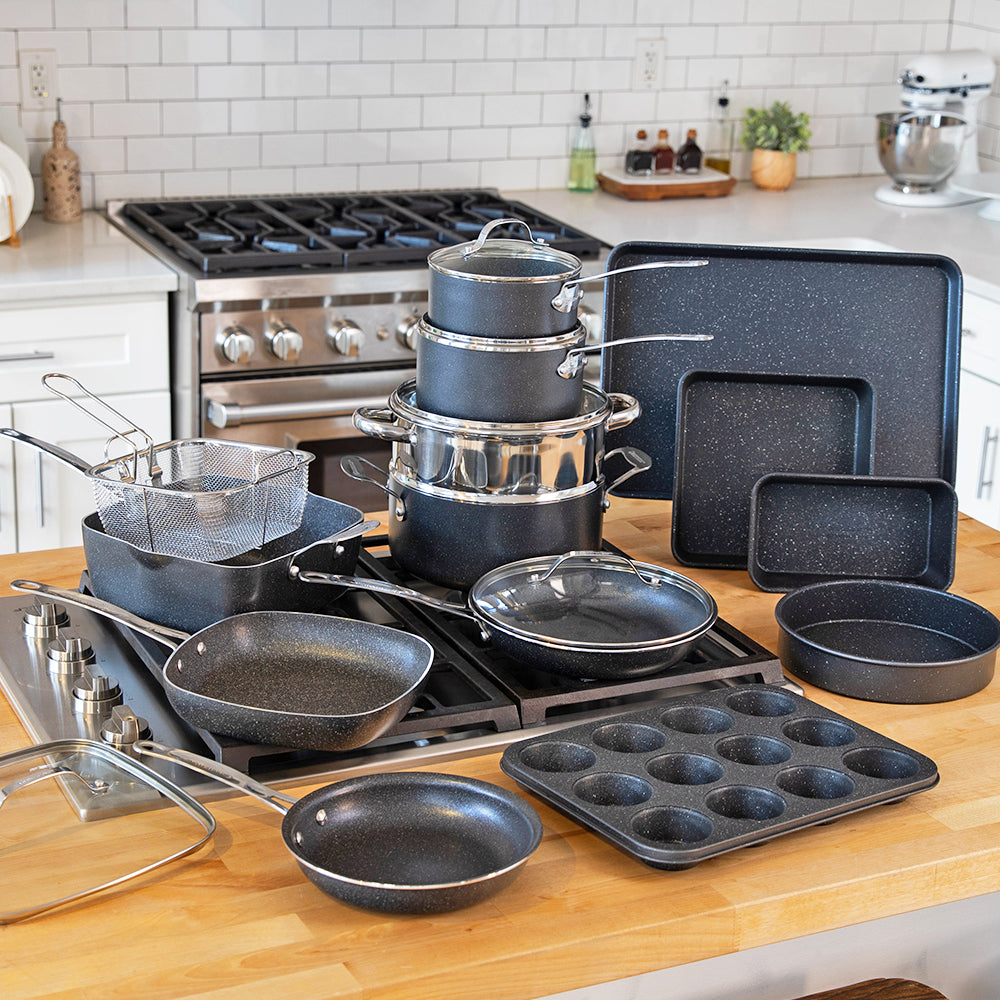
Granitestone cookware supports healthy cooking for diverse dietary needs. Its health and safety features make it a trusted choice for many.
Credit: granitestone.com
Comparing Granitestone To Other Cookware
Choosing the right cookware affects cooking ease and food taste. Granitestone cookware stands out with its stone-derived non-stick coating. Comparing Granitestone to other cookware helps you see its strengths and limits. This guide looks at how Granitestone matches up against traditional non-stick pans, cast iron, and stainless steel. Also, it covers price and value to help you make a smart choice.
Versus Traditional Non-stick Pans
Granitestone cookware uses a stone-derived non-stick surface that feels durable and smooth. Traditional non-stick pans often use PTFE coatings like Teflon, which can wear out faster. Granitestone claims better scratch resistance and longer use without peeling.
- Durability: Granitestone resists scratches and sticks less over time.
- Heat Distribution: Both heat evenly, but Granitestone may keep heat steadier due to its thicker base.
- Cleaning: Granitestone cleans easily without scrubbing hard.
- Safety: Granitestone uses PFOA-free coatings, reducing health concerns common in older non-stick pans.
Here is a quick comparison:
| Feature | Granitestone | Traditional Non-Stick |
|---|---|---|
| Coating Type | Stone-derived non-stick | PTFE (e.g., Teflon) |
| Scratch Resistance | High | Medium |
| Heat Distribution | Even | Even |
| Cleaning Ease | Very Easy | Easy |
| Health Safety | PFOA-free | May contain PFOA in older versions |
Versus Cast Iron And Stainless Steel
Cast iron and stainless steel are popular for their strength and cooking style. Granitestone offers a different experience with easy non-stick cooking and less maintenance.
Cast iron heats well and lasts for decades but needs seasoning and careful cleaning. Stainless steel is durable and great for searing but food may stick without enough oil.
- Maintenance: Granitestone needs simple washing; cast iron requires seasoning.
- Weight: Granitestone is lighter than cast iron, easier to handle.
- Non-stick: Granitestone has a smooth non-stick surface; cast iron and stainless steel do not.
- Heat Tolerance: Cast iron holds very high heat; Granitestone suits medium heat to protect coating.
Below is a side-by-side look:
| Feature | Granitestone | Cast Iron | Stainless Steel |
|---|---|---|---|
| Weight | Light | Heavy | Medium |
| Non-stick Surface | Yes | No | No |
| Maintenance | Low | High | Medium |
| Heat Capacity | Medium | Very High | High |
| Durability | Good | Excellent | Excellent |
Price And Value
Granitestone cookware offers good value for buyers wanting non-stick features with durability. Its price sits between budget non-stick pans and premium cast iron or stainless steel sets.
Consider these points about price and value:
- Cost: Granitestone sets cost less than high-end stainless steel but more than basic Teflon pans.
- Longevity: The stone coating lasts longer than cheap non-stick, reducing replacement costs.
- Ease of Use: Saves time cleaning and cooking, offering practical value.
- Health: PFOA-free coating adds safety without extra cost.
Here is a rough price range overview:
| Cookware Type | Typical Price Range | Value Note |
|---|---|---|
| Granitestone | $60 – $150 (per set) | Good balance of price and durability |
| Traditional Non-Stick | $30 – $100 (per set) | Lower price but shorter lifespan |
| Cast Iron | $50 – $200 (per piece) | Expensive but lasts very long |
| Stainless Steel | $100 – $300 (per set) | High upfront cost, very durable |
User Experience And Reviews
Granitestone cookware has gained attention for its unique granite-like nonstick coating and stylish design. Many users share their honest experiences, which help new buyers understand the product’s strengths and weaknesses. This section highlights real user reviews and feedback to give a clearer picture of how Granitestone performs daily. Understanding these insights helps decide if this cookware fits your kitchen needs.
Common Praises
Many users appreciate Granitestone cookware for its easy-to-clean surface and attractive look. The nonstick coating allows cooking with less oil, which appeals to health-conscious cooks. Users often mention that food slides off smoothly, making cooking and cleaning faster.
- Nonstick efficiency: Food rarely sticks, even with delicate items like eggs and fish.
- Even heat distribution: Most users say the pans heat evenly, preventing hot spots.
- Durable handles: Comfortable and secure grip adds safety during cooking.
- Lightweight design: Easy to lift and maneuver compared to heavier cookware sets.
- Stylish appearance: The granite-like finish looks modern and fits many kitchen styles.
| Feature | User Feedback |
|---|---|
| Nonstick Coating | Highly effective, easy release of food |
| Handle Comfort | Secure and heat-resistant |
| Cleaning | Simple, requires minimal scrubbing |
Frequent Complaints
Some users report issues with Granitestone cookware after months of use. The most common complaints relate to the coating wearing off or scratches appearing. This often happens if metal utensils are used or if the cookware is cleaned with abrasive materials.
- Coating durability: Some users notice the nonstick layer peeling after regular use.
- Scratches: Using sharp utensils can easily damage the surface.
- Heat resistance: A few users mention the handles can get warm during cooking.
- Not dishwasher safe: Cleaning in a dishwasher may reduce the lifespan of the coating.
Below is a summary of common problems reported by users:
| Issue | Frequency | Impact |
|---|---|---|
| Nonstick peeling | Moderate | Reduces cooking efficiency |
| Surface scratches | Common | Damages appearance and coating |
| Handle heating | Less frequent | Safety concern |
Longevity In Real Use
Granitestone cookware’s lifespan depends on care and usage. Many users report good performance for 1 to 2 years with gentle use. Proper cleaning and avoiding metal tools help keep the nonstick surface intact longer.
Users who follow care tips notice less wear and sustained nonstick ability. Here are key factors affecting longevity:
- Use only silicone, wood, or plastic utensils.
- Wash by hand with soft sponges.
- Avoid overheating pans empty.
- Store carefully to prevent scratches.
A typical lifespan overview based on user reports:
| Usage Style | Expected Lifespan | Notes |
|---|---|---|
| Gentle, careful use | 2+ years | Maintains coating and performance |
| Moderate use, some metal utensils | 1-2 years | Some coating wear visible |
| Rough use, dishwasher cleaning | Less than 1 year | Coating deteriorates quickly |
Regular maintenance and careful handling help Granitestone cookware last longer. Users valuing durability often combine good care with gentle cooking practices.
Maintenance Tips
Granitestone cookware offers a durable and non-stick cooking experience. To keep it working well and looking good, proper maintenance is key. Simple care steps help the cookware last longer and perform better. Below are important maintenance tips to protect your Granitestone pots and pans.
Cleaning Guidelines
Cleaning Granitestone cookware properly preserves its non-stick surface and appearance. Avoid harsh scrubbing or abrasive cleaners that can damage the coating. Follow these steps for safe cleaning:
- Let the cookware cool before washing to prevent warping.
- Use warm water and mild dish soap for regular cleaning.
- Clean with a soft sponge or cloth; avoid steel wool or rough pads.
- For stuck-on food, soak the pan in warm soapy water for 10-15 minutes.
- Rinse thoroughly to remove all soap residues.
- Dry the cookware completely with a soft towel to prevent water spots.
Stubborn stains or residues can be removed by making a paste of baking soda and water. Gently rub the paste on the surface and rinse well. Avoid using bleach or strong chemical cleaners, as they damage the coating.
| Do | Don’t |
|---|---|
| Use mild dish soap | Use abrasive cleaners |
| Clean with soft sponges | Scrub with steel wool |
| Soak for stuck food | Wash while hot |
| Dry fully after washing | Leave wet or damp |
Storage Advice
Proper storage keeps Granitestone cookware safe from scratches and damage. Store the pieces in a dry, cool place away from direct sunlight. Follow these tips to maintain your cookware’s condition:
- Stack pans carefully by placing a soft cloth or paper towel between each item.
- Use pan protectors or silicone mats to prevent scratches.
- Avoid piling heavy items on top of the cookware.
- Hang pans by their handles if your kitchen has hooks or racks.
- Store lids separately or place them upside down on the pans.
Keeping the cookware dry before storage prevents rust on metal parts and protects the coating. Check the storage area for humidity and avoid damp cabinets. Proper storage helps keep the non-stick surface intact and makes the cookware ready for use every time.
Avoiding Damage
Protecting Granitestone cookware from damage keeps it working well longer. Avoid actions that can harm the non-stick coating or the pan’s body. Use these guidelines to prevent damage:
- Do not use metal utensils; prefer wooden, silicone, or plastic tools.
- Avoid cooking on very high heat, as it can wear out the coating.
- Do not drop or bang the cookware on hard surfaces.
- Allow the pan to heat slowly before adding food or oil.
- Do not use the cookware in the oven beyond the manufacturer’s recommended temperature.
- Do not use sharp knives or cut food inside the pan.
Following these tips prevents scratches, peeling, and warping. Damaged cookware loses its non-stick benefits and may become unsafe. Handle each piece gently and keep it away from harsh conditions to extend its lifespan.

Credit: www.amazon.com
Frequently Asked Questions
Is Granitestone Cookware Non-stick And Durable?
Yes, Granitestone cookware features a strong non-stick coating. It offers durability and scratch resistance for everyday cooking. This ensures easy food release and simple cleaning, making it a reliable kitchen choice.
Can Granitestone Cookware Be Used On All Stovetops?
Granitestone cookware works well on gas, electric, and ceramic stovetops. However, it is not compatible with induction cooktops. Always check the product details to confirm stovetop compatibility before purchase.
Is Granitestone Cookware Safe For Healthy Cooking?
Yes, Granitestone cookware is free from harmful chemicals like PFOA and PTFE. Its non-stick surface requires less oil, promoting healthier cooking with reduced fat content.
How Easy Is It To Clean Granitestone Cookware?
Cleaning Granitestone cookware is simple and quick. Its non-stick surface prevents food from sticking, allowing easy hand washing with mild detergent. Most pieces are also dishwasher safe for added convenience.
Conclusion
Granitestone cookware offers good durability and easy cleaning. It heats evenly and cooks food well. The non-stick surface helps reduce oil use. Some users find it affordable for daily cooking. It works best with gentle utensils to avoid scratches. Overall, it suits those who want simple, reliable cookware.
Not perfect, but a solid choice for many kitchens. Consider your cooking style before buying. This cookware meets basic needs without extra fuss. Worth trying if you want practical pots and pans.

Hello, This is Annie Walker, a 38-year-old blogger, founder, and editor of Cookware Guider from NY, USA. I am a cookware fanatic and passionate cooker. I love to cook with different types of cooking appliances (example: all types of cookware, rice cookers, slow cookers, etc) almost every day in my kitchen. I love to share my experience with my readers in my blog. Also, I enjoy helping people to solve their problems through my website. You can follow me on Twitter & Pinterest. To know details about my blog please check the about us page.