
When it comes to choosing cookware, you want the best for your kitchen and your health. But with so many options, it’s easy to get confused.
Is stainless steel cookware better than ceramic? You might be wondering which one will make your cooking easier, safer, and tastier. You’ll discover the real differences between these two popular materials. By the end, you’ll know exactly which cookware suits your needs and helps you create delicious meals with confidence.
Keep reading to find out which one should be on your stove right now.

Credit: www.carawayhome.com
Stainless Steel Cookware Basics
Stainless steel cookware is a popular choice in many kitchens. It offers a blend of strength, style, and performance. Understanding its basics helps you decide if it suits your cooking needs.
This section covers the key features of stainless steel cookware. Learn about its material, durability, heat behavior, and care tips.
Material Composition
Stainless steel cookware is made from a mix of metals. The main part is iron with added chromium and nickel. Chromium makes the surface shiny and rust-resistant. Nickel improves strength and corrosion resistance. Some pans have layers of aluminum or copper inside. These layers help spread heat evenly during cooking.
Durability And Longevity
This cookware is very strong and lasts a long time. It resists dents, scratches, and rust. It does not chip or peel like some other cookware. Proper use and care can make it last for decades. It handles high heat well without damage.
Heat Conductivity
Stainless steel alone does not conduct heat well. That can cause hot spots that burn food. Many pans include an aluminum or copper core to fix this. These metals spread heat quickly and evenly. This helps cook food uniformly and saves energy.
Maintenance And Care
Cleaning stainless steel is simple but important. Use warm water, soap, and a soft sponge. Avoid harsh scrubbers that can scratch the surface. Stains and food marks can be removed with baking soda paste. Stainless steel is dishwasher safe but hand washing keeps it shiny longer.

Credit: www.360cookware.com
Ceramic Cookware Essentials
Ceramic cookware has gained popularity for its unique qualities. It offers a different cooking experience than stainless steel. Understanding its basics helps you decide if it suits your kitchen.
From material types to cleaning tips, knowing these essentials is important. It affects how you cook and care for your pots and pans.
Material Types
Ceramic cookware usually has a metal base coated with ceramic. Some are fully ceramic without metal. The coating is made from natural minerals baked at high heat. This makes the surface smooth and hard.
Different brands use different ceramic blends. Some coatings last longer than others. Check for lead-free and non-toxic labels for safety.
Non-stick Properties
Ceramic cookware is naturally non-stick without chemicals like Teflon. Food slides off easily, reducing oil use. This makes cooking healthier and cleaning simpler. The non-stick effect may reduce over time. Avoid metal utensils to protect the surface.
Heat Distribution
Ceramic cookware heats up quickly and evenly. This helps food cook uniformly. Some ceramic pans lose heat fast when taken off the stove. They may not hold heat as well as stainless steel. This is good for delicate cooking that needs gentle heat.
Cleaning And Upkeep
Ceramic cookware is easy to clean with warm water and mild soap. Avoid abrasive scrubbers to keep the coating safe. Some ceramic pots are dishwasher safe, but hand washing extends their life. Check for cracks or chips regularly and replace if needed.
Performance Comparison
Comparing stainless steel and ceramic cookware helps find the best fit for your kitchen. Performance matters most when choosing cookware. This section breaks down how each type works in cooking.
Cooking Efficiency
Stainless steel heats up quickly and spreads heat evenly. It works well on all stovetops, including induction. Ceramic heats slower but cooks food gently. It is best for low to medium heat cooking. Stainless steel is better for fast cooking tasks.
Heat Retention
Stainless steel holds heat longer after removing from heat source. This helps keep food warm on the plate. Ceramic loses heat faster but cools evenly. It prevents hot spots and burning. Both have good heat retention but differ in speed.
Food Release
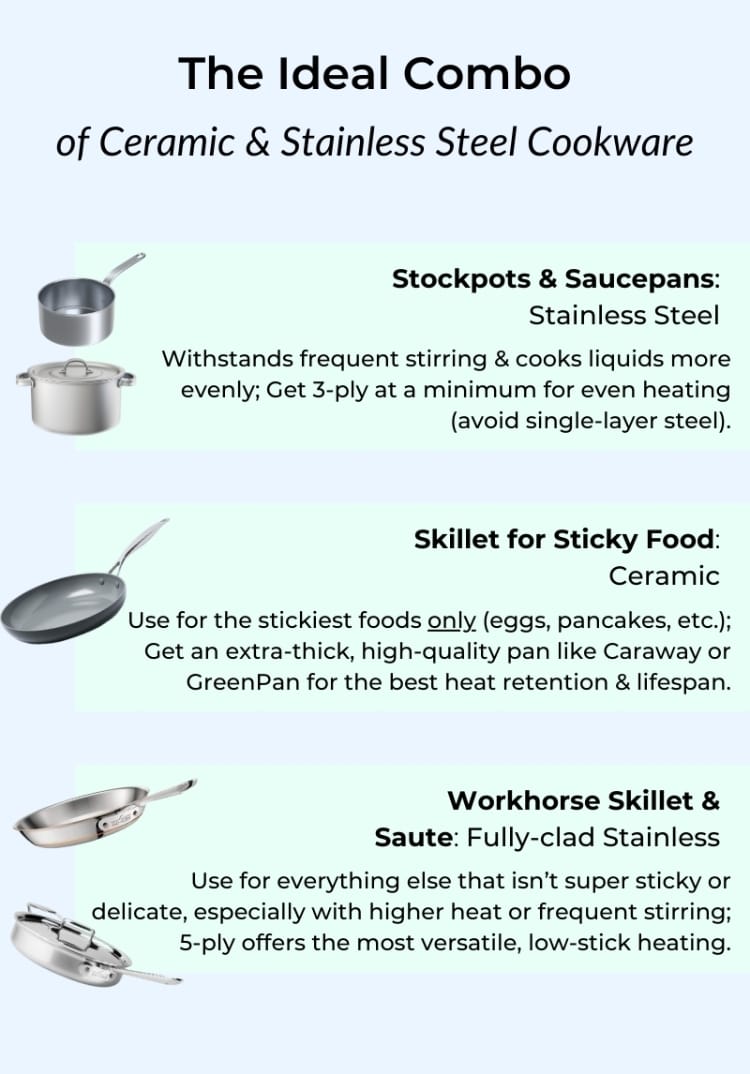
Ceramic has a natural non-stick surface. Food slides off easily with little oil. Stainless steel tends to stick without enough oil or butter. It requires careful cooking and preheating. Ceramic is ideal for sticky foods like eggs or pancakes.
Suitability For Different Cooking Methods
Stainless steel is versatile for searing, frying, and boiling. It can go from stove to oven safely. Ceramic is best for simmering, steaming, and slow cooking. It is not ideal for high heat or searing. Choose cookware that suits your cooking style.
Health And Safety Factors
Health and safety are key when choosing cookware. The materials used can affect food quality and your well-being. Stainless steel and ceramic cookware have different impacts on health and safety. Understanding these differences helps you pick the best for your kitchen.
Chemical Leaching Risks
Ceramic cookware may contain coatings that can break down over time. This breakdown can release chemicals into your food. Some ceramics use lead or cadmium in their glazes, which are harmful. Stainless steel does not have these coatings. It is less likely to leach chemicals. This makes stainless steel safer for long-term use.
Non-toxicity
Stainless steel is a non-reactive material. It does not react with acidic or alkaline foods. This keeps your food free from unwanted tastes or toxins. Ceramic cookware is also often marketed as non-toxic. Pure ceramic is safe, but cheap or poor-quality ceramics may have toxic glazes. Choose high-quality ceramic to avoid health risks.
Allergen Considerations
Stainless steel cookware is hypoallergenic. It does not release allergens or irritants. Ceramic cookware is usually safe for those with allergies too. However, people sensitive to certain metals should check stainless steel grades. Nickel in some stainless steel may cause allergies in rare cases. Knowing your sensitivities can guide your choice.
Cost And Value
Cost and value are key points when choosing cookware. Both stainless steel and ceramic have different price tags and benefits. Understanding their costs helps you decide which fits your kitchen and budget best.
Initial Investment
Stainless steel cookware usually costs more at first. It has a strong build and good heat conduction. Ceramic cookware starts cheaper but prices vary by brand and quality. The initial price can impact your choice.
Longevity Vs Replacement
Stainless steel pots and pans last many years without much wear. They resist scratches and do not chip easily. Ceramic cookware can wear out faster. The coating may chip or crack with time. You might replace ceramic more often.
Warranty And Brand Reliability
Stainless steel brands often offer long warranties. This shows confidence in their product’s life. Ceramic brands have shorter warranties. Check brand reputation before buying. Reliable brands save money and stress over time.
Environmental Impact
Choosing cookware affects more than your kitchen. It impacts the planet too. Understanding the environmental impact helps make better choices. Stainless steel and ceramic cookware differ in how they affect nature.
Manufacturing Process
Stainless steel requires mining metals like iron and chromium. This process uses a lot of energy and water. It also creates pollution. Ceramic cookware is made from natural clay and minerals. It needs less energy to produce. The firing process causes some emissions but less than metal mining.
Recyclability
Stainless steel is highly recyclable. Factories melt old steel to make new products. This saves energy and reduces waste. Ceramic cookware is harder to recycle. Broken pieces often end up in landfills. Recycling ceramic needs special facilities not widely available.
Sustainability
Stainless steel lasts a long time. It resists rust and damage. This means less frequent replacement. Ceramic cookware can chip or crack easily. It may need to be replaced sooner. Using durable cookware reduces waste over time. Choosing long-lasting materials supports sustainability better.
User Experience And Preferences
User experience and personal preferences play a big role in choosing cookware. Both stainless steel and ceramic have unique qualities that affect how people use them in the kitchen. Comfort, look, and feel can make a big difference in daily cooking tasks.
Ease Of Use
Stainless steel heats up quickly and cooks food evenly. It is good for searing and browning meat. Cleaning can take more effort if food sticks to the surface. Ceramic cookware is non-stick, making it easier to cook eggs and pancakes. It cleans quickly with little scrubbing. Both types suit different cooking styles.
Aesthetic Appeal
Stainless steel has a shiny and modern look. It fits well in professional or classic kitchens. Ceramic comes in many colors and designs. It can brighten up the cooking space. The choice depends on the kitchen style and personal taste.
Weight And Handling
Stainless steel is usually heavier and feels solid in hand. It provides good control but may tire the wrist during long cooking. Ceramic cookware is lighter and easier to lift. It suits those who prefer light tools in the kitchen. Comfort during cooking is key for many users.
Credit: thegoodlifedesigns.com
Choosing The Right Cookware
Choosing the right cookware is important for every kitchen. It affects how food cooks and how easy cleaning will be. Different materials offer different benefits. Stainless steel and ceramic are popular choices. Each has strengths that suit different needs.
Cooking Style Considerations
Think about how you cook most often. Stainless steel works well for frying and searing. It heats quickly and keeps heat evenly. Ceramic cookware is good for gentle cooking. It prevents food from sticking without extra oil. Consider the types of meals you make regularly. This helps decide which material fits best.
Budget Constraints
Cookware prices vary widely. Stainless steel tends to cost more upfront. It lasts long and resists scratches. Ceramic cookware is often cheaper but may wear faster. Decide on an amount to spend. Choose cookware that fits your budget and lasts well.
Kitchen Setup And Storage
Check your kitchen space. Stainless steel cookware is usually heavier and takes more room. Ceramic pots and pans are lighter and easier to store. Consider how much storage you have. Pick cookware that fits your kitchen size and storage options.
Frequently Asked Questions
Is Stainless Steel Cookware Healthier Than Ceramic?
Stainless steel is non-reactive and doesn’t leach chemicals. Ceramic coatings are generally safe but can wear off over time. Both are healthy options if used and maintained correctly.
Which Cookware Heats Food More Evenly?
Stainless steel often heats unevenly unless it has an aluminum or copper core. Ceramic distributes heat more evenly but may heat slower. Quality construction matters for both types.
Does Stainless Steel Cookware Last Longer?
Yes, stainless steel cookware is highly durable and resistant to scratches and dents. Ceramic coatings can chip or wear down with frequent use, affecting longevity.
Is Ceramic Cookware Easier To Clean Than Stainless Steel?
Ceramic cookware usually has a non-stick surface, making cleaning easier. Stainless steel can require more effort to remove stuck-on food but is dishwasher safe.
Conclusion
Choosing between stainless steel and ceramic cookware depends on your needs. Stainless steel is strong and lasts long. It handles high heat well and does not chip. Ceramic cookware is easy to clean and looks nice. It heats evenly but can be fragile.
Both types have good and bad points. Think about your cooking style and budget. Pick what fits your kitchen best. Either way, good cookware makes cooking more fun.

Hello, This is Annie Walker, a 38-year-old blogger, founder, and editor of Cookware Guider from NY, USA. I am a cookware fanatic and passionate cooker. I love to cook with different types of cooking appliances (example: all types of cookware, rice cookers, slow cookers, etc) almost every day in my kitchen. I love to share my experience with my readers in my blog. Also, I enjoy helping people to solve their problems through my website. You can follow me on Twitter & Pinterest. To know details about my blog please check the about us page.