
If you’ve ever wondered where your Cuisinart stainless steel cookware is made, you’re not alone. Knowing the origin of your kitchen tools can give you confidence in their quality and durability.
Whether you’re a home chef or just love cooking, understanding where your cookware comes from can help you make smarter choices. Keep reading to discover the truth behind Cuisinart’s manufacturing process and what it means for your cooking experience.
Cuisinart Brand Origins
Cuisinart is a well-known name in kitchen appliances and cookware. The brand began in the late 1970s and quickly became popular for its quality and innovation. Many people trust Cuisinart stainless steel cookware for its durability and style. Understanding the brand’s origins helps explain why it remains a favorite in kitchens worldwide.
Cuisinart’s Beginning And Founding
Cuisinart was founded by Carl Sontheimer in 1971. He introduced the first food processor to the U.S. market. This product changed the way people cooked at home. The company started small but grew fast because of its smart design and ease of use.
Early Product Focus And Expansion
The initial focus was on food processors. Soon, Cuisinart added other kitchen tools and cookware. Stainless steel cookware became part of the lineup due to its strength and heat control. The brand’s goal was to offer reliable, affordable kitchen items for everyday cooks.
Where Cuisinart Cookware Is Made
Many Cuisinart products are made in China and other parts of Asia. The company works with factories that follow strict quality rules. Some components may come from different countries, but final assembly often happens in Asia.
Cuisinart also ensures the products meet safety and performance standards. This helps keep customer trust worldwide.
How Cuisinart Keeps Its Quality
- Strict quality control at factories
- Use of durable materials like stainless steel
- Regular testing for heat distribution and durability
- Continuous product improvements based on user feedback
Summary Of Cuisinart Brand Origins And Manufacturing
| Aspect | Details |
|---|---|
| Founder | Carl Sontheimer |
| Year Started | 1971 |
| First Product | Food Processor |
| Cookware Material | Stainless Steel |
| Main Manufacturing Locations | China, Asia |
| Quality Focus | Strict controls and testing |

Credit: www.amazon.com
Materials Used In Cookware
Cuisinart stainless steel cookware is known for its quality and durability. The materials used play a big role in how well the cookware performs. Understanding these materials helps you choose the right pots and pans for your kitchen. Let’s explore the main materials found in Cuisinart stainless steel cookware.
Stainless Steel Composition
Stainless steel is the primary material in Cuisinart cookware. It usually contains iron, carbon, and chromium. Chromium helps the steel resist rust and stains. The most common grade is 18/10 stainless steel, meaning 18% chromium and 10% nickel. This mix creates a strong, shiny, and non-reactive surface.
Aluminum Core
Cuisinart often uses an aluminum core inside the cookware. Aluminum spreads heat quickly and evenly. This core is sandwiched between stainless steel layers. It prevents hot spots and helps food cook better. The aluminum core is hidden inside, so it doesn’t touch food.
Base And Layering
The base of Cuisinart cookware usually has multiple layers. This is called clad construction. The layers include stainless steel on the outside and aluminum inside. This design makes the cookware strong and heats fast. It also works well on different stovetops, including induction.
Handles And Lids Material
Handles are made from stainless steel or heat-resistant materials. They stay cool during cooking. Lids are often tempered glass or stainless steel. Tempered glass lids let you see food while cooking. Stainless steel lids provide a tight fit for better heat retention.
| Material | Purpose | Benefits |
|---|---|---|
| Stainless Steel (18/10) | Outer surface and cooking area | Durable, rust-resistant, non-reactive |
| Aluminum Core | Heat distribution | Even heating, fast heat conduction |
| Tempered Glass Lids | Cover pots while cooking | See-through, heat resistant |
| Stainless Steel Handles | Grip and safety | Cool to touch, sturdy |
Manufacturing Locations
Manufacturing locations of Cuisinart stainless steel cookware play a key role in its quality and price. Knowing where these products are made helps buyers understand the production process and standards behind the brand. Cuisinart, a well-known kitchenware brand, uses multiple factories worldwide to produce its stainless steel cookware. These factories follow strict quality controls to keep product reliability high. The main manufacturing hubs include China and several other countries. Each location offers unique benefits in terms of materials, labor, and technology.
Factories In China
China is a major manufacturing base for Cuisinart stainless steel cookware. Many of the company’s products are made in Chinese factories, which have advanced equipment and skilled workers. These factories handle large-scale production while maintaining consistent quality.
- High production capacity: Factories in China can produce cookware in large volumes quickly.
- Cost efficiency: Lower labor and material costs help keep prices reasonable.
- Modern technology: Use of automated machines and quality control systems.
- Strict quality checks: Products undergo testing for durability and safety.
The Chinese factories manufacture various stainless steel cookware types, including multi-ply pots and pans with aluminum cores. These designs offer good heat distribution and durability. Materials used meet international standards to ensure food safety.
| Aspect | Details |
|---|---|
| Location | Multiple factories across eastern China |
| Production Scale | Large volume mass production |
| Quality Control | ISO certified processes |
| Materials | Food-grade stainless steel, aluminum cores |
Chinese factories allow Cuisinart to balance cost and quality effectively. This supports a wide range of cookware lines available globally.
Production In Other Countries
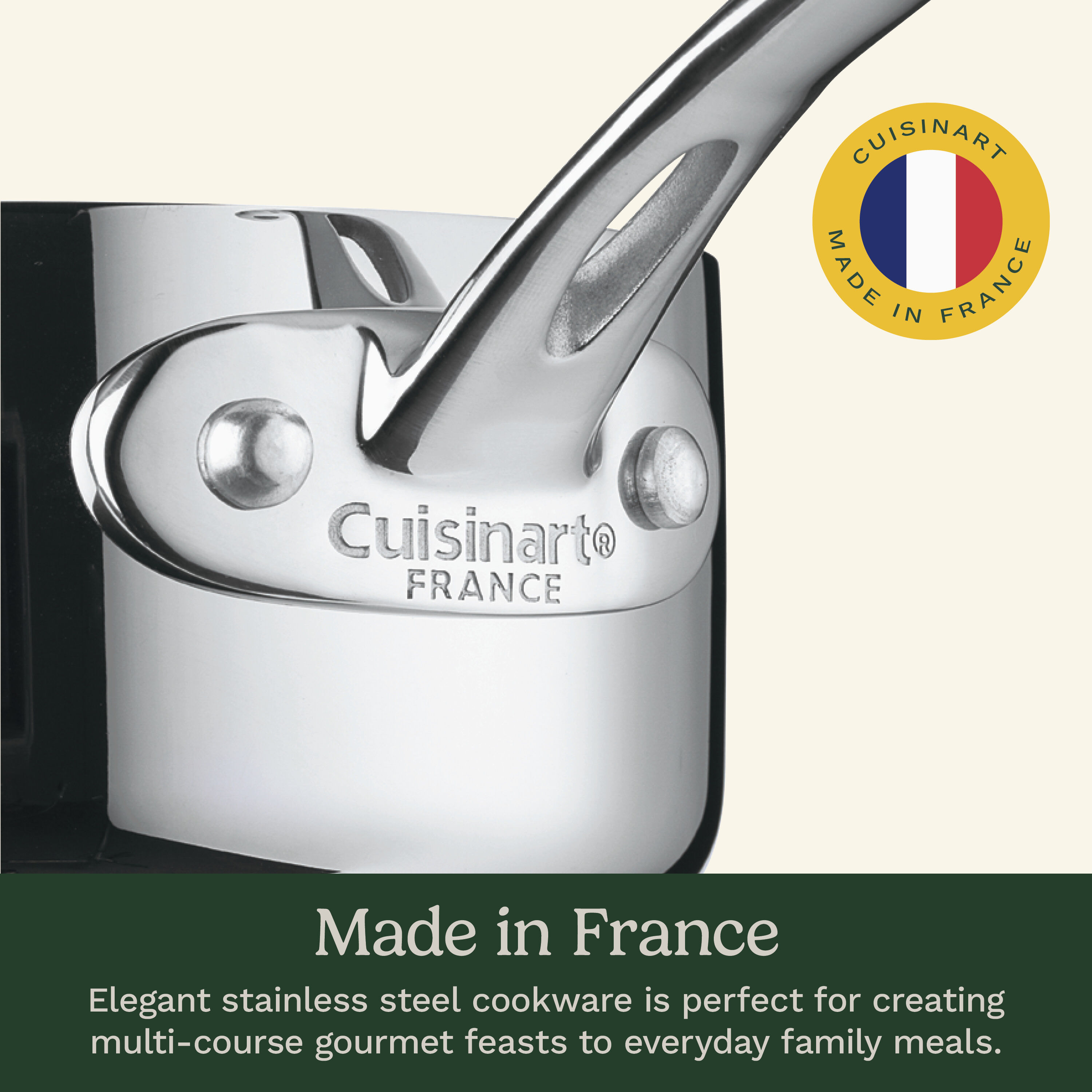
Cuisinart also produces stainless steel cookware in countries outside China. These locations contribute to product variety and meet different market needs. Factories in these countries often focus on special collections or premium lines.
- United States: Some high-end cookware is assembled or finished in the USA.
- Vietnam: Growing manufacturing hub for mid-range products.
- Thailand and Indonesia: Factories producing select cookware models.
- Europe: Limited production for local markets, emphasizing craftsmanship.
These international locations offer benefits such as closer proximity to certain markets and access to local materials. Quality standards remain high across all sites.
Here is a summary of production locations:
| Country | Role in Production | Key Features |
|---|---|---|
| USA | Assembly and finishing | Premium product lines, quality focus |
| Vietnam | Mid-range cookware production | Efficient manufacturing, cost-effective |
| Thailand/Indonesia | Manufacturing select models | Skilled labor, quality materials |
| Europe | Small-scale, local markets | Craftsmanship, tradition |
By spreading production across different countries, Cuisinart ensures diverse product options. Each location adds value through unique skills and resources.
Credit: www.cuisinart.com
Quality Control Standards
Quality control standards play a key role in the production of Cuisinart stainless steel cookware. These standards ensure every piece meets strict requirements for safety, durability, and performance. The company uses thorough testing methods to keep its cookware reliable and long-lasting.
Manufacturing Inspections
Each batch of Cuisinart stainless steel cookware undergoes detailed inspections during manufacturing. These inspections check for:
- Material consistency
- Proper assembly
- Surface finish quality
- Weight and balance
Inspectors use precise tools to detect defects early. This reduces the chance of faulty products reaching customers.
Performance Testing
Cuisinart tests cookware performance in simulated kitchen conditions. Tests include:
- Heat distribution analysis
- Durability under high temperatures
- Resistance to warping and scratching
- Handle strength and safety
These tests guarantee cookware works well during daily cooking tasks.
Material Quality Checks
The stainless steel used in Cuisinart cookware must meet high purity and composition standards. Quality checks involve:
| Test Type | Description | Purpose |
|---|---|---|
| Elemental Analysis | Measures the metal composition | Ensures corrosion resistance and durability |
| Surface Hardness Test | Checks resistance to scratches | Maintains cookware appearance |
| Thickness Measurement | Verifies uniform steel thickness | Supports even heat distribution |
Final Product Review
Before packaging, every cookware piece has a final review. This step includes:
- Visual inspection for flaws
- Handle fit and tightness checks
- Cleaning and polishing
- Packaging integrity verification
Only products passing all steps leave the factory.
Comparing Cuisinart Stainless Steel Cookware To Competitors
Cuisinart stainless steel cookware stands out for its quality and design. Many buyers want to know how it compares to other brands. Comparing helps find the best option for your kitchen needs.
Cuisinart Vs. All-clad: Material And Build Quality
Both brands use high-grade stainless steel. Cuisinart typically uses 18/10 stainless steel, which resists rust and corrosion well. All-Clad also uses 18/10 but often adds more layers for heat distribution.
| Feature | Cuisinart | All-Clad |
|---|---|---|
| Stainless Steel Grade | 18/10 | 18/10 |
| Number of Layers | 3-ply or 5-ply options | 5-ply and more |
| Heat Distribution | Good | Excellent |
Price Comparison: Value For Money
Cuisinart offers quality cookware at a lower price than All-Clad. This makes it a good choice for home cooks on a budget.
- Cuisinart: Affordable, great quality
- All-Clad: Premium price, professional level
Cuisinart balances cost and performance well.
Durability And Warranty
Cuisinart cookware is durable and built to last. The company provides a limited lifetime warranty on many products. All-Clad also offers a lifetime warranty but is known for slightly higher durability due to thicker layers.
- Cuisinart: Strong, backed by warranty
- All-Clad: More robust, longer-lasting
Design And Usability
Cuisinart designs focus on ease of use. Handles stay cool, and lids fit tightly. The cookware is dishwasher safe and oven safe to high temperatures.
All-Clad offers similar features but often with a more polished finish. Both brands have ergonomic handles and good balance.
Credit: www.cuisinart.com
Customer Insights On Origin And Quality
Many people want to know where Cuisinart stainless steel cookware is made. Customers care about the origin because it often relates to quality. Reviews and feedback show what real users think about the cookware’s performance and durability. Understanding customer insights helps buyers make smart choices.
Customer Views On Manufacturing Location
Most Cuisinart stainless steel cookware is made in China and some parts in other countries. Customers often mention this in reviews. Some buyers worry about quality when products are made abroad. Others trust Cuisinart because the brand controls quality well.
- Many users accept Chinese manufacturing due to good quality control.
- Some prefer products made in the USA or Europe for better trust.
- Brand reputation eases concerns about origin for many customers.
Quality Feedback From Users
Customer opinions show that Cuisinart cookware performs well despite its origin. Users praise the cookware for even heating and sturdy build. Some reports mention scratches after long use, but many find it lasts for years.
| Quality Aspect | Customer Feedback |
|---|---|
| Durability | Strong and lasts long for most users |
| Heat Distribution | Heats food evenly and quickly |
| Maintenance | Easy to clean, but needs gentle care |
Why Origin Matters To Customers
Origin connects to trust and quality. Some customers believe products made in certain countries last longer. Others look for ethical manufacturing and safety standards. Knowing the origin helps customers feel confident about their purchase.
- Assures product quality and safety
- Supports ethical buying decisions
- Helps set expectations for product life
Frequently Asked Questions
Where Is Cuisinart Stainless Steel Cookware Manufactured?
Cuisinart stainless steel cookware is primarily made in China. The brand partners with trusted factories there to ensure quality production. This allows Cuisinart to offer affordable, durable cookware while maintaining strict quality controls and design standards.
Is Cuisinart Cookware Made In The Usa?
Most Cuisinart stainless steel cookware is not made in the USA. However, some components or higher-end collections may have partial US involvement. The brand focuses on global manufacturing to balance cost and quality.
Are Cuisinart Stainless Steel Pots High Quality?
Yes, Cuisinart stainless steel cookware is known for its high quality. It uses durable materials and precision engineering. This ensures even heat distribution and long-lasting performance suitable for home and professional kitchens.
Does Cuisinart Ensure Quality In Overseas Production?
Cuisinart enforces strict quality control standards in its overseas factories. The brand conducts regular inspections to meet safety and durability requirements. This guarantees consistent product quality despite global manufacturing.
Conclusion
Cuisinart stainless steel cookware is mainly made in China. The brand focuses on quality materials and good design. Many users trust their products for everyday cooking. The cookware offers durability and even heat distribution. It suits both beginners and skilled cooks.
Knowing the origin helps you make smart choices. You can enjoy cooking with confidence and style. Overall, Cuisinart balances quality and affordability well.

Hello, This is Annie Walker, a 38-year-old blogger, founder, and editor of Cookware Guider from NY, USA. I am a cookware fanatic and passionate cooker. I love to cook with different types of cooking appliances (example: all types of cookware, rice cookers, slow cookers, etc) almost every day in my kitchen. I love to share my experience with my readers in my blog. Also, I enjoy helping people to solve their problems through my website. You can follow me on Twitter & Pinterest. To know details about my blog please check the about us page.