
Few foods inspire as much excitement as a perfectly cooked ribeye steak. The moment a golden-brown crust forms on the outside, you know something special is happening. While many people believe steak must be grilled, pan frying can actually deliver more flavor and control—right in your own kitchen. If you want a juicy, tender ribeye with a crisp, savory crust, pan frying is one of the best techniques you can learn.
This guide will walk you through everything you need to know, from choosing the right steak to serving it with confidence. You’ll get clear steps, practical tips, and answers to common questions. Even if you’re new to cooking steak, you’ll feel ready to pan fry ribeye like a pro by the end.
Understanding Ribeye Steak
Ribeye comes from the rib section of the cow, between ribs six and twelve. This cut is famous for its rich marbling—thin lines of fat that run through the meat. When cooked, this fat melts and bastes the steak, making it extra juicy and flavorful.
Ribeye is sometimes called a “beauty steak” because of its texture and taste. It’s tender, easy to cook, and forgiving for beginners. Unlike leaner cuts, ribeye doesn’t dry out as easily. This makes it ideal for pan frying, where direct heat helps create a delicious crust.
Bone-in Vs. Boneless Ribeye
You’ll see ribeye sold both bone-in and boneless. Bone-in ribeye (sometimes labeled as a “rib steak”) can add more flavor, and the bone helps the steak cook more evenly. Boneless ribeye is easier to sear and slightly quicker to cook, since there’s no bone to insulate the meat.
Here’s a quick comparison:
| Type | Flavor | Cooking Time | Ease of Handling |
|---|---|---|---|
| Bone-In Ribeye | Richer, deeper | Longer (bone slows cooking) | Heavier, slightly harder to flip |
| Boneless Ribeye | Classic, beefy | Faster | Easier to handle |
Both types are excellent. If you’re new, boneless is a bit easier, but don’t hesitate to try bone-in for a special occasion.
Choosing The Right Ribeye
Not all ribeyes are equal. The quality of the steak you buy will make a huge difference in taste and tenderness.
What To Look For
- Marbling: Thin white streaks of fat throughout the meat. More marbling usually means more flavor.
- Color: Bright, cherry-red meat is best. Avoid brown or gray spots.
- Thickness: Steaks at least 1 to 1.5 inches thick are ideal for pan frying. Thinner steaks cook too fast and can dry out.
- Grade: In the U.S., look for USDA Prime or Choice. Prime has the most marbling, but Choice is still very good.
Where To Buy
- Butcher shops: Often have better quality and can cut to your preferred thickness.
- Supermarkets: Good for convenience, but check labels and appearance carefully.
- Online: Specialty meat suppliers can deliver high-grade steaks, though prices are higher.
Buying a great ribeye is the first step to a memorable meal.
Tools And Equipment You’ll Need
Pan frying steak does not require fancy gear, but a few key items help you get the best results.
Essential Tools
- Heavy skillet: Cast iron is ideal, but stainless steel also works. Avoid non-stick pans—they don’t get hot enough for a good crust.
- Tongs: For flipping the steak safely.
- Instant-read thermometer: Takes the guesswork out of doneness.
- Paper towels: To dry the steak before cooking.
- Small spoon: For basting butter over the steak.
Helpful Extras
- Splatter guard: Reduces mess on your stovetop.
- Meat thermometer: If you want precise control.
A simple setup is enough for a great steak, but these extras can make things easier.
Preparing The Ribeye For Pan Frying
Good steak starts with good preparation. Here’s how to get your ribeye ready.
Step 1: Bring To Room Temperature
Take the steak out of the fridge 30–60 minutes before cooking. If it’s too cold, the outside can burn before the inside cooks. Letting the steak warm up helps it cook more evenly.
Step 2: Pat Dry
Use paper towels to pat the steak dry. Removing moisture is essential for a crisp, brown crust. Wet steak will steam, not sear.
Step 3: Season Generously
Salt is the most important seasoning for steak. Sprinkle kosher salt and freshly ground black pepper on both sides. For a 1. 5-inch steak, use about 1 teaspoon of salt per side. Don’t be shy—the crust needs seasoning.
Some people add garlic powder, smoked paprika, or other spices. Keep it simple at first; quality ribeye shines with just salt and pepper.
Step 4: Optional Extras
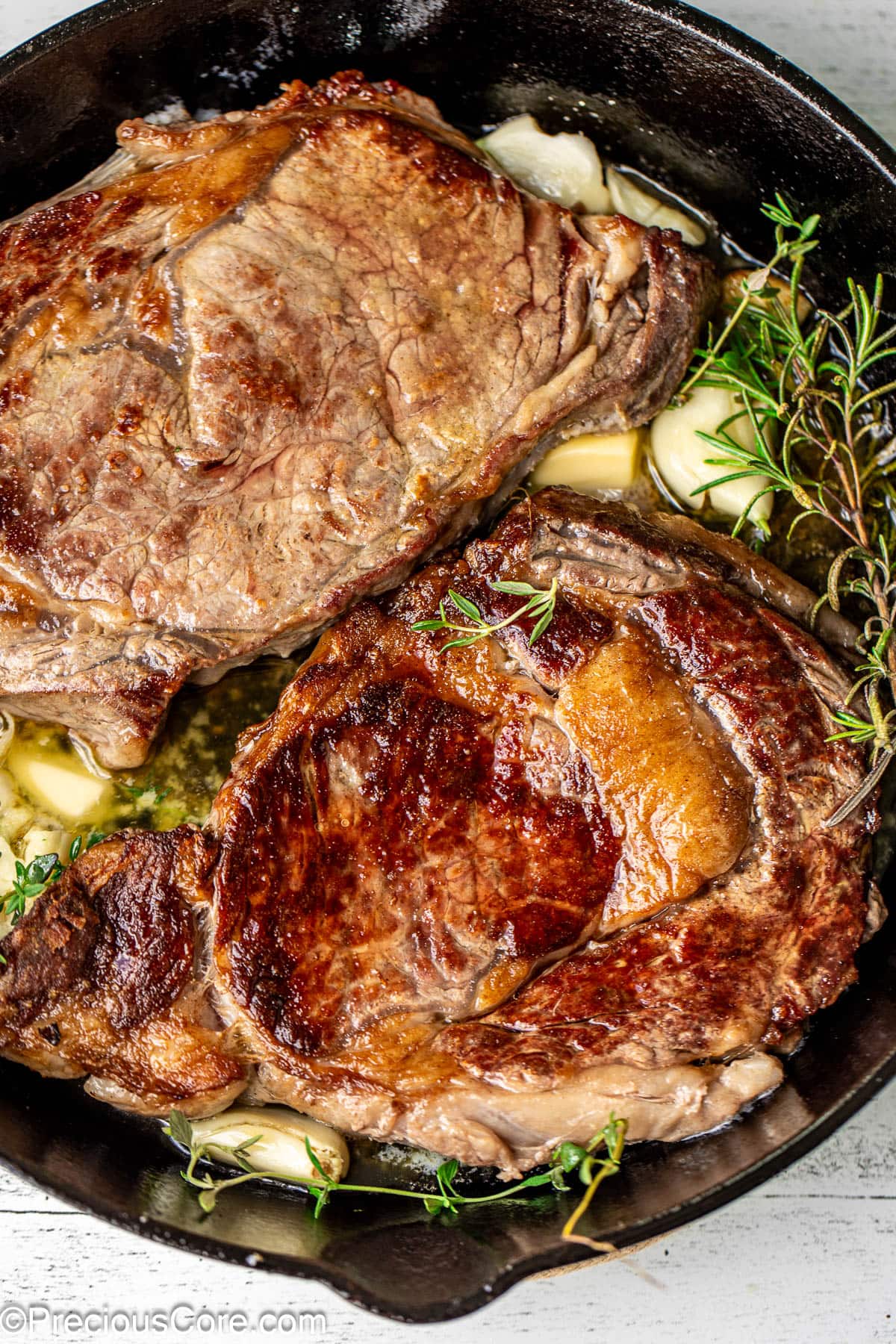
If you want, rub a little olive oil on the steak to help the crust form. You can also add fresh herbs like thyme or rosemary later, during basting.
Credit: www.preciouscore.com
Cooking Oil And Fats: What’s Best?
Choosing the right fat for pan frying is important. You want something that tolerates high heat, so it doesn’t burn.
- Canola or vegetable oil: Neutral flavor, high smoke point.
- Grapeseed oil: Also neutral and good for high heat.
- Clarified butter (ghee): Adds flavor, won’t burn as fast as regular butter.
- Butter: Adds richness, but burns easily. Use for basting, not for the initial sear.
For best results, use oil for searing, then add butter and herbs during the last few minutes.
Step-by-step Guide: How To Pan Fry Ribeye
Let’s go through the complete process for pan frying a ribeye steak. Follow these steps for reliable results.
Step 1: Preheat The Pan
Place your skillet on the stove over high heat. Let it get very hot—this takes about 2–3 minutes. A drop of water should sizzle and evaporate instantly.
Step 2: Add Oil
Pour in about 1 tablespoon of oil, enough to coat the bottom lightly. Swirl to cover the surface.
Step 3: Sear The Steak
Carefully lay the steak in the pan, away from you to avoid splatter. You should hear a loud sizzle right away. Don’t move the steak for at least 2 minutes—this helps form the crust.
For a 1.5-inch ribeye, sear for:
- 3–4 minutes on the first side
- 2–3 minutes on the second side
Step 4: Baste With Butter And Herbs
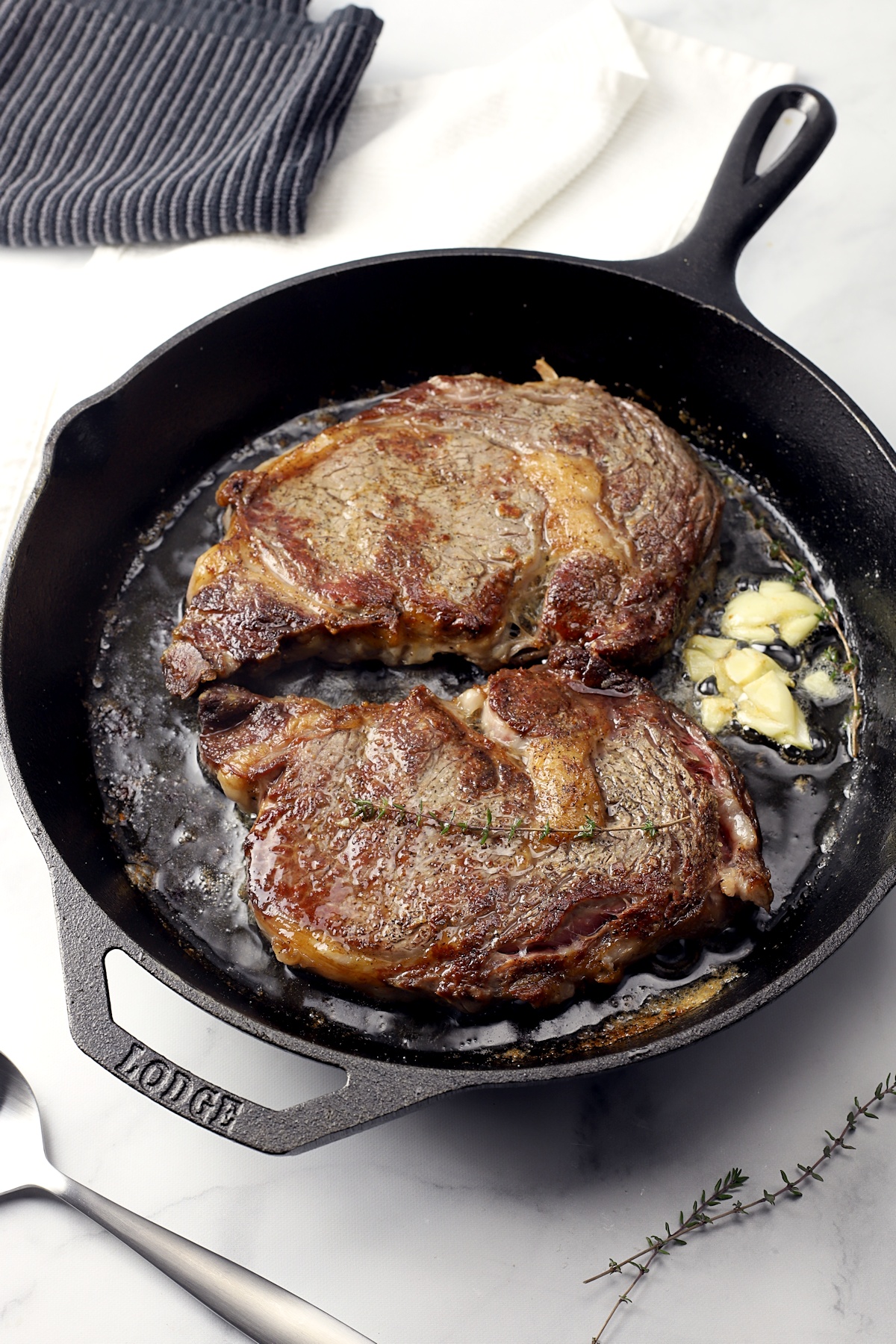
When you flip the steak, add a tablespoon of butter, a smashed garlic clove, and a sprig of thyme or rosemary to the pan. As the butter melts, tilt the pan and use a spoon to baste the steak with the hot, flavored butter.
This step adds extra flavor and helps the crust develop.
Step 5: Check Doneness
Use an instant-read thermometer to check the temperature. Insert into the thickest part of the steak.
Here are the target temperatures:
| Doneness | Internal Temp (°F) | Description |
|---|---|---|
| Rare | 120–125 | Cool, red center |
| Medium Rare | 130–135 | Warm, red center |
| Medium | 140–145 | Pink center |
| Medium Well | 150–155 | Mostly brown center |
| Well Done | 160+ | Brown throughout |
Take the steak off the heat when it’s 5°F below your target. It will continue to rise as it rests.
Step 6: Rest The Steak
Let the steak rest on a plate for at least 5–10 minutes. This allows juices to redistribute, so the steak stays juicy when you cut it.
Step 7: Slice And Serve
Slice against the grain for the most tenderness. Serve immediately, with your favorite sides or a simple sauce.
Credit: thetoastykitchen.com
Common Mistakes When Pan Frying Ribeye
Even experienced cooks make mistakes. Here are some to avoid:
- Pan not hot enough: The steak won’t sear and will stick.
- Overcrowding the pan: Moisture builds up, and you won’t get a crust.
- Not drying the steak: Water prevents browning.
- Flipping too often: Let the crust form before turning.
- Skipping the rest: Cutting too soon means dry steak.
A less obvious mistake is using olive oil with a low smoke point, which can burn and taste bitter. Stick to oils that handle high heat.
Another tip: If cooking more than one steak, don’t crowd the pan—work in batches if needed.
Flavor Upgrades And Variations
Once you’ve mastered the basic method, you can add extra flavors.
Compound Butters
Mix softened butter with herbs, garlic, or even blue cheese. Place a slice on the hot steak as it rests for a rich, melting finish.
Finishing Salts
Sprinkle a pinch of flaky sea salt or smoked salt after cooking to boost flavor.
Peppercorn Crust
Press crushed black peppercorns into the steak before cooking for a spicy, crunchy edge.
Sauces
A quick pan sauce can turn a simple steak into a restaurant-quality meal. After removing the steak, pour off extra fat, add a splash of wine or broth to the pan, and scrape up the browned bits. Simmer for a few minutes, then swirl in some butter for a smooth sauce.
Side Dishes That Shine With Pan Fried Ribeye
A great steak deserves the right side dishes. Here are classic and creative options:
- Garlic mashed potatoes: Creamy and comforting.
- Sautéed mushrooms: Earthy and savory, cooked in the steak’s pan drippings.
- Grilled asparagus: Adds freshness and color.
- Crisp salad: Balances the richness of the steak.
Try to keep sides simple so the ribeye stays the star.
Cleaning And Caring For Your Cast Iron Skillet
If you use a cast iron skillet, cleaning it properly keeps it in top shape.
- After cooking, let the pan cool slightly.
- Wipe out any fat with paper towels.
- For stuck bits, add a little water and scrub with a brush (no soap needed).
- Dry the pan over low heat, then rub a thin layer of oil over the surface.
Never soak cast iron in water, and don’t put it in the dishwasher. With care, a good skillet lasts for generations.
Non-obvious Tips For Next-level Pan Frying
Most guides cover the basics, but here are two advanced tips you might not know:
- Reverse Sear: For extra-thick steaks (2 inches or more), cook in a low oven until nearly done, then pan sear for a perfect crust. This gives more control and even doneness.
- Rest on a rack: Instead of a plate, rest your steak on a wire rack. This keeps the crust crisp, since steam can escape from all sides.
Trying these tips can take your steak game from good to great.
Troubleshooting: What To Do If Things Go Wrong
Even with the best planning, sometimes steak doesn’t turn out as expected.
- Steak is undercooked: Put it back in the pan for 1–2 more minutes per side. Tent with foil to keep warm.
- Steak is overcooked: Try slicing thin and serving with a flavorful sauce to add moisture.
- Crust didn’t form: Pan probably wasn’t hot enough. Next time, preheat longer and dry steak better.
Don’t be discouraged—practice makes perfect. Even top chefs have off days.
Health And Nutrition Facts
Ribeye is high in protein, iron, and vitamin B12. It’s also higher in fat than lean cuts, with about 20–30 grams of fat and 400–500 calories per 8 oz serving (cooked). Enjoy ribeye in moderation as part of a balanced diet.
If you want more nutrition details, the USDA FoodData Central is a reliable resource for data on all meat cuts.
Comparing Pan Frying To Other Steak Cooking Methods
Is pan frying better than grilling or broiling? Each method has strengths.
| Method | Flavor | Crust Quality | Control | Ease of Use |
|---|---|---|---|---|
| Pan Frying | Rich, beefy | Excellent | High | Easy, year-round |
| Grilling | Smoky, charred | Very good | Medium | Needs outdoor grill |
| Broiling | Well-browned | Good | Medium | Easy, but less control |
Pan frying gives you the most control over heat and crust, and you can do it any time, rain or shine.
:max_bytes(150000):strip_icc()/perfect-pan-seared-steaks-recipe-step-beauty-c7a9ca69ad9e4d4cb783f845fd429251.JPG)
Credit: www.seriouseats.com
Frequently Asked Questions
How Long Should I Pan Fry Ribeye Steak?
For a 1. 5-inch thick ribeye, pan fry about 3–4 minutes on the first side, then 2–3 minutes on the other. Adjust for your preferred doneness and always check with a thermometer for best results.
Can I Cook Ribeye Straight From The Fridge?
It’s better to let the steak sit at room temperature for 30–60 minutes before cooking. Cold steak cooks unevenly and may develop a tough texture.
What Oil Is Best For Pan Frying Steak?
Choose oils with a high smoke point, like canola, grapeseed, or vegetable oil. Olive oil can burn and turn bitter at high heat.
Should I Use Butter When Pan Frying Ribeye?
Yes, but add butter after the initial sear. Butter adds flavor but burns quickly. Baste the steak with butter and herbs during the last 2–3 minutes for best taste.
Where Can I Learn More About Steak Cuts And Cooking Methods?
You can find more detailed information about beef cuts and cooking at the Beef. It’s What’s For Dinner website, a trusted resource for home cooks and professionals.
Cooking a ribeye steak in a pan is a skill anyone can master. With the right steak, tools, and technique, you can enjoy a restaurant-quality meal any night of the week. Once you taste that golden, crackling crust and juicy center, you’ll be hooked.

Hello, This is Annie Walker, a 38-year-old blogger, founder, and editor of Cookware Guider from NY, USA. I am a cookware fanatic and passionate cooker. I love to cook with different types of cooking appliances (example: all types of cookware, rice cookers, slow cookers, etc) almost every day in my kitchen. I love to share my experience with my readers in my blog. Also, I enjoy helping people to solve their problems through my website. You can follow me on Twitter & Pinterest. To know details about my blog please check the about us page.