
Measuring a cooktop might sound simple, but it’s a task that needs careful attention. Whether you’re buying a new cooktop, replacing an old one, or planning a kitchen renovation, accurate measurements are crucial. Many people make mistakes that cause installation delays, extra costs, or even safety risks.
This guide will walk you through the process step by step, with practical advice, clear examples, and real-world tips. You’ll learn what tools to use, where to measure, and how to avoid common errors. By the end, you’ll be confident in measuring any cooktop—no matter the type or size.
Why Accurate Cooktop Measurement Matters
Making sure your cooktop fits is more than a matter of aesthetics. A cooktop that’s too large won’t fit into your countertop. One that’s too small leaves gaps, which can be unsafe and look untidy. Incorrect measurements can lead to:
- Extra installation costs
- Delays in kitchen upgrades
- Problems with gas or electrical connections
- Reduced resale value of your home
According to a survey from the National Kitchen & Bath Association, about 25% of kitchen remodels face delays due to appliance fitting issues. Measuring your cooktop properly is a simple way to avoid these headaches.
Tools You Need For Measuring
Before you start, gather these tools:
- Tape measure (preferably metal, for accuracy)
- Straight edge or ruler
- Notepad or smartphone (for recording measurements)
- Level (optional, for checking surface flatness)
- Pencil or marker
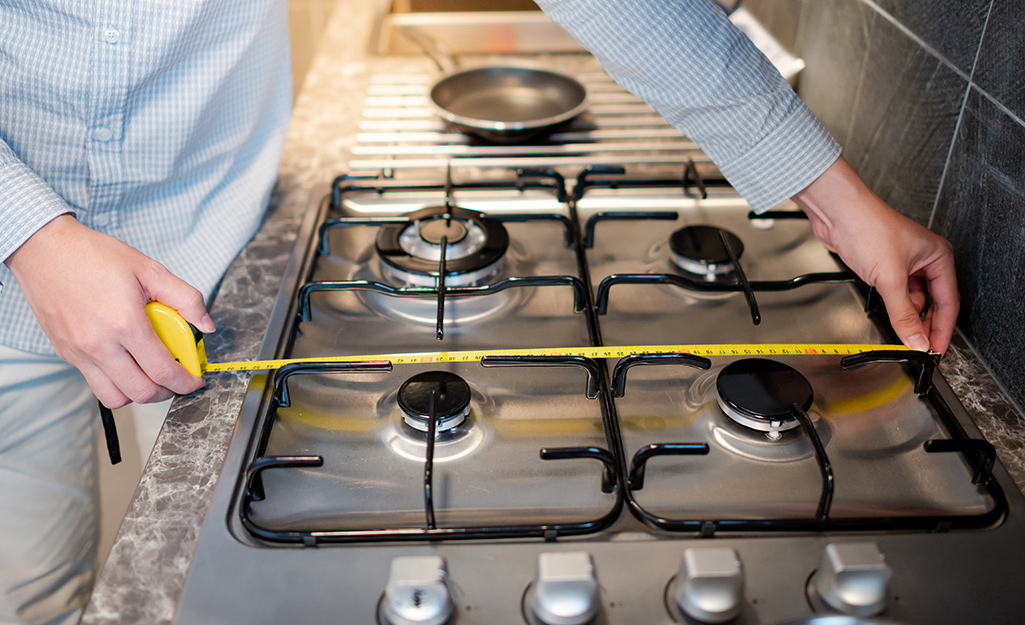
These simple items can help you get precise numbers. Using a metal tape measure is especially important because fabric or plastic tapes stretch and give incorrect readings.
Credit: www.homedepot.com
Understanding Cooktop Types And Sizes
Cooktops come in several forms. The most common are:
- Gas cooktops
- Electric cooktops
- Induction cooktops
- Modular cooktops (with removable parts)
Each type may have different installation requirements, so check the manufacturer’s instructions before measuring. Standard cooktop sizes in the US are:
- 24 inches
- 30 inches
- 36 inches
But there are exceptions, especially for European or custom models. The size refers to the width, not the depth or height.
Here’s a quick comparison of common cooktop sizes:
| Cooktop Type | Standard Width (inches) | Typical Depth (inches) | Height (inches) |
|---|---|---|---|
| Gas | 30, 36 | 20-22 | 2-5 |
| Electric | 24, 30 | 20-21 | 2-4 |
| Induction | 24, 30, 36 | 20-22 | 2-4 |
| Modular | 12, 15, 30 | 20 | 2-4 |
Step-by-step Guide: Measuring Your Cooktop
Let’s break down the process, so you don’t miss anything. Most cooktops are installed in a cut-out in your countertop. You’ll need to measure both the cooktop and the cut-out.
Measuring The Cooktop Itself
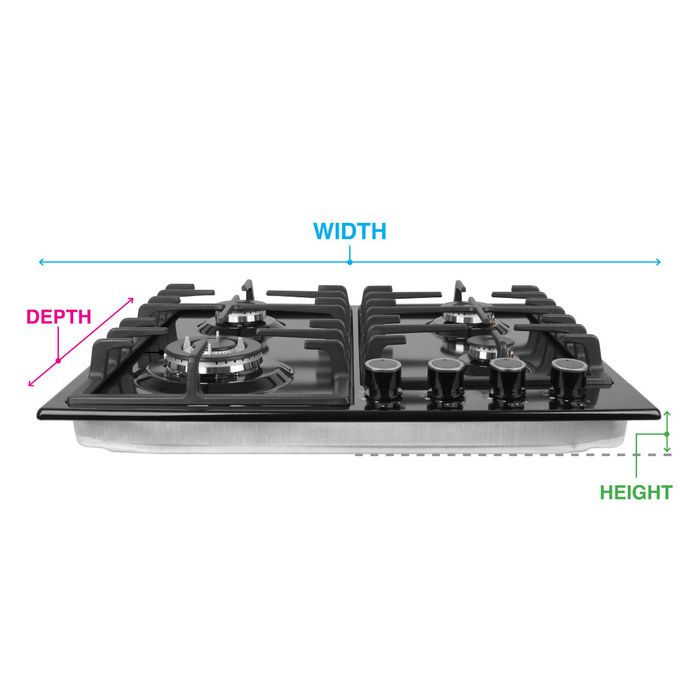
- Width: Place your tape measure across the widest part of the cooktop from left to right. Record the number.
- Depth: Measure from front to back, including any knobs or controls that stick out.
- Height: Measure from the bottom to the highest point. This is important if your cooktop sits above cabinets.
Measuring The Countertop Cut-out
If you’re replacing an existing cooktop, measure the cut-out where the cooktop sits. This is often slightly smaller than the cooktop itself.
- Remove the Cooktop: If possible, lift out the old cooktop. If not, measure the visible gap.
- Width of Cut-Out: Measure the left-to-right inside distance of the hole.
- Depth of Cut-Out: Measure front-to-back inside distance.
- Clearance: Check the space under the countertop for wires, pipes, or supports.
Recording And Double-checking Measurements
Write down all measurements clearly. Double-check each one. It’s easy to make a mistake, especially if you’re rushing or distracted.
Here’s an example of how to record your measurements:
| Measurement | Cooktop (inches) | Cut-Out (inches) |
|---|---|---|
| Width | 30 | 28.5 |
| Depth | 21 | 19.5 |
| Height | 4 | N/A |
Special Considerations For Different Cooktops
Not all cooktops are the same. Here are some things to watch out for:
Gas Cooktops
- Need extra space for gas lines and valves.
- Check for proper ventilation.
- Some models require more clearance underneath.
Electric And Induction Cooktops
- Make sure there’s space for electrical wiring.
- Induction cooktops often have cooling fans underneath—don’t block them.
Modular Cooktops
- Allow room for changing modules.
- Measure each section separately.
If your cooktop is part of a stove or range, measurements are slightly different. Always check the manual for unique requirements.
How To Measure For A New Cooktop Installation
When planning a new kitchen, you often start from scratch. Here’s what to do:
- Decide Cooktop Size: Choose the size that fits your cooking needs and countertop space.
- Check Manufacturer’s Cut-Out Dimensions: Manufacturers specify exact cut-out sizes, which are sometimes smaller than the cooktop.
- Add Clearance: Leave at least 1/8 inch of extra space on each side for easy installation.
- Check Cabinet and Drawer Placement: Make sure there’s no interference below the cooktop.
For example, if a manufacturer says the cut-out should be 29 inches wide for a 30-inch cooktop, follow their instructions—not just the visible size.
Credit: www.aztecappliance.com
Common Mistakes When Measuring Cooktops
Many people make errors that seem small but cause big problems. Here are the most frequent ones:
- Measuring only the cooktop, not the cut-out
- Ignoring knobs or controls that stick out
- Forgetting to check underneath for obstructions
- Not accounting for countertop thickness
- Using a flexible tape measure that stretches
- Confusing width and depth
If you avoid these mistakes, you’ll save time and money. One non-obvious tip: Always measure twice—once before you start, once after you finish. This catches errors before they become expensive.
Cooktop Measurement Examples
Let’s look at two real-life scenarios:
Example 1: Replacing A Gas Cooktop
You have a 30-inch gas cooktop. The countertop cut-out is 28. 5 inches wide and 19. 5 inches deep. The new cooktop says it needs a 28. 75-inch cut-out. You have just enough room, but need to trim the countertop slightly.
Example 2: Installing An Induction Cooktop
You’re planning a kitchen remodel. You want a 36-inch induction cooktop. Manufacturer says the cut-out should be 34. 5 inches wide and 20 inches deep. You measure your countertop and find it’s 36 inches wide and 22 inches deep—plenty of space.
These examples show why you must check both the appliance and the space—not just the visible surface.
Tips For Measuring Cooktop Height And Clearance
Height is often ignored, but it matters if you have drawers or cabinets underneath. Check:
- Minimum clearance: Some cooktops need at least 2 inches of space underneath.
- Ventilation: Gas cooktops especially need airflow.
- Electrical or gas connections: Leave room for wires, pipes, or valves.
If your countertop is thick (like granite), subtract that thickness from the available space.
Comparing Cooktop And Countertop Materials
Different countertop materials affect measurements. Here’s a quick comparison:
| Material | Typical Thickness (inches) | Measurement Impact |
|---|---|---|
| Laminate | 1-1.5 | Easy to cut, flexible sizing |
| Granite | 1.25-1.5 | Needs professional cutting |
| Quartz | 1.25 | Precise cuts, less flexibility |
| Wood | 1-1.5 | Easy adjustments, but prone to warping |
If you have stone countertops, measuring accurately is even more important. Mistakes are expensive to fix.
Practical Advice For Measuring In Tight Spaces
Sometimes, you don’t have much room to work. If your kitchen is small, or your cooktop is close to a wall, use these tips:
- Use a shorter tape measure for tight spots.
- Remove obstacles like utensils or small appliances.
- Measure diagonally if straight lines are blocked, then calculate the width.
- Take photos of your measurements for easy reference.
Many people overlook diagonal measurements, which can reveal hidden issues—especially in older kitchens where walls are not perfectly straight.
Checking Manufacturer Specifications
Before buying or installing, always check the manufacturer’s specifications. These include:
- Minimum and maximum cut-out sizes
- Required clearance space
- Installation instructions
Some brands provide downloadable guides and templates. If you’re unsure, contact their support or visit their website. For example, Whirlpool offers detailed measurement guides for each model.
What To Do If Measurements Don’t Match
If your measurements and the cooktop’s requirements don’t match, you have options:
- Choose a smaller or larger model
- Adjust the countertop cut-out (with professional help)
- Use filler strips or trim kits to close small gaps
- Reroute wires or pipes if needed
Never force a cooktop into a space that’s too small. This can damage both the appliance and your countertop. If you’re unsure, ask a professional installer.
Frequently Asked Questions
How Do I Measure A Cooktop For A Replacement?
First, measure the existing cooktop’s width, depth, and height. Then, remove the cooktop and measure the countertop cut-out. Record all dimensions and compare them to the new cooktop’s specs.
What If My New Cooktop Is Slightly Larger Than The Old One?
If the difference is less than ½ inch, you might be able to trim the countertop. For bigger differences, consider a new model or professional installation. Never force a cooktop into a tight space.
Do Cooktops Include Knobs And Controls In Their Measurements?
Usually, manufacturer dimensions include the main surface, but not always the knobs or controls that stick out. Always measure the full depth, including any protruding parts.
How Much Clearance Do I Need Under The Cooktop?
Most cooktops require at least 2 inches of clearance below for ventilation and wiring. Check your model’s manual for exact requirements.
Can I Use A Flexible Tape Measure For Cooktop Measurement?
A metal tape measure is best. Flexible tapes can stretch and give inaccurate numbers, especially for larger cooktops.
Measuring a cooktop is a task that rewards careful planning and attention to detail. With the right tools, clear measurements, and a little patience, you’ll avoid costly mistakes and enjoy a seamless installation. Whether you’re upgrading your kitchen or replacing a single appliance, following these steps ensures your cooktop fits perfectly and works safely.
If you’re unsure about any measurement, don’t hesitate to consult a professional or check the manufacturer’s guide. Your kitchen deserves accuracy—and so do you.

Credit: www.youtube.com

Hello, This is Annie Walker, a 38-year-old blogger, founder, and editor of Cookware Guider from NY, USA. I am a cookware fanatic and passionate cooker. I love to cook with different types of cooking appliances (example: all types of cookware, rice cookers, slow cookers, etc) almost every day in my kitchen. I love to share my experience with my readers in my blog. Also, I enjoy helping people to solve their problems through my website. You can follow me on Twitter & Pinterest. To know details about my blog please check the about us page.