
If you recently bought a KitchenAid induction cooktop or are considering one, you’re about to discover a faster, safer, and more precise way to cook. Induction is different from traditional gas or electric stoves, and it often feels unfamiliar at first. But with the right guidance, you’ll find it easy to use and full of benefits. In this guide, you’ll learn everything you need to know to use your KitchenAid induction cooktop confidently—including setup, controls, cookware choices, safety tips, and advanced features. Whether you’re a beginner or switching from another cooktop, you’ll find clear steps and useful advice for everyday cooking.
What Is An Induction Cooktop?
A KitchenAid induction cooktop uses electromagnetic energy to directly heat pots and pans. There’s no open flame or glowing electric coil. When you place compatible cookware on the cooktop, the energy transfers straight to the pan, making it hot—while the surface stays cool to the touch. This means faster heating, better energy efficiency, and improved safety.
How Induction Differs From Gas And Electric
- Gas stoves: Use a visible flame to heat cookware.
- Electric stoves: Rely on a metal coil that heats up and transfers heat to the pan.
- Induction cooktops: Create a magnetic field that heats the cookware itself.
Because induction heats only the pan, not the air or the cooktop surface, it’s more responsive. You get instant changes in temperature—similar to gas, but with much less heat lost to the room.
Getting Started: Setup And Installation
Before using your KitchenAid induction cooktop, make sure it’s installed correctly. Professional installation is recommended because induction cooktops require a dedicated electrical circuit and proper ventilation. Read your model’s manual for any specific instructions.
Key Steps For Setup
- Check the power supply: Induction cooktops usually need a 240V connection. Never try to plug it into a standard outlet.
- Position the cooktop: Install it on a flat, stable countertop with enough airflow underneath.
- Test the controls: After installation, switch on the main power and confirm the touch controls light up.
- Clean before first use: Wipe the surface with a damp cloth to remove dust or packaging residue.
Pro tip: Never use extension cords with induction cooktops. This can cause power issues or even damage the appliance.
Choosing The Right Cookware
Not all pots and pans work on an induction cooktop. Induction needs cookware with a magnetic base. If a magnet sticks firmly to the bottom, it’s compatible.
Best Materials For Induction
- Cast iron: Excellent heat retention, always works with induction.
- Stainless steel: Works if it has a magnetic base (not all stainless steel is induction-ready).
- Enamel-coated iron: Compatible and easy to clean.
Materials To Avoid
- Aluminum, copper, glass, ceramic: Unless labeled “induction-ready,” these will not work.
How To Test Your Cookware
Take a small magnet and stick it to the bottom of your pan. If it clings tightly, you’re good to go. If it falls off or slides, the pan will not heat on induction.
Size Matters
The cookware’s base should cover at least 70% of the cooking zone for optimal performance. Too-small pans may not be detected, and too-large pans can cause uneven heating.
Understanding Kitchenaid Induction Controls
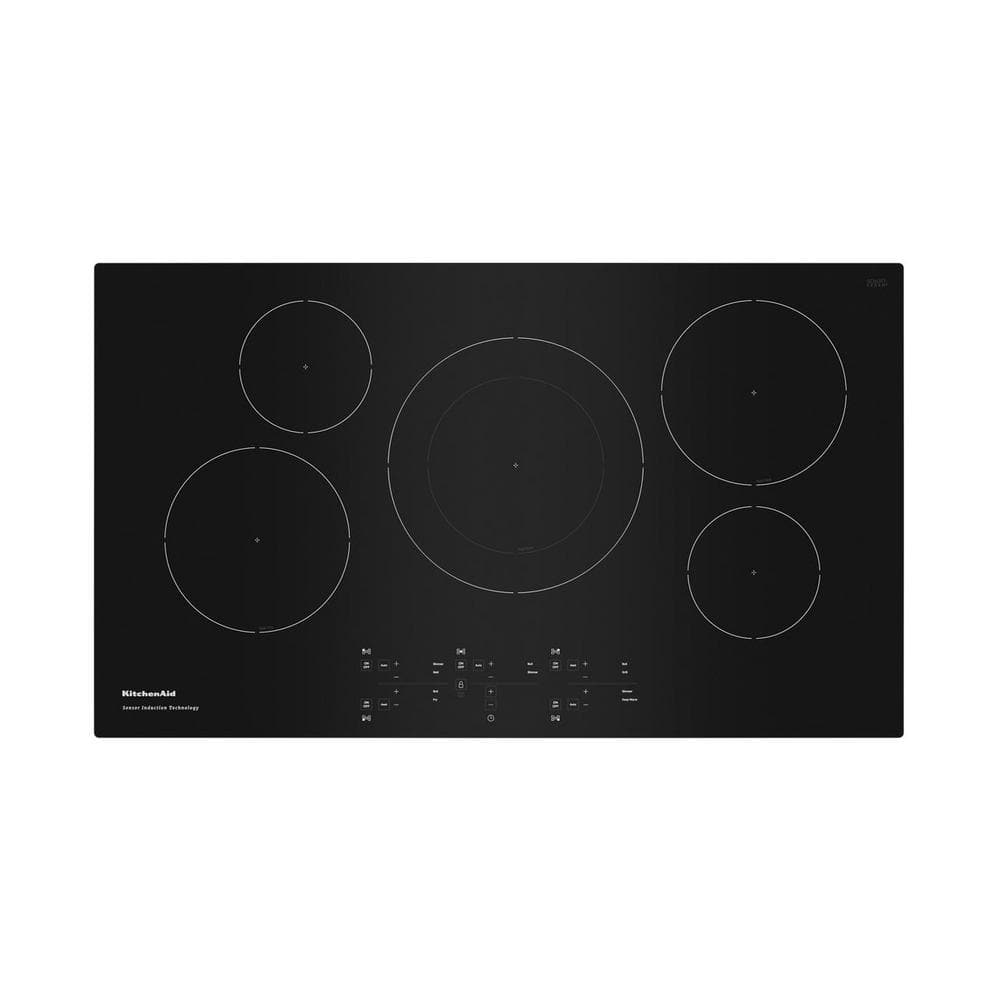
KitchenAid induction cooktops use touch controls, which are very different from knobs or dials. Here’s what you’ll typically see:
- Power On/Off: Main button to activate or shut down the cooktop.
- Cooking Zones: Each burner (zone) is marked with a circle or square.
- Heat Settings: Usually a range from 1 (lowest) to 9 or 10 (highest).
- Boost/Power Boost: Provides maximum heat for quick boiling.
- Timer: Set a countdown for automatic shut-off.
- Lock: Child safety lock to prevent accidental changes.
- Pause: Temporarily stops heating without turning off the zone.
Let’s look at a typical control panel:
| Control Icon | Function | When to Use |
|---|---|---|
| ⏻ | Power On/Off | Start or finish cooking |
| + | Increase heat | Make the zone hotter |
| – | Decrease heat | Lower the temperature |
| 🔒 | Lock controls | Child safety or cleaning |
| ⏲️ | Timer | Set cooking time |
| BOOST | Power Boost | Quick boil |
Credit: www.homedepot.com
Basic Cooking Steps On A Kitchenaid Induction Cooktop
Cooking with induction is simple once you understand the sequence. Here’s how to start:
- Place compatible cookware on the desired cooking zone.
- Power on the cooktop using the main button.
- Select the cooking zone by touching its icon.
- Set the heat level (1-9 or 1-10) using the plus/minus controls.
- Add ingredients and monitor your food. Adjust heat as needed.
- Use the timer for hands-free cooking if your recipe allows.
- When done, switch off the zone and the main power.
Insider tip: Induction heats so quickly that you may need to use lower settings than you did with gas or electric. Start low and increase as needed.
Using Advanced Features
KitchenAid induction cooktops offer more than just basic heating. These features help you cook smarter and safer.
Power Boost
This setting delivers maximum heat to a zone for rapid boiling—ideal for water or soups. But use it carefully, as it can boil over quickly.
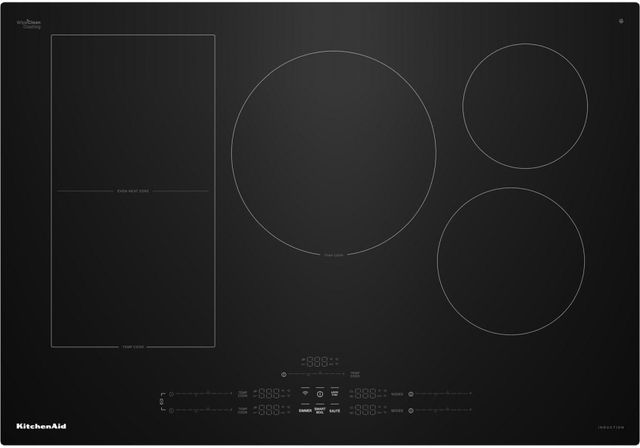
Bridge Function
Some models allow you to “bridge” two zones into one large area—perfect for griddles or roasting pans.
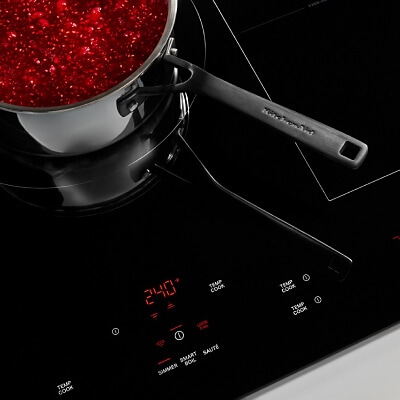
Simmer And Melt
Low settings designed for gentle simmering or melting chocolate. These keep the temperature stable without burning.
Keep Warm
Maintains food at serving temperature without overcooking.
Pause
If you need to step away, pause all zones at once. Touch again to resume.
Control Lock
Locks the controls so that nothing can be changed accidentally. Useful during cleaning or if you have kids.
Credit: www.appliancedirect.com
Cleaning And Maintenance
Induction cooktops are much easier to clean than gas or electric. Since the surface doesn’t get very hot, spills are less likely to burn on.
How To Clean Your Cooktop
- Wait until cool: The glass may be warm from the pan, so allow a few minutes.
- Wipe with a damp cloth: For most spills, a soft cloth is enough.
- Use a cooktop cleaner: For stubborn stains, use a cream cleaner designed for glass tops.
- Avoid harsh pads: Never use steel wool or abrasive sponges.
Maintenance Tips
- Do not use foil or plastic on the surface—they can melt and cause damage.
- Check the ventilation regularly to avoid dust buildup.
- If you hear a humming or clicking sound, this is normal for induction.
Safety Tips For Induction Cooking
Induction cooktops are safer than gas or traditional electric, but there are still rules to follow.
- The surface stays cool, but the pan gets extremely hot. Always use oven mitts.
- Do not leave empty pans on a hot zone—they heat up fast and can warp.
- If you spill sugary substances (like jam or syrup), clean them immediately. Sugar can damage the glass if left to cool and harden.
- Use the child lock if there are kids in the house.
Troubleshooting Common Problems
The Cooktop Doesn’t Heat
- Make sure your cookware is induction-ready.
- The pan might be too small or not centered.
- Check the power supply.
Error Codes Displayed
- Most KitchenAid models show error codes for overheating, wrong cookware, or a blocked vent. Check your manual or visit the KitchenAid support page for details.
Cooktop Turns Off Unexpectedly
- This often happens if the pan is removed during cooking, or the ventilation is blocked.
Surface Scratches
- Always lift pans—don’t slide them. Use cookware with smooth bases.
Comparing Induction To Other Cooktops
To help you understand the advantages of induction, here’s a quick comparison with gas and electric cooktops:
| Feature | Induction | Gas | Electric |
|---|---|---|---|
| Heat Speed | Very Fast | Fast | Moderate |
| Energy Efficiency | 90% | 40-50% | 70-80% |
| Surface Temperature | Stays Cool | Hot | Hot |
| Control Precision | Excellent | Good | Fair |
| Safety | High | Medium | Medium |
Practical Tips For First-time Users
- Start simple: Boil water or make eggs to get used to the quick heating.
- Don’t preheat empty pans: They reach high temperatures in seconds.
- Use the right zone size: Match pan size to the cooking zone for even heating.
- Try the timer: Set a timer when simmering or boiling to avoid overcooking.
- Clean up spills quickly: Induction cooktops are easiest to clean when spills are fresh.
Two Non-obvious Insights For Beginners
- Residual heat indicator: Even though the glass seems cool, KitchenAid cooktops have a residual heat indicator light. Use this as a guide—don’t touch the zone until it turns off.
- Noise is normal: Induction can make a faint humming or clicking noise, especially at higher settings or with certain pans. It’s not a sign of a problem.
Advanced Cooking Techniques
Once you’re comfortable, try advanced methods:
- Sear meat at high heat with Power Boost, then reduce for gentle simmering.
- Use a griddle on bridge zones for pancakes or grilled sandwiches.
- Melt chocolate directly in a pan—induction’s precision prevents burning.
When To Call For Service
If your cooktop won’t turn on, shows persistent error codes, or the surface is cracked, call KitchenAid service. Don’t try to repair it yourself—induction technology is sensitive and requires expert attention.
Credit: www.kitchenaid.com
Frequently Asked Questions
How Do I Know If My Pan Works With Induction?
Test with a magnet. If it sticks to the bottom of your pan, the cookware is induction-compatible. Otherwise, it won’t work with your KitchenAid induction cooktop.
Is It Safe To Use Induction With A Pacemaker?
Most modern pacemakers are shielded, but as a precaution, consult your doctor before using induction cooktops if you have a pacemaker or similar device.
What Should I Do If The Cooktop Gets Scratched?
Light scratches are usually cosmetic. To avoid more damage, always lift cookware instead of sliding it. For deep scratches, contact KitchenAid support for advice.
Can I Use My Old Cookware On A Kitchenaid Induction Cooktop?
Only if your old pots and pans have a magnetic base. Non-magnetic materials like aluminum or copper will not work unless they have an induction-ready layer.
Why Does My Induction Cooktop Make Noise?
A faint humming or clicking is normal, especially at high power or with certain types of cookware. If you hear loud buzzing or rattling, check that the pan is flat and well-centered on the cooking zone.
Using a KitchenAid induction cooktop opens up a world of faster, more efficient cooking. With the right pans, a bit of practice, and these practical tips, you’ll soon enjoy safer, cleaner, and more precise meals every day. For more in-depth technical details, you can visit the Wikipedia page on induction cooking. Happy cooking!

Hello, This is Annie Walker, a 38-year-old blogger, founder, and editor of Cookware Guider from NY, USA. I am a cookware fanatic and passionate cooker. I love to cook with different types of cooking appliances (example: all types of cookware, rice cookers, slow cookers, etc) almost every day in my kitchen. I love to share my experience with my readers in my blog. Also, I enjoy helping people to solve their problems through my website. You can follow me on Twitter & Pinterest. To know details about my blog please check the about us page.