
Rust on your cast iron cookware can be frustrating. It not only looks bad but can also affect your cooking.
If you’ve noticed those orange spots forming on your favorite pan, you’re probably wondering how to fix it fast and safely. Don’t worry—getting rid of rust is easier than you think. You’ll discover simple, effective steps to restore your cast iron to its former glory.
Keep reading, and you’ll learn how to protect your cookware so it lasts for years to come.
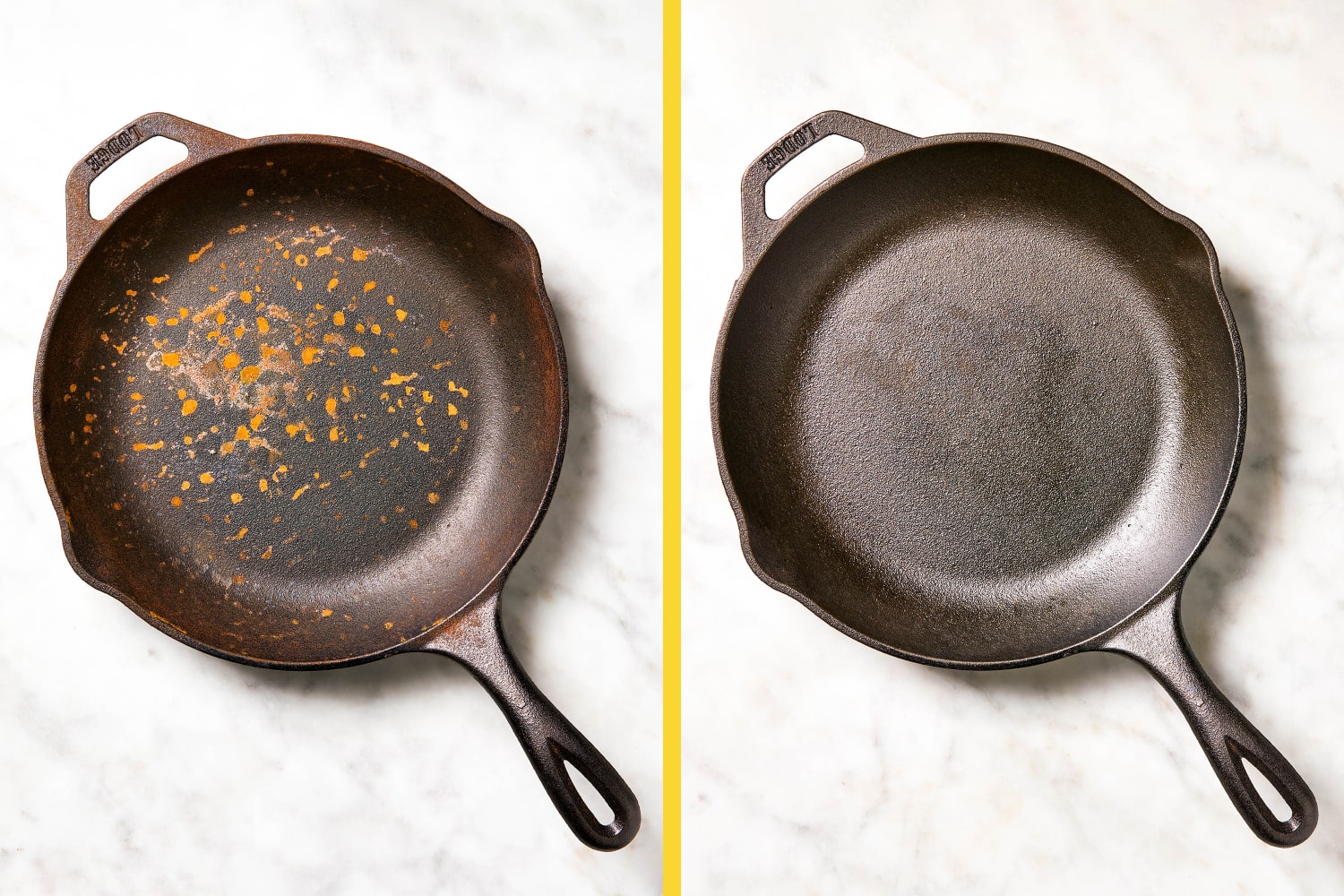
Credit: www.thekitchn.com
Causes Of Rust On Cast Iron
Rust forms on cast iron cookware due to certain common causes. Knowing these causes helps prevent rust and keeps your cookware in good shape. Cast iron needs special care because it reacts to water and air easily. Understanding why rust appears is the first step to stopping it.
Moisture Exposure
Cast iron rusts when exposed to water or damp air for too long. Even small amounts of moisture can start rusting. Leaving your pan wet after washing invites rust quickly. Cooking acidic foods can also wear down the protective layer, making rust easier.
Improper Cleaning
Using harsh soaps or scrubbing too hard removes the seasoning layer. This layer protects the iron from moisture and rust. Not drying the cookware well after cleaning also causes rust. Avoid soaking cast iron in water as it causes rust spots.
Storage Mistakes
Storing cast iron in humid places causes rust to form. Keeping the cookware without drying or oiling invites rust. Stacking pans without protection scratches the surface, breaking the seasoning. Proper storage means dry, oiled, and separated cookware to stay rust-free.

Credit: www.youtube.com
Tools And Materials Needed
Removing rust from cast iron cookware needs the right tools. Proper tools make the job easier and protect your pan. Gather everything before starting. This helps avoid delays and frustration.
Cleaning Supplies
Start with a stiff brush to scrub off loose rust. Use steel wool or sandpaper for tougher spots. Have some mild dish soap to clean the surface. Keep a sponge or cloth to wipe down the pan. A bowl or bucket for warm water is helpful too.
Protective Gear
Wear rubber gloves to protect your hands. Rust and cleaning agents can irritate skin. Use a mask to avoid breathing rust dust. Work in a well-ventilated area to stay safe.
Seasoning Ingredients
Seasoning restores the pan’s non-stick surface. You will need cooking oil like vegetable or flaxseed oil. Have a clean cloth or paper towel to spread the oil. An oven or heat source is necessary to bake the seasoning.
Removing Rust Step-by-step
Removing rust from cast iron cookware is simple with the right steps. Rust can damage your pan and affect cooking. Follow these easy methods to clean rust and protect your cast iron. Each step uses common tools and ingredients.
Scrubbing With Steel Wool
Start by scrubbing the rust with steel wool. Use firm pressure to remove rust spots. This method works best for light rust. Rinse the pan with warm water afterward. Dry the cookware completely to stop new rust.
Using Vinegar Soak
Soak your cast iron in vinegar to dissolve rust. Mix equal parts of white vinegar and water. Submerge the cookware for 1 to 2 hours. Check often to avoid damage. After soaking, scrub with a brush to remove loosened rust. Rinse and dry well.
Applying Baking Soda Paste
Make a thick paste with baking soda and water. Spread the paste on rusted areas. Let it sit for 15 to 20 minutes. Scrub gently with a sponge or brush. Baking soda helps lift rust without harsh chemicals. Rinse thoroughly and dry your cast iron.
Restoring The Seasoning
Restoring the seasoning on cast iron cookware is key after rust removal. Seasoning protects the pan and keeps it non-stick. Without a good layer, the pan can rust again quickly. The process involves cleaning, oiling, and heating. Each step helps rebuild the protective coating. Follow these simple steps to bring your cast iron back to life.
Cleaning After Rust Removal
After removing rust, clean the pan thoroughly. Use warm water and a gentle scrub brush. Avoid soap that can strip the metal. Dry the pan well to prevent new rust. Make sure no rust particles remain on the surface.
Oiling The Surface
Apply a thin layer of cooking oil to the pan. Use oils like vegetable, flaxseed, or canola oil. Rub the oil evenly on all surfaces inside and out. This oil will create a barrier against moisture. A thin, even coat works best for seasoning.
Baking To Season
Heat the oiled pan in the oven at 350°F (175°C) for one hour. Place the pan upside down to avoid oil pooling. Use a baking sheet below to catch drips. After baking, let the pan cool inside the oven. This process bonds the oil to the pan, creating a hard, protective layer.
Preventing Future Rust
Preventing rust on cast iron cookware keeps it safe and ready to use. A few simple steps stop rust from forming again. These care tips help your cast iron last many years. Protecting the surface keeps your food tasting great and your pan strong.
Proper Drying Techniques
Always dry your cast iron right after washing. Water left on the surface causes rust quickly. Use a clean towel to wipe it dry. Heat the pan on low for a few minutes. This removes any leftover moisture inside and outside.
Regular Oil Application
Apply a thin layer of oil to the pan after drying. This creates a strong barrier against rust. Use cooking oils like vegetable or flaxseed oil. Rub the oil all over the inside and outside. Wipe away any extra oil to avoid sticky spots.
Safe Storage Tips
Store your cast iron in a dry place. Avoid humid spots like under the sink or near the stove. Keep the pan uncovered or use a paper towel between stacked pans. This lets air flow and stops moisture buildup. Good storage keeps rust far away.

Credit: www.souschef.co.uk
Alternative Rust Removal Methods
Rust on cast iron cookware can be stubborn. Besides the usual scrubbing methods, several alternative rust removal techniques work well. These options suit different needs and materials. Explore these methods to restore your cast iron’s surface effectively and safely.
Electrolysis Process
The electrolysis process uses electricity to remove rust. Submerge the cast iron in a water solution with washing soda. Connect the iron to the negative terminal of a battery charger. Connect a sacrificial metal to the positive terminal. Turn on the charger and let the process run for hours. Rust dissolves without damaging the cast iron. This method works well for heavy rust.
Commercial Rust Removers
Commercial rust removers contain chemicals that break down rust quickly. Apply the product to the rusty surface following label instructions. Let it sit for the recommended time. Then scrub lightly and rinse thoroughly. Choose removers safe for cast iron to avoid damage. These products offer a fast and easy rust removal option.
Using Potato And Salt
Potato and salt form a natural rust remover. Cut a potato in half and dip the cut side in salt. Rub the potato over the rusted area firmly. The acid in the potato and the salt’s abrasiveness lift the rust. Rinse the cookware well after scrubbing. This method is gentle and uses kitchen items you already have.
Frequently Asked Questions
How Do I Remove Rust From Cast Iron Cookware?
To remove rust, scrub the cookware with steel wool or a stiff brush. Use warm water and mild soap. Dry thoroughly and apply a thin layer of oil to prevent future rusting.
Can Vinegar Help Clean Rust Off Cast Iron?
Yes, soaking cast iron in a vinegar-water solution for up to an hour can dissolve rust. Rinse and scrub afterward, then dry and re-season the cookware to restore its protective coating.
How Do I Prevent Rust On Cast Iron Cookware?
Keep cast iron dry and well-oiled after each use. Avoid soaking in water and store in a dry place. Regular seasoning helps maintain a rust-resistant surface.
Is It Safe To Use Soap On Rusty Cast Iron?
Light soap use is safe to remove rust and debris. Avoid harsh detergents or soaking too long. Always re-season after cleaning to protect the cast iron’s surface.
Conclusion
Rust on cast iron cookware can be removed with simple steps. Regular cleaning and drying help stop rust from coming back. Use gentle scrubbing and seasoning to protect your pan. Taking care of your cookware keeps it safe and lasts longer.
Enjoy cooking with your cast iron without worrying about rust. A little effort goes a long way in keeping your pan strong and clean. Keep your kitchen tools ready for every meal.

Hello, This is Annie Walker, a 38-year-old blogger, founder, and editor of Cookware Guider from NY, USA. I am a cookware fanatic and passionate cooker. I love to cook with different types of cooking appliances (example: all types of cookware, rice cookers, slow cookers, etc) almost every day in my kitchen. I love to share my experience with my readers in my blog. Also, I enjoy helping people to solve their problems through my website. You can follow me on Twitter & Pinterest. To know details about my blog please check the about us page.