
Choosing the right cookware can change the way you cook—and how healthy your meals are. But with so many options, it’s easy to feel confused and overwhelmed.
You want cookware that’s safe, durable, and good for your family’s health. So, what is the safest cookware material you should be using every day? Keep reading to discover which materials protect your food and your well-being, and which ones you should avoid.
Your kitchen—and your body—will thank you.
Health Risks In Cookware
Choosing the right cookware is more than a kitchen choice. It can impact your health. Some materials release harmful substances when heated. These toxins can mix with your food. Over time, this exposure can cause health problems. Understanding the health risks in cookware helps you choose safer options.
Toxic Chemicals To Avoid
Some cookware contains chemicals that harm your body. Avoid cookware with PFOA and PFAS chemicals. These are in some non-stick pans. Lead and cadmium can be found in cheap ceramics. Aluminum pans may leach metal into food. These chemicals may cause illness or long-term damage. Always check the materials before buying cookware.
How Cookware Affects Food Safety
Cookware material affects how safe your food is. Some metals react with acidic foods. This reaction can change taste and safety. Non-stick coatings can break down with heat. This releases toxic fumes or particles. Scratched or worn cookware is more dangerous. Choosing safe cookware means less risk of contamination. It keeps your meals cleaner and healthier.
Credit: lexiscleankitchen.com
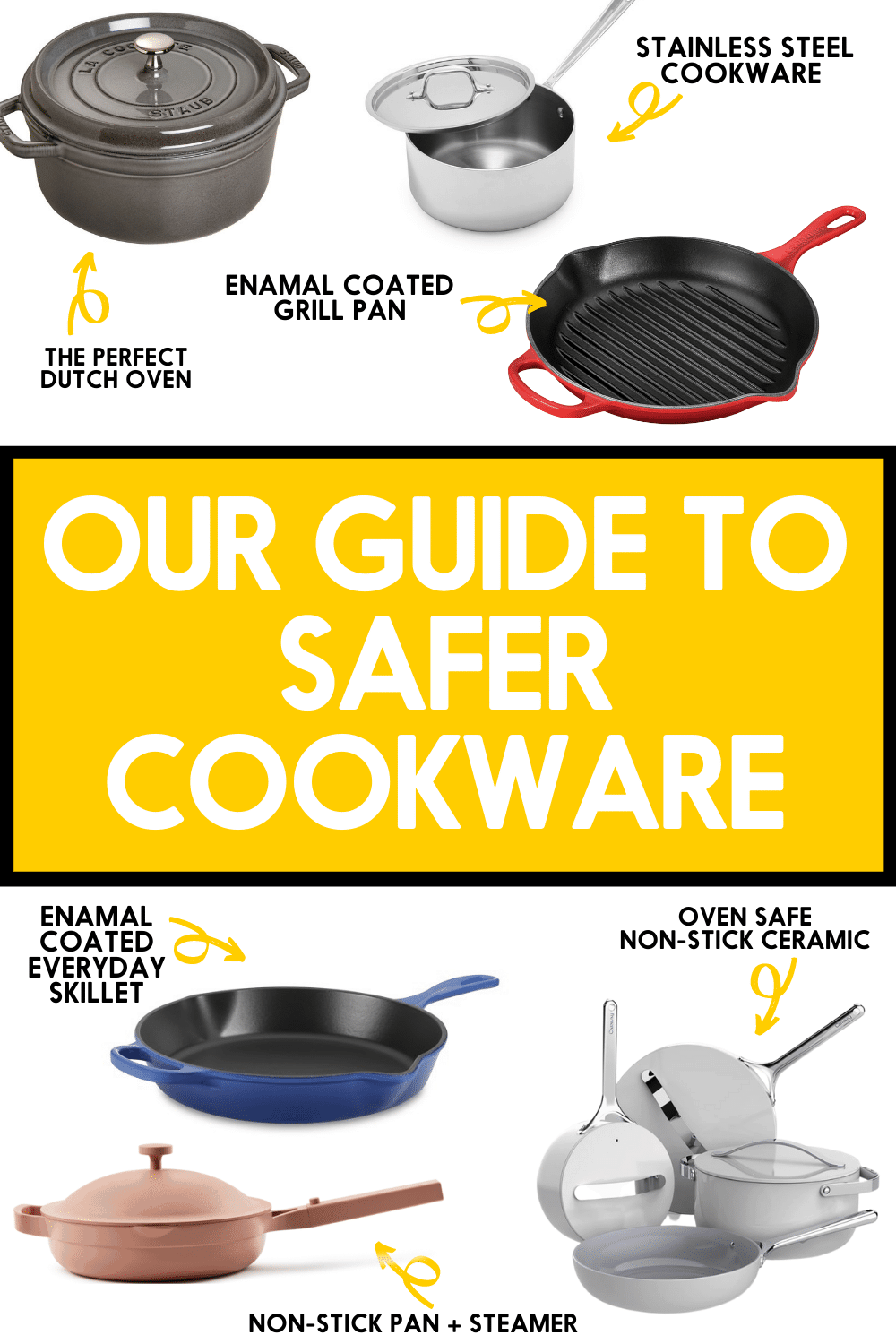
Popular Cookware Materials
Choosing the right cookware material is important for safe and healthy cooking. Different materials have unique benefits and risks. Knowing popular options helps make a smart choice.
Each cookware type heats differently and affects food in its own way. Some materials last longer and resist damage. Others may react with certain foods or release chemicals.
Stainless Steel
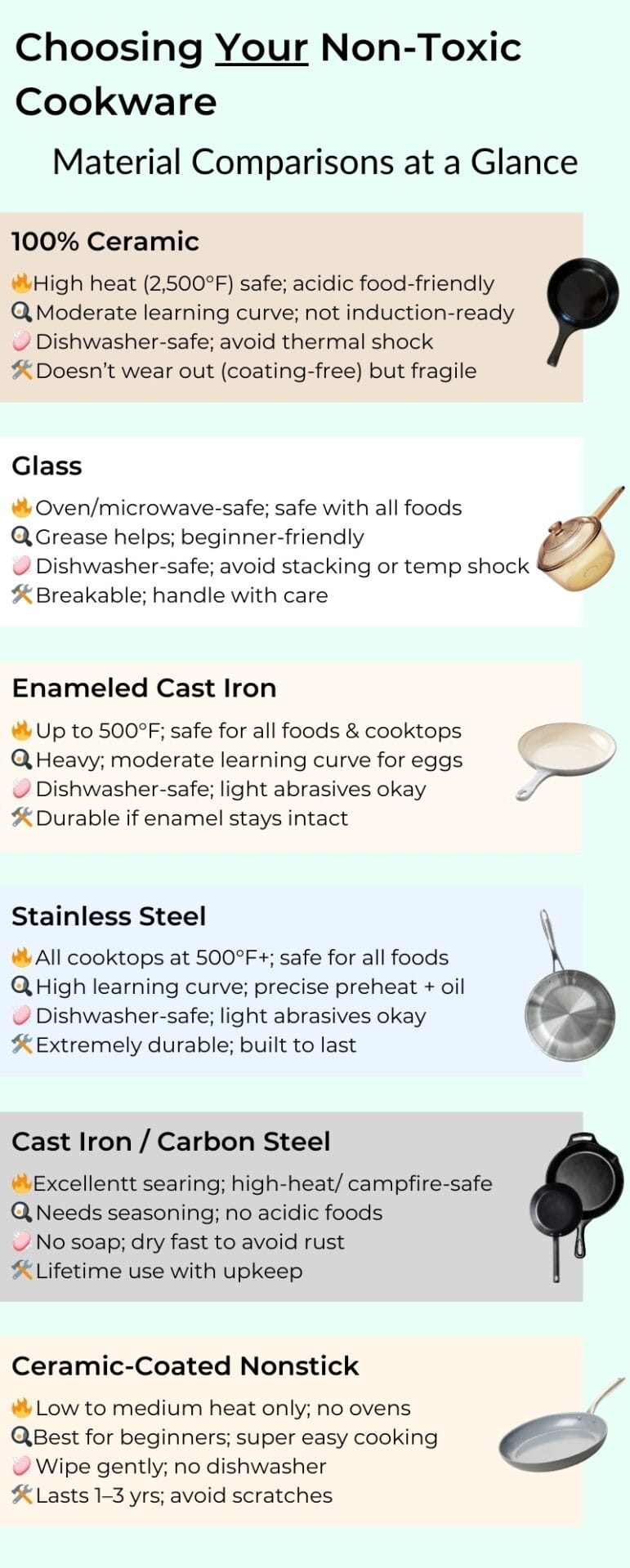
Stainless steel is strong and does not rust easily. It does not react with acidic or alkaline foods. Many chefs prefer it for even heating and durability. It requires a bit of oil to prevent sticking.
Cast Iron
Cast iron holds heat very well. It can last for decades if cared for properly. This material adds small amounts of iron to food, which can be healthy. It needs seasoning to keep its nonstick surface and prevent rust.
Nonstick Coatings
Nonstick cookware makes cooking and cleaning easy. It needs less oil for cooking. Some coatings can release harmful fumes if overheated. Choose PFOA-free options for safer use.
Ceramic
Ceramic cookware offers a natural, nonstick surface. It does not release toxic chemicals during cooking. It heats evenly but can chip if dropped. It is good for low to medium heat cooking.
Copper
Copper cookware heats up quickly and evenly. It often has a lining of stainless steel or tin to prevent metal from touching food. Copper can react with acidic foods without a lining. It needs regular polishing to keep shine.
Aluminum
Aluminum is lightweight and heats fast. It can react with acidic foods and change taste. Anodized aluminum has a hard surface that prevents reactions. It is affordable and common in many kitchens.
Safety Features Of Each Material
Understanding the safety features of cookware materials helps in choosing the best option. Each material offers unique benefits and potential risks. Knowing these details ensures safer cooking and better health.
Chemical Stability
Chemical stability means the material does not react with food. Stainless steel is very stable and does not release harmful substances. Cast iron can leach small amounts of iron, which is usually safe. Non-stick coatings may break down at high heat, releasing toxins. Ceramic cookware is generally stable and safe for cooking.
Heat Retention And Distribution
Good heat retention means food cooks evenly and stays warm longer. Cast iron holds heat well and distributes it evenly. Stainless steel heats quickly but may have hot spots. Aluminum is excellent at heat distribution but often needs a non-stick or anodized coating. Ceramic heats slowly but keeps food warm for a long time.
Durability And Maintenance
Durability affects how long cookware lasts and stays safe. Stainless steel is strong, resists rust, and cleans easily. Cast iron is durable but needs seasoning to prevent rust. Non-stick pans wear out faster and need gentle care. Ceramic can chip but is easy to clean with mild soap and water.
Credit: www.cleaneatingkitchen.com
Choosing Cookware For Healthy Cooking
Choosing cookware for healthy cooking matters more than many realize. The right pots and pans can keep your food safe and tasty. Cookware affects how nutrients stay in your meal. It also helps avoid harmful chemicals from getting into your food. Picking the safest cookware means better health for you and your family.
Different materials work well for different cooking needs. Some are easy to clean, while others last longer or heat food evenly. Understanding these differences helps you pick what fits your kitchen best. Safe cookware makes cooking easier and healthier every day.
Matching Cookware To Cooking Styles
Choose cookware that suits how you cook most often. Stainless steel works great for boiling and sautéing. Cast iron is perfect for frying and slow cooking. Non-stick pans are best for eggs and pancakes. Each material offers different heat levels and care needs. Match cookware to your cooking style for best results.
Budget Considerations
Cookware prices vary widely. Some safe materials cost more upfront but last longer. Cheaper pans may wear out fast or release harmful substances. Think about how often you cook and your budget. Investing in good cookware can save money over time. Avoid very cheap options that may harm your health.
Long-term Health Benefits
Safe cookware reduces exposure to toxins. Materials like stainless steel and cast iron do not leach chemicals. This protects your body from harmful substances. Healthy cookware also supports nutrient retention in food. Using the right cookware helps keep your meals pure and nutritious. It is a simple step toward better health every day.
Tips To Maximize Cookware Safety
Maximizing cookware safety protects your health and extends your pots’ and pans’ life. Simple habits keep your kitchen tools safe and effective. Follow practical tips to avoid risks and get the best from your cookware.
Proper Usage And Care
Use cookware according to the manufacturer’s instructions. Avoid high heat on non-stick pans to prevent coating damage. Always preheat pans slowly and avoid sudden temperature changes. Clean cookware after each use with mild soap and soft sponges. Dry thoroughly to prevent rust and stains.
Avoiding Damage And Contamination
Do not use metal utensils on non-stick surfaces. Scratches can release harmful chemicals into food. Avoid stacking pans without protection to prevent scratches. Store cookware in a dry place to stop moisture buildup. Never leave acidic foods in metal pots for long periods.
When To Replace Cookware
Replace pots and pans that have deep scratches or peeling coatings. Warped or cracked cookware can cause uneven cooking and safety hazards. If your cookware shows signs of rust, discard it promptly. Regularly check for loose handles or lids to avoid accidents. Old cookware may affect food taste and safety.
Credit: thegoodlifedesigns.com
Frequently Asked Questions
What Is The Safest Cookware Material To Use Daily?
The safest cookware materials are stainless steel, cast iron, and ceramic. They do not leach harmful chemicals. These materials withstand high heat and are durable for everyday cooking.
Is Non-stick Cookware Safe For Health?
Non-stick cookware is safe if used properly. Avoid overheating and using metal utensils to prevent coating damage. Opt for PFOA-free brands to reduce chemical risks.
Can Cast Iron Cookware Be Toxic?
Cast iron cookware is generally safe and non-toxic. It can add beneficial iron to food. Avoid cooking acidic foods for long periods to prevent metallic taste.
Why Is Stainless Steel Considered Safe Cookware?
Stainless steel is non-reactive and does not leach chemicals into food. It resists rust and corrosion, making it a healthy and durable option for cooking.
Conclusion
Choosing the safest cookware helps protect your health. Materials like stainless steel and cast iron offer good safety. Avoid cookware that can release harmful chemicals when heated. Simple care keeps your pots and pans in top shape. Safe cookware also cooks food evenly and tastes better.
Your kitchen deserves tools that support your well-being. Make smart choices for a healthier cooking experience. Safe cookware means peace of mind every time you cook.

Hello, This is Annie Walker, a 38-year-old blogger, founder, and editor of Cookware Guider from NY, USA. I am a cookware fanatic and passionate cooker. I love to cook with different types of cooking appliances (example: all types of cookware, rice cookers, slow cookers, etc) almost every day in my kitchen. I love to share my experience with my readers in my blog. Also, I enjoy helping people to solve their problems through my website. You can follow me on Twitter & Pinterest. To know details about my blog please check the about us page.