
If you own All Clad cookware, you know it’s an investment in quality cooking. But to keep your pots and pans looking great and performing at their best, you need to care for them the right way.
Without proper care, your cookware can lose its shine, stickiness can build up, and cooking results may suffer. You’ll discover simple, effective tips to clean, maintain, and protect your All Clad pieces. Follow these easy steps, and your cookware will stay like new, making every meal better and every kitchen moment more enjoyable.
Keep reading to learn how to get the most out of your All Clad cookware!

Credit: www.youtube.com
Cleaning Techniques
Proper cleaning techniques are essential for maintaining the shine and performance of All Clad cookware. These pans and pots are made with high-quality materials that need gentle care. Using the right cleaning methods helps protect their surface and extends their life. Avoid harsh scrubbing or wrong detergents that can damage the finish. Focus on cleaning steps that keep your cookware looking new and working well every day.
Hand Washing Tips
Hand washing is the safest way to clean All Clad cookware. Use warm, soapy water and a soft sponge or cloth. Avoid steel wool or abrasive pads that can scratch the surface. Follow these simple steps to keep your cookware spotless:
- Fill the sink with warm water and a mild dish soap.
- Let the cookware soak for a few minutes if food is stuck.
- Gently scrub with a soft sponge or nylon brush.
- Rinse thoroughly with warm water to remove soap residue.
- Dry immediately with a soft towel to prevent water spots.
Here is a quick comparison of washing tools:
| Tool | Use with All Clad? | Effect |
|---|---|---|
| Soft Sponge | Yes | Safe and effective |
| Nylon Brush | Yes | Good for stuck food |
| Steel Wool | No | Scratches surface |
| Abrasive Pads | No | Damages finish |
Always dry your cookware right after washing. This prevents rust and keeps the shine bright. Hand washing also reduces the risk of warping or discoloration. It keeps your All Clad pots and pans in perfect condition for years.
Removing Stubborn Stains
Stubborn stains on All Clad cookware can happen from burnt food or mineral deposits. Use gentle cleaning tricks that do not harm the metal. Avoid harsh chemicals or scrubbing that can scratch or dull the surface. Try these effective stain removal methods:
- Make a paste with baking soda and water.
- Apply the paste to the stained area.
- Let it sit for 15-20 minutes.
- Gently scrub with a soft sponge.
- Rinse and dry thoroughly.
For tougher stains, try boiling a mixture of water and vinegar in the pan:
- Fill the cookware with equal parts water and white vinegar.
- Bring to a boil on medium heat.
- Let it simmer for 5-10 minutes.
- Remove from heat and let cool.
- Wash as usual and dry.
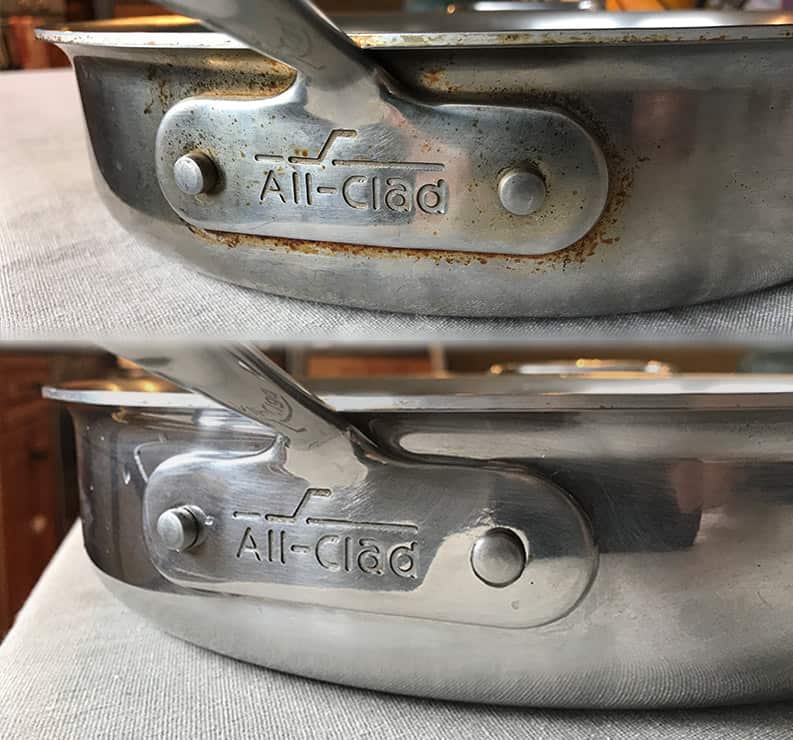
These methods safely lift stains without damaging the cookware. Avoid bleach or strong acids as they can ruin the finish. Use stain removers designed for stainless steel if needed, following package instructions carefully.
Avoiding Dishwasher Damage
Many people think dishwashers are convenient for cleaning All Clad cookware. Dishwashers can cause damage over time. Harsh detergents and high heat can dull the finish or cause discoloration. The dishwasher’s strong jets can also lead to scratches or dents. Protect your investment by avoiding the dishwasher for regular cleaning.
Keep these points in mind:
- Use hand washing for daily cleaning.
- Dry immediately after washing to prevent spotting.
- Reserve the dishwasher for occasional use only.
- Choose mild detergents if dishwasher use is necessary.
- Place cookware securely to avoid banging against other items.
Dishwasher damage can appear as:
| Damage Type | Cause | Effect |
|---|---|---|
| Discoloration | Harsh detergents, high heat | Dull, uneven surface |
| Scratches | Strong jets, rubbing against other items | Visible marks, reduced shine |
| Warping | Rapid temperature changes | Uneven cooking surface |
Hand washing remains the best way to keep All Clad cookware in top shape. It protects the finish and ensures your pans cook evenly and look beautiful for years.
Maintenance Practices
Proper maintenance keeps All Clad cookware in top condition for years. These practices protect the cookware’s surface and improve cooking performance. Regular care prevents damage and maintains the cookware’s appearance. Follow simple steps to clean, season, polish, and fix common issues. This section explains key maintenance practices for All Clad cookware.
Seasoning Stainless Steel Surfaces
Seasoning All Clad stainless steel pans creates a natural non-stick layer. This layer helps food release easily and reduces the need for excess oil. Unlike cast iron, stainless steel seasoning is light and easy to refresh.
Follow these steps to season your stainless steel cookware:
- Heat the pan on medium until warm.
- Add a small amount of high-smoke-point oil (like canola or vegetable oil).
- Spread the oil evenly over the surface using a paper towel.
- Let the pan heat until the oil starts to smoke lightly.
- Turn off the heat and let the pan cool completely.
- Wipe off any excess oil with a clean cloth.
Seasoning frequency depends on use. For daily cooking, season once a week. For occasional use, season before each cooking session.
| Oil Type | Smoke Point (°F) | Benefits |
|---|---|---|
| Canola Oil | 400 | Neutral flavor, affordable |
| Avocado Oil | 520 | High smoke point, healthy fats |
| Vegetable Oil | 400 | Common and easy to find |
Seasoning prevents food from sticking and protects the stainless steel surface from stains. Avoid using butter or olive oil for seasoning, as they have low smoke points and may burn.
Polishing For Shine
Polishing All Clad cookware keeps the stainless steel bright and smooth. Regular polishing removes water spots, fingerprints, and dullness. It restores the cookware’s original shine.
Use these simple tips for polishing:
- Choose a non-abrasive stainless steel cleaner or polish.
- Apply a small amount of polish to a soft cloth.
- Rub the cookware in the direction of the grain for best results.
- Rinse with warm water and dry immediately with a clean towel.
For homemade polishing, use a paste of baking soda and water:
- Mix 3 parts baking soda with 1 part water to form a paste.
- Apply the paste to the cookware surface.
- Gently rub with a soft cloth or sponge.
- Rinse well and dry completely.
Avoid steel wool or harsh scrubbing pads. They scratch the surface and dull the finish. Polish cookware every few weeks or after heavy use for best results.
Handling Warping And Scratches
Warping and scratches may occur with frequent use or sudden temperature changes. Proper care reduces these problems. Handle cookware with care to avoid damage.
Tips to prevent warping:
- Heat the pan gradually on low to medium heat.
- Do not place hot cookware into cold water suddenly.
- Use flat, stable burners to support the pan evenly.
Minor warping can sometimes be fixed:
- Heat the cookware on low heat for a few minutes.
- Remove from heat and place on a flat surface.
- Press gently to reshape if safe to do so.
Scratches are cosmetic but can be minimized:
- Use wooden, silicone, or plastic utensils.
- Avoid abrasive cleaners or scouring pads.
- For deep scratches, professional polishing may help.
Keep cookware clean and dry after use to prevent surface damage. Proper storage, such as using pan protectors or soft cloths between pans, also reduces scratches.
Cooking Tips
Proper cooking techniques help keep All Clad cookware in great shape and improve your meals. These tips focus on how to use your cookware to get the best results and extend its life. Simple habits during cooking make a big difference in performance and durability. Follow these easy steps for better cooking and care.
Preheating Correctly
Preheating All Clad pans correctly helps food cook evenly and prevents sticking. Start by placing the pan on low to medium heat. Let it warm slowly for 2 to 3 minutes before adding oil or food. Avoid heating empty pans on high heat as this can damage the surface.
- Use medium or low heat: High heat can warp the pan or cause food to burn.
- Test heat by sprinkling water: Small droplets should dance and evaporate quickly, showing the pan is ready.
- Add oil after preheating: This prevents oil from burning and sticking to the pan.
Here is a simple table showing proper preheating times for different All Clad cookware:
| Cookware Type | Preheat Time | Heat Level |
|---|---|---|
| Stainless Steel Skillet | 2-3 minutes | Medium |
| Nonstick Pan | 1-2 minutes | Low to Medium |
| Cast Aluminum | 3-4 minutes | Medium |
Preheating properly helps your food cook evenly and stops it from sticking. It also protects the cookware from damage due to sudden high heat.
Using Appropriate Utensils
Using the right utensils keeps the surface of All Clad cookware smooth and scratch-free. Avoid metal tools that can scratch or damage the finish. Use utensils made of wood, silicone, or heat-resistant plastic for the best care.
Here are some tips for choosing utensils:
- Wooden spoons and spatulas: Gentle on the surface and durable.
- Silicone utensils: Heat-resistant and flexible, perfect for stirring or flipping.
- Plastic tools: Use only if heat-resistant to avoid melting.
Avoid these utensils to protect your cookware:
- Metal forks, knives, or spoons
- Sharp or pointed tools
- Abrasive scrubbers that can scratch the surface
Using proper utensils helps keep the cookware looking new and working well. It prevents scratches that can cause food to stick and makes cleaning easier.
Temperature Control
Controlling heat is key to cooking well and caring for All Clad cookware. These pans heat quickly and hold heat well, so use medium or low heat most of the time. High heat is rarely needed and can damage the pan or burn food.
Follow these tips to control temperature:
- Start with medium heat: Adjust up or down based on cooking progress.
- Lower heat for delicate foods: Eggs, fish, or sauces cook best on low heat.
- Use high heat briefly: Only for boiling water or searing meat, then reduce heat.
Here is a quick guide for heat levels and common cooking tasks:
| Heat Level | Use For | Notes |
|---|---|---|
| Low | Simmering, melting butter, cooking eggs | Gentle heat prevents burning |
| Medium | Sautéing, frying, cooking vegetables | Even cooking without overheating |
| High | Boiling water, searing meat | Use only briefly to avoid damage |
Controlling temperature carefully helps your food cook better and keeps the cookware in good condition. Avoid overheating and sudden temperature changes to protect your investment.

Credit: www.reddit.com
Storage Recommendations
Proper storage of All Clad cookware keeps it in top shape for many years. Storing your pots and pans the right way prevents damage and maintains their beauty. It also helps avoid scratches, dents, and other problems that affect cooking performance. This section explains key storage tips to protect your All Clad cookware effectively.
Stacking Safely
Stacking cookware saves space but can cause damage if done carelessly. All Clad pieces are durable but still need careful handling to avoid scratches and dents.
Follow these tips for safe stacking:
- Use protective layers: Place soft cloths or paper towels between pans.
- Stack by size: Put larger, heavier pots at the bottom and smaller, lighter ones on top.
- Avoid nesting deep pans: Deep pots can get stuck or cause scratching if nested tightly.
- Keep lids separate: Store lids vertically or in a rack to prevent pressure on cookware.
| Stacking Tip | Benefit |
|---|---|
| Soft cloth between pans | Prevents scratches and abrasions |
| Stack by size | Reduces pressure on smaller pans |
| Separate lids | Avoids warping and damage |
Stacking safely extends your cookware’s life and keeps it looking new. Avoid rushing this step to protect your investment.
Protecting Nonstick Layers
Some All Clad cookware has a nonstick coating. This layer is delicate and needs extra care during storage.
Use these methods to protect the nonstick surface:
- Never stack nonstick pans directly: Always place a soft separator like a cloth or paper towel.
- Avoid metal utensils or sharp objects: These can chip or scratch the coating during handling and storage.
- Store nonstick pieces separately: Keep them in a dedicated area to reduce the risk of damage.
- Use pan protectors: Felt or silicone pan protectors work well to keep surfaces safe.
These simple steps help keep the nonstick coating intact. Damaged coatings reduce cooking efficiency and can release harmful particles.
| Action | Reason |
|---|---|
| Use soft separators | Prevents scratches on nonstick surfaces |
| Store nonstick separately | Reduces risk of accidental damage |
| Avoid metal tools | Protects coating from chipping |
Avoiding Moisture Build-up
Moisture can cause stains, rust spots, or corrosion on All Clad cookware. Proper drying and ventilation are key to preventing moisture problems.
Tips to avoid moisture build-up include:
- Dry cookware completely: Use a soft towel to dry pots and pans right after washing.
- Store in a dry place: Keep cookware in cupboards or drawers with good airflow.
- Use moisture absorbers: Place silica gel packets or moisture absorbers in storage areas.
- Avoid stacking wet cookware: Wet layers trap moisture and cause rust or stains.
Check cookware regularly for signs of moisture or spots. Wipe off any dampness immediately to protect your investment.
| Preventive Step | Effect |
|---|---|
| Dry completely after washing | Stops water spots and rust |
| Store in ventilated areas | Reduces moisture build-up |
| Use moisture absorbers | Keeps storage area dry |
Credit: prudentreviews.com
Frequently Asked Questions
How Do I Clean All Clad Cookware Properly?
To clean All Clad cookware, use warm soapy water and a soft sponge. Avoid abrasive cleaners. For tough stains, soak the pan or use a stainless steel cleaner. Dry immediately to prevent water spots and maintain the cookware’s shine.
Can I Use Metal Utensils With All Clad Pans?
Yes, All Clad cookware is durable and can handle metal utensils. However, using wooden or silicone utensils helps maintain the non-stick surface and prevents scratches, prolonging the cookware’s life.
Is All Clad Dishwasher Safe?
Most All Clad cookware is dishwasher safe, but hand washing is recommended. Dishwashers can dull the finish over time. Hand washing preserves the cookware’s appearance and performance longer.
How Do I Prevent Food From Sticking To All Clad Pans?
Preheat your All Clad pan on medium heat before adding oil or food. Avoid cooking on high heat immediately. This helps create a natural non-stick surface and prevents food from sticking.
Conclusion
Caring for All Clad cookware keeps it strong and lasting. Clean it gently with warm water and mild soap. Avoid using steel wool or harsh scrubbers. Dry the pans right after washing to stop water spots. Store them carefully to prevent scratches.
Use wooden or silicone tools to protect the surface. With simple steps, your cookware stays shiny and works well. Enjoy cooking with pots and pans that look new for years. Small efforts bring big benefits to your kitchen tools. Keep these tips in mind and cook happily.

Hello, This is Annie Walker, a 38-year-old blogger, founder, and editor of Cookware Guider from NY, USA. I am a cookware fanatic and passionate cooker. I love to cook with different types of cooking appliances (example: all types of cookware, rice cookers, slow cookers, etc) almost every day in my kitchen. I love to share my experience with my readers in my blog. Also, I enjoy helping people to solve their problems through my website. You can follow me on Twitter & Pinterest. To know details about my blog please check the about us page.