
Are your pots and pans scratched or damaged from stacking? You don’t have to replace your cookware every time it gets a little worn.
Cookware protectors are a simple, affordable way to keep your kitchen gear safe and looking new. You’ll discover how to use these handy tools to prevent scratches, save space, and extend the life of your favorite pots and pans. Keep reading, and you’ll learn easy tips that make a big difference for your kitchen.
Credit: www.mxklm.com
Choosing The Right Cookware Protectors
Choosing the right cookware protectors keeps your pots and pans safe. They stop scratches and dents during storage. Picking the best protector helps your cookware last longer. Consider the material, size, and heat resistance before buying. These factors affect how well protectors work and how easy they are to use.
Material Types
Cookware protectors come in foam, felt, silicone, and fabric. Foam protectors are soft and cushion well. Felt ones are thin but gentle on surfaces. Silicone protectors resist heat and last long. Fabric protectors are flexible and easy to clean. Choose a material that suits your cookware type and storage needs.
Size And Fit
Measure the diameter of your pots and pans. Protectors should fit snugly without stretching or slipping. Too small protectors may not cover the cookware fully. Too large protectors can bunch up and fail to protect. Select protectors that match your cookware size for the best fit and protection.
Heat Resistance
Some cookware protectors handle heat better than others. Silicone protectors resist high temperatures and stay safe near hot pans. Foam and felt protectors work best with cool cookware. Avoid placing protectors on hot cookware to prevent damage. Choose heat-resistant protectors if you often stack warm pots and pans.

Credit: www.amazon.com
Preparing Pans For Protection
Preparing pans for protection is a key step to keep your cookware in good shape. Proper preparation helps cookware protectors work better and last longer. It also prevents scratches and damage during storage or stacking. Start with clean, dry pans for the best results.
Cleaning Before Use
Remove all dirt, grease, and food residue from your pans. Use warm water and mild soap for washing. A soft sponge works well to avoid scratching the surface. Rinse thoroughly to clear any soap traces. Clean pans ensure the protectors stick or fit properly.
Drying Techniques
Dry pans completely before adding protectors. Use a soft towel to wipe them dry. Air drying also works but takes longer. Moisture can cause mold or make protectors slip. Make sure no water remains on any part of the pan.
Applying Cookware Protectors
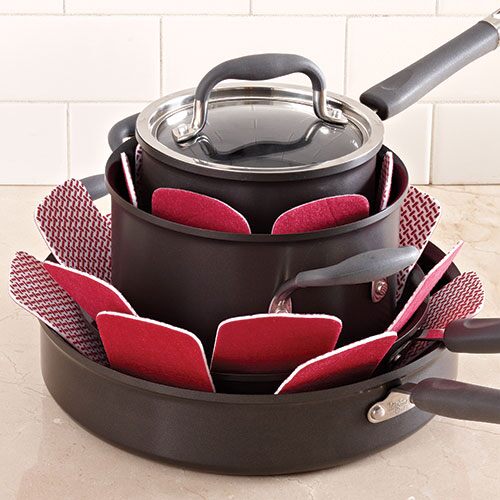
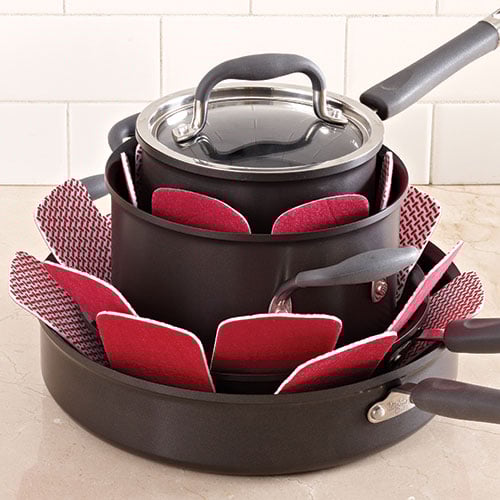
Applying cookware protectors is an easy way to keep your pots and pans safe. These soft layers stop scratches and dents. They also help your cookware last longer. Using protectors correctly makes stacking and storing simple and neat.
Layering Methods
Start by placing a protector at the bottom of each pan. Use one protector between every pot or pan. This creates a soft barrier that stops metal from touching metal. For deep pots, fold the protector to cover more surface. Avoid using too many layers; two or three protectors are enough.
Stacking Tips
Stack cookware from largest to smallest to save space. Always place a protector between each piece to avoid scratches. Keep heavy pans at the bottom and lighter ones on top. Check that protectors fit well and do not slip out. This keeps your kitchen organized and your cookware safe.
Maintaining Cookware Protectors
Maintaining cookware protectors helps extend their life and keeps your cookware safe. Proper care stops scratches and dents. It also keeps protectors clean and fresh for every use.
Cleaning And Care
Cookware protectors need gentle cleaning after each use. Hand wash with warm water and mild soap. Avoid harsh chemicals or abrasive sponges. Let them air dry completely before storing. Store in a dry, cool place to prevent damage. Regular cleaning keeps protectors soft and flexible.
Replacing When Needed
Check protectors often for signs of wear and tear. Look for cracks, tears, or thinning areas. Replace protectors if they lose shape or cushioning. Worn protectors no longer protect cookware properly. Replacing on time saves your pots and pans from damage.
Benefits Of Using Cookware Protectors
Cookware protectors help keep your pots and pans safe and clean. They act as a soft layer between items. This simple tool brings many benefits to your kitchen routine. Protectors save money and time by reducing damage. They also make storing cookware easier and more organized.
Preventing Scratches
Cookware protectors stop pans from rubbing against each other. This prevents scratches on non-stick and metal surfaces. Scratches can ruin the cooking surface and food quality. Protectors keep your cookware looking new longer. No more worrying about marks or dents.
Extending Pan Life
Using protectors reduces wear and tear on your pans. Less damage means your cookware lasts for years. This saves money on replacements. Pans with intact surfaces cook food more evenly. Protectors help maintain your investment in quality cookware.
Improving Storage
Cookware protectors make stacking pans safe and neat. They stop pans from sliding or banging into each other. This keeps your kitchen shelves tidy and organized. It also makes finding the right pan easier. Protectors help you save space and avoid clutter.
Credit: www.mxklm.com
Common Mistakes To Avoid
Using cookware protectors can extend the life of your pots and pans. Avoiding common mistakes helps protect your kitchen tools better. Simple errors can cause damage or reduce the protector’s effectiveness.
Overloading Pans
Stacking too many pans with protectors can crush them. Heavy weight can bend or tear the protectors. Use protectors only between a few pans to keep them safe. Light stacking keeps your cookware and protectors in good shape.
Ignoring Protector Damage
Damaged protectors lose their protective power. Small tears or holes can scratch your cookware. Check protectors often and replace worn ones quickly. Keeping protectors in good condition protects your pans well.
Frequently Asked Questions
What Are Cookware Protectors And Why Use Them?
Cookware protectors are soft pads placed between pots to prevent scratches. They extend your cookware’s lifespan and keep surfaces looking new. Using them avoids damage during stacking and storage, saving money on replacements and maintaining cookware performance.
How Do I Properly Place Cookware Protectors?
Place a protector between each pot or pan when stacking. Ensure the protector covers the entire base to avoid metal contact. This prevents scratches and dents, keeping your cookware in excellent condition during storage or transport.
Can Cookware Protectors Fit All Types Of Pots And Pans?
Yes, most cookware protectors are flexible and fit various sizes. They adapt to different diameters and shapes, protecting both non-stick and stainless steel surfaces. Check protector dimensions to ensure a snug fit for your cookware.
How To Clean And Maintain Cookware Protectors?
Clean protectors with mild soap and warm water after use. Air dry completely before storing to prevent mold or odors. Regular cleaning keeps them effective and hygienic for long-term use.
Conclusion
Using cookware protectors keeps your pots and pans safe from scratches. They help stack items neatly and save kitchen space. Protectors also extend the life of your cookware by preventing damage. Choose the right size and material for best results.
Clean them regularly to keep your kitchen tidy. Small steps like these make cooking easier and more enjoyable. Keep your cookware looking new with simple care. Protectors are a smart addition to any kitchen. Try them and see the difference they make.

Hello, This is Annie Walker, a 38-year-old blogger, founder, and editor of Cookware Guider from NY, USA. I am a cookware fanatic and passionate cooker. I love to cook with different types of cooking appliances (example: all types of cookware, rice cookers, slow cookers, etc) almost every day in my kitchen. I love to share my experience with my readers in my blog. Also, I enjoy helping people to solve their problems through my website. You can follow me on Twitter & Pinterest. To know details about my blog please check the about us page.