
Rust on your cast iron cookware can be frustrating to deal with. You rely on these heavy-duty pans for cooking your favorite meals, but when rust appears, it feels like your trusty tool is ruined.
The good news? You don’t have to throw it away or buy new ones. With the right steps, you can bring your cast iron back to life, restoring its non-stick surface and durability. Keep reading, and you’ll discover simple, effective methods to clean rust from your cast iron cookware—so you can get back to cooking with confidence.
Causes Of Rust On Cast Iron
Rust on cast iron cookware happens when iron meets water and air. This reaction causes the metal to corrode and form rust. Knowing why rust forms helps you stop it early and keep your cookware safe. Understanding these causes makes cleaning easier and prevents damage.
Exposure To Water
Water is the main cause of rust on cast iron. Leaving your cookware wet for long allows moisture to sit on the surface. This moisture reacts with the iron and starts rusting. Always dry your cast iron quickly after washing to avoid this.
Not Seasoning Properly
Seasoning creates a protective layer on cast iron. If the seasoning is thin or damaged, the metal is exposed. Without this barrier, water and air can reach the iron and cause rust. Regular seasoning keeps the surface safe and smooth.
Storing In Humid Places
Humidity in the air adds moisture to the cast iron. Storing your cookware in damp areas speeds up rust formation. A dry, ventilated place helps keep moisture away from your cast iron.
Using Harsh Cleaning Tools
Scrubbing cast iron with steel wool or harsh brushes can remove the seasoning. This exposes bare metal to air and water, leading to rust. Use soft sponges or brushes designed for cast iron care.
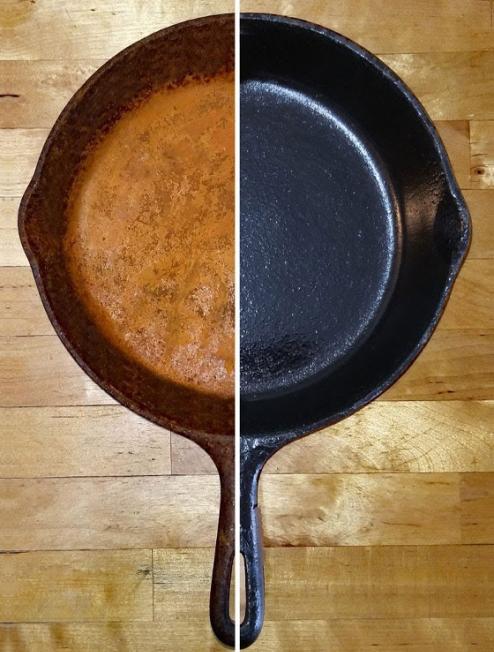
Credit: www.lodgecastiron.com
Tools Needed For Rust Removal
Removing rust from cast iron cookware requires the right tools. Having these tools ready makes the process easier and more effective. Each tool plays a key role in bringing your cookware back to life.
Steel Wool Or Abrasive Pads
Steel wool or abrasive pads help scrub off rust quickly. They are rough enough to remove rust but gentle enough to protect the cast iron. Use a medium or fine grade for best results.
White Vinegar
White vinegar helps dissolve rust naturally. Soaking the cookware in vinegar softens the rust, making it easier to remove. It is safe and commonly found in most kitchens.
Baking Soda
Baking soda acts as a gentle abrasive and neutralizes vinegar’s acidity. Mixing baking soda with water forms a paste that helps scrub away rust. It also cleans and deodorizes the cookware.
Soft Cloth Or Sponge
Use a soft cloth or sponge to wipe the cookware after scrubbing. It helps remove loose rust and cleaning residues. Avoid harsh sponges that might scratch the surface.
Cooking Oil
Cooking oil is essential for seasoning the cast iron after rust removal. It protects the surface and prevents future rust. Apply a thin layer evenly across the cookware.
Simple Methods To Remove Rust
Rust on cast iron cookware is common but easy to fix. Simple methods can restore your pan’s surface quickly. These techniques use items found in most kitchens. They remove rust gently without harming the cast iron. Follow these steps to bring your cookware back to life.
Using Vinegar Soak
Pour white vinegar and water in a 1:1 ratio into a container. Submerge the rusty cast iron piece fully. Let it soak for up to one hour. Check the progress every 15 minutes. Do not soak longer to avoid damage. After soaking, scrub the rust with a soft brush. Rinse the pan thoroughly with water. Dry it completely to stop new rust forming.
Scrubbing With Baking Soda
Make a thick paste using baking soda and water. Spread the paste over the rusty areas. Use a sponge or soft brush to scrub gently. Baking soda acts as a mild abrasive to lift rust. Rinse the pan well after scrubbing. Dry it with a clean cloth or paper towel. Repeat if rust remains until the surface is clean.
Applying Salt And Oil Paste
Mix coarse salt with a small amount of cooking oil. Rub this paste onto the rusty spots. The salt scrubs away rust without scratching the pan. The oil helps protect the cast iron surface. Use a cloth to apply and scrub the paste. Rinse the pan with warm water afterward. Dry the cookware fully to prevent more rust.

Credit: www.youtube.com
Deep Cleaning Techniques
Removing rust from cast iron cookware can be tough. Light cleaning might not work for heavy rust. Deep cleaning methods help restore your pan’s surface. These techniques remove rust completely and prepare your cookware for seasoning. Careful cleaning brings back the pan’s original strength and durability.
Using Steel Wool
Steel wool is a strong tool for scrubbing rust. Use fine or medium-grade steel wool. Wet the cookware and rub the rusty spots gently. The steel wool scrapes off rust without harming the metal underneath. Rinse the pan after scrubbing to clear away loose rust particles. Dry the pan well to stop new rust from forming. This method is fast and works well for small to medium rust patches.
Electrolysis Rust Removal
Electrolysis uses electricity to clean rust from cast iron. You need a power source, a plastic container, washing soda, and a steel or iron scrap. Fill the container with water and dissolve washing soda in it. Connect the pan and scrap to the power source with wires. The electric current moves rust from the pan to the scrap. This process is gentle on the cookware and removes rust deep inside pores. It takes several hours but leaves the cast iron clean and ready to season.
Seasoning Cast Iron After Cleaning
Seasoning cast iron after cleaning is key to protecting your cookware. It rebuilds the protective layer that rust may have damaged. This layer keeps the pan non-stick and stops rust from returning. Proper seasoning also improves the flavor of your food cooked in the pan.
After removing rust, seasoning restores the pan’s smooth surface. It helps the cast iron last for many years. Follow these steps carefully for the best results.
Choosing The Right Oil
Pick an oil that can handle high heat. Flaxseed oil is popular because it creates a strong coating. Vegetable oil or canola oil are also good choices. Avoid oils with low smoke points like olive oil. The right oil makes the seasoning last longer and protects better.
Proper Heating Process
Preheat your oven to 450°F (230°C). Apply a thin layer of oil all over the pan, inside and out. Use a cloth to spread the oil evenly. Place the pan upside down on the oven rack. Put a baking sheet below to catch drips. Bake for one hour, then turn off the oven. Let the pan cool inside the oven completely before removing.
Maintenance Tips
Clean your pan with warm water and a soft brush. Avoid soap or harsh scrubbing that can remove seasoning. Dry the pan fully after each use to prevent rust. Apply a light coat of oil after drying. Store in a dry place with good air flow. Regular care keeps your cast iron in great shape.
Preventing Rust In The Future
Preventing rust on cast iron cookware keeps it strong and safe to use. Rust damages the surface and spoils the cooking experience. Proper care helps the cookware last for many years. Small steps can stop rust from forming again.
Drying And Storage Tips
Always dry cast iron right after washing. Water left on the surface causes rust fast. Use a clean towel or place the pan on low heat to dry. Store the cookware in a dry place. Avoid stacking with wet items or in humid spots. A light coat of oil on the surface before storage helps keep moisture away.
Regular Maintenance Routine
Clean your cast iron after each use with warm water and a soft brush. Avoid soap or harsh detergents that remove the seasoning. Apply a thin layer of oil after cleaning and drying. This protects the pan and builds a non-stick surface. Check the cookware regularly for signs of rust or damage. Fix small rust spots quickly to stop spread.

Credit: southerncastiron.com
Frequently Asked Questions
How Do I Remove Rust From Cast Iron Cookware?
To remove rust, scrub the cookware with steel wool or a stiff brush. Use mild soap and warm water. Rinse and dry thoroughly. Re-season the pan with oil to restore its protective coating.
Can Vinegar Clean Rust Off Cast Iron Safely?
Yes, vinegar can remove rust effectively. Soak the cookware in a vinegar-water solution for up to an hour. Scrub gently to remove rust, then rinse and dry immediately. Avoid prolonged soaking to prevent damage.
How Often Should I Season Cast Iron After Rust Removal?
After rust removal, season your cast iron immediately. Apply a thin layer of oil and bake it at 350°F (175°C) for an hour. Regular seasoning after cleaning maintains the non-stick surface and prevents future rust.
What Household Items Help Clean Rust From Cast Iron?
Common items like baking soda, vinegar, and salt help clean rust. Make a paste with baking soda and water, scrub gently. Vinegar can soak rust away. Salt acts as an abrasive when scrubbing.
Conclusion
Cleaning rust from cast iron cookware keeps it useful and safe to cook. Use simple tools like steel wool or a scrub brush for best results. After cleaning, dry the pan well to stop rust from coming back. Season the pan with oil to protect its surface.
This care helps your cookware last many years. Rust removal does not have to be hard or time-consuming. Just a little effort brings back your pan’s strength and shine. Keep your cast iron ready for your next delicious meal.

Hello, This is Annie Walker, a 38-year-old blogger, founder, and editor of Cookware Guider from NY, USA. I am a cookware fanatic and passionate cooker. I love to cook with different types of cooking appliances (example: all types of cookware, rice cookers, slow cookers, etc) almost every day in my kitchen. I love to share my experience with my readers in my blog. Also, I enjoy helping people to solve their problems through my website. You can follow me on Twitter & Pinterest. To know details about my blog please check the about us page.