
Choosing The Best Material For Baking Pans: What Really Matters
If you love baking, you know the right pan can change everything. Sometimes, cookies burn on the bottom. Other times, cakes stick and break. These problems often happen because of the baking pan material. Each material handles heat differently, affects browning, and even changes how easy it is to clean. Picking the best baking pan isn’t just about price or shape—it’s about understanding what’s inside.
Many beginners think all pans are the same. But the truth is, the pan’s material can make your bread chewy or your muffins dry. It can even affect how your food tastes. If you want to bake like a pro, you need to know the strengths and weaknesses of each material.
This guide explains the most popular baking pan materials, their pros and cons, and how to pick the right one for your kitchen.
Common Baking Pan Materials Explained
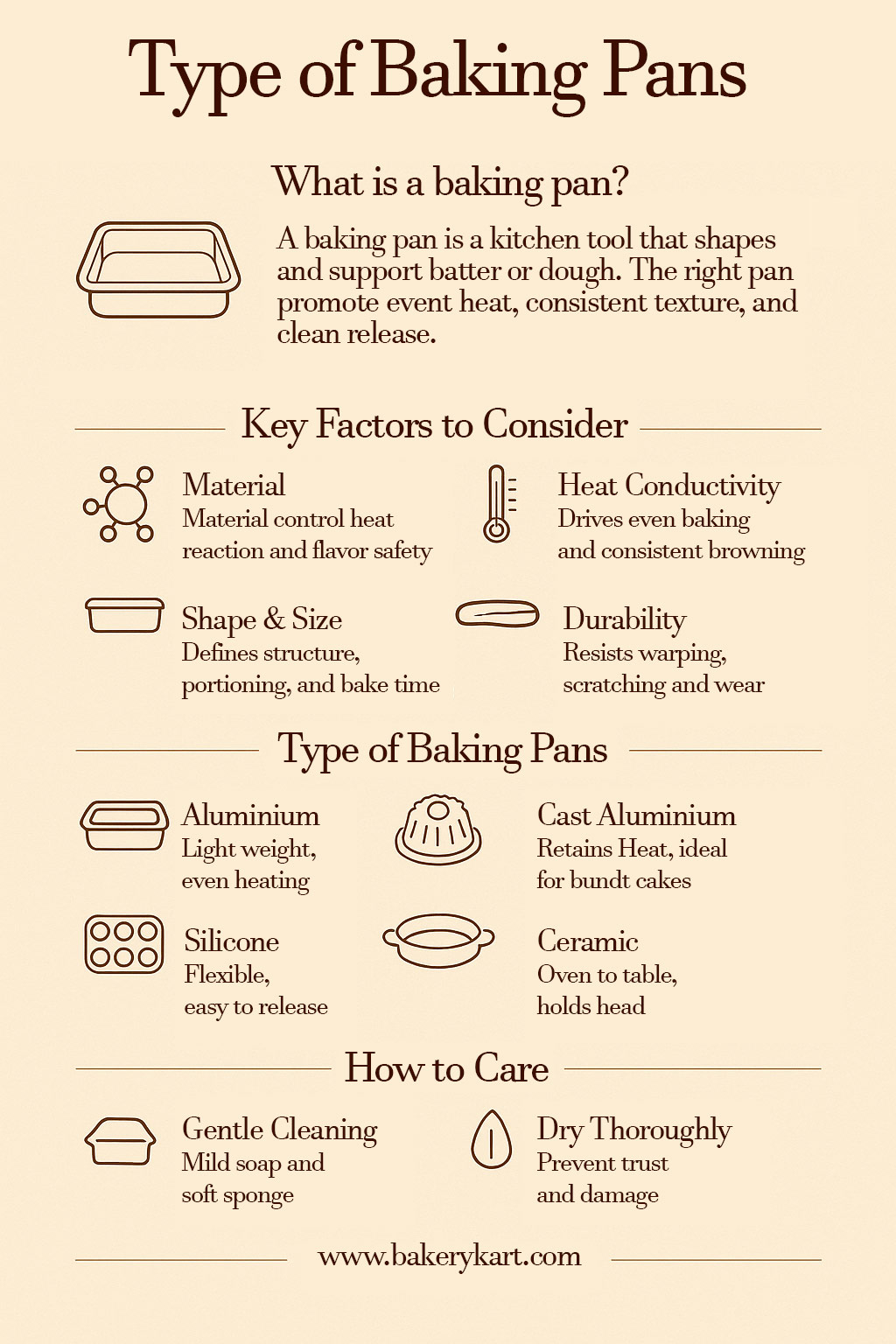
Baking pans come in several materials. Each one works differently in the oven, and some are better for certain recipes.
Aluminum
Aluminum is one of the most popular materials for baking pans. It is lightweight and affordable, making it a favorite in many kitchens.
- Heat conduction: Aluminum heats up quickly and spreads heat evenly. This helps prevent hot spots, so your cake or cookies bake evenly.
- Durability: Pure aluminum is soft and can scratch or dent easily. Many pans are made from anodized aluminum, which is harder and more resistant to corrosion.
- Reactivity: Aluminum can react with acidic foods (like tomato or lemon), causing discoloration and sometimes a metallic taste.
When to use: Aluminum pans are great for cakes, brownies, and cookies. Avoid using them for recipes with lots of acid.
Stainless Steel
Stainless steel pans are strong, shiny, and don’t rust. They are common in professional kitchens.
- Heat conduction: Stainless steel doesn’t conduct heat as well as aluminum. This can lead to uneven baking or longer cooking times.
- Durability: Stainless steel is tough. It resists scratches, dents, and doesn’t react with acidic foods.
- Cleaning: These pans can go in the dishwasher and are easy to scrub.
When to use: Stainless steel pans are best for roasting and recipes where even heat is less important. They are good for savory dishes, but not ideal for delicate cakes.
Nonstick
Nonstick pans are coated with materials like Teflon. The coating stops food from sticking, making cleanup easy.
- Heat conduction: Most nonstick pans are made from aluminum, so they conduct heat well.
- Durability: The coating can scratch and wear off, especially if you use metal utensils.
- Safety: Nonstick pans can release fumes if overheated. Always use them below 500°F (260°C).
When to use: Nonstick pans are perfect for sticky foods like muffins or quick breads. Don’t use them for recipes that need crisp edges, as the coating can block browning.
Glass
Glass baking dishes are see-through and often used for casseroles, brownies, and pies.
- Heat conduction: Glass heats slowly but keeps heat well. This means food cooks slower, but stays warm longer.
- Durability: Glass can break if dropped or exposed to sudden temperature changes.
- Cleaning: Glass is non-reactive and easy to clean. It doesn’t absorb odors.
When to use: Glass pans are great for pies, casseroles, and recipes where you want to see the browning. Avoid using them for quick recipes or when you need crisp crusts.
Ceramic
Ceramic pans are popular for casseroles and baked pasta. They often look colorful and pretty.
- Heat conduction: Ceramic heats slowly, like glass. It keeps heat well, so food stays hot after baking.
- Durability: Ceramic can chip or crack if dropped.
- Cleaning: Ceramic is non-reactive and easy to clean.
When to use: Ceramic pans are perfect for lasagna, baked pasta, and bread pudding. Avoid using them for fast baking or recipes needing crisp bottoms.
Cast Iron
Cast iron pans are heavy and sturdy. Some are coated with enamel for easier cleaning.
- Heat conduction: Cast iron heats slowly but stays hot for a long time. It can brown and crisp food well.
- Durability: Cast iron lasts for generations, but it can rust if not cared for.
- Maintenance: Needs to be seasoned with oil to stop sticking and rust.
When to use: Cast iron pans are great for cornbread, upside-down cakes, and recipes needing crisp edges. Not ideal for delicate cakes or cookies.
Silicone
Silicone baking pans are flexible and come in bright colors. They’re newer than other types.
- Heat conduction: Silicone heats slowly and doesn’t brown food well.
- Durability: Silicone doesn’t break or rust. But it can lose shape over time.
- Cleaning: Easy to clean and dishwasher safe.
When to use: Silicone pans are best for muffins, cupcakes, and recipes that need easy release. Not good for crispy cookies or bread.
Comparison Table: Heat Conductivity And Browning
To help you see the differences, here’s a table comparing popular pan materials for heat and browning:
| Material | Heat Conductivity | Browning | Best For |
|---|---|---|---|
| Aluminum | Excellent | Good | Cakes, cookies |
| Stainless Steel | Moderate | Fair | Roasting, savory dishes |
| Nonstick | Excellent | Poor to fair | Muffins, quick breads |
| Glass | Slow | Fair | Pies, casseroles |
| Ceramic | Slow | Fair | Lasagna, baked pasta |
| Cast Iron | Moderate | Excellent | Cornbread, crisp recipes |
| Silicone | Poor | Poor | Muffins, cupcakes |
:max_bytes(150000):strip_icc()/Web_1500-SEA-Group-Shot-Half-Sheet-Baking-Pans-Irvin-Lin-Photo-05-8521-50e2e9d9430c4f2a82407e877ec84131.jpg)
Credit: www.seriouseats.com
Which Material Is Best For Each Baking Task?
Different recipes need different pans. Here’s how to choose:
- Cakes and brownies: Aluminum pans give even heat and good browning. Nonstick pans are good for sticky recipes.
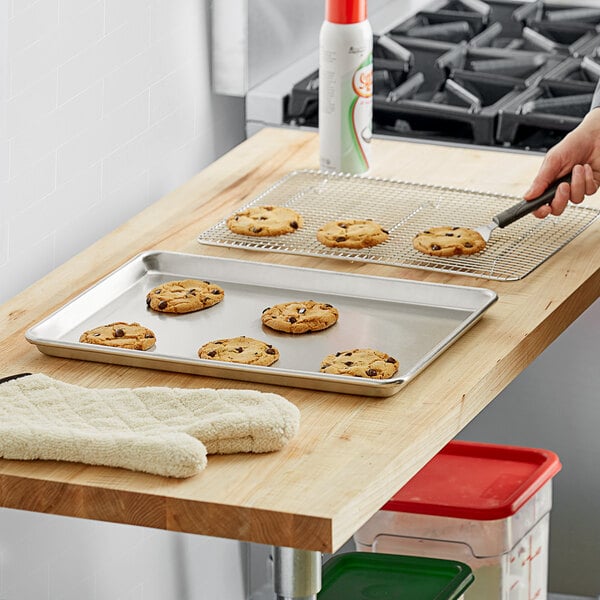
- Cookies: Aluminum pans help prevent burning. Dark nonstick pans can brown too quickly.
- Pie and tarts: Glass pans let you see the crust and check doneness. Metal pans can make crusts crisper.
- Bread: Cast iron gives a crispy crust. Aluminum or nonstick pans are good for quick breads.
- Roasting vegetables or meats: Stainless steel pans stand up to high heat and won’t react with acidic foods.
Durability And Maintenance Comparison
Some pans last longer than others. Here’s a quick look at how durable and easy to care for each material is:
| Material | Durability | Maintenance | Dishwasher Safe |
|---|---|---|---|
| Aluminum | Good (anodized) | Avoid acidic foods, hand wash | Sometimes |
| Stainless Steel | Excellent | Easy, no special care | Yes |
| Nonstick | Moderate | No metal utensils, gentle cleaning | Sometimes |
| Glass | Good | No sudden temperature changes | Yes |
| Ceramic | Moderate | Careful handling, avoid chipping | Yes |
| Cast Iron | Excellent | Season with oil, dry after washing | No |
| Silicone | Good | Easy cleaning, no special care | Yes |
Credit: seanfoster.co.nz
Non-obvious Insights Beginners Miss
Many new bakers don’t realize that:
- Pan color matters: Dark pans absorb more heat and can brown food faster. If you switch from a shiny to a dark pan, reduce oven temperature by 25°F to avoid burning.
- Thickness counts: Thicker pans prevent warping and spread heat better. Cheap, thin pans can twist and cause uneven baking.
- Edge design affects crispiness: Pans with rolled edges (like rimmed baking sheets) keep their shape and give crisper edges. Flat pans can warp easily.
Safety And Health Factors
Some materials are safer than others, especially when used correctly.
- Nonstick coatings: If scratched or overheated, they can release fumes. Always use wooden or silicone tools and never heat empty.
- Aluminum: Some people worry about aluminum exposure. Most research says it’s safe for cooking, but avoid scratched pans and never store acidic foods inside.
- Cast iron: Adds a small amount of iron to food. This can be good for people needing more iron.
If you want to see more about material safety, you can check FDA food safety guidelines.
Credit: www.bakerykart.com
Price And Value Comparison
Not all pans cost the same. Here’s a look at what you get for your money.
| Material | Average Price Range (US) | Value for Money |
|---|---|---|
| Aluminum | $8–$30 | High |
| Stainless Steel | $15–$50 | High |
| Nonstick | $10–$35 | Moderate |
| Glass | $12–$40 | Moderate |
| Ceramic | $15–$45 | Moderate |
| Cast Iron | $20–$60 | High |
| Silicone | $8–$25 | Moderate |
How To Choose The Best Baking Pan Material For Your Needs
When choosing a baking pan, consider:
- Type of recipe: Cakes, cookies, pies, or bread? Each needs different heat and browning.
- Oven habits: If you bake often, invest in durable materials like stainless steel or cast iron.
- Cleaning style: If you hate hand washing, look for dishwasher safe pans.
- Health concerns: If you avoid chemicals, skip nonstick coatings and use glass or ceramic.
- Budget: Aluminum pans are affordable and work well for most recipes.
Don’t make the mistake of buying a pan just because it looks nice. Always check the material, thickness, and edge design. If you bake both sweet and savory foods, keep separate pans to avoid flavor mixing.
Frequently Asked Questions
What Is The Best Material For Baking Cakes?
The best material for cakes is aluminum. It heats evenly and gives good browning. Nonstick pans are also helpful for sticky batters, but aluminum is more reliable for consistent results.
Are Nonstick Pans Safe For Baking?
Yes, nonstick pans are safe if used properly. Do not overheat them (keep below 500°F/260°C) and avoid scratching the coating. Always use silicone or wooden utensils.
Why Do My Cookies Burn On The Bottom?
Cookies often burn because of dark pans or thin materials. Dark pans absorb more heat, while thin pans warp and create hot spots. Try using a shiny aluminum pan and check your oven temperature.
Can I Use Glass Pans For Baking Bread?
You can use glass pans for bread, but it may cook slower and the crust might not get as crisp. For crusty bread, cast iron or aluminum pans are better.
How Do I Prevent Sticking In Metal Pans?
To prevent sticking, use parchment paper, grease the pan with butter or oil, or choose a nonstick pan. For aluminum or stainless steel, always line with paper or lightly grease.
Finding the right baking pan material can make your baking more fun and your results more tasty. Understand your recipes, pick the best material, and treat your pans well—they’ll reward you with perfect bakes every time.

Hello, This is Annie Walker, a 38-year-old blogger, founder, and editor of Cookware Guider from NY, USA. I am a cookware fanatic and passionate cooker. I love to cook with different types of cooking appliances (example: all types of cookware, rice cookers, slow cookers, etc) almost every day in my kitchen. I love to share my experience with my readers in my blog. Also, I enjoy helping people to solve their problems through my website. You can follow me on Twitter & Pinterest. To know details about my blog please check the about us page.