
Cooking chicken tenders in a pan is a classic method that delivers crispy, juicy results without the need for deep frying. Many home cooks wonder exactly how long to fry chicken tenders in a pan for perfect texture and safety. The answer depends on several factors: thickness, temperature, batter, and whether your tenders are fresh or frozen. Understanding the right frying time helps you avoid undercooked or dry chicken, and ensures a safe, delicious meal. This guide explains everything you need to know about pan-frying chicken tenders, with clear steps, practical tips, and common mistakes to avoid.
Understanding Chicken Tender Sizes And Thickness
Chicken tenders are usually thin strips from the breast, but their size can vary. Thicker pieces take longer to cook, while thin strips fry faster. Most store-bought tenders are about ½ inch thick and 4–5 inches long. If you cut your own, aim for even thickness, so all pieces cook at the same speed.
| Chicken Tender Size | Approx. Fry Time (per side) | Notes |
|---|---|---|
| Thin (¼ inch) | 2–3 minutes | Fast cooking, risk of overcooking |
| Standard (½ inch) | 3–4 minutes | Most common size |
| Thick (¾ inch+) | 4–6 minutes | Check doneness carefully |
For best results, keep tenders uniform. If some are thicker, pound them gently with a meat mallet or the back of a pan.
The Essential Frying Process
Knowing the right process matters as much as timing. Here’s a step-by-step approach:
- Preheat the pan: Use a heavy skillet, like cast iron or stainless steel. Heat over medium-high for about 2 minutes before adding oil.
- Add oil: Use enough oil to cover the bottom, usually ¼ inch deep. Vegetable, canola, or peanut oil works best for frying.
- Check oil temperature: Aim for 350–375°F (177–190°C). If you don’t have a thermometer, sprinkle a tiny bit of flour—if it sizzles, the oil is ready.
- Prepare tenders: Pat chicken dry. Coat with flour, egg, and breadcrumbs, or your favorite batter.
- Fry tenders: Place in the pan, leaving space between each. Cook until golden and crispy on one side, then flip.
- Total fry time: Usually 6–8 minutes total, or 3–4 minutes per side for standard tenders.
- Check doneness: Internal temperature should reach 165°F (74°C). If unsure, cut one open to check for pinkness.
Factors That Affect Frying Time
Frying time isn’t always fixed. Here are key factors that can change how long you need to cook chicken tenders:
- Thickness: Thicker tenders require more time.
- Batter/bread coating: Heavy coating can slow down cooking and require lower heat to prevent burning.
- Pan material: Cast iron retains heat, while thinner pans may cool quickly, changing cook times.
- Oil temperature: If oil is too hot, tenders burn outside but stay raw inside; too cool, and they absorb oil and become greasy.
Example: Frying Time For Different Coatings
| Coating Type | Fry Time (per side) | Crispiness |
|---|---|---|
| Plain flour | 3–4 minutes | Light, golden |
| Bread crumbs | 4–5 minutes | Extra crispy |
| Heavy batter | 5–6 minutes | Thick crust |
Step-by-step Guide To Pan-frying Chicken Tenders
For beginners, here’s a clear guide to pan-frying chicken tenders:
- Prepare ingredients:
- 1 lb chicken tenders (about 8–10 pieces)
- ½ cup flour
- 2 eggs, beaten
- 1 cup breadcrumbs (or panko)
- Salt, pepper, and spices (optional)
- Oil for frying
- Dry the chicken: Pat tenders dry with paper towels.
- Season and coat: Sprinkle with salt and pepper. Dip in flour, then egg, then breadcrumbs.
- Heat oil: Pour enough oil in the pan for a shallow fry. Heat to 350°F.
- Add tenders: Place tenders in the hot oil. Don’t overcrowd—work in batches.
- Fry first side: Cook for 3–4 minutes until golden.
- Flip and fry: Turn and cook other side for 3–4 minutes. Adjust heat if browning too fast.
- Check doneness: Internal temp should be 165°F. If you don’t have a thermometer, cut open to check.
- Drain and serve: Place cooked tenders on a plate lined with paper towels. Serve hot.
Practical Cooking Tips
- Keep oil hot but not smoking: Smoking oil burns coating and creates off flavors.
- Don’t crowd the pan: Overcrowding lowers oil temperature and makes tenders soggy.
- Rest after frying: Let tenders sit for 2–3 minutes before serving for juicier meat.
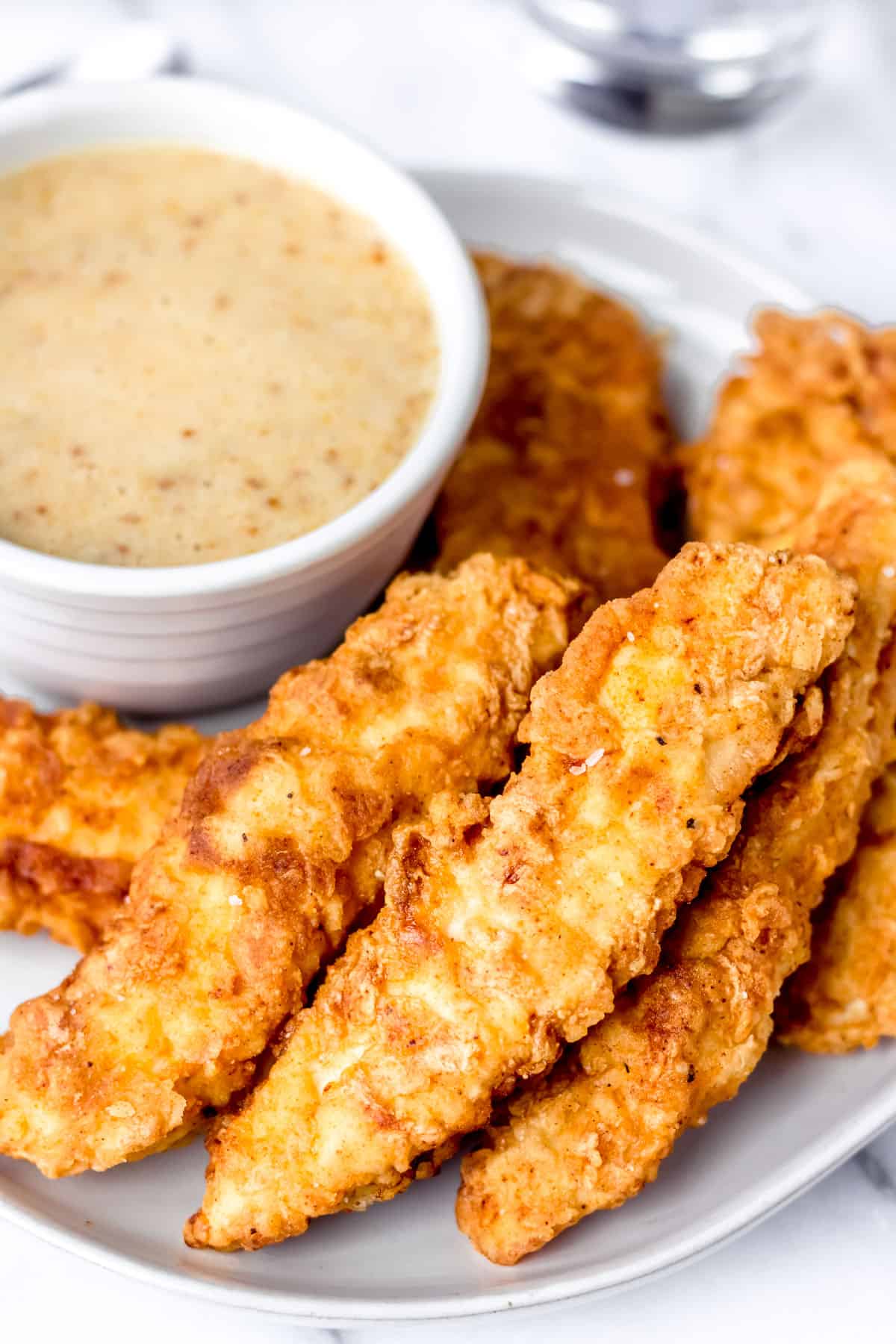
Credit: deliciouslittlebites.com
Common Mistakes And How To Avoid Them
Even experienced cooks make errors when frying chicken tenders. Here are some mistakes to watch for:
- Undercooking: Always check internal temperature—165°F is safe. If the center is pink, fry longer.
- Overcrowding: Too many tenders in the pan drops oil temperature, resulting in greasy coating.
- Using cold oil: Oil that isn’t hot enough means soggy, oily chicken.
- Overcooking: Frying for too long dries out the meat and burns the crust.
- Flipping too often: Flip only once for best crust.
How To Fix If Tenders Are Undercooked
If you realize your tenders are undercooked after frying, you can finish them in a preheated oven at 350°F for 5–8 minutes. This helps avoid burning the crust.
Comparing Pan-frying To Other Methods
Pan-frying is different from deep frying, baking, or air frying. Here’s how they compare:
| Method | Cook Time | Texture | Healthiness |
|---|---|---|---|
| Pan-frying | 6–8 min | Crispy outside, juicy inside | Moderate oil |
| Deep frying | 4–6 min | Very crispy | High oil |
| Baking | 15–20 min | Less crispy | Low oil |
| Air frying | 8–12 min | Moderately crispy | Minimal oil |
Pan-frying offers a good balance between crispiness and oil use. It’s also easier to control the result compared to deep frying.

Credit: wholelottayum.com
How To Tell When Chicken Tenders Are Done
The most reliable way is to use a meat thermometer. Insert it into the thickest part—165°F signals safe, cooked chicken. If you don’t have a thermometer, look for:
- Golden brown crust
- Juices run clear
- No pink in the center
Sometimes, beginners misjudge by color alone. The crust can brown quickly, but the inside may still be raw, especially with thick tenders. Always check at least one piece.
Adjusting Fry Time For Frozen Chicken Tenders
Frozen chicken tenders need extra attention. If frying from frozen, add 2–3 minutes to the total time. Always check the internal temperature, since frozen meat can cook unevenly. It’s safer to thaw tenders first in the fridge overnight.
Nutritional Data For Pan-fried Chicken Tenders
Pan-fried chicken tenders are popular, but how healthy are they? Here’s basic nutrition for one average tender (about 50g):
- Calories: 120–150
- Protein: 11g
- Fat: 6–9g
- Carbs: 8–12g
The exact numbers depend on coating and oil used. Using less oil and leaner batter reduces calories.
Practical Insights Most Beginners Miss
Many cooks focus only on frying time, but two overlooked factors are:
- Resting after frying: Letting tenders rest for a few minutes makes them juicier. The juices settle, so meat doesn’t dry out.
- Oil maintenance: After each batch, remove any burnt crumbs from the oil with a slotted spoon. This keeps the oil clean and prevents bitter flavors.
Another insight is that pan size matters. Using a smaller pan means more batches and less control over oil temperature. Choose a wide skillet to fry more at once without crowding.
Serving Ideas And Dipping Sauces
Pan-fried chicken tenders are versatile. Serve with:
- Honey mustard
- Ranch dressing
- Barbecue sauce
- Buffalo sauce
Pair with fries, salad, or steamed vegetables for a balanced meal. For extra flavor, toss tenders in a little melted butter and hot sauce after frying.
Safety And Food Handling Tips
- Wash hands after handling raw chicken.
- Use separate utensils for raw and cooked meat.
- Store leftovers within 2 hours, refrigerate for up to 3 days.
Cooked tenders can be reheated in the oven at 350°F for 8–10 minutes.
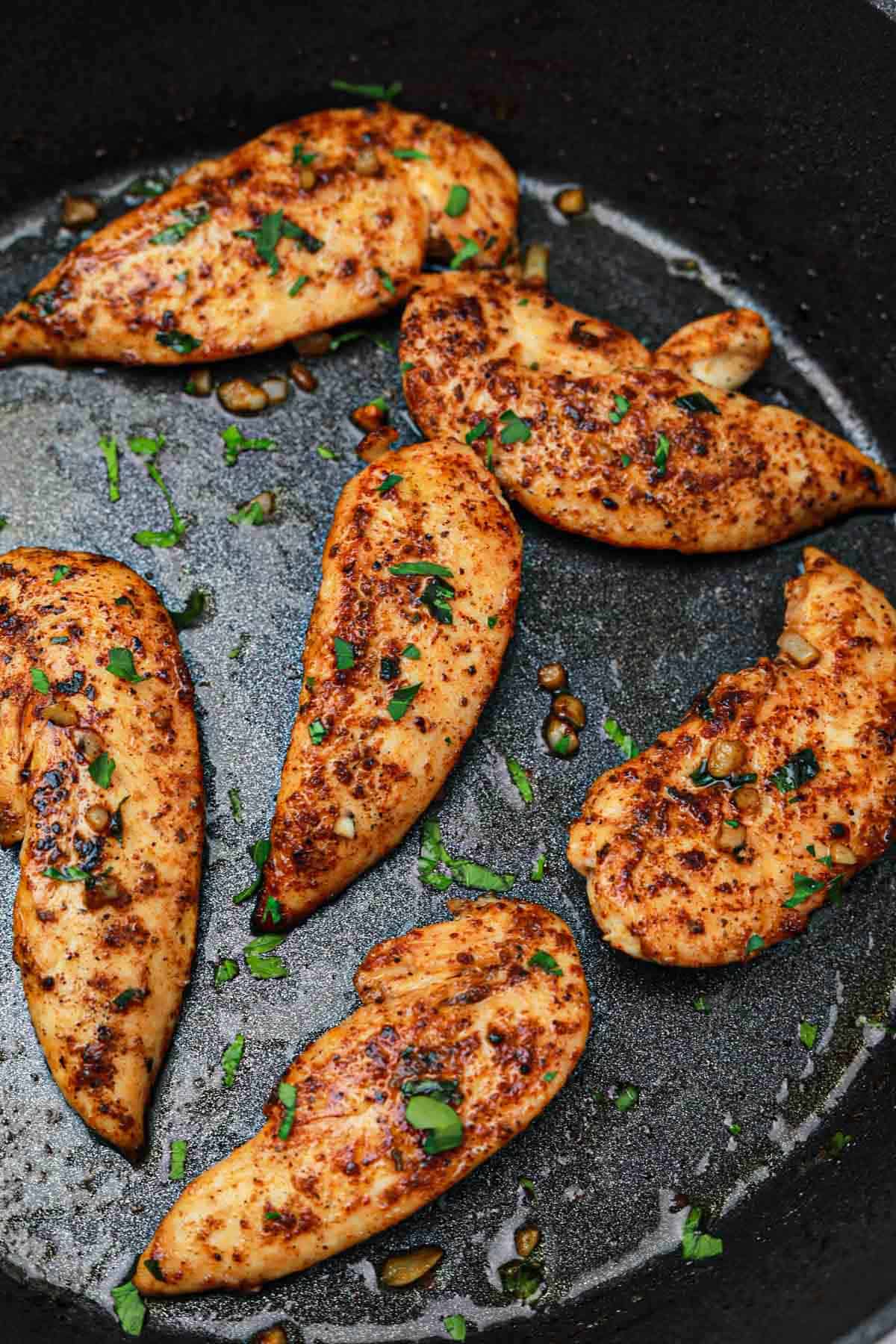
Credit: www.recipevibes.com
Frequently Asked Questions
How Long Should I Fry Chicken Tenders In A Pan?
For standard-sized chicken tenders, fry for 3–4 minutes per side. The total time is about 6–8 minutes. Always check for a golden crust and an internal temperature of 165°F.
Can I Fry Chicken Tenders Without Breading?
Yes, you can fry unbreaded chicken tenders. They cook a bit faster—about 2–3 minutes per side. The result is juicy and less crispy, but still tasty.
What Oil Is Best For Frying Chicken Tenders?
Canola, vegetable, or peanut oil are ideal. They have high smoke points and don’t add strong flavor. Avoid butter or olive oil, which can burn at frying temperatures.
How Do I Know If Chicken Tenders Are Cooked Safely?
Use a meat thermometer to check the thickest part. If it reads 165°F, the tenders are safe. If you don’t have a thermometer, cut open to check for clear juices and no pink.
What Should I Do If My Tenders Are Burnt Outside But Raw Inside?
Lower the heat and try again. Burnt outside means oil is too hot. Next time, fry at medium heat and check thickness. If needed, finish cooking in the oven for even results. For expert advice on cooking temperatures and safety, visit Foodsafety.gov.
Pan-frying chicken tenders is simple once you know the right timing and techniques. With the tips above, you can make crispy, juicy tenders every time—without guessing or risking undercooked meat. Enjoy your meal, and impress family and friends with your frying skills!

Hello, This is Annie Walker, a 38-year-old blogger, founder, and editor of Cookware Guider from NY, USA. I am a cookware fanatic and passionate cooker. I love to cook with different types of cooking appliances (example: all types of cookware, rice cookers, slow cookers, etc) almost every day in my kitchen. I love to share my experience with my readers in my blog. Also, I enjoy helping people to solve their problems through my website. You can follow me on Twitter & Pinterest. To know details about my blog please check the about us page.