
Cooking fish in a frying pan is a simple, quick, and delicious way to enjoy seafood at home. Many people avoid cooking fish because they think it’s difficult or messy. In reality, pan-frying fish is easy if you follow a few basic steps.
Whether you’re a beginner or just want to improve your results, this guide will show you how to cook fish in a frying pan with confidence. You’ll learn how to choose the right fish, prepare it, fry it perfectly, and avoid common mistakes that can ruin your meal.
Choosing The Right Fish For Pan-frying
Not every type of fish is perfect for pan-frying. Some fish hold their shape well and have a great texture when fried, while others can fall apart or become too dry.
- Best fish for frying: Cod, tilapia, snapper, haddock, catfish, salmon, trout, and sea bass. These have firm flesh and mild flavors.
- Fish to avoid: Very oily fish like mackerel or very delicate fish like flounder can be harder to pan-fry for beginners.
Freshness is key. Fresh fish should smell like the sea, not “fishy. ” The flesh should be firm and shiny, not dull or mushy. If you’re buying fillets, look for even thickness for even cooking.
Whole Fish Vs. Fillets
Whole fish give more flavor but take longer to cook and are more difficult to handle. Fillets are faster and easier, especially for beginners. Skin-on fillets are popular because the skin gets crispy and helps hold the fish together.
Here’s a quick look at popular choices:
| Fish Type | Texture | Typical Cooking Time (per side) |
|---|---|---|
| Cod | Firm, flaky | 3-4 min |
| Salmon | Rich, tender | 4-5 min |
| Tilapia | Delicate, mild | 2-3 min |
| Trout | Delicate, nutty | 2-3 min |
Essential Ingredients And Tools
Before you start, gather everything you need. This will help you cook smoothly without rushing.
Ingredients
- Fish fillets (about 6-8 oz per person)
- Salt and pepper
- Flour or cornmeal (for dredging, optional)
- Oil (canola, vegetable, or olive oil)
- Butter (optional, for flavor)
- Lemon wedges (for serving)
- Herbs like parsley or dill (optional)
Tools
- Non-stick or stainless steel frying pan (10-12 inch is ideal)
- Fish spatula (thin, flexible for lifting fish)
- Tongs (optional, for flipping)
- Paper towels (for drying fish)
- Plate lined with paper towels (for draining excess oil)
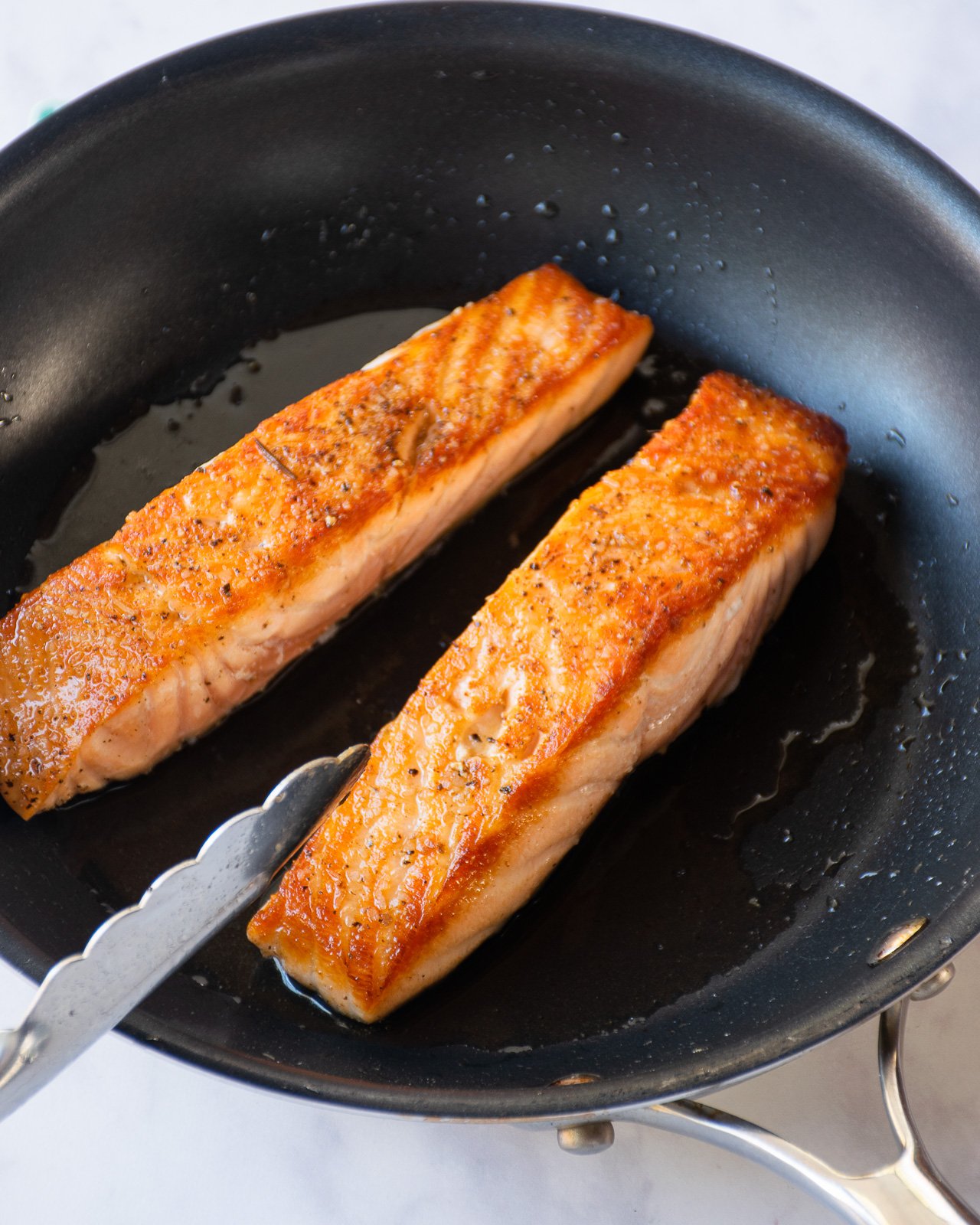
Credit: bluejeanchef.com
Preparing Fish For The Pan
Good preparation makes a big difference in the final taste and texture.
Dry The Fish
Use paper towels to pat the fish dry on both sides. Moisture on the surface causes the fish to steam, not fry, and can stop it from getting crispy.
Season Well
Sprinkle salt and pepper on both sides. You can add other spices like paprika, garlic powder, or lemon zest for extra flavor, but simple is often best.
Dredge In Flour (optional)
Lightly coat the fish in flour or cornmeal. This step is optional but helps create a crispy crust and keeps the fish from sticking to the pan. Shake off any extra flour before frying.
Remove Fish From The Fridge Early
Take the fish out of the refrigerator 10-15 minutes before cooking. Cold fish can cause oil to splatter and may cook unevenly.
Step-by-step Guide: How To Pan-fry Fish
Let’s break down the process into simple steps so you can follow along easily.
1. Heat The Pan
Place your pan on medium-high heat. Add about 2-3 tablespoons of oil. The oil should shimmer but not smoke. You can test by flicking a drop of water; if it sizzles, the pan is ready.
2. Add The Fish
Carefully lay the fish in the pan, skin-side down if it has skin. Always place the fish away from you to avoid splashing hot oil.
- Don’t overcrowd: Cook in batches if needed. Crowding lowers the temperature and makes the fish soggy.
- Don’t move the fish: Let it cook undisturbed for 2-5 minutes (depending on thickness). The fish will release from the pan when ready.
3. Flip And Finish Cooking
Gently slide a fish spatula under the fish and flip it. Cook the other side until golden and cooked through. Most fillets take about 6-8 minutes total.
- Check doneness: The fish is done when it flakes easily with a fork and looks opaque. For thick fillets, you can finish in a preheated oven at 375°F for 3-5 minutes.
4. Add Butter And Herbs (optional)
For extra flavor, add a tablespoon of butter and a few herbs in the last minute of cooking. Spoon the melted butter over the fish.
5. Rest And Serve
Remove the fish and let it rest on a paper towel-lined plate for 2 minutes. This helps absorb extra oil and keeps the crust crisp.
Serve with lemon wedges and your favorite sides like rice, salad, or roasted vegetables.
Common Pan-frying Mistakes And How To Avoid Them
Even experienced cooks make mistakes when frying fish. Here are some common errors and how to avoid them:
- Using wet fish: Always dry your fish well. Water causes oil to splatter and prevents browning.
- Overcrowding the pan: Leave space between fillets. If needed, cook in batches.
- Not enough oil: Too little oil leads to sticking and uneven cooking. Use enough to coat the pan.
- Moving the fish too soon: Wait until it naturally releases from the pan before flipping.
- Overcooking: Fish cooks quickly. Remove it from heat as soon as it flakes.
An often-missed tip: Let your oil get hot enough before adding fish. If the oil isn’t hot, the fish will soak up oil and become greasy rather than crisp.
Tips For Crispy And Flavorful Fish
Want that perfect restaurant-style texture? Here are a few extra tips:
- Use a mix of oil and butter: Oil prevents burning, while butter adds flavor.
- Try different coatings: Panko breadcrumbs or cornmeal give extra crunch.
- Add aromatics: Fry a few garlic cloves or herb sprigs in the oil for added taste.
- Squeeze lemon juice: A little acid brightens the flavors and cuts through any oiliness.
Cooking Times For Different Fish
Cooking time depends on the thickness and type of fish. Here’s a quick reference:
| Fish Thickness | Cooking Time (per side) | Notes |
|---|---|---|
| 1/2 inch | 2-3 min | Thin fillets, quick cooking |
| 1 inch | 4-5 min | Medium fillets, check doneness |
| Whole small fish | 5-6 min | Flip carefully |
A simple rule: Cook fish for about 8-10 minutes per inch of thickness, turning halfway through.

Credit: www.recipetineats.com
Health Benefits Of Pan-fried Fish
Fish is not just tasty; it’s also healthy. Pan-frying can be a healthy cooking method if you use the right oil and avoid heavy breading.
- High in protein: Fish provides lean protein for muscle and energy.
- Omega-3 fatty acids: Salmon, trout, and sardines are rich in these heart-healthy fats.
- Low in calories: When pan-fried with little oil, fish is a light meal option.
A 4-ounce serving of pan-fried cod has about 120 calories, 22 grams of protein, and less than 1 gram of saturated fat (without heavy breading).
Cleaning Up After Cooking
Frying fish can leave behind odors and a greasy pan. Here’s how to make cleanup easier:
- Wipe the pan with paper towels while still warm (but not hot).
- Wash with hot, soapy water and a soft sponge.
- For lingering smells, simmer water with lemon slices in the pan for a few minutes.
- Air out your kitchen by opening windows or using a fan.
When Things Go Wrong: Troubleshooting
Sometimes, despite your best efforts, things don’t go as planned. Here are some quick fixes:
- Fish stuck to the pan: Let it cook longer before trying to flip. If it still sticks, use the spatula to gently loosen it in small sections.
- Fish breaks apart: Next time, use a firmer fish or a light flour coating to hold it together.
- Burnt outside, raw inside: Lower the heat and cook more slowly, or finish thick fillets in the oven.
A non-obvious insight: Sometimes, the pan just isn’t the right tool. If you have very thin or delicate fillets, consider oven-baking or steaming instead.
Comparing Pan-frying To Other Cooking Methods
How does pan-frying stack up against other ways to cook fish? Here’s a simple comparison:
| Method | Texture | Time | Best For |
|---|---|---|---|
| Pan-frying | Crispy outside, moist inside | Quick (6-10 min) | Most fillets |
| Baking | Even, soft | 15-20 min | Delicate or thick fish |
| Grilling | Smoky, firm | 8-12 min | Steaks, whole fish |
| Steaming | Very tender | 8-15 min | Very delicate fish |
Each method has its place, but pan-frying offers a balance of speed, crispiness, and flavor.

Credit: www.recipetineats.com
Frequently Asked Questions
How Do I Keep Fish From Sticking To The Pan?
Start with a hot, well-oiled pan and dry fish. Use a non-stick pan if possible. Let the fish cook undisturbed until it releases easily.
What Oil Is Best For Pan-frying Fish?
Choose a neutral oil with a high smoke point, like canola, vegetable, or light olive oil. Avoid butter alone, as it burns quickly.
Can I Pan-fry Frozen Fish?
It’s best to thaw fish first for even cooking. If you must cook from frozen, rinse and dry very well, then cook on lower heat to avoid burning the outside.
How Do I Know When Fish Is Cooked?
Fish is done when it flakes easily with a fork and looks opaque. The internal temperature should reach 145°F (63°C). For more info, check the FDA’s seafood safety guide.
Why Does My Fish Taste Bland?
Season generously before cooking and finish with lemon juice or fresh herbs. Try a light flour or cornmeal crust for more flavor and texture.
Cooking fish in a frying pan is quick, healthy, and rewarding. With the right fish, a hot pan, and a few simple steps, you can create a delicious meal in minutes. Don’t be afraid to experiment with different coatings and seasonings, and remember—practice makes perfect.
Soon, pan-fried fish will become one of your go-to dishes for busy nights or special occasions.

Hello, This is Annie Walker, a 38-year-old blogger, founder, and editor of Cookware Guider from NY, USA. I am a cookware fanatic and passionate cooker. I love to cook with different types of cooking appliances (example: all types of cookware, rice cookers, slow cookers, etc) almost every day in my kitchen. I love to share my experience with my readers in my blog. Also, I enjoy helping people to solve their problems through my website. You can follow me on Twitter & Pinterest. To know details about my blog please check the about us page.