
Cooking a T-bone steak in a frying pan is a skill anyone can master with the right guidance. Many people think you need a grill or expensive equipment for a perfect steak, but a simple pan in your kitchen works just as well.
The T-bone steak, with its combination of tenderloin and strip, offers rich flavor and a satisfying texture. If you want a juicy, restaurant-quality steak at home, this guide will walk you through every step. You’ll learn how to select the best cut, prepare and season it, cook it to your preferred doneness, and avoid mistakes that can ruin your meal.
Even if you’re new to cooking steak, you’ll finish with confidence and a plate full of flavor.
What Makes T-bone Steak Special?
The T-bone steak is known for its iconic T-shaped bone, which separates two different cuts of beef: the tenderloin and the strip steak. This gives you the best of both worlds in one piece of meat. The strip side is meaty and flavorful, while the tenderloin is soft and buttery.
The T-bone is usually cut at least 1 inch thick, but thicker steaks (up to 2 inches) are common in steakhouses. The thickness affects cooking time and the final texture. Because of its size and variety of textures, cooking a T-bone in a frying pan needs a bit of technique—but it’s very doable.
Key Facts About T-bone Steak
| Feature | T-Bone Steak | Ribeye Steak | Sirloin Steak |
|---|---|---|---|
| Main Cuts | Tenderloin & Strip | Rib muscle | Top sirloin muscle |
| Typical Thickness | 1–2 inches | 1–1.5 inches | 0.75–1.5 inches |
| Flavor Profile | Rich, beefy, tender | Juicy, fatty, bold | Lean, slightly chewy |
Non-obvious insight: The bone helps the steak cook more evenly, but it also means the meat near the bone will cook slower than the edges.
Choosing The Best T-bone Steak
Selecting quality beef is the first step to a delicious meal. Here’s what to look for:
- Marbling: Look for small white flecks of fat inside the meat. These melt during cooking, giving flavor and juiciness.
- Color: Fresh T-bone steaks are bright red, not brown or gray.
- Thickness: For pan-cooking, a steak between 1 and 1.5 inches thick is ideal. Thinner steaks cook too fast and can dry out. Thicker steaks are harder to cook evenly in a pan.
- Grade: In the US, steak is graded as Prime, Choice, or Select. Prime has the most marbling and flavor, but Choice is also a good option for most people.
Tip: If possible, buy your steak from a butcher rather than pre-packed. You can often request the exact thickness and see the meat quality up close.

Credit: annavocino.com
Essential Ingredients And Tools
Before you cook, gather your ingredients and tools. Here is what you need for a classic pan-seared T-bone:
Ingredients (for 1–2 Servings)
- 1 T-bone steak (1–1.5 inches thick, about 16–20 oz)
- 1–2 teaspoons coarse salt (like kosher or sea salt)
- 1 teaspoon black pepper, freshly ground
- 2–3 tablespoons high-smoke-point oil (canola, grapeseed, or avocado oil)
- 2 tablespoons unsalted butter
- 2–3 garlic cloves, crushed
- 2–3 sprigs fresh thyme or rosemary (optional)
Equipment
- Heavy frying pan (cast iron is best)
- Tongs
- Instant-read thermometer (for perfect doneness)
- Paper towels
- Plate or tray for resting
Non-obvious insight: Using a cast iron pan helps create a crust because it holds heat better than lighter pans.
Prepping The Steak For The Pan
Proper preparation makes a big difference in the final taste and texture.
- Bring to Room Temperature: Take the steak out of the fridge 30–60 minutes before cooking. This helps it cook more evenly.
- Pat Dry: Use paper towels to dry the steak thoroughly. Moisture on the surface will steam the meat instead of searing it.
- Season Generously: Sprinkle salt and pepper on both sides and the edges. Don’t be shy—some will come off in the pan.
Common mistake: Salting too early can draw out moisture. Season right before cooking for a better crust.

Credit: www.olivemagazine.com
Step-by-step: Cooking T-bone Steak In A Frying Pan
Now for the main event. Follow these steps for a steakhouse-quality result every time.
1. Heat The Pan
Place your pan on the stove and turn the heat to high. Let it get very hot—this takes about 3–5 minutes. The pan should be almost smoking before you add the steak.
Tip: Flick a drop of water onto the pan. If it sizzles and evaporates immediately, the pan is ready.
2. Add Oil
Pour in the oil and swirl it to coat the bottom. Use enough to prevent sticking, but not so much that it pools.
3. Sear The Steak
Lay the steak in the pan away from you to avoid splatters. You should hear a loud sizzle.
- For a 1–1.5 inch thick steak, sear each side for about 3–4 minutes. Do not move the steak during this time. This allows a golden-brown crust to form.
Non-obvious insight: Press the meat gently with tongs for better contact with the pan, but don’t flatten it.
4. Sear The Edges
Hold the steak with tongs and sear the fat strip and the edges for about 30 seconds each. This adds flavor and helps render fat.
5. Add Butter And Aromatics
Reduce the heat to medium-low. Add butter, garlic, and herbs to the pan. As the butter melts, tilt the pan slightly and spoon the melted butter over the steak (this is called basting). Do this for 1–2 minutes.
6. Check Doneness
Use an instant-read thermometer to check the internal temperature.
| Doneness | Target Temperature (°F) | Color Inside |
|---|---|---|
| Rare | 120–125 | Red, cool center |
| Medium Rare | 130–135 | Warm red center |
| Medium | 140–145 | Warm pink center |
| Medium Well | 150–155 | Slightly pink, mostly brown |
| Well Done | 160+ | Brown throughout |
Remove the steak from the pan when it’s 5°F below your target. The temperature rises as it rests.
7. Rest The Steak
Place the steak on a plate and cover loosely with foil. Rest for 5–10 minutes. This lets the juices settle and keeps the steak moist.
Common mistake: Cutting the steak too soon causes juices to run out, making the meat dry.
8. Slice And Serve
Cut the meat away from the bone, then slice against the grain. This makes each bite more tender.
Serving suggestion: Top with a sprinkle of flaky salt and serve with roasted vegetables or a fresh salad.
Tips For The Perfect Pan-seared T-bone
- Do not overcrowd the pan. If cooking more than one steak, use a bigger pan or cook in batches.
- Ventilate your kitchen. Searing at high heat creates smoke.
- Let the steak rest. This is not optional if you want juicy meat.
- Don’t skip the thermometer. Guesswork often leads to overcooked or undercooked steak.
Comparison: Pan Vs. Grill Vs. Oven
Here’s how pan-cooking compares to other methods.
| Method | Crust Quality | Juiciness | Ease | Special Tools Needed |
|---|---|---|---|---|
| Frying Pan | Excellent | High | Easy | No |
| Grill | Very Good | High | Medium | Yes |
| Oven (Broil) | Good | Medium | Medium | No |
Insight: Pan-searing gives you the best crust and is easiest for beginners, especially if you do not have outdoor space for grilling.
Common Mistakes And How To Avoid Them
- Starting with a cold steak: Always let the meat warm up before cooking.
- Under-seasoning: Steak needs more salt than you think for a flavorful crust.
- Moving the steak too soon: Let it sear undisturbed for a golden crust.
- Skipping the rest: Resting is as important as cooking for juicy results.
- Using low heat: High heat is essential for a good sear and flavor.
Flavor Variations And Additions
Once you master the basics, you can experiment with different flavors:
- Garlic Butter: Mix chopped herbs and minced garlic into the butter before adding to the pan.
- Peppercorn Crust: Press cracked black pepper into the steak for a spicy edge.
- Spicy Rub: Add paprika, cayenne, or chili powder to your seasoning for heat.
Pro tip: Avoid sugary marinades—they burn easily during searing.
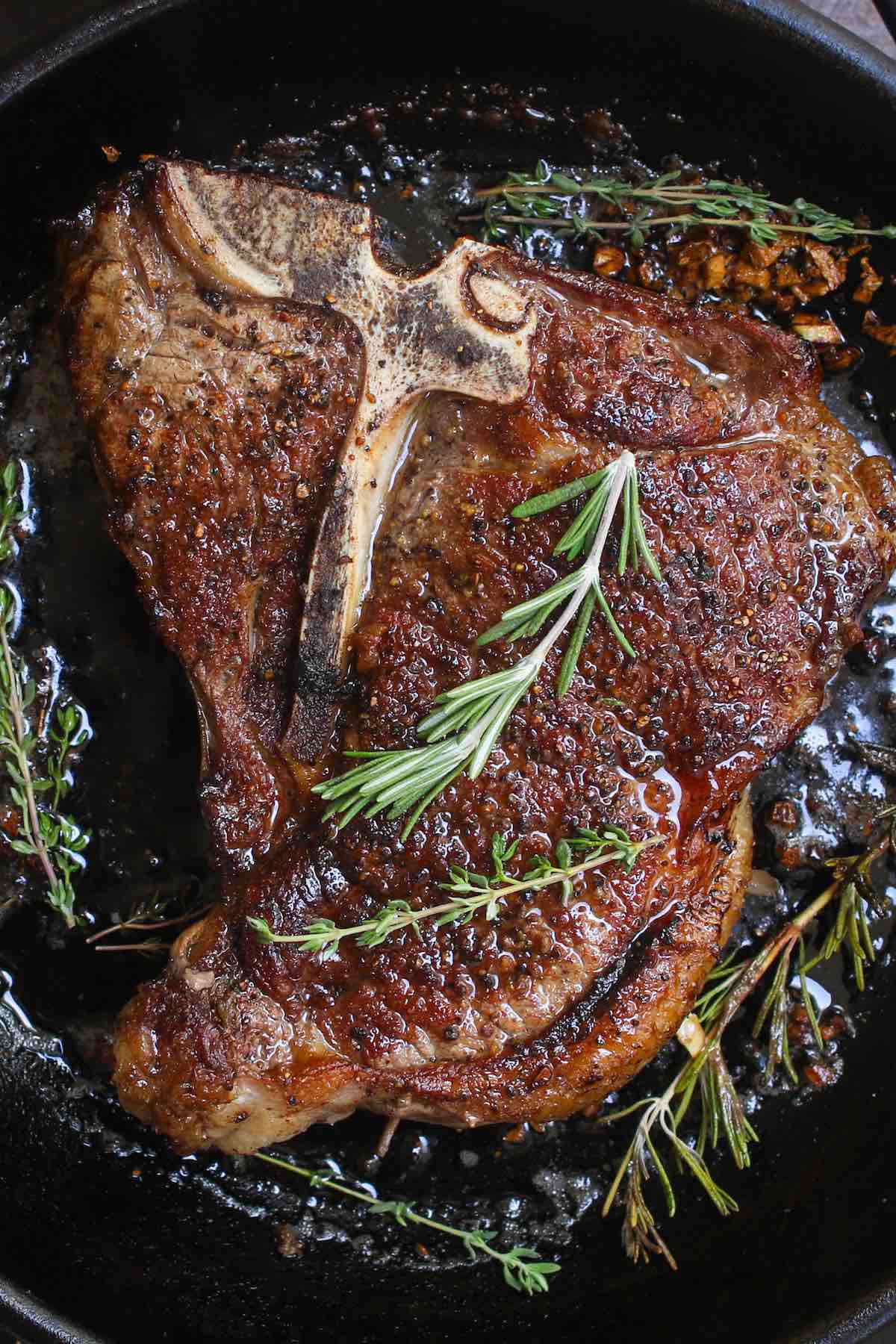
Credit: tipbuzz.com
Nutrition And Serving Size
A 16-oz T-bone steak (cooked, without bone) provides about:
- Calories: 900–1100 (depending on fat content)
- Protein: 70–80g
- Fat: 55–70g
This is enough for 2 servings, especially if paired with side dishes.
Note: Steak is high in protein and iron but also contains saturated fat. Enjoy as part of a balanced diet. For more on beef nutrition, see Beef Nutrition.
Frequently Asked Questions
How Long Should I Cook A T-bone Steak In A Frying Pan?
For a 1–1. 5 inch thick T-bone, cook 3–4 minutes per side for medium rare. Use a thermometer for best results, as times can vary with pan and steak thickness.
Do I Need To Use Butter When Pan-searing Steak?
Butter adds rich flavor and helps create a golden crust, especially when combined with herbs and garlic. You can skip it, but the taste will not be as complex.
Can I Cook A Frozen T-bone Steak In A Pan?
It’s possible, but not recommended. The outside will cook before the inside thaws, leading to uneven doneness. Thaw your steak overnight in the fridge for best results.
Why Is My Steak Tough After Cooking?
Overcooking or cutting the steak too soon causes toughness. Use a thermometer to avoid overcooking, and always let the steak rest before slicing.
What Oil Should I Use For Frying Steak?
Use a high-smoke-point oil like canola, grapeseed, or avocado oil. Olive oil can burn at high heat and give a bitter taste.
Cooking a T-bone steak in a frying pan is simple once you know the key steps. With the right cut, proper preparation, and attention to detail, you can enjoy a restaurant-quality steak at home. Don’t be afraid to experiment with flavors or side dishes.
Remember, the pan is your friend—use it with confidence, and you’ll serve up delicious steak every time.

Hello, This is Annie Walker, a 38-year-old blogger, founder, and editor of Cookware Guider from NY, USA. I am a cookware fanatic and passionate cooker. I love to cook with different types of cooking appliances (example: all types of cookware, rice cookers, slow cookers, etc) almost every day in my kitchen. I love to share my experience with my readers in my blog. Also, I enjoy helping people to solve their problems through my website. You can follow me on Twitter & Pinterest. To know details about my blog please check the about us page.