
Cooking chicken in a pan is one of the easiest ways to make a quick and delicious meal. But many people wonder: How long does it really take to pan fry chicken? If you cook it too short, you risk getting raw chicken. Too long, and the meat becomes dry and tough. Getting the timing right is crucial for both taste and safety. In this guide, you’ll learn exactly how long to pan fry different types of chicken, what affects cooking times, and how to get that perfect golden crust without stress.
What Affects Pan Frying Time?
Before you set the timer, it’s important to know that several factors influence how long your chicken will take to cook.
- Thickness of the chicken: Thin cutlets cook faster than thick breasts or bone-in pieces.
- Type of chicken cut: Breasts, thighs, wings, or drumsticks all have different ideal cook times.
- Boneless vs. bone-in: Boneless cooks quicker than bone-in.
- Pan temperature: A hot pan gives a golden crust but can burn if too high.
- Starting temperature: Chicken straight from the fridge takes longer than room temperature.
- Amount of oil: Enough oil prevents sticking and helps even browning.
Knowing these factors helps you adjust cook times for your recipe and avoid undercooked or dry chicken.
Pan Frying Times For Different Chicken Cuts
Let’s break down the typical times for the most common chicken pieces. These are averages for medium heat using a standard skillet.
| Chicken Cut | Boneless/Bone-in | Average Thickness | Pan Fry Time (per side) | Total Cook Time |
|---|---|---|---|---|
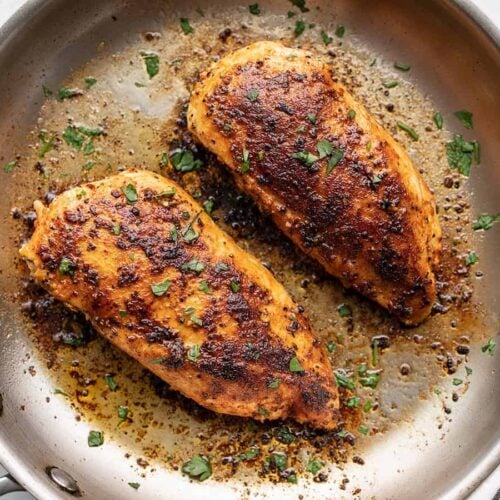
| Chicken Breast (cutlet) | Boneless | 1/2 inch | 3-4 min | 6-8 min |
| Chicken Breast (whole) | Boneless | 1 inch+ | 6-8 min | 12-16 min |
| Chicken Thigh | Boneless | 3/4 inch | 4-5 min | 8-10 min |
| Chicken Thigh | Bone-in | 1 inch+ | 7-8 min | 14-16 min |
| Chicken Drumsticks | Bone-in | Varies | 8-10 min | 16-20 min |
| Chicken Wings | Bone-in | Varies | 6-8 min | 12-16 min |
Tip: Always check the thickest part for doneness, not just the outside color.
Credit: www.budgetbytes.com
How To Pan Fry Chicken: Step-by-step
Cooking chicken in a pan is simple, but small details make a big difference. Follow these steps for juicy, evenly-cooked chicken.
- Prep the chicken: Pat dry with paper towels. Season both sides with salt, pepper, and spices.
- Pound if needed: For even cooking, gently pound thick breasts to an even thickness.
- Heat the pan: Use medium or medium-high heat. Add enough oil to coat the bottom (about 1-2 tablespoons).
- Add chicken: Place chicken in a single layer. Do not overcrowd.
- Let it sear: Don’t move the chicken for the first few minutes. This helps create a crisp crust.
- Flip once: Turn chicken when golden brown on the first side.
- Reduce heat if needed: If browning too fast, lower the heat to prevent burning.
- Check doneness: Use a meat thermometer (165°F/74°C for safe chicken). Or, cut into the thickest part—juices should run clear, not pink.
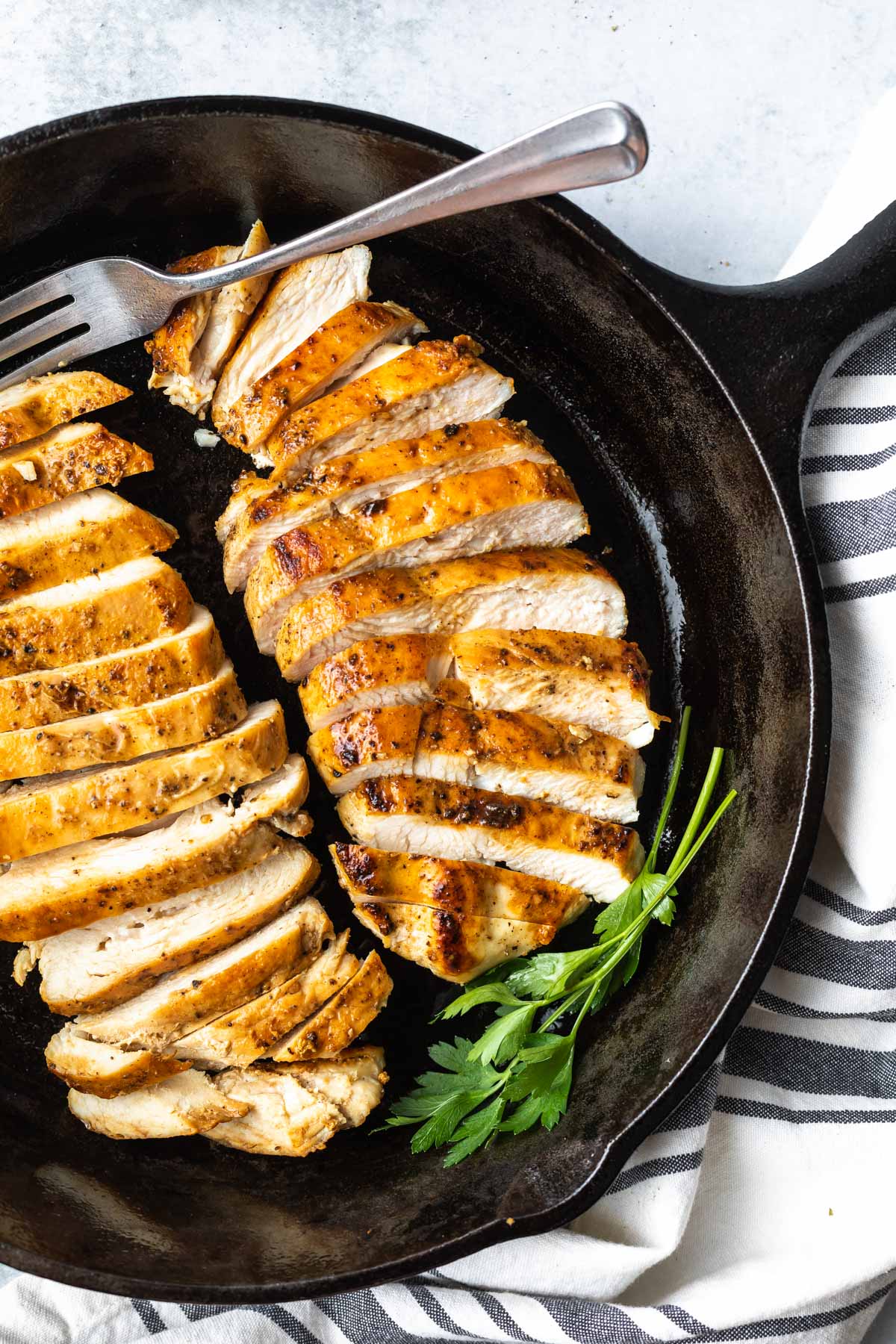
- Rest before slicing: Let the chicken rest for 2-3 minutes. This keeps juices inside.
Bone-in Vs. Boneless: What’s The Difference?
Bone-in chicken takes longer to cook than boneless. The bone acts as insulation, slowing down heat transfer. For example, a boneless chicken thigh might cook in 8 minutes, while a bone-in thigh could take 14-16 minutes. The flavor is often richer with bone-in, but timing is more critical.
If you want a quick meal, choose boneless cuts. For deeper flavor and a juicier bite, bone-in is worth the extra time.
Common Mistakes When Pan Frying Chicken
Many beginners make the same errors when pan frying chicken. Avoid these common pitfalls:
- Pan too cold: The chicken absorbs oil and turns soggy instead of crisping.
- Pan too hot: The outside burns before the inside cooks.
- Overcrowding: Crowding the pan drops the temperature, causing steaming, not frying.
- Not checking temperature: Guessing leads to undercooked or overcooked chicken.
- Skipping rest time: Cutting too soon releases juices and dries out the meat.
Pro tip: Use a thermometer for accuracy. It’s the easiest way to avoid guesswork.
How Pan Size And Material Affect Cooking Time
The type of pan matters more than you might think. A heavy skillet (like cast iron) holds heat better and cooks more evenly than a thin, lightweight pan. Here’s a quick comparison:
| Pan Type | Heat Retention | Evenness | Best For |
|---|---|---|---|
| Cast Iron | High | Very even | Thick cuts, crisp crust |
| Stainless Steel | Medium | Good | Cutlets, boneless pieces |
| Nonstick | Low | Even | Thin cutlets, easy cleanup |
| Aluminum | Low | Uneven | Quick meals, less browning |
If you want beautiful browning and even cooking, use a heavy pan. For easy cleanup, nonstick is fine, but avoid high heat.
How To Tell When Chicken Is Done
Color is not enough—sometimes chicken looks cooked outside but is raw inside. Here’s how to check for doneness:
- Internal temperature: 165°F (74°C) is the safe minimum. Use an instant-read thermometer.
- Juice test: Pierce the thickest part; juices should be clear, not pink.
- Firmness: Cooked chicken feels firm but not hard.
- Color inside: Should be white, not pink or translucent.
If in doubt, cook for one more minute and check again.
How To Pan Fry Chicken Evenly
Getting even cooking means no raw spots and no overcooked edges. Here’s how to do it:
- Even thickness: Pound thick pieces so all parts cook at the same speed.
- Preheat the pan: Hot pan = even browning.
- Don’t overcrowd: Leave space between pieces so heat can circulate.
- Flip only once: Too much flipping lowers pan temperature.
- Move thicker pieces to the hotter spot: Pans can have hot and cool spots—adjust pieces as needed.
Credit: www.simplywhisked.com
How Oil Choice Impacts Pan Frying
Not all oils are equal for pan frying chicken. The smoke point (the temperature oil starts to burn) matters.
- Best oils: Canola, vegetable, peanut, or sunflower oil. They have a high smoke point and neutral flavor.
- Olive oil: Use only for lower heat, as it burns easily.
- Butter: Adds flavor, but burns quickly. Mix with oil for better results.
High-heat oils prevent burning and keep the chicken tasting clean.
How To Make Crispy Pan-fried Chicken
A crispy crust makes pan-fried chicken special. Here’s how to get that crunch:
- Pat chicken dry before seasoning—excess moisture steams instead of fries.
- Dredge in flour or breadcrumbs for extra crunch. Dip chicken in beaten egg, then coat with flour or panko.
- Don’t flip too soon—let the crust form before turning.
- Don’t cover while cooking—steam softens the crust.
If you want a healthier version, skip the breading, but let the surface dry well before pan frying.
Pan Frying Vs. Other Cooking Methods
How does pan frying compare to baking or deep frying? Here’s a simple comparison:
| Method | Cook Time (avg) | Texture | Fat Used |
|---|---|---|---|
| Pan Frying | 8-16 min | Crispy, moist | 1-2 tbsp oil |
| Baking | 20-30 min | Even, drier | Light coating |
| Deep Frying | 6-12 min | Very crispy | Full submersion |
Pan frying is faster than baking, uses less oil than deep frying, and gives a satisfying golden crust.
Safety Tips For Pan Frying Chicken
Chicken must always be cooked safely to avoid food poisoning. Follow these rules:
- Never eat undercooked chicken. Salmonella and Campylobacter are serious risks.
- Clean all surfaces touched by raw chicken—cutting boards, knives, hands.
- Don’t reuse marinade that touched raw chicken unless you boil it first.
- Use a thermometer for best results.
- Let cooked chicken rest on a clean plate, not the raw one.
For more on food safety, see the USDA’s guide to safe poultry preparation.

Credit: www.youtube.com
Advanced Tips For Perfect Pan-fried Chicken
Want to level up your pan frying? Try these expert secrets:
- Brine the chicken for 30 minutes before cooking. Salt water makes meat juicier.
- Let chicken come to room temperature for 15-20 minutes before frying. It cooks more evenly.
- Finish thick pieces in the oven: Sear both sides, then bake at 375°F for a few minutes if the outside browns before the inside cooks through.
- Use a splatter guard for less mess.
- Rest on a wire rack instead of a plate, so the bottom stays crispy.
Most home cooks skip brining or don’t let meat warm up before cooking—these two steps alone can transform your results.
Frequently Asked Questions
How Do I Pan Fry Chicken Without It Sticking?
Use enough oil to coat the pan, and let it get hot before adding chicken. Don’t move the chicken for the first few minutes—once it forms a crust, it will naturally release from the pan.
Can I Pan Fry Frozen Chicken?
It’s best to thaw chicken before pan frying. Frozen chicken cooks unevenly and the outside may burn before the inside is done. If you must cook from frozen, use lower heat and extend the cooking time, but check temperature carefully.
What Temperature Should I Pan Fry Chicken At?
Use medium to medium-high heat. The oil should shimmer but not smoke. If the pan is too hot, the chicken will burn outside and stay raw inside.
Why Is My Pan Fried Chicken Dry?
Dry chicken usually means overcooking or starting with meat that is too thin. Use a thermometer and remove the chicken as soon as it hits 165°F. Let it rest before slicing to keep juices in.
How Do Restaurants Get Chicken So Crispy?
They often use a dredge (flour or batter), fry at the right temperature, and let the crust form before flipping. Some restaurants double-fry chicken for extra crunch, but at home, proper breading and not covering the pan will help.
Pan frying chicken is fast, flavorful, and easy once you know the right timing and a few pro secrets. Remember to adjust for thickness, use the right pan and oil, and always check doneness for safety and taste. With these tips, your next pan-fried chicken will be golden, juicy, and just right.

Hello, This is Annie Walker, a 38-year-old blogger, founder, and editor of Cookware Guider from NY, USA. I am a cookware fanatic and passionate cooker. I love to cook with different types of cooking appliances (example: all types of cookware, rice cookers, slow cookers, etc) almost every day in my kitchen. I love to share my experience with my readers in my blog. Also, I enjoy helping people to solve their problems through my website. You can follow me on Twitter & Pinterest. To know details about my blog please check the about us page.