
Few things compare to the taste and experience of a perfectly pan-fried ribeye steak. The ribeye is famous for its rich marbling, deep flavor, and tender texture. You don’t need a grill or fancy equipment—just a hot pan, a good cut of steak, and attention to detail. Whether you’re making steak for a special dinner or just want to treat yourself, learning how to pan fry ribeye steak can turn a simple meal into something unforgettable.
This guide will show you every step, from choosing the right steak to achieving the perfect crust and doneness. You’ll also find out about common mistakes, pro tips, and answers to questions that most beginners have but rarely ask.
Why Pan Fry Ribeye Steak?
Pan frying is one of the best ways to cook a ribeye. First, it gives you full control over heat and timing. Second, the pan’s contact with the meat creates a beautiful golden-brown crust—known as the Maillard reaction—that seals in juices and boosts flavor. This method works year-round, whether you have an outdoor grill or not.
Another advantage: you can easily baste the steak with butter, garlic, and herbs for extra taste. And, unlike grilling, there’s no risk of flare-ups or losing juices to the fire.
Choosing The Best Ribeye Steak
Selecting the right steak is the most important step. Not all ribeyes are created equal. Here’s what matters:
Grade And Marbling
USDA grades like Prime, Choice, and Select reflect quality. Prime has the most marbling (fat within the meat), which means more tenderness and flavor. Choice is also good, while Select can be lean and less juicy.
Thickness
A steak that’s 1.25 to 1.5 inches thick is ideal for pan frying. Thinner steaks cook too quickly and can dry out; thicker ones may not cook through evenly in a pan.
Bone-in Vs. Boneless
Bone-in ribeyes hold more flavor and stay juicier, but boneless are easier to handle. Both are excellent—choose based on your preference.
Dry-aged Vs. Wet-aged
Dry-aged steaks are more expensive but offer a deeper, nutty flavor. Wet-aged is more common and still delicious.
Here’s a quick comparison of ribeye grades:
| Grade | Marbling | Tenderness | Price (per lb) |
|---|---|---|---|
| Prime | High | Very Tender | $20–$30 |
| Choice | Moderate | Tender | $12–$20 |
| Select | Low | Less Tender | $8–$12 |
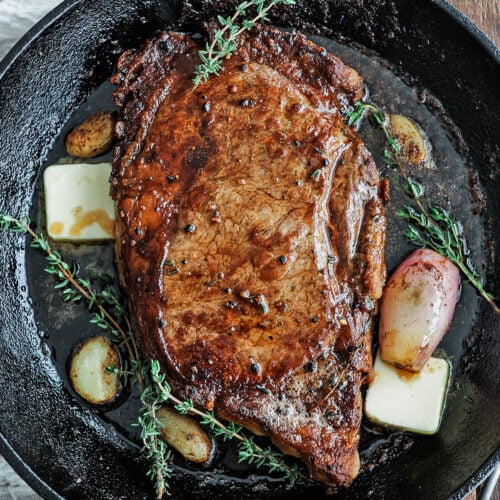
Credit: www.billyparisi.com
Essential Tools And Ingredients
To pan fry ribeye steak like a pro, gather the right tools and ingredients:
- Heavy skillet or pan (cast iron is best)
- Tongs (not forks)
- Paper towels
- Instant-read thermometer (for perfect doneness)
For the steak:
- 1 ribeye steak (1.25–1.5 inches thick, 12–16 oz)
- Kosher salt
- Freshly ground black pepper
- 1–2 tablespoons high-heat oil (canola, grapeseed, or vegetable)
- 2 tablespoons unsalted butter
- 2–3 garlic cloves, smashed
- 2–3 sprigs of fresh thyme or rosemary (optional)
Preparation: Getting Ready To Cook
Bring To Room Temperature
Take the steak out of the fridge at least 30–60 minutes before cooking. This helps it cook evenly.
Pat Dry
Use paper towels to dry the surface. A dry steak will sear better and form a crisp crust.
Season Generously
Coat both sides with kosher salt and black pepper. Don’t be shy—much of the seasoning stays on the pan.
Step-by-step: How To Pan Fry Ribeye Steak
Follow these steps for a steakhouse-quality result.
1. Preheat The Pan
Heat your skillet over high heat for 3–5 minutes. It should be very hot but not smoking. Cast iron works best because it retains heat and sears evenly.
2. Add Oil
Pour in 1–2 tablespoons of oil and swirl to coat the pan. Use a high-smoke-point oil to avoid burning.
3. Sear The Steak
Place the steak in the center of the pan. You should hear a loud sizzle. Let it sear without moving for 2–3 minutes. This forms the crust.
4. Flip And Sear The Other Side
Turn the steak with tongs and sear the other side for another 2–3 minutes.
5. Add Butter And Aromatics
Reduce the heat to medium-low. Add the butter, garlic, and herbs to the pan. As the butter melts, tilt the pan and use a spoon to baste the steak with the melted butter. Do this for 1–2 minutes.
6. Check Doneness
Use an instant-read thermometer to check the center:
- Rare: 120°F (cool red center)
- Medium-rare: 130°F (warm red center)
- Medium: 140°F (pink center)
- Medium-well: 150°F (slightly pink)
- Well done: 160°F (little or no pink)
For the juiciest results, aim for medium-rare (130°F). Remember, the steak continues to cook after removing from the pan.
7. Rest The Steak
Transfer the steak to a plate and cover loosely with foil. Rest for at least 5–10 minutes. This lets juices redistribute.
8. Slice And Serve
Slice against the grain for maximum tenderness. Serve with your favorite sides.
Here’s a simple timeline for a 1.5-inch steak:
| Step | Time |
|---|---|
| Preheat pan | 3–5 min |
| Sear side 1 | 2–3 min |
| Sear side 2 | 2–3 min |
| Baste with butter | 1–2 min |
| Rest | 5–10 min |
Common Mistakes To Avoid
Even experienced cooks can make errors when pan frying ribeye. Here’s what to watch out for:
- Steak too cold: Cooking straight from the fridge leads to uneven doneness.
- Pan not hot enough: Without high heat, you won’t get a good sear.
- Overcrowding: Cooking more than one steak at a time lowers the pan’s temperature.
- Using too much oil: Extra oil can fry instead of sear the meat.
- Cutting too soon: Slicing before the rest period means losing juices.

Credit: www.bbcgoodfood.com
Pro Tips For Perfect Pan-fried Ribeye
- Let the steak air-dry in the fridge (uncovered) for a few hours before cooking. This dries the surface and helps create a better crust.
- Use a thermometer for accuracy. Guessing leads to over- or undercooked steak.
- Finish with flaky sea salt after cooking for extra texture.
- Tilt the pan when basting. This pools the butter for easier spooning over the meat.
- Let the steak rest on a rack (if possible) instead of a flat plate. This prevents the bottom from steaming and softening the crust.
Pan Fry Vs. Other Cooking Methods
How does pan frying compare to grilling or broiling? Here’s a quick look:
| Method | Crust Quality | Flavor Depth | Juiciness | Ease of Use |
|---|---|---|---|---|
| Pan Frying | Excellent | High | High | Easy |
| Grilling | Good | Smoky | Medium | Medium |
| Broiling | Fair | Medium | Medium | Easy |
| Sous Vide + Sear | Excellent | Very High | Very High | Advanced |
Pan frying stands out for ease, flavor, and crust—especially if you don’t have outdoor space or want to cook indoors.

Credit: www.bbcgoodfood.com
Sides And Sauces To Pair With Ribeye
A great steak deserves the right sides. Classic choices include:
- Roasted potatoes or mashed potatoes
- Sautéed mushrooms
- Creamed spinach
- Grilled asparagus
- Simple green salad
For sauces, try:
- Classic béarnaise
- Peppercorn sauce
- Garlic herb butter
- Chimichurri
Keep sides simple to let the ribeye shine.
Nutrition Facts
Ribeye is rich in protein, iron, and flavor—but also higher in fat than leaner cuts. Here’s a rough breakdown for a 12 oz (340g) ribeye, pan fried with butter:
- Calories: ~900
- Protein: 65g
- Fat: 72g
- Carbs: 0g
Ribeye is a treat, not an everyday food. Enjoy it as part of a balanced diet.
Frequently Asked Questions
How Long Should I Cook Each Side Of Ribeye Steak?
For a 1.25–1.5 inch thick steak, cook each side for 2–3 minutes over high heat. Finish with 1–2 minutes of basting. Times may vary based on thickness and desired doneness.
Should I Use Oil Or Butter For Pan Frying Ribeye?
Start with a high-heat oil (like canola or grapeseed) for searing. Add butter later for flavor—don’t use butter alone at first, as it can burn.
Can I Cook Frozen Ribeye Steak In A Pan?
It’s best to thaw steak completely before pan frying. Cooking from frozen is possible but harder to get an even doneness and good crust.
How Do I Know When My Steak Is Done Without A Thermometer?
Press the center with your finger: Rare feels soft like your cheek, medium like your chin, well done like your forehead. For accuracy, use an instant-read thermometer.
What Is The Maillard Reaction And Why Does It Matter?
The Maillard reaction is a chemical process that happens when proteins and sugars in the meat brown at high heat. It creates the delicious, complex flavors and crust that make steak irresistible. For more about this reaction, visit Wikipedia.
A pan-fried ribeye steak is simple, satisfying, and impressive. With the right cut, technique, and attention to detail, you can cook a steak that rivals any restaurant. Practice, experiment with seasonings, and enjoy the process—your kitchen will never be the same.

Hello, This is Annie Walker, a 38-year-old blogger, founder, and editor of Cookware Guider from NY, USA. I am a cookware fanatic and passionate cooker. I love to cook with different types of cooking appliances (example: all types of cookware, rice cookers, slow cookers, etc) almost every day in my kitchen. I love to share my experience with my readers in my blog. Also, I enjoy helping people to solve their problems through my website. You can follow me on Twitter & Pinterest. To know details about my blog please check the about us page.