
Finding the Best Sushi Knives depends on your slicing technique and maintenance preferences. A quality blade ensures a clean, single-motion cut that preserves the fish’s texture and flavor. The primary distinction lies in blade geometry: traditional single-bevel designs offer superior precision for experienced users, while double-bevel edges provide a more familiar, beginner-friendly feel.
1. MASAMOTO AT Sujihiki Slicing Knife 10.6″ (270mm) Made in JAPAN

Best for: Chefs wanting a versatile, long-blade slicing knife.
This slicer features a 10.5-inch blade made from molybdenum vanadium stainless steel. Its long, narrow shape is built to trim sinew and fat or fillet fish in one smooth motion. The full tang construction adds weight, which helps the knife feel stable during repetitive tasks.
The Pakkawood handle is curved to fit the hand, aiming to prevent slipping during use. Because this is a western-style handle on a Japanese blade, it’s a great pick if you aren’t used to traditional Japanese wooden grips. It may not be the right choice if you strictly want a single-bevel blade for traditional sashimi preparation.
| Feature | Trade-off |
|---|---|
| 10.5-inch length | Requires significant counter space |
| Molybdenum Vanadium steel | Needs regular sharpening |
| Full tang Pakkawood handle | Heavier than traditional wood |
2. KYOKU Samurai Yanagiba

Best for: Those who need extra comfort during long prep sessions.
The KYOKU Samurai Yanagiba uses cryogenically treated steel to hold a sharp edge for longer periods. Its 10.5-inch blade is polished to a 11-13 degree angle, which is very thin for precision work. The blade is single-bevel, meaning it’s ground on only one side for cleaner slices.
The wenge wood handle is designed to reduce hand fatigue. While this is helpful, the single-bevel blade requires a learning curve if you’re used to double-sided kitchen knives. It isn’t ideal for those who want a knife they can use for general-purpose heavy-duty chopping.
What goes smoothly:
- Handcrafted mirror-polished edge.
- Includes a protective sheath for storage.
- Cryogenic treatment improves edge retention.
- Well-balanced weight distribution.
What you have to accept:
- Requires specialized sharpening technique.
- Single-bevel blades are for right-handed users.
3. SHAN ZU 10 Inch Japanese Sushi Knife

Best for: Buyers who prefer a durable, multi-layer blade structure.
This knife features a 9-layer forged steel construction with a high-carbon core. The 62 HRC hardness rating makes it one of the harder blades on this list, which helps it keep a sharp edge through many cuts. It uses a 12-degree angle to minimize resistance when slicing through fish.
The octagonal red sandalwood handle is a classic touch that provides good control for aiming your cuts. However, the matte finish on the blade is purely for looks and reducing food stickiness; it doesn’t change the cutting performance itself. This knife isn’t for someone who dislikes hand-washing, as the high-carbon core needs careful drying to stay rust-free.
Snapshot:
- 9-layer forged steel construction.
- Hardened to 62 HRC.
- Ergonomic octagonal sandalwood handle.
- Matte finish reduces fingerprint visibility.
- Includes a luxury presentation gift box.
4. Mercer Culinary Asian Collection Yanagi Sashimi Knife with NSF Handle

Best for: Professional kitchen environments needing durability.
The Mercer Culinary Yanagi is crafted from high-carbon German steel, which is often favored for its toughness. It features an NSF-certified handle, meaning it meets specific standards for safety and sanitation in commercial kitchens. This is a 12-inch blade, giving you plenty of length for large salmon or halibut fillets.
The design uses a single-edge blade with different angles on each side. It’s built for heavy, daily use in a fast-paced environment. This knife isn’t for someone who wants the delicate, lightweight feel of a handcrafted Japanese wooden-handle knife.
Who it fits:
- Professional chefs who need a reliable, high-volume tool.
- Users who prefer a handle that’s easy to sanitize.
Who should pass:
- Home cooks who find 12-inch blades too long to manage.
- Those looking for a decorative or traditional wooden look.
5. kanngou Sushi Knife 27cm Japanese Carving Knife

Best for: Users who want a double-bevel edge for versatility.
The kanngou Sujihiki uses AUS-8 steel with a hammered Kurouchi Nashiji finish. This finish isn’t just for style; it helps reduce friction so food doesn’t stick to the blade. Because it’s double-edged, it acts more like a standard chef’s knife, making it useful for roasts and vegetables as well as fish.
The handle blends ebony and red sandalwood for a premium, solid feel. While the micro-concaved edge is very sharp, it may be harder to sharpen at home without the right equipment. This isn’t the right choice if you’re specifically looking for a traditional single-bevel yanagiba for authentic sashimi work.
| Feature | Trade-off |
|---|---|
| Double-bevel edge | Not traditional for sashimi |
| Hammered texture | Requires careful hand cleaning |
| AUS-8 steel | Needs frequent honing |
6. Kimura Sushi Knife

Best for: Those who want a compact, lifetime-guaranteed tool.
The Kimura 8-inch knife is made in Seki, Japan, using high-carbon molybdenum stainless steel. It’s smaller than most others on this list, which makes it easier to control if you have limited space. The full tang and triple-riveted handle are built to last, backed by a lifetime warranty.
The POM resin handle is non-slip, making it very safe for those who worry about grip. However, the 8-inch length might feel short if you’re trying to slice large whole fish in a single, long draw. It isn’t the best choice for someone who needs the extra reach required for processing large, whole fish.
What goes smoothly:
- Compact 8-inch size for better control.
- Full tang construction for strength.
- Non-slip POM resin handle.
- Includes a lifetime warranty.
What you have to accept:
- Short blade limits long slicing motions.
7. Lucky Cook 10” Sashimi Sushi Knife

Best for: Traditionalists who want a dedicated sashimi slicer.
This is a classic yanagiba-style knife with a single-bevel edge. It’s designed specifically to help you achieve the clean, thin slices needed for sashimi. The stainless steel blade is resistant to rust, which is helpful if you’re new to maintaining high-carbon blades. The blade is handcrafted for extreme precision, allowing you to cut through fish, meat, and vegetables with minimal resistance.
The Pakkawood handle is ergonomic and balanced for long sessions, ensuring fatigue-free precision. Because of the single-bevel design, it’s strictly for right-handed users. If you’re left-handed, this knife won’t perform as expected, as the angle is specifically ground for one side.
A common mistake is using this knife for heavy-duty tasks like deboning or cutting through frozen foods. Because the blade is optimized for thin, precise slicing rather than brute force, such misuse can lead to chipping or structural damage. Always reserve this tool for its intended purpose: delicate filleting and clean, even slices that preserve the texture and taste of your ingredients. Its polished finish is functional as well as elegant, ensuring that slices don’t stick to the blade during use.
Snapshot:
- Traditional 10-inch single-bevel blade.
- Pakkawood handle for comfort.
- Rust-resistant stainless steel.
- Includes a gift box.
- Best for thin, precision fish slicing.
- Right-handed orientation only.
8. KEEMAKE 10 Inch Sashimi Knife

Best for: Anyone who struggles with food sticking to the blade.
The KEEMAKE KIKU series features a unique black non-stick coating applied to the 440C stainless steel. This hydrophobic coating helps the knife move through fish without dragging or sticking. The balance point is designed to sit right at the bolster, providing a comfortable feel in the hand.
The handle is made of rosewood with G10 bolsters, which are very durable and resistant to cracking. While the coating is useful, the manufacturer notes it may wear down over many years of heavy use. It isn’t for someone who prefers the look of bare, polished steel.
Who it fits:
- Cooks who find thin slices stick to the blade surface.
- Users who want a modern, dark aesthetic in their kitchen.
Who should pass:
- Those who prefer the classic look of traditional Japanese knives.
- Users who are worried about the longevity of blade coatings.
9. Sunnecko 10.5 inch Sashimi Knife
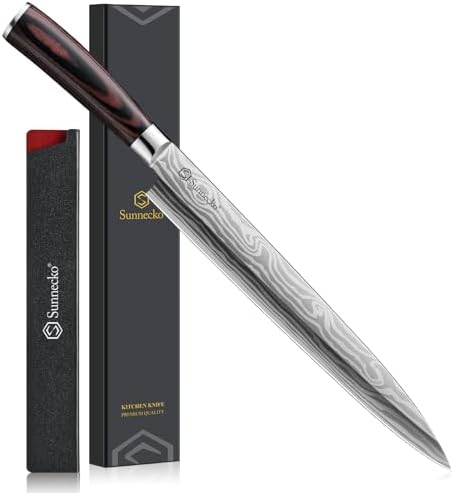
Best for: Chefs who prefer a lightweight, agile blade.
The Sunnecko 10.5-inch knife is designed for balance, with a Pakkawood handle that keeps the weight manageable. It’s hand-sharpened at an 11-12 degree angle to ensure it slices through fish skin without tearing. The included PVC cover is a nice addition for keeping the blade safe in a drawer.
Because it’s so lightweight, it’s excellent for precision work, but it lacks the heft some users look for when carving larger roasts. This knife isn’t for those who want a heavy-duty “beater” knife for tough kitchen tasks.
What goes smoothly:
- Lightweight balance for agility.
- Hand-sharpened 11-12 degree edge.
- Includes a PVC protective cover.
- Corrosion-resistant handle material.
What you have to accept:
- Lacks the weight needed for heavy carving.
10. SANMEIHO 10 Inch Sushi Knife

Best for: Beginners who want a simple, easy-to-maintain slicer.
The SANMEIHO 10-inch knife uses 5Cr15Mov steel, which is known for being easy to sharpen and clean. The double-bevel edge makes it very intuitive to use, even if you have never used a dedicated sushi knife before. It’s a great “all-rounder” for a home kitchen.
The octagonal red sandalwood handle provides a good grip, and the full tang design ensures it won’t break under normal pressure. It isn’t for professional chefs who need the extreme edge retention of higher-end, harder steels.
If you’re choosing between this and a traditional single-bevel knife, use this rule: if you want a knife that performs like a standard chef’s knife but with the length needed for slicing fish or large roasts, choose the double-bevel SANMEIHO. If you’re specifically practicing the traditional Japanese art of sashimi preparation, where the single-bevel design prevents tearing and preserves delicate fish texture, you should look for a single-bevel yanagiba instead.
A common mistake is assuming this knife is dishwasher safe because of its stainless steel construction. Like all high-quality kitchen knives, you must hand wash and dry it immediately. The listing does not mention dishwasher compatibility; always follow the manufacturer’s care instructions to maintain the blade and handle.
| Feature | Trade-off |
|---|---|
| Double-bevel edge | Easier to learn, but lacks the precision of single-bevel |
| 5Cr15Mov steel | Highly rust-resistant and easy to sharpen, but requires more frequent honing |
| Red sandalwood handle | Provides superior grip and comfort, but needs occasional oiling to prevent drying |
The Decision Filter
Most people miss this: a sushi knife is a precision tool, not a general-purpose chopper. First, decide if you’re right-handed or left-handed. Traditional single-bevel knives are strictly one-sided, meaning they’re designed for specific hands. If you buy the wrong orientation, you’ll find it nearly impossible to maintain a straight, clean cut.
Next, determine if you want a traditional single-bevel blade or a double-bevel blade. If you want the most authentic sashimi experience, look for a single-bevel model. These blades are crafted to slice through fish without tearing the flesh, preserving the ingredient’s texture. If you want a versatile knife that can also carve roasts, fillet larger fish, or slice vegetables, pick a double-bevel Sujihiki model.
Finally, consider your maintenance habits. Are you ready to hand-wash and dry your knife immediately after every use? If you’re not, high-carbon steel may be prone to rust, and you should choose a stainless steel option instead. Many professional-grade blades require this strict care to prevent corrosion.
If you’re a beginner, look for a knife with an ergonomic handle, such as pakkawood or an octagonal wooden grip, which helps reduce fatigue during long prep sessions. If you prioritize ease of cleaning, look for blades with non-stick or matte coatings that resist fingerprints and food residue. Always check the Rockwell hardness (HRC); a range of 57 to 59 offers a reliable balance between extreme sharpness and the toughness needed to prevent chipping during daily tasks.
The Thirty-Second Checklist
- Are you right-handed, or do you need a knife specifically ground for left-handed users?
- Do you have a dedicated space to store an extra-long, professional-grade blade?
- Are you willing to hand-wash and dry the knife immediately after every single use?
- Will you be slicing mostly raw fish, or do you need to handle cooked meats?
- Do you have a sharpening stone, or do you need a knife that’s easy?
- Does the knife have to fit inside an existing knife block, or will it store?
Three Regrets Worth Avoiding
Regret #1: Buying a single-bevel knife when you’re left-handed. Traditional yanagiba blades are ground specifically for the right hand. If you’re left-handed, these blades won’t slice straight, as the edge geometry forces the knife to veer off-course. Always verify the orientation before purchasing to ensure the bevel matches your dominant hand.
Regret #2: Expecting a high-carbon steel knife to stay pristine without constant maintenance. While these blades offer superior sharpness and edge retention at 57–62 HRC, they’re highly susceptible to oxidation. Leaving a blade wet or dirty will result in rust spots. Check your specific product’s care instructions, as some manufacturers advise against submerging the knife or using a dishwasher. Instead, wash it by hand with mild soap and immediately wipe it completely dry with a soft towel after every use.
Regret #3: Using a long, delicate slicer for heavy-duty kitchen tasks. Yanagiba and Sujihiki knives are designed with thin, razor-sharp edges—often honed to an 11–13° angle—to minimize cellular damage to fish and meat. Forcing these blades through bones, frozen foods, or hard vegetables like squash is a common mistake that causes irreparable chipping. Use a robust chef’s knife for chopping and deboning. Reserve your sushi knife strictly for precision work, such as filleting fish or carving roasts, to maintain the integrity of the edge.
Best Sushi Knives: What to Look For
| If you want… | Look for | Avoid |
|---|---|---|
| Authentic sashimi | Single-bevel blade | Double-bevel design |
| Easy maintenance | Stainless steel | High-carbon steel |
| Multi-purpose use | Double-bevel edge | Single-bevel blade |
| Less food sticking | Hammered finish | Mirror-polished flat blade |
When deciding between two similar picks, look at the handle material and the bolster. A bolster that provides a smooth transition to the blade usually indicates better balance and comfort during long tasks. If you’re still unsure, choose the model that includes a protective sheath or case, as this will help you keep the edge sharp for years to come. Your next step is to pick the blade length that matches the size of the fish you usually prepare. If you mostly handle smaller fillets, a standard-length blade is likely more than enough; only go for the longest option if you’re working with large, whole fish.
Frequently Asked Questions
Can I use a dishwasher to clean these knives?
No, you should never put these knives in a dishwasher. The listing does not mention dishwasher safety; hand washing is recommended to maintain the knife. Always wash your sushi knife by hand using warm water and mild soap, then dry it immediately with a soft towel.
Do I need a special sharpener for single-bevel knives?
Yes, single-bevel knives require a specific sharpening technique to maintain the correct angle on the cutting side. You should use a high-quality whetstone and practice the proper angle, as standard pull-through sharpeners can ruin the specialized edge of a traditional yanagiba.
What is the difference between HRC 57 and HRC 62?
The HRC rating measures the hardness of the steel on the Rockwell scale. A higher number like 62 means the steel is harder and will hold a sharp edge for a longer time, but it’s also more brittle and prone to chipping. A lower number like 57 means the steel is tougher and easier to sharpen, though it may need to be honed more often.
Are these knives safe for left-handed users?
Most traditional yanagiba knives are ground specifically for right-handed users. If you’re left-handed, you must look for a specific “left-handed” model, or choose a double-bevel knife which performs the same regardless of which hand you use.
Why do some knives have a hammered finish?
The hammered finish, often called Kurouchi or Nashiji, isn’t just for decoration. It creates small air pockets between the blade and the food, which helps prevent thin slices of fish from sticking to the side of the knife as you slice.
Final Thoughts
Investing in a sharp, reliable tool will truly transform your kitchen experience. Once you’ve picked the right blade, don’t forget to practice your technique on simple ingredients like cucumbers before moving on to delicate fish. You’ll find that with a little patience, your homemade rolls won’t just taste better—they’ll look professional too.

Hello, This is Annie Walker, a 38-year-old blogger, founder, and editor of Cookware Guider from NY, USA. I am a cookware fanatic and passionate cooker. I love to cook with different types of cooking appliances (example: all types of cookware, rice cookers, slow cookers, etc) almost every day in my kitchen. I love to share my experience with my readers in my blog. Also, I enjoy helping people to solve their problems through my website. You can follow me on Twitter & Pinterest. To know details about my blog please check the about us page.