
Modern kitchens rely on cooktops to prepare meals quickly and efficiently. But have you ever wondered how many watts a cooktop uses? Understanding this is important for many reasons: energy savings, electrical planning, safety, and even cooking performance. Whether you are choosing a new cooktop or just curious about your energy bill, knowing the wattage can help you make smarter decisions.
Cooktops come in different types and sizes, each with its own power needs. Some people think all cooktops use about the same electricity. In reality, the wattage can vary greatly. Gas, electric, and induction cooktops all have different power ratings, and even within those categories, the numbers can change based on burner size, design, and how you use them.
Let’s explore what determines cooktop wattage, how to find it for your model, and how this affects your kitchen and wallet. You’ll also learn some practical tips to control your energy use, and see how cooktops compare to other common kitchen appliances.
What Is Cooktop Wattage?
Wattage measures the rate at which an appliance uses electrical power. For cooktops, this means how much energy a burner uses to produce heat. Higher wattage usually means faster heating, but also more electricity used.
How Wattage Is Calculated
Wattage is calculated by multiplying voltage by amperage (Watts = Volts x Amps). Most residential cooktops in the US operate on 120V or 240V circuits. The amperage depends on the type and number of burners in use.
For example, if a burner draws 8 amps at 240 volts:
8 Amps X 240 Volts = 1,920 Watts
Most cooktops list their power rating on a label. This number shows the maximum wattage if all burners are used at the highest setting.
Why Wattage Matters
- Cooking speed: Higher wattage heats food faster.
- Energy bills: More wattage means more electricity used, which can raise your bills.
- Electrical safety: Knowing wattage helps prevent circuit overloads.
- Compatibility: Some homes may not support high-wattage cooktops without upgrades.
Common Cooktop Types And Their Wattages
Not all cooktops are the same. The type you choose affects how much power you use. Below are the most popular types and their usual wattage ranges.
Electric Coil Cooktops
Electric coil cooktops are simple and common. They use metal coils that heat up when electricity passes through.
- Single burner: 1,000–2,500 watts
- Four-burner cooktop (total): 4,000–7,500 watts
Electric Smooth-top (radiant) Cooktops
These cooktops have a smooth glass surface. Underneath, electric elements heat up and transfer heat through the glass.
- Small burner: 1,200–1,800 watts
- Large burner: 2,200–3,000 watts
- Total for four burners: 5,000–7,200 watts
Induction Cooktops
Induction cooktops use electromagnetic energy to heat pots directly. This makes them fast and efficient.
- Single burner: 1,400–3,700 watts
- Four-burner cooktop (total): 7,200–10,800 watts
Induction models often have a “boost” mode that can temporarily increase wattage for faster boiling.
Gas Cooktops
Gas cooktops use natural gas or propane. Their energy is measured in BTUs (British Thermal Units), not watts. However, you can estimate their electric use (for ignition and controls) and convert BTUs to watts for comparison.
- Small burner: 5,000–9,500 BTU/hour (~1,500–2,800 watts)
- Large burner: 12,000–18,000 BTU/hour (~3,500–5,300 watts)
- Electric use for controls: Usually less than 100 watts
Gas cooktops use less electricity but more gas. Their total energy use depends on cooking time and flame size.
Portable Cooktops
Portable induction or electric cooktops are popular in small kitchens or for travel.
- Typical wattage: 1,000–1,800 watts (per burner)
Comparing Cooktop Types
Here’s a quick comparison of average wattage ranges:
| Cooktop Type | Single Burner (Watts) | Total for 4 Burners (Watts) |
|---|---|---|
| Electric Coil | 1,000–2,500 | 4,000–7,500 |
| Electric Smooth-Top | 1,200–3,000 | 5,000–7,200 |
| Induction | 1,400–3,700 | 7,200–10,800 |
| Gas (BTU-based) | 1,500–5,300* | Varies |
*Gas wattage values are approximate, based on BTU conversion.
Factors That Affect Cooktop Wattage
Many people think wattage is fixed, but several factors can change how much power your cooktop uses.
Burner Size And Number
Larger burners need more power. A big burner used for boiling water will draw more watts than a small one for simmering soup. Using multiple burners at once increases total wattage.
Power Settings
Most cooktops have adjustable heat levels. Lower settings use less power. For example, cooking on “low” might use only 30–40% of the burner’s full wattage.
Booster And Turbo Modes
Induction and some electric cooktops offer “boost” or “turbo” modes. These temporarily raise wattage for quick heating, sometimes above the standard rating. After a few minutes, the cooktop returns to normal to avoid overheating.
Age And Efficiency
Older cooktops may use more power for the same job due to wear and less efficient technology. Newer induction models, for example, can heat food faster with less wasted energy.
Kitchen Voltage And Circuit Limits
Homes in the US usually have 120V or 240V outlets. High-wattage cooktops require a dedicated 240V circuit. Using the wrong circuit can limit how much power your cooktop gets, affecting performance and safety.
Cookware Material And Size
For induction cooktops, the type of pan matters. Magnetic stainless steel or cast iron works best. Thin or warped pans may not heat evenly, which can waste energy.
How To Find Your Cooktop’s Wattage
If you want to know your cooktop’s exact wattage, there are a few simple ways to check.
Check The Appliance Label
Most cooktops have a label on the bottom, side, or back. It usually lists the maximum wattage in watts (W). For gas models, look for BTU ratings.
Read The User Manual
The manual often gives detailed power information for each burner and the total. If you lost the manual, look up your model online.
Manufacturer’s Website
You can search your cooktop’s brand and model number on the manufacturer’s site. They usually post specifications for all models.
Measuring Actual Usage
If you want to know real-world usage, you can use a plug-in watt meter for portable electric cooktops. For hardwired cooktops, an electrician can measure current draw with a clamp meter.
Example Label
Here’s what a typical label might look like:
- Model: XYZ1234
- Voltage: 240V
- Total Wattage: 7,200W
- Burner 1: 1,800W
- Burner 2: 2,200W
How Much Does A Cooktop Add To Your Electricity Bill?
The cost depends on how much you use your cooktop and at what settings. Let’s see how to estimate the monthly cost.
Step-by-step Calculation
- Find wattage: Use the number from your cooktop label.
- Estimate hours of use per day: For example, 1.5 hours.
- Multiply wattage by hours: 2,000W x 1.5 = 3,000 watt-hours/day.
- Convert to kilowatt-hours (kWh): 3,000 watt-hours ÷ 1,000 = 3 kWh/day.
- Multiply by days per month: 3 kWh x 30 = 90 kWh/month.
- Multiply by your electricity rate: At $0.16 per kWh, 90 x $0.16 = $14.40/month.
This is just an estimate. Real costs depend on your usage and local rates.
Real-world Example
If you use a 2,500-watt burner for 30 minutes each day, you’ll use:
- 2,500W x 0.5 hours = 1,250 watt-hours/day = 1.25 kWh/day
- Over a month: 1.25 x 30 = 37.5 kWh
- At $0.16/kWh, that’s about $6.00/month
Cooktop Wattage Compared To Other Appliances
It helps to compare cooktops to other common kitchen appliances.
| Appliance | Typical Wattage | Notes |
|---|---|---|
| Cooktop (single burner) | 1,000–3,700 W | Depends on type and size |
| Microwave | 600–1,200 W | Short bursts of use |
| Oven | 2,000–5,000 W | Heats large space |
| Toaster | 800–1,500 W | Used briefly |
| Refrigerator | 150–400 W | Runs all day |
| Coffee Maker | 800–1,200 W | Short use periods |
As you can see, cooktops are one of the most energy-hungry kitchen devices, especially when using multiple burners at high settings.
)
Credit: www.energysage.com
How To Use Your Cooktop Efficiently
You don’t have to sacrifice good cooking to save energy. Here are some practical ways to use your cooktop wisely.
- Use the right burner size: Match your pan to the burner. Using a big burner for a small pan wastes energy.
- Keep lids on pots: This traps heat, so food cooks faster and uses less power.
- Preheat only when needed: Unlike ovens, most cooktops heat up quickly.
- Turn off early: Residual heat will finish the job for many dishes.
- Keep burners and pans clean: Dirt or grease reduces heat transfer and efficiency.
- Choose induction if possible: Induction cooktops are usually more efficient than electric coils or gas.
Non-obvious Tips
- Avoid using the boost mode for everything. The boost mode on induction cooktops is great for boiling water but not always needed for most cooking tasks. Overusing it increases your energy bill.
- Check for cookware warping. Even a slight warp in the pan bottom lowers contact and efficiency, especially for smooth-top and induction cooktops.
Do You Need To Upgrade Your Electrical System?
Some kitchens, especially in older homes, may not have the right wiring for high-wattage cooktops. Here’s what to check:
- Circuit rating: Most electric and induction cooktops need a dedicated 30–50 amp, 240V circuit.
- Wire gauge: Thicker wires (lower gauge numbers) are required for high current.
- Breaker panel space: Make sure your panel can handle an extra large breaker.
- Outlet type: Some cooktops are hardwired, while portable units use standard outlets.
If you’re unsure, consult a licensed electrician. Installing a high-wattage cooktop on an underpowered circuit is dangerous and can cause fires.
Pros And Cons Of High-wattage Cooktops
Choosing a cooktop with higher wattage has benefits and drawbacks.
Advantages
- Faster cooking: More power means quicker boiling and heating.
- Better for big families: Multiple burners at high power support large meals.
- More flexible: High-end models offer boost modes and advanced features.
Disadvantages
- Higher energy use: Increases your electricity bill.
- Requires stronger wiring: May need electrical upgrades.
- More heat output: Can make the kitchen warmer, especially in summer.
Special Cases: Cooktops In Apartments And Rvs
If you live in an apartment, RV, or tiny home, your options may be limited.
- Apartments: Often have 120V circuits, so only low-wattage cooktops are safe. Induction hot plates are popular.
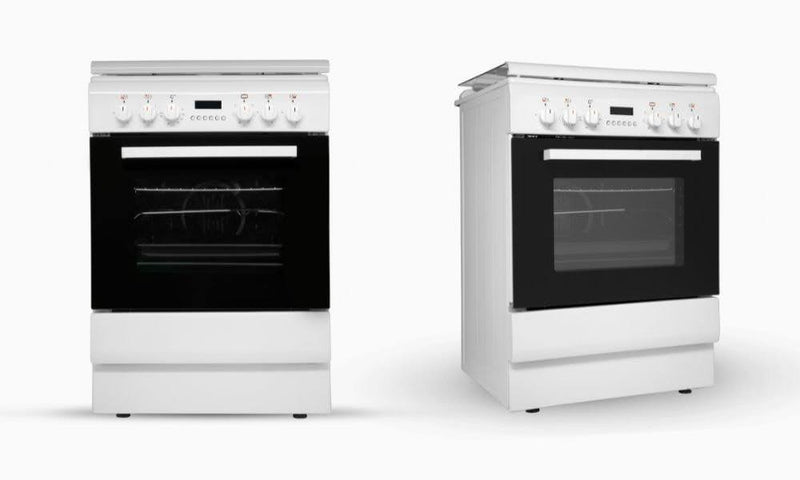
- RVs and boats: Usually use portable cooktops (1,000–1,800W) that plug into regular outlets. Running multiple appliances at once can overload circuits.
Always check your power supply before buying a new cooktop.
Credit: homeoutletdirect.com
Safety And Wattage: What To Watch Out For
High-wattage cooktops can be safe if used correctly. Here are some important tips:
- Never exceed your circuit’s amp rating. Overloading can trip breakers or cause fires.
- Install ground fault protection (GFCI) in kitchens for extra safety.
- Avoid using extension cords with portable cooktops; use them only with wall outlets.
- Have a professional install hardwired cooktops.
Trends: Energy Efficiency And Smart Cooktops
The latest cooktops are smarter and more efficient.
- Induction cooktops are becoming more popular for their speed and efficiency.
- Smart cooktops let you set timers, control heat precisely, and even connect to apps.
- Energy Star ratings help you find efficient appliances, although not all cooktops are rated yet.
These features make it easier to save energy without thinking too much about wattage.
Environmental Impact Of Cooktop Wattage
Using less energy helps the environment. Cooktops with lower wattage or higher efficiency (like induction) produce less greenhouse gas, especially if your electricity comes from fossil fuels.
If you want to reduce your carbon footprint:
- Use induction or efficient electric models.
- Cook with lids on and use the right burner size.
- Try to use renewable energy sources when possible.
For more information about energy use and the environment, check the U.S. Department of Energy.
Frequently Asked Questions
How Do I Find The Wattage Of My Specific Cooktop Model?
Look for a label on the side, bottom, or back of the cooktop. You can also check the user manual or the manufacturer’s website using your model number. If you can’t find it, contact the manufacturer’s customer service.
Does Higher Wattage Always Mean Better Cooking Performance?
Not always. Higher wattage means more heat, but too much can burn food or waste energy. Cooking skill, pan quality, and cooktop technology (like induction) matter just as much. Find a balance that fits your needs.
Can I Use A High-wattage Cooktop In My Apartment?
Check your apartment’s wiring and circuit limits. Most apartments support only 120V, so a high-wattage (240V) cooktop may not be allowed or safe. Portable induction units are a good alternative for apartments.
How Much Energy Does An Induction Cooktop Save Compared To Electric Or Gas?
Induction cooktops are usually 10–20% more efficient than electric coils and 40–50% more efficient than gas, since they heat the pan directly with less wasted heat. Actual savings depend on your cooking habits and cookware.
What Is The Safest Way To Install A New Cooktop?
Have a licensed electrician do the installation, especially for hardwired or high-wattage models. Make sure your kitchen has a dedicated circuit of the correct voltage and amperage. Follow all manufacturer instructions for safety.
Understanding how many watts a cooktop uses helps you cook smarter, save money, and stay safe. Choosing the right cooktop for your home starts with knowing your power needs and options. With the right information, you can enjoy better meals and lower bills—without surprises.

Credit: www.energysage.com

Hello, This is Annie Walker, a 38-year-old blogger, founder, and editor of Cookware Guider from NY, USA. I am a cookware fanatic and passionate cooker. I love to cook with different types of cooking appliances (example: all types of cookware, rice cookers, slow cookers, etc) almost every day in my kitchen. I love to share my experience with my readers in my blog. Also, I enjoy helping people to solve their problems through my website. You can follow me on Twitter & Pinterest. To know details about my blog please check the about us page.