
Are you thinking about switching to copper ceramic cookware but worried about its safety? You’re not alone.
When it comes to what you use in your kitchen, safety is always a top priority. You want to know if this cookware can protect your health while making your meals taste great. You’ll discover everything you need to know about how safe copper ceramic cookware really is.
By the end, you’ll feel confident about whether it’s the right choice for your kitchen and your family. Keep reading to find out the truth behind the shine.
Copper Ceramic Cookware Basics
Copper ceramic cookware combines two popular materials in one pot or pan. It offers strong heat control and a smooth cooking surface. This cookware is gaining attention for its unique design and cooking features.
Understanding the basics helps you see why many people choose copper ceramic cookware. It blends the benefits of copper with ceramic’s easy cleaning and non-stick qualities. This section explains how it is made and how it is commonly used.
Materials And Construction
Copper ceramic cookware usually has a copper base or core. Copper spreads heat quickly and evenly across the surface. The cooking surface is coated with ceramic, a non-stick and safe material. Ceramic coatings do not release harmful chemicals. The combination creates a durable and effective cooking tool. Most pieces also have stainless steel or aluminum layers for extra strength.
Common Uses In Cooking
This cookware suits many cooking styles. It works great for frying, sautéing, and simmering. Copper’s heat control helps avoid hot spots and burnt food. Ceramic surfaces allow easy food release and simple cleanup. It is excellent for cooking delicate foods like eggs and fish. Many cooks enjoy copper ceramic pans for everyday meals.
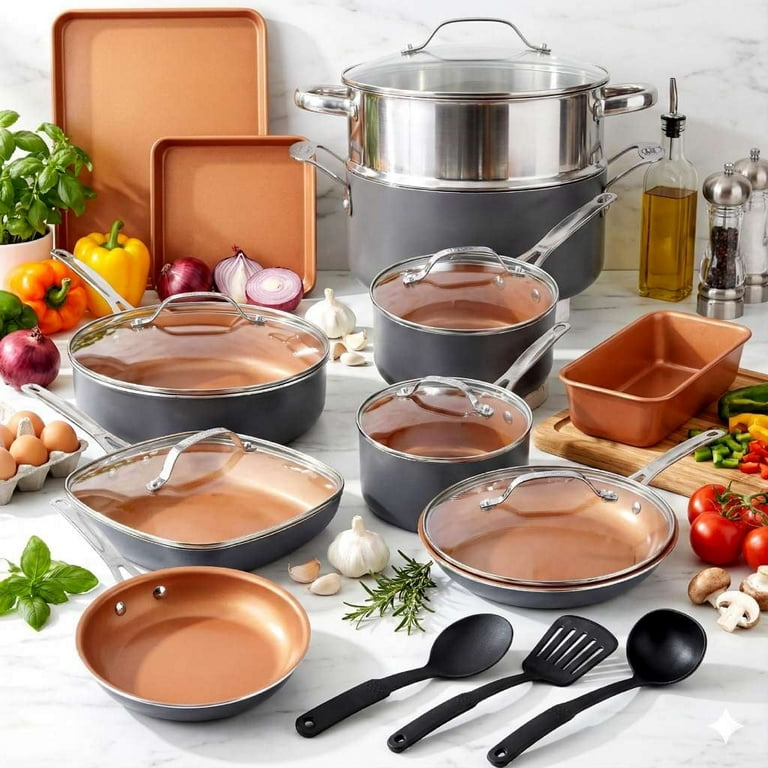
Credit: www.walmart.com
Health Benefits Of Copper Ceramic Cookware
Copper ceramic cookware offers several health benefits that make it a smart choice for your kitchen. Its unique materials work together to create a safe cooking experience. This cookware helps keep your meals healthy and free from harmful chemicals.
Non-toxic Surface
The ceramic coating on copper pans is free from toxic chemicals. It does not release harmful substances into food. This means no lead or cadmium exposure while cooking. The non-stick surface allows you to cook with less oil, which is better for your health. You get clean and safe meals every time.
Even Heat Distribution
Copper conducts heat quickly and evenly. This stops hot spots that burn food or leave it undercooked. Even cooking helps preserve nutrients and flavor. It also means you need less oil and fat during cooking. The result is tastier, healthier dishes with less waste.
Potential Safety Concerns
Copper ceramic cookware has gained popularity for its style and heat conduction. Still, some safety concerns exist. It is important to understand these issues before using this type of cookware in your kitchen.
Copper Exposure Risks
Copper is an essential mineral but can be harmful in large amounts. Prolonged exposure to copper from cookware may cause health problems. This is especially true if the copper surface is scratched or damaged. Such damage can release copper into food during cooking.
People with certain health conditions should be cautious. Excess copper can affect the liver and kidneys. Proper care and use of the cookware reduce these risks.
Ceramic Coating Durability
Ceramic coatings protect the copper base and prevent direct contact with food. Over time, this coating can wear off or chip. Once damaged, the cookware may lose its safety and non-stick properties.
Scratches or cracks in the ceramic layer can expose the copper underneath. This exposure increases the risk of copper leaching into food. Handle ceramic cookware gently and avoid using metal utensils.
Possible Metal Leaching
Metal leaching happens when tiny amounts of metal enter your food. Copper ceramic cookware may leach metals if the ceramic layer is damaged. Acidic or salty foods can increase this effect.
Leaching metals can cause an unpleasant taste and potential health concerns. Choosing high-quality cookware with strong, intact coatings helps reduce this risk. Regular inspection of your cookware is important.

Credit: www.amazon.com
Expert Safety Evaluations
Experts carefully study copper ceramic cookware for safety. They test the materials and coatings to check for harmful chemicals or metals. These evaluations help buyers trust the product for daily use.
Safety experts use science and rules to judge if the cookware is safe. They look at how it reacts with food and heat. This process ensures the cookware does not release toxins or cause health risks.
Laboratory Testing Results
Labs test copper ceramic cookware for heavy metals like lead and cadmium. Results usually show very low or no harmful metals released. Experts also check for ceramic coating durability during cooking.
Tests include heating the cookware to high temperatures. They measure if any chemicals leach into food under normal use. Most products pass these tests, proving they are safe for cooking.
Regulatory Standards Compliance
Safe copper ceramic cookware meets strict rules from health authorities. These rules cover material safety and food contact standards. Products must comply with standards set by agencies like the FDA or EFSA.
Manufacturers provide certification to show compliance. This guarantees the cookware meets safety and quality levels. Consumers can check for these certifications before buying.
Maintenance For Safety And Longevity
Proper maintenance keeps copper ceramic cookware safe and lasting longer. It helps avoid damage and preserves the cookware’s non-stick surface. Regular care also prevents copper from discoloring or corroding. Simple habits can extend the life of your cookware and keep it safe for cooking.
Cleaning Tips
Clean copper ceramic cookware after each use. Use warm water and mild dish soap. Avoid harsh chemicals or abrasive cleaners. Soft sponges or cloths work best. Do not use steel wool or rough scrubbers. Dry the cookware immediately to stop water spots. For tough stains, soak the pan in warm soapy water. Gently scrub with a soft brush if needed.
Avoiding Damage And Wear
Do not overheat empty cookware. High heat can damage the ceramic coating. Use low to medium heat settings for cooking. Avoid metal utensils that can scratch the surface. Choose wooden, silicone, or plastic tools instead. Store the cookware carefully to avoid bumps. Stack pans with a soft cloth between them. Regular care prevents chips and keeps the cookware safe.
Comparing Copper Ceramic To Other Cookware
Choosing the right cookware affects your health and cooking experience. Copper ceramic cookware is popular for its design and heat control. Comparing it with other types helps you decide what suits your kitchen best.
This section looks at copper ceramic versus stainless steel and non-stick aluminum. Each type has different features and safety levels.
Versus Stainless Steel
Stainless steel is strong and durable. It does not react with food, so it is very safe. But it heats unevenly and can cause hot spots. Copper ceramic heats quickly and spreads heat evenly.
Unlike stainless steel, copper ceramic has a non-stick surface. This means less oil is needed when cooking. Stainless steel can stick to food, making cleaning harder.
In terms of safety, stainless steel is very stable and does not release harmful chemicals. Copper ceramic is also safe if the ceramic coating is not damaged. Both need proper care to last long.
Versus Non-stick Aluminum
Non-stick aluminum cookware is lightweight and heats fast. The non-stick coating helps cook food with little oil. But some coatings can wear off and release toxins if overheated.
Copper ceramic cookware offers a safer non-stick surface. Its ceramic coating is free from PTFE and PFOA chemicals. This reduces health risks linked to some aluminum pans.
Copper ceramic is more durable than many non-stick aluminum pans. It can handle higher heat without damage. This makes it safer for various cooking styles.

Credit: www.walmart.com
Frequently Asked Questions
Is Copper Ceramic Cookware Safe For Daily Use?
Yes, copper ceramic cookware is generally safe for daily use. It combines copper’s heat conductivity with ceramic’s non-toxic coating, which prevents harmful chemicals from leaching into food. However, avoid using metal utensils to maintain the ceramic coating’s safety and durability.
Does Copper Ceramic Cookware Release Toxins?
No, copper ceramic cookware does not release toxins when used properly. The ceramic coating acts as a non-reactive barrier, preventing copper from contacting food. Always ensure the ceramic layer is intact to avoid potential exposure to copper ions.
Can Copper Ceramic Cookware Cause Allergies?
Copper ceramic cookware rarely causes allergies. The ceramic coating prevents direct contact with copper, reducing allergy risks. Individuals sensitive to copper should still monitor reactions and choose cookware with high-quality, durable ceramic layers for added safety.
How Does Copper Ceramic Cookware Affect Food Taste?
Copper ceramic cookware does not alter food taste. The ceramic surface is non-reactive and neutral, preserving natural flavors. Copper underneath ensures even heating, which enhances cooking quality without imparting metallic flavors.
Conclusion
Copper ceramic cookware offers a safe cooking option for many kitchens. It heats evenly and reduces the risk of harmful chemicals. Cleaning is easy, and the materials are durable. Still, always check for quality and proper use. Avoid overheating to keep coatings intact.
Choosing trusted brands helps ensure safety and performance. Cook with care, and enjoy tasty meals without worry. Safety and good cooking can go hand in hand. Copper ceramic cookware fits well for those seeking a reliable option.

Hello, This is Annie Walker, a 38-year-old blogger, founder, and editor of Cookware Guider from NY, USA. I am a cookware fanatic and passionate cooker. I love to cook with different types of cooking appliances (example: all types of cookware, rice cookers, slow cookers, etc) almost every day in my kitchen. I love to share my experience with my readers in my blog. Also, I enjoy helping people to solve their problems through my website. You can follow me on Twitter & Pinterest. To know details about my blog please check the about us page.