
Have you ever faced the frustration of burnt food stuck to your enamel cookware? It’s a common problem that can make your favorite pots and pans look ruined.
But don’t worry—you don’t have to toss them out or scrub endlessly. In this guide, you’ll discover simple, effective ways to clean burnt enamel cookware and bring back its shine. Keep reading, and you’ll learn tricks that save you time, effort, and money while protecting your cookware for many meals to come.
Causes Of Burnt Enamel
Burnt enamel on cookware happens because of certain common causes. Understanding these helps avoid damage and keep pots and pans looking good. Enamel coating is delicate. It can burn or stain easily.
Heat, food residue, and cooking habits affect enamel condition. Knowing what causes burnt enamel helps in cleaning and care.
Common Cooking Mistakes
Leaving food to cook too long without stirring can cause burning. Cooking with little or no oil often leads to sticking and burnt spots. Using metal utensils may scratch the enamel, making it easier to burn. Not cleaning cookware soon after use allows food to harden and burn onto the surface.
Effects Of High Heat
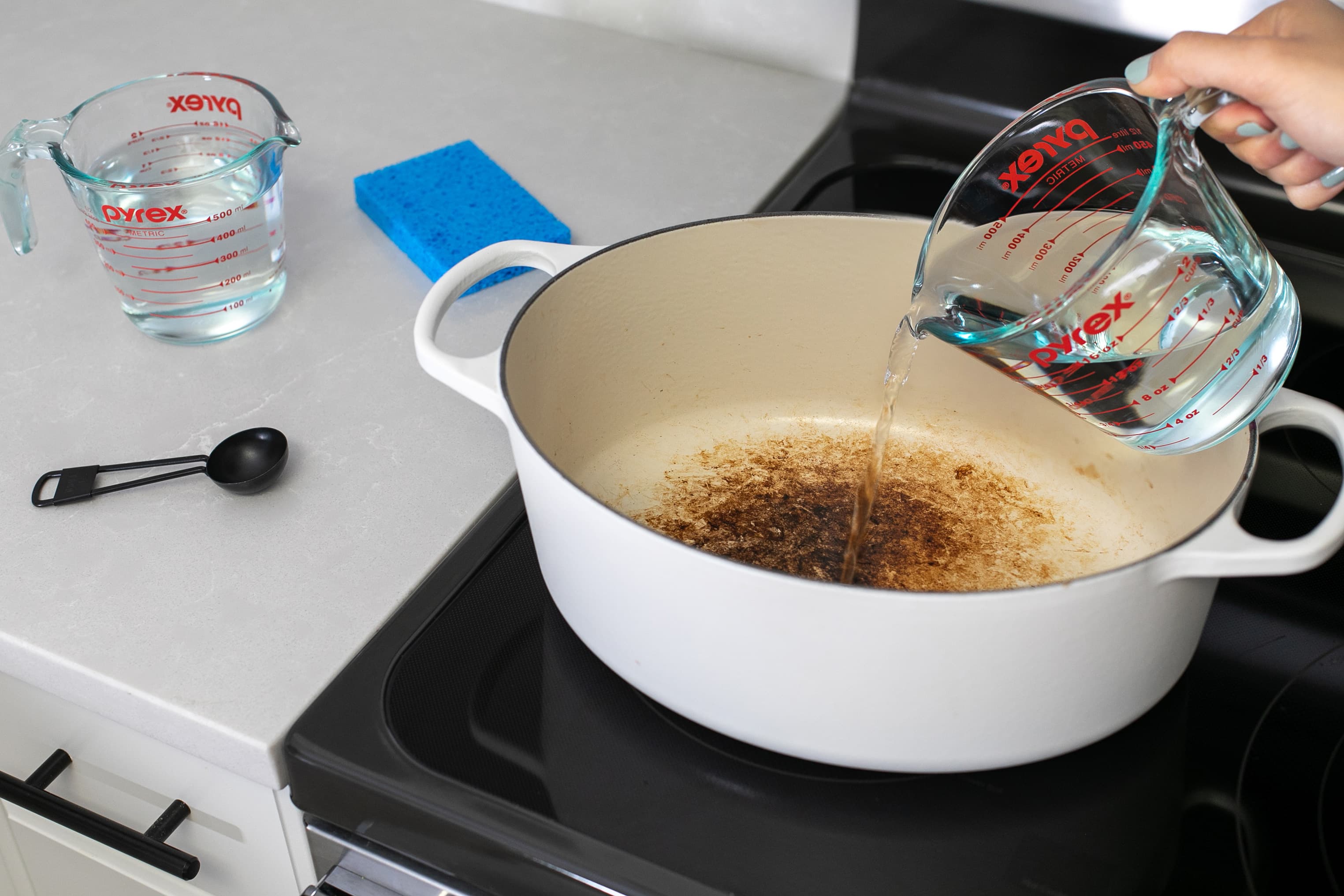
Enamel cookware does not like very high temperatures. High heat can crack or discolor the enamel coating. It also causes food to burn quickly and stick tightly. Rapid heating or cooling may cause enamel to chip, making cleaning harder. Use medium or low heat to protect enamel surfaces.
Credit: www.thekitchn.com
Safety Tips Before Cleaning
Cleaning burnt enamel cookware requires care and attention to avoid injury. Before you start, follow important safety tips. These steps protect your hands and prevent accidents during cleaning. Safety is the first step to effective cleaning.
Handling Hot Cookware
Never clean cookware while it is hot. Hot enamel can crack or break if exposed to cold water. Let the cookware cool down completely before cleaning. Use oven mitts or thick towels to move hot pots safely. Avoid sudden temperature changes to protect your cookware and yourself.
Protective Gear To Use
Wear rubber gloves to protect your hands from harsh cleaners. Gloves also prevent skin irritation from scrubbing. Use safety goggles if you scrub with strong cleaning agents to protect your eyes. A mask helps if you use powders or sprays that create dust or fumes. Protective gear keeps you safe during the cleaning process.
Simple Cleaning Methods
Cleaning burnt enamel cookware does not have to be hard. Simple methods can bring back its shine and remove tough stains. These easy steps use items you likely already have at home. They save time and effort while protecting your cookware’s surface.
Soaking With Warm Soapy Water
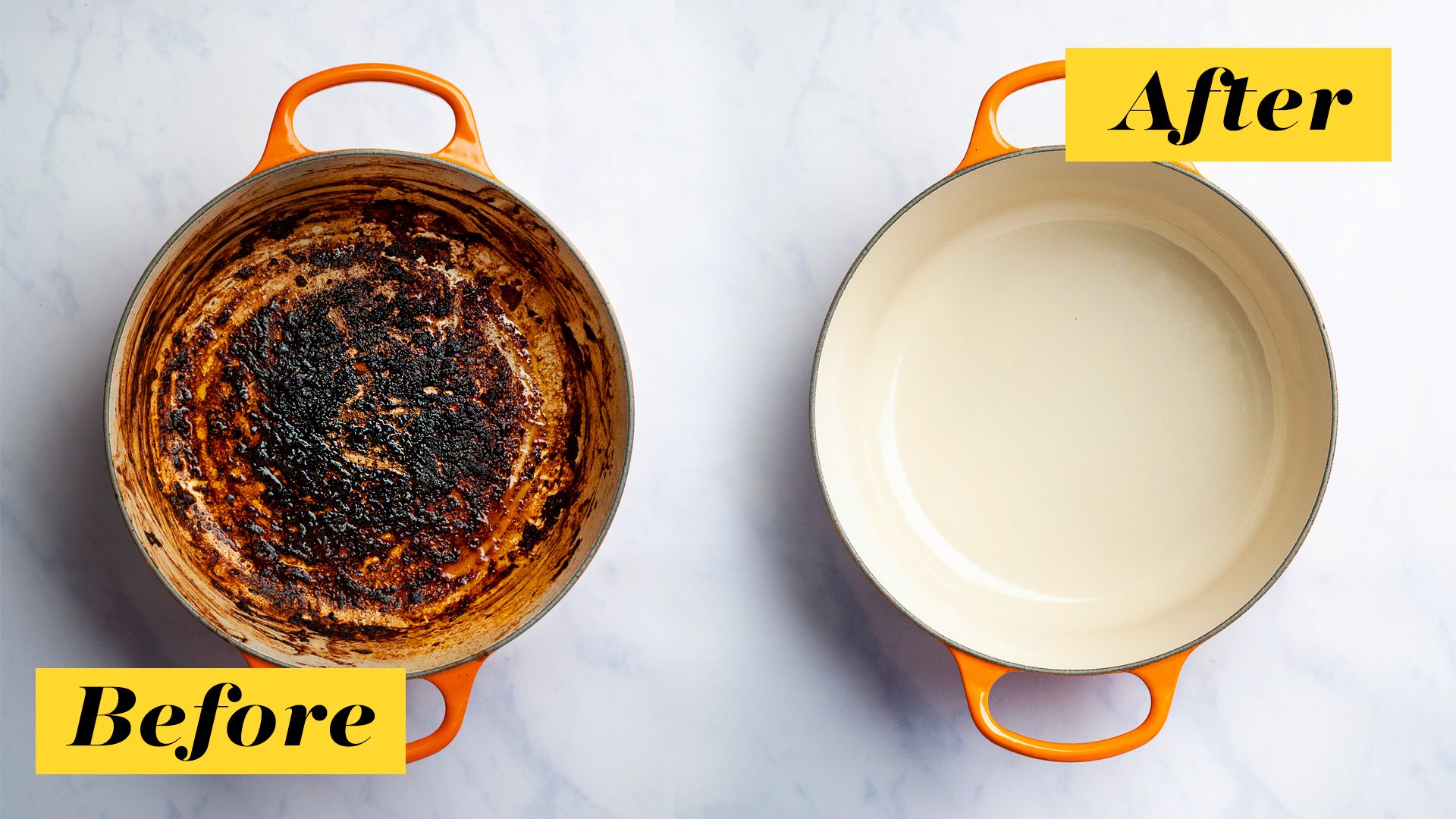
Start by filling the cookware with warm water. Add a few drops of dish soap. Let it soak for at least 30 minutes. This softens the burnt food and grime. After soaking, use a soft sponge to scrub gently. Avoid harsh scrubbing to keep the enamel safe. Rinse well with clean water and dry with a cloth.
Using Baking Soda Paste
Make a paste by mixing baking soda with a little water. Apply the paste to the burnt areas. Let it sit for 15 to 20 minutes. Baking soda helps lift the burnt residue without scratching. Use a soft cloth or sponge to rub the paste gently. Rinse the cookware thoroughly and dry it. Repeat if any stains remain.
Credit: www.goodhousekeeping.com
Natural Remedies For Stubborn Stains
Burnt stains on enamel cookware can be tough to remove. Natural remedies offer safe and effective ways to clean these stubborn marks. They use simple household ingredients that are gentle on your cookware but tough on stains.
These remedies help restore your pots and pans without harsh chemicals. They save money and protect the environment. Try these easy methods to bring back the shine of your enamel cookware.
Vinegar And Water Solution
Vinegar is great for loosening burnt food and stains. Mix equal parts of vinegar and water in the pan. Heat the mixture on low for 10 minutes. Let it cool, then scrub gently with a soft sponge. Rinse well with warm water. This method breaks down tough stains without damaging the enamel.
Lemon Juice Application
Lemon juice works well as a natural cleaner and deodorizer. Squeeze fresh lemon juice over the burnt areas. Let it sit for 15 to 20 minutes. The acid in lemon helps dissolve burnt residue. Use a soft cloth or sponge to scrub the stains. Rinse thoroughly to remove any lemon smell. This method brightens the cookware and removes stubborn marks naturally.
Commercial Cleaners To Consider
Commercial cleaners can help remove burnt stains from enamel cookware. They are designed to break down tough residues and restore shine. Choosing the right product is important to avoid damage.
Choosing The Right Cleaner
Pick cleaners made for enamel surfaces. Check labels for safe use on cookware. Avoid harsh chemicals like bleach or ammonia. Look for mild abrasives or enzyme-based formulas. These clean well without scratching the enamel.
Proper Usage Guidelines
Follow instructions on the cleaner’s packaging carefully. Use gloves to protect your skin. Apply the cleaner with a soft cloth or sponge. Let it sit for the recommended time. Rinse thoroughly with warm water after cleaning. Avoid scrubbing too hard to prevent enamel damage.
Preventing Future Burnt Residue
Preventing burnt residue on enamel cookware keeps your pots and pans looking new longer. It also saves time spent on tough cleaning. Small changes in how you cook and care for your cookware can make a big difference.
Adjusting Cooking Temperatures
High heat can cause food to stick and burn on enamel surfaces. Use medium or low heat for most cooking tasks. Start with a lower temperature and increase it slowly if needed. Avoid heating an empty pan on high heat to protect the enamel coating.
Regular Maintenance Tips
Clean cookware soon after use to stop residue from hardening. Use soft sponges and mild detergents to protect enamel. Avoid metal scrubbers that scratch the surface. Occasionally, soak pans in warm water to loosen stuck food. Dry cookware completely before storing to prevent rust and stains.

Credit: thehomeicreate.com
Frequently Asked Questions
How Do I Remove Burnt Stains From Enamel Cookware?
To remove burnt stains, soak the cookware in warm soapy water. Use a non-abrasive sponge and baking soda paste to scrub gently. Avoid harsh scrubbers to protect the enamel surface. Rinse thoroughly and dry with a soft cloth.
Can Vinegar Help Clean Burnt Enamel Cookware?
Yes, vinegar is effective for cleaning burnt enamel. Boil a mixture of water and white vinegar in the cookware. Let it cool, then scrub gently with baking soda. Vinegar breaks down burnt residue without damaging the enamel.
What Household Items Clean Burnt Enamel Cookware Safely?
Common household items like baking soda, vinegar, and lemon juice clean burnt enamel safely. These ingredients are mild abrasives and natural acids that loosen burnt food. They protect the enamel surface while effectively removing stains.
Is It Safe To Use Baking Soda On Enamel Cookware?
Baking soda is safe and effective for enamel cookware. It gently scrubs away burnt residue without scratching the surface. Mix it with water to form a paste and apply carefully. Avoid excessive force to keep the enamel intact.
Conclusion
Cleaning burnt enamel cookware does not have to be hard. Use gentle scrubbing and common household items. Avoid harsh tools that can damage the surface. Regular care keeps your cookware looking good and lasting longer. With patience, stains and burnt spots will disappear.
Enjoy cooking with clean, shiny pots and pans again. Simple steps make a big difference in maintaining your cookware. Keep these tips in mind for easy, effective cleaning every time.

Hello, This is Annie Walker, a 38-year-old blogger, founder, and editor of Cookware Guider from NY, USA. I am a cookware fanatic and passionate cooker. I love to cook with different types of cooking appliances (example: all types of cookware, rice cookers, slow cookers, etc) almost every day in my kitchen. I love to share my experience with my readers in my blog. Also, I enjoy helping people to solve their problems through my website. You can follow me on Twitter & Pinterest. To know details about my blog please check the about us page.