
Glass bakeware brings beauty and practicality to the kitchen. Its clear surface lets you see how food is cooking, and it’s great for baking everything from casseroles to desserts. But cleaning glass bakeware can be tricky. Stains, baked-on food, and cloudy spots often stick to the surface.
Many people don’t realize that improper cleaning can damage glass or make food taste strange. Knowing how to clean glass bakeware correctly helps your dishes last longer and keeps them looking new. In this guide, you’ll learn smart, easy ways to clean glass bakeware, avoid common mistakes, and keep your kitchen tools in top shape.
Why Glass Bakeware Gets So Dirty
Glass bakeware is popular because it heats evenly and doesn’t react with food. But glass has special cleaning challenges. Unlike metal pans, glass shows every spot and stain. Food spills can bake into the surface and become hard to remove. Many people don’t notice how grease and oil seep into tiny scratches or corners. Over time, these stains build up and make your bakeware look cloudy or dull.
Some common reasons glass bakeware gets dirty include:
- Grease splatters: Fat from meats or cheese sticks to the glass, especially after baking.
- Baked-on sugars: Desserts often leave sticky residue that turns brown and hard.
- Hard water stains: Minerals in tap water create cloudy marks after washing.
- Scratches: Using rough scrubbers can cause tiny scratches, trapping dirt and making stains worse.
Many beginners think regular dish soap is enough. But some stains need special treatment, or the glass will keep looking dirty.
Essential Cleaning Tools And Supplies
Before cleaning glass bakeware, gather the right tools. Using the proper supplies makes the job easier and protects your bakeware from damage. Here’s what you’ll need:
- Soft sponge or cloth: Avoid abrasive pads that scratch glass.
- Dish soap: Mild, unscented soap works best.
- Baking soda: This gentle abrasive lifts tough stains without scratching.
- White vinegar: Removes mineral spots and helps dissolve grease.
- Plastic scraper: Useful for removing baked-on food safely.
- Toothbrush: Cleans corners and edges.
- Hot water: Loosens residue and makes cleaning easier.
- Paper towels or microfiber cloth: For drying and polishing.
Some people use harsh chemicals or steel wool, but these can ruin your bakeware. Stick to gentle, common items for best results.
Step-by-step Cleaning Methods
Cleaning glass bakeware isn’t difficult, but each step matters. Let’s break down the process for different types of stains and residue.
Basic Everyday Cleaning
If your bakeware is only a little dirty, follow these steps:
- Let it cool: Never wash hot glass with cold water—this can cause cracking.
- Rinse with warm water: Remove loose food bits first.
- Apply dish soap: Use a soft sponge and soapy water to clean the surface.
- Focus on corners: Use a toothbrush for tricky edges.
- Rinse again: Make sure all soap is gone.
- Dry: Wipe with a paper towel or cloth to avoid water spots.
This routine keeps glass bakeware looking clear and shiny. For everyday cleaning, avoid soaking too long—prolonged exposure to water can weaken glass over time.
Removing Baked-on Residue
Sometimes, food sticks and won’t come off easily. Try this method:
- Soak in hot, soapy water: Let your bakeware sit for 30–60 minutes.
- Scrape gently: Use a plastic scraper to loosen baked-on bits.
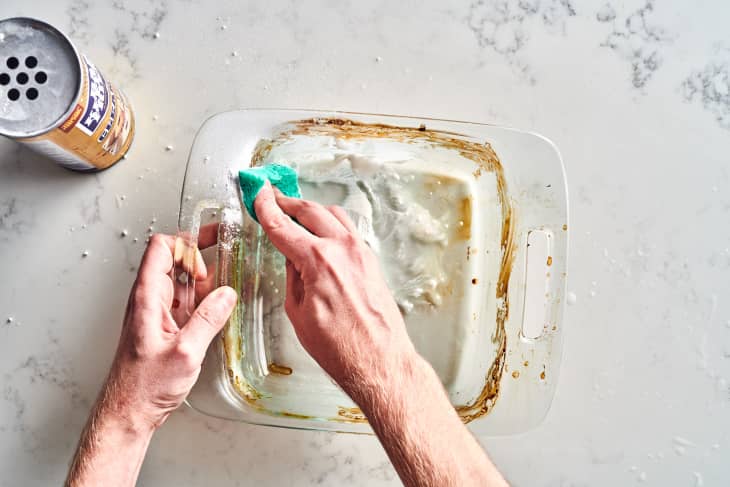
- Sprinkle baking soda: Cover stubborn spots with baking soda, then dampen with a little water.
- Scrub with a sponge: Use circular motions, applying gentle pressure.
- Rinse thoroughly: Make sure all baking soda is removed.
- Dry completely: Water left on glass can cause stains.
Some people rush this process, but patience is key. Letting stains soak helps avoid scratching the glass.
Dealing With Cloudy Spots And Hard Water Stains
Cloudy marks often come from minerals in water. Here’s a solution:
- Make a vinegar solution: Mix equal parts white vinegar and water.
- Apply to stains: Pour or spray directly on the cloudy area.
- Let sit for 10–15 minutes: The acid dissolves mineral deposits.
- Scrub with a soft sponge: Gently wipe away the residue.
- Rinse and dry: Clean with warm water, then polish with a cloth.
Many people forget that vinegar must be rinsed off fully. If left, it can leave a sour smell or taste in your bakeware.
Handling Stubborn Grease And Oil
Grease can be hard to remove, especially after baking cheese or meats. Try this method:
- Sprinkle baking soda on greasy spots: Cover oily areas with a thin layer.
- Add a few drops of dish soap: The soap helps break down fat.
- Scrub gently: Use a soft sponge in circular motions.
- Rinse with warm water: Make sure no residue remains.
- Dry well: Grease attracts dust if left behind.
Some people use ammonia or strong cleaners, but these can damage glass and leave unsafe residue. Stick to baking soda and dish soap for safe, effective cleaning.
Preventing Damage And Extending Glass Bakeware Life
Glass bakeware is tough, but it’s not indestructible. Many people shorten its life by cleaning incorrectly. Here are important tips to protect your investment:
- Avoid extreme temperature changes: Never wash hot bakeware with cold water, or vice versa. This can cause thermal shock and cracking.
- Use soft cleaning tools: Steel wool, metal brushes, and harsh pads scratch glass, making stains worse over time.
- Don’t stack glassware tightly: Stacking can cause chips and cracks. Use paper towels between items if you must stack.
- Dry thoroughly: Water spots can cause minerals to build up. Always dry with a clean cloth.
- Store in a safe place: Keep glass bakeware away from heavy pots or sharp utensils.
Many beginners don’t realize that scratches aren’t just cosmetic—they make cleaning harder and can cause glass to break more easily.
:max_bytes(150000):strip_icc()/Simply-Recipes-PYREX-LEAD-01-2-9a0acc7db7b64e30b4ed32bfb471adae.jpg)
Credit: www.simplyrecipes.com
Comparing Glass Bakeware To Other Materials
Glass isn’t the only choice for bakeware. Here’s how it compares to other popular materials:
| Bakeware Material | Cleaning Difficulty | Durability | Stain Resistance |
|---|---|---|---|
| Glass | Moderate | High | Medium |
| Metal | Easy | Medium | High |
| Ceramic | Moderate | Medium | Medium |
| Silicone | Easy | Low | High |
Glass bakeware is more durable than silicone, but it stains more easily than metal. It’s also safer for acidic foods, which can react with metal pans.
Tackling Common Cleaning Mistakes
Many people make simple errors when cleaning glass bakeware. Avoid these mistakes for best results:
- Using harsh abrasives: Steel wool and gritty pads scratch the surface.
- Washing while hot: Sudden temperature changes cause cracks.
- Ignoring corners and edges: Food hides in small spaces, causing stains.
- Not rinsing well: Soap or cleaning agents left behind can affect taste.
- Stacking without padding: Glass-on-glass contact causes chips.
A non-obvious insight: even small scratches let stains build up faster, so always use gentle tools. Another tip: if you notice a chip, stop using the bakeware—it can break during cooking.
Deep Cleaning For Tough Stains
Sometimes, regular cleaning isn’t enough. For deep stains, follow these advanced steps:
- Prepare a baking soda paste: Mix 3 tablespoons baking soda with 1 tablespoon water.
- Apply to stained areas: Spread thickly over the problem spots.
- Let sit for 30 minutes: The paste loosens stubborn residue.
- Scrub gently: Use a soft sponge or cloth.
- Rinse and check: Repeat if needed.
For extra tough stains, try soaking overnight in a vinegar solution. If stains remain after several tries, it may be time to retire the bakeware.
How Often Should You Clean Glass Bakeware?
Some people wash their glass bakeware after every use, while others wait until it looks dirty. For best results:
- Clean after every use: Prevent stains from building up.
- Deep clean monthly: Remove hidden residue and hard water spots.
- Inspect regularly: Look for chips, cracks, or stains that need attention.
Neglecting regular cleaning makes stains harder to remove and can affect the taste of your food.
Eco-friendly Cleaning Options
Many people worry about chemicals in cleaning products. Here are some eco-friendly methods:
- Baking soda and vinegar: Natural, safe, and effective.
- Lemon juice: Helps dissolve grease and leaves a fresh smell.
- Reuse old toothbrushes: Great for cleaning corners.
- Microfiber cloths: Clean well with less soap.
Avoid bleach or ammonia—they’re harsh and can leave residue in your bakeware.
Cleaning Glass Bakeware With Burnt Food
Burnt food is a big challenge. Here’s a proven method:
- Soak in hot water: Fill your bakeware and let it sit for at least an hour.
- Add baking soda: Sprinkle over burnt spots.
- Scrape gently: Use a plastic scraper or spatula.
- Repeat soaking if needed: Sometimes, multiple rounds are necessary.
- Rinse and dry: Make sure all burnt residue is gone.
Many people try to scrape hard, but this can scratch glass and make future cleaning harder. Patience and soaking work best.
Keeping Glass Bakeware Crystal Clear
Glass bakeware can become dull or cloudy over time. To restore shine:
- Polish with a microfiber cloth: After cleaning, buff the surface.
- Use vinegar for mineral spots: Removes cloudiness.
- Dry immediately: Prevents water spots.
Some people forget that drying is just as important as washing. Leaving bakeware wet can cause stains and dullness.
Professional Cleaning Products: Are They Worth It?
You may see special cleaners for glass bakeware in stores. Do they help? Here’s a comparison:
| Cleaning Product | Effectiveness | Safety | Cost |
|---|---|---|---|
| Baking soda & vinegar | High | Safe | Low |
| Specialty glass cleaners | High | Varies | Medium |
| Ammonia-based products | Medium | Unsafe for food | Low |
| Bleach | Medium | Unsafe for food | Low |
Most experts agree: natural cleaners like baking soda and vinegar are just as effective, safer, and cheaper than professional products.
Can You Clean Glass Bakeware In The Dishwasher?
Many glass bakeware items are labeled dishwasher safe. But is this the best option? Dishwashers can remove light stains but may not clean baked-on residue. Hard water in dishwashers can cause cloudy spots. For best results:
- Use the top rack: Reduces risk of breaking.
- Avoid harsh detergents: Choose gentle, unscented brands.
- Check after washing: Hand clean any missed spots.
A non-obvious tip: Dishwashers can cause micro-scratches over time, making glass dull. If you value clarity, hand washing is better.
Storing Clean Glass Bakeware Safely
Clean bakeware is only as safe as its storage. To prevent damage:
- Use padding: Place paper towels or cloth between stacked items.
- Keep away from heavy pots: Glass can chip if bumped by metal.
- Store upright if possible: Reduces pressure on edges.
Good storage habits help your bakeware last longer and stay clean between uses.
Credit: www.thekitchn.com
Addressing Odors In Glass Bakeware
Sometimes, glass bakeware develops strange smells after cooking strong foods. To remove odors:
- Soak in vinegar and water: Use a 1:1 mix for 30 minutes.
- Rinse well: Make sure no vinegar smell remains.
- Air dry: Let bakeware sit in a well-ventilated area.
Lemon juice also works for removing odors and leaves a pleasant scent.
When To Replace Glass Bakeware
Glass is tough, but not forever. Signs that it’s time to replace your bakeware include:
- Visible chips or cracks
- Deep, stubborn stains that won’t come off
- Cloudiness that won’t clear
- Strange odors that linger
Using damaged bakeware is unsafe. Glass can break during cooking, causing injury or ruining food. Always inspect bakeware before use.
Real-life Example: Cleaning A Baked-on Lasagna Dish
Let’s walk through a practical example. After baking lasagna, your glass dish is covered with cheese, sauce, and burnt bits.
- Let the dish cool completely
- Fill with hot, soapy water and soak for 1 hour
- Use a plastic scraper to loosen food
- Sprinkle baking soda on tough spots
- Scrub with a soft sponge
- Rinse with warm water
- Dry with a microfiber cloth
This step-by-step approach ensures your dish is clean without scratches or residue.
Data: Glass Bakeware Lifespan
How long does glass bakeware last if cleaned properly? On average:
| Cleaning Method | Expected Lifespan |
|---|---|
| Gentle hand cleaning | 10–15 years |
| Dishwasher only | 6–10 years |
| Harsh scrubbing | 3–5 years |
Gentle cleaning nearly doubles the lifespan compared to harsh methods.
Useful Resources
For more information about glass bakeware care, visit WikiHow. It offers step-by-step instructions and extra tips for beginners.
Frequently Asked Questions
Can You Use Bleach To Clean Glass Bakeware?
No, bleach is not recommended for glass bakeware. It can leave unsafe residue and damage the surface. Stick to baking soda and vinegar for tough stains.
What’s The Best Way To Clean Cloudy Glass Bakeware?
Use a solution of equal parts white vinegar and water. Apply to cloudy areas, let sit, scrub gently, and rinse well. This removes mineral deposits and restores clarity.
Is Glass Bakeware Dishwasher Safe?
Most glass bakeware is dishwasher safe, but hand washing is better for removing tough stains and preventing scratches. Always check the manufacturer’s instructions.
How Do You Remove Burnt-on Food From Glass Bakeware?
Soak the bakeware in hot, soapy water for an hour, then use a plastic scraper and baking soda to loosen burnt bits. Repeat soaking if needed.
What Should You Do If Your Glass Bakeware Is Chipped?
Stop using chipped glass bakeware immediately. Chips can become cracks, leading to breakage during cooking. Replace damaged bakeware for safety.
Cleaning glass bakeware is easy if you know the right methods. With gentle tools, smart cleaning steps, and regular care, your glass bakeware will stay beautiful and last for years. Avoid harsh chemicals and rough scrubbing, and always dry thoroughly.
These simple habits make cooking and baking safer, easier, and more enjoyable.

Credit: www.youtube.com

Hello, This is Annie Walker, a 38-year-old blogger, founder, and editor of Cookware Guider from NY, USA. I am a cookware fanatic and passionate cooker. I love to cook with different types of cooking appliances (example: all types of cookware, rice cookers, slow cookers, etc) almost every day in my kitchen. I love to share my experience with my readers in my blog. Also, I enjoy helping people to solve their problems through my website. You can follow me on Twitter & Pinterest. To know details about my blog please check the about us page.