
Cooking a great ribeye steak in a frying pan is simpler than most people think. You don’t need a grill or fancy equipment to create a restaurant-style steak at home. With just a few basic tools and some attention to detail, you can enjoy a juicy, flavorful steak that rivals any steakhouse. Many home cooks worry about getting the perfect sear, choosing the right cut, or knowing when the steak is done. This guide will answer all those questions and more, offering clear steps, practical tips, and little-known tricks to help you master the art of pan-fried ribeye.
Why Choose Ribeye For Pan Cooking?
The ribeye steak is a favorite among steak lovers because of its marbling. Marbling means thin lines of fat running through the meat. This fat melts as you cook, making the steak juicy and full of flavor. Ribeye is also forgiving—even if you slightly overcook it, it stays tender compared to leaner cuts. For pan-searing, ribeye’s fat helps prevent dryness and creates a beautiful golden crust.
What You Need Before You Start
Cooking a ribeye in a frying pan doesn’t require much, but having the right items makes a big difference. Here’s what you should have ready:
- Ribeye steak (1–1.5 inches thick is ideal)
- Salt and pepper
- Cooking oil (high smoke point like canola, vegetable, or avocado oil)
- Butter (for basting)
- Fresh herbs (like thyme or rosemary, optional)
- Garlic cloves (optional)
- Heavy frying pan (cast iron or stainless steel works best)
- Tongs
- Instant-read thermometer (for checking doneness)
- Paper towels
Choosing The Right Ribeye Steak
Not all ribeyes are the same. Here’s how to pick a great one:
- Thickness matters: Go for at least 1 inch thick (about 2.5 cm). Thinner steaks cook too fast and can dry out.
- Look for marbling: Choose steaks with even, white fat lines. More marbling means more flavor.
- Bone-in or boneless: Bone-in ribeyes have extra flavor, but boneless is easier to cook evenly.
- Freshness: The meat should be bright red, not brown or dull.
Here’s a quick comparison of popular ribeye types:
| Type | Price | Flavor | Cooking Ease |
|---|---|---|---|
| Boneless Ribeye | $$ | Rich, beefy | Easy |
| Bone-in Ribeye | $$$ | Extra juicy, more flavor | Medium |
| Prime Ribeye | $$$$ | Exceptional, buttery | Medium |
Preparing The Steak
Preparation is key for a perfect steak. Start with these steps:
- Bring to room temperature: Take the steak out of the fridge 30–60 minutes before cooking. This helps it cook evenly.
- Pat dry: Use paper towels to dry both sides. A dry surface creates a better crust.
- Season generously: Sprinkle both sides with salt and pepper. For a 1-pound steak, use about 1 teaspoon of salt and ½ teaspoon of pepper. You can add garlic powder or smoked paprika for extra flavor if you like.
Insider tip: Salt the steak at least 40 minutes before cooking, or just before it hits the pan. Salting too early but not long enough can draw out moisture.
Choosing The Right Frying Pan
A heavy pan is important. Cast iron or thick stainless steel holds heat well and gives a great sear. Nonstick pans don’t brown the steak as well and can’t handle high heat for long.
Here’s a quick look at how different pans compare:
| Pan Type | Heat Retention | Sear Quality | Ease of Use |
|---|---|---|---|
| Cast Iron | Excellent | High | Medium |
| Stainless Steel | Very Good | High | Medium |
| Nonstick | Low | Low | Easy |
Step-by-step: How To Cook Ribeye Steak In A Frying Pan
Follow these steps for a perfect pan-seared ribeye:
1. Preheat The Pan
Place your pan over medium-high heat for about 3–5 minutes. You want it very hot. A drop of water should sizzle and evaporate instantly.
2. Add Oil
Pour in about 1 tablespoon of oil. Swirl to coat the bottom. The oil should shimmer but not smoke heavily.
3. Sear The Steak
Lay the steak in the pan away from you. You should hear a loud sizzle. Don’t move the steak for at least 2–3 minutes—this builds a crust.
- For a 1-inch steak: Sear 3–4 minutes on the first side.
- For a thicker steak: Sear 4–5 minutes.
4. Flip And Add Flavor
Turn the steak with tongs. Add 1–2 tablespoons of butter, a few sprigs of herbs, and a smashed garlic clove to the pan. Tilt the pan and use a spoon to baste (spoon melted butter over the steak) for extra flavor and moisture.
- Sear 2–4 minutes on the second side, depending on thickness.
5. Check Doneness
Use an instant-read thermometer for best results. Here are the target temperatures:
| Doneness | Temperature (°F) | Temperature (°C) | Visual Clues |
|---|---|---|---|
| Rare | 120–125 | 49–52 | Very red, soft |
| Medium Rare | 130–135 | 54–57 | Warm red center |
| Medium | 140–145 | 60–63 | Pink center |
| Medium Well | 150–155 | 65–68 | Small pink line |
| Well Done | 160+ | 71+ | Little or no pink |
Beginner mistake: Only judging by time can lead to overcooking. Use a thermometer for accuracy.
6. Rest The Steak
Once done, move the steak to a plate. Cover loosely with foil and let it rest for 5–10 minutes. This lets juices settle inside the meat, making the steak juicy.

Credit: www.bbcgoodfood.com
Common Mistakes And How To Avoid Them
Even experienced cooks can make errors with steak. Here’s how to avoid the most common ones:
- Pan not hot enough: If the pan isn’t hot, you won’t get a good sear. Wait until it’s almost smoking before adding the steak.
- Overcrowding the pan: Cooking two steaks? Use a bigger pan or cook one at a time. Too much meat cools the pan and ruins the crust.
- Too much flipping: Only flip once. Moving the steak too often stops the crust from forming.
- Skipping the rest: Cutting too soon lets the juices run out. Always rest your steak.
- Using low-quality oil: Olive oil can burn at high heat. Use an oil with a high smoke point.
How To Serve Ribeye Steak
Letting the steak rest is important, but how you slice and serve it matters, too.
- Slice against the grain: Look for the lines of muscle and cut across them. This makes each bite tender.
- Serve simply: A good ribeye needs little more than a sprinkle of salt. You can add a pat of butter on top, or serve with a side of roasted vegetables or salad.
- Sauce options: Classic steak sauces include chimichurri, peppercorn, or garlic butter. But a great ribeye rarely needs much.
Simple Ribeye Steak Recipe (pan-fried)
Here’s a straightforward recipe for 2 servings:
Ingredients:
- 2 ribeye steaks (1–1.5 inches thick, about 12 oz each)
- 2 teaspoons kosher salt
- 1 teaspoon black pepper
- 2 tablespoons canola or avocado oil
- 2 tablespoons unsalted butter
- 3 sprigs fresh thyme or rosemary
- 2 garlic cloves, smashed
Instructions:
- Remove steaks from fridge 30–60 minutes ahead. Pat dry.
- Season both sides with salt and pepper.
- Heat pan over medium-high heat until very hot.
- Add oil, then add steaks. Sear 3–4 minutes per side (see doneness chart).
- After flipping, add butter, herbs, and garlic. Baste with melted butter for extra flavor.
- Check temperature with thermometer.
- Move steaks to plate, cover, and rest 5–10 minutes.
- Slice against the grain and serve.
Approximate cooking time: 8–12 minutes (plus resting)
Serving size: 2 people
Pro Tips For The Best Pan-fried Ribeye
- Dry brine: For even more flavor, salt your steak and leave it uncovered in the fridge overnight. This draws moisture to the surface and then back in, seasoning deeper.
- Use the “finger test”: If you don’t have a thermometer, press the center of the steak. Rare feels soft, medium rare is slightly firm, and well done is firm.
- Finish with compound butter: Mix softened butter with herbs, garlic, or blue cheese. Place a slice on top just before serving.
:max_bytes(150000):strip_icc()/perfect-pan-seared-steaks-recipe-step-beauty-c7a9ca69ad9e4d4cb783f845fd429251.JPG)
Credit: www.seriouseats.com
Nutritional Value Of Ribeye Steak
Ribeye is rich in protein and fat, which helps with satiety. Here’s an average breakdown per 8 oz cooked steak:
- Calories: 600–700
- Protein: 50–55g
- Fat: 45–50g
- Iron: 3–4mg
Keep in mind, most calories come from fat. Trim excess fat after cooking if you prefer a leaner meal.
Cleaning Up After Cooking
Pan-searing can be messy. Here’s how to make clean-up easier:
- Let the pan cool before washing—never add water to a hot pan.
- Wipe out fat with a paper towel before washing.
- For cast iron, avoid soap. Use hot water and a brush, dry well, and rub with a little oil.
- For stainless steel, soak with warm water and a little baking soda to loosen stuck bits.
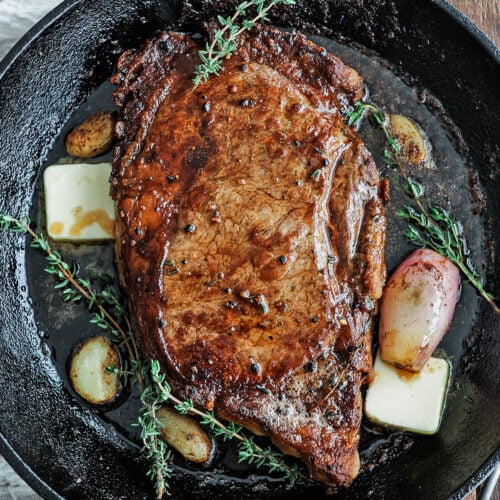
Credit: www.billyparisi.com
Frequently Asked Questions
How Do I Know When My Ribeye Steak Is Done Without A Thermometer?
You can use the “finger test.” Press the steak’s center with your finger or tongs:
- Rare: Very soft
- Medium rare: Soft, with some resistance
- Medium: Springs back
- Well done: Very firm
For beginners, a thermometer is much more reliable.
Should I Cover The Pan While Cooking Ribeye Steak?
No, do not cover the pan. Covering traps steam, making the steak less crisp and more likely to steam than sear.
Is It Better To Use Butter Or Oil For Frying Steak?
Start with oil because it handles high heat better. Add butter in the last few minutes for flavor. Butter alone can burn if used from the start.
Can I Cook A Frozen Ribeye Steak In A Frying Pan?
It’s possible, but you’ll get a better crust and more even cooking if you thaw the steak first. If you must cook from frozen, expect a longer cooking time and a less even result.
What’s The Best Way To Reheat Leftover Ribeye Steak?
Reheat gently in a low oven (250°F/120°C) until warm, about 10–15 minutes. You can also slice thin and reheat briefly in a hot pan with a bit of oil. Avoid microwaving, which can dry out the meat.
Cooking a ribeye steak in a frying pan is all about technique and attention. With the right cut, proper prep, and a hot pan, you can enjoy steakhouse results at home. Remember, practice makes perfect—the more steaks you cook, the better you’ll get. For more on steak science and cooking techniques, check the Serious Eats Steak Guide. Enjoy your perfectly pan-seared ribeye!

Hello, This is Annie Walker, a 38-year-old blogger, founder, and editor of Cookware Guider from NY, USA. I am a cookware fanatic and passionate cooker. I love to cook with different types of cooking appliances (example: all types of cookware, rice cookers, slow cookers, etc) almost every day in my kitchen. I love to share my experience with my readers in my blog. Also, I enjoy helping people to solve their problems through my website. You can follow me on Twitter & Pinterest. To know details about my blog please check the about us page.