
There is something special about the sound and smell of bacon cooking in a frying pan. For many, crispy bacon is the perfect start to a morning or the highlight of a comfort-food meal. But getting bacon to that golden, crunchy texture is not always easy. Sometimes it burns, curls up, or cooks unevenly. If you want to make bacon that is both crispy and delicious, the right pan, heat level, and technique are key. This guide will walk you through every step, offer expert tips, and clear up common myths so you can master the art of making crispy bacon in a frying pan.
Why Frying Pan Bacon Tastes So Good
Bacon cooked in a frying pan has a unique flavor and texture. The direct contact with the hot surface allows the fat to render slowly, crisping the meat while keeping it juicy. Compared to oven or microwave methods, the pan gives you more control over each piece.
You can flip, move, and adjust the heat as needed.
Freshly cooked bacon’s crunchy texture and rich aroma come from the Maillard reaction—a chemical change that happens when amino acids and sugars in the bacon meet heat. This is what creates the deep, savory taste and appetizing scent. The frying pan method also lets you use the leftover bacon grease for other dishes, adding a punch of flavor to eggs or vegetables.
Choosing The Best Bacon For Frying
Not all bacon is created equal. The type and cut you pick can make a big difference in the final result.
| Type of Bacon | Texture When Fried | Best For |
|---|---|---|
| Regular sliced | Crispy, even edges | Everyday breakfast |
| Thick-cut | Chewy in center, crispy edges | Sandwiches, burgers |
| Center-cut | Less fat, more uniform crisp | Lighter meals |
| Turkey bacon | Less crispy, leaner | Low-fat diets |
If you want ultra-crispy bacon, choose regular or center-cut pork bacon. Thick-cut can be crisped, but it needs more time. Avoid bacon with too much fat or uneven slices, as these cook less evenly.
Tools And Ingredients Needed
You do not need fancy equipment, but choosing the right tools helps:
- Frying pan (skillet): Cast iron or heavy stainless steel is best for even heat.
- Tongs: For easy flipping and moving.
- Paper towels: To drain excess fat.
- Plate: For serving or cooling.
- Bacon: 6–8 slices (or as much as you want).
- Optional: Splatter guard to reduce mess.
Tip: Do not add oil or butter. Bacon has enough fat to cook itself.
Step-by-step: How To Make Crispy Bacon In A Frying Pan
1. Start With A Cold Pan
Place your bacon strips in a cold pan. Lay them flat, making sure they do not overlap. This helps the fat render slowly and prevents curling.
Insight: Many people start with a hot pan, but this can shock the meat, causing it to curl and cook unevenly.
2. Turn The Heat To Medium-low
Set your stove to medium-low. Slow heat lets the bacon fat melt out, making the bacon crispy without burning the edges.
If you rush with high heat, the bacon can burn on the outside and stay chewy inside.
3. Cook And Watch Closely
Let the bacon cook for 4–5 minutes. As the fat starts to melt, you will see the strips shrink and curl slightly. Use tongs to move or adjust pieces if they are cooking unevenly.
4. Flip The Bacon
After 4–5 minutes, use tongs to flip each strip. Continue to cook for another 3–5 minutes, or until your bacon reaches the desired crispiness.
Non-obvious tip: Flip each piece more than once. Frequent flipping (every 1–2 minutes) leads to more even crispiness and less burning.
5. Drain And Serve
When your bacon looks golden and crispy, remove it from the pan and place it on a plate lined with paper towels. This helps soak up excess grease and keeps the bacon crunchy.
Let it rest for 1–2 minutes before serving—the bacon will become crispier as it cools.
How Long Should You Fry Bacon?
Cooking times depend on the thickness of your bacon, your pan, and your stove. Here is a simple guide:
| Bacon Type | Approximate Cook Time (per side) | Final Texture |
|---|---|---|
| Regular sliced | 4–5 min | Very crispy |
| Thick-cut | 6–8 min | Crispy edges, chewy center |
| Turkey bacon | 3–4 min | Lightly crispy |
Always watch closely in the final minutes—bacon can go from crispy to burnt quickly.
Tips For Extra Crispy Bacon
- Use a heavy pan: Cast iron keeps heat even, preventing hot spots that can burn bacon.
- Do not overcrowd: Give each strip space. Overlapping creates soggy spots.
- Drain fat as you go: If there is too much liquid fat, carefully pour some out. Too much fat can make bacon limp.
- Press with spatula: Gently press bacon with a spatula for flatter, crispier strips.
- Try a splatter guard: This keeps your kitchen cleaner and reduces smoke.
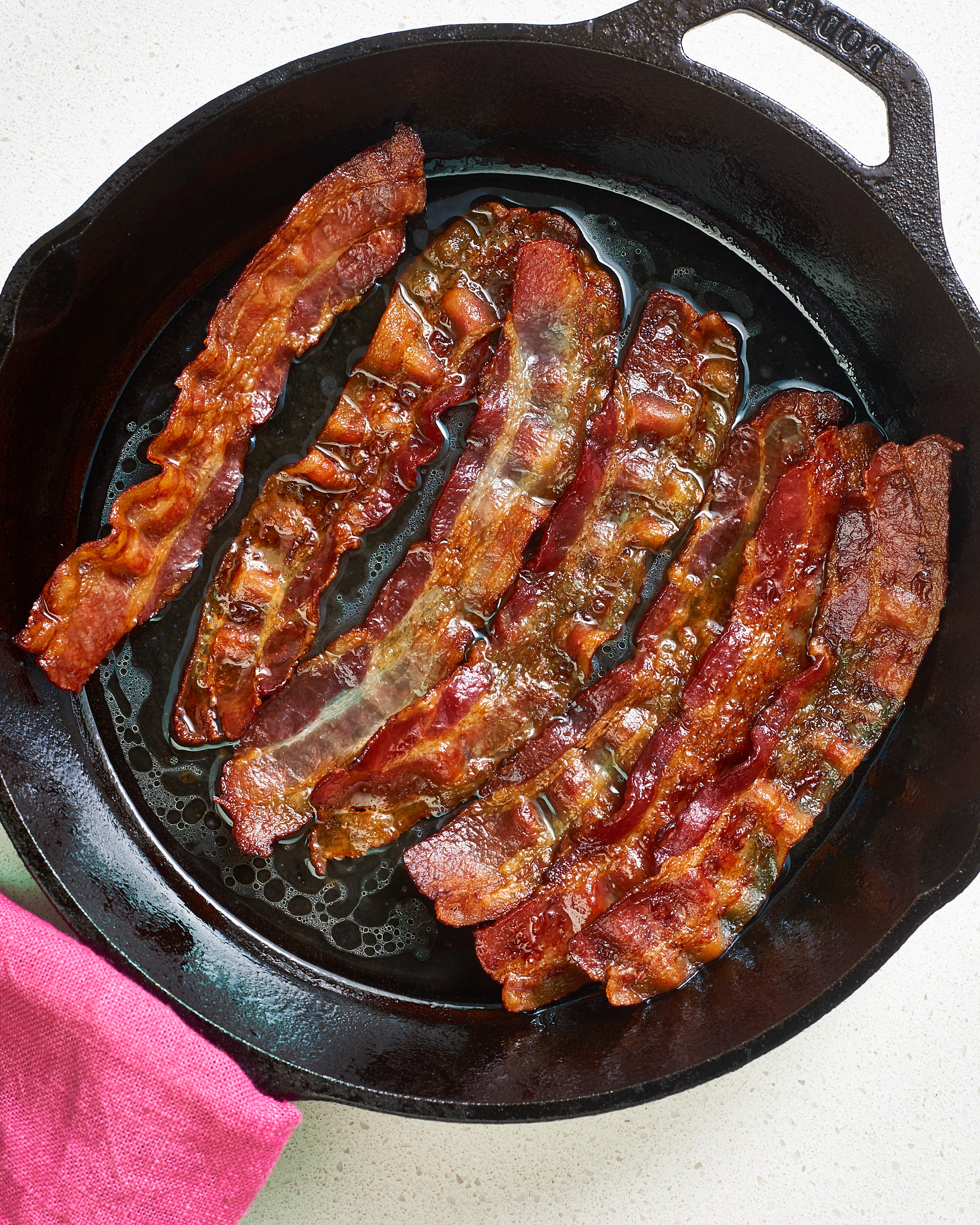
Credit: www.thekitchn.com
Common Mistakes To Avoid
- Using high heat: This cooks the outside too fast and leaves the inside chewy or burnt.
- Adding oil or butter: Unneeded and can cause the bacon to fry unevenly.
- Overlapping strips: This leads to steaming, not frying.
- Not watching closely: Bacon cooks fast, especially at the end.
- Cooking straight from the fridge: Let bacon rest at room temperature for 5–10 minutes before frying for even cooking.
Should You Save Bacon Grease?
Yes! Bacon grease is packed with flavor and can be used for cooking eggs, frying potatoes, or adding to soups. To save it, pour the cooled fat into a heatproof container and store in the fridge. It will last up to a month.
Non-obvious insight: Strain the grease through a fine sieve or cheesecloth to remove crispy bits. This keeps the fat from turning rancid.
Comparing Frying Pan Bacon To Other Methods
How does frying pan bacon stack up against oven and microwave methods? Here is a quick comparison:
| Method | Crispiness | Control | Mess | Time |
|---|---|---|---|---|
| Frying Pan | High | Excellent | Medium | 10–12 min |
| Oven | Medium | Good | Low | 15–20 min |
| Microwave | Low | Poor | Low | 4–6 min |
Frying pan bacon gives you the most control and best texture, especially if you like your bacon extra crispy.
What To Do With Crispy Bacon
Crispy bacon is more than just a breakfast food. Try these ideas:
- Add to salads: Crumble on top of Caesar or spinach salads.
- Use in sandwiches: BLTs, breakfast sandwiches, or burgers.
- Mix into pasta: Carbonara, mac and cheese, or Alfredo dishes.
- Top baked potatoes: Add bacon, cheese, and sour cream.
- Serve as snacks: Bacon strips with dips or wrapped around dates.

Credit: www.washingtonpost.com
Cleaning Up After Frying Bacon
Bacon can leave a greasy mess, but cleaning up is simple if you act quickly.
- Let the pan cool slightly (but not fully cold).
- Pour off excess fat into a container for storage or disposal.
- Wipe the pan with a paper towel.
- Wash with warm, soapy water. For cast iron, avoid soap and just use hot water and a scrub brush.
- Dry the pan completely to prevent rust (especially for cast iron).
Health Facts About Bacon
Bacon is high in protein and saturated fat. One slice (about 8g) has around 42 calories, 3g fat, and 137mg sodium. While tasty, bacon should be eaten in moderation. For a lighter option, look for center-cut or turkey bacon.
According to the USDA, cooked bacon should be kept in the fridge and eaten within 4–5 days. For more on bacon safety, visit the USDA Food Safety page.
:max_bytes(150000):strip_icc()/GettyImages-599760022-5a5e52ce13f1290036e350e4-5b032d9ec06471003604a51f.jpg)
Credit: www.thespruceeats.com
Frequently Asked Questions
How Do I Keep Bacon From Curling In The Pan?
Start with a cold pan and cook on medium-low heat. If needed, press bacon gently with a spatula or lay another pan on top for the first 2 minutes. This helps keep bacon flat.
Can I Reuse Bacon Grease?
Yes, as long as you strain out any crispy bits and store it in the fridge. Use it to fry eggs, vegetables, or add flavor to other dishes.
What Is The Best Pan For Crispy Bacon?
A cast iron skillet is ideal. It holds heat evenly and helps bacon crisp up nicely. Stainless steel pans also work well, but avoid nonstick pans for best results.
How Do I Know When Bacon Is Done?
Bacon is done when it looks golden brown and feels firm. It will crisp up more as it cools, so take it off the heat just before it reaches your perfect crispiness.
Is It Better To Cook Bacon Fast Or Slow?
Slow cooking on medium-low heat gives you the crispiest bacon. Fast cooking can burn the outside and leave the inside chewy.
Crispy bacon made in a frying pan is a classic treat that is easy to master once you know the right steps. With the tips and techniques above, you can enjoy perfect bacon every time, whether for breakfast, lunch, or a savory snack.
Happy cooking!

Hello, This is Annie Walker, a 38-year-old blogger, founder, and editor of Cookware Guider from NY, USA. I am a cookware fanatic and passionate cooker. I love to cook with different types of cooking appliances (example: all types of cookware, rice cookers, slow cookers, etc) almost every day in my kitchen. I love to share my experience with my readers in my blog. Also, I enjoy helping people to solve their problems through my website. You can follow me on Twitter & Pinterest. To know details about my blog please check the about us page.