
Measuring a frying pan might sound simple, but doing it correctly makes a big difference in your kitchen. If you’ve ever bought a lid that doesn’t fit or tried to follow a recipe but your food cooks unevenly, the problem could be how you measured your pan.
Understanding how to measure a frying pan accurately helps you buy the right accessories, cook with precision, and even avoid wasting money. Many people, especially beginners, make mistakes because they don’t know the industry standards or what manufacturers mean by “size.
” Let’s break down how to measure a frying pan step by step, clear up common confusion, and share tips that save you time and effort.
Why Pan Size Matters
Choosing the right pan size is more than a question of preference. The diameter of a frying pan affects how food cooks, how much you can make at once, and which lids or accessories fit. For example, an 8-inch pan is great for a single egg, while a 12-inch pan can handle a family-sized stir fry. If you pick the wrong size, you might crowd the food, leading to steaming instead of browning. Or you might use more oil than needed.
Most recipes and cookware guides use pan size as a standard reference point, so knowing your pan’s actual size helps you follow instructions better. It also matters when buying replacement lids, splatter screens, or oven-safe covers.
Standard Ways To Measure A Frying Pan
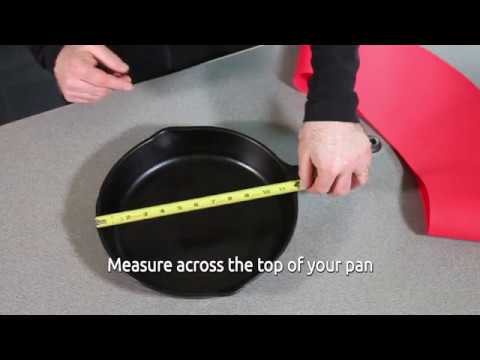
There is more than one way to measure a frying pan, but the most common method used by manufacturers is the top diameter—the distance from one rim to the opposite rim across the top, not the cooking surface or the bottom.
Common Measurement Methods
- Top Diameter (Rim-to-Rim): This is the measurement across the widest part of the pan, from one edge of the top rim to the other. This is the industry standard.
- Cooking Surface Diameter: This measures the flat, usable surface at the bottom inside of the pan. Some recipes or chefs use this for more accuracy, but it’s less common on packaging.
- Base Diameter: This is the diameter of the bottom of the pan, touching the burner. It’s important for induction or electric stovetops, but not usually the advertised size.
Most packaging and online stores are referring to the top diameter unless they specify otherwise.

Credit: razab.com
What You Need Before Measuring
You don’t need fancy tools to measure a frying pan, but accuracy helps. Here’s what you’ll need:
- A measuring tape or a ruler (flexible tape is better for curved pans)
- A flat, stable surface
- Pen and paper (optional, for notes)
- The pan itself, clean and dry
Pro tip: If your pan has sloped sides, use a tape measure. If it’s straight-sided, a ruler works fine.
Step-by-step: How To Measure A Frying Pan
Step 1: Identify The Type Of Measurement Needed
Check if you need the top diameter (for lids and accessories) or the cooking surface (for recipes). Most of the time, you’ll measure the top rim.
Step 2: Place The Pan On A Flat Surface
Set your frying pan upside down or right side up on a flat, stable surface like a kitchen counter. This keeps the measurement accurate and the pan steady.
Step 3: Measure The Top Diameter
- Lay your ruler or measuring tape across the center of the pan, from one edge of the rim to the other.
- Make sure the tape passes through the exact center of the pan.
- Read the measurement in inches (in the US) or centimeters (elsewhere).
- Note the value. This is the pan’s “advertised” size.
Step 4: Measure The Cooking Surface (optional)
- Place the ruler or tape across the flat bottom inside the pan, not including any sloped or curved sides.
- This is useful for recipes that specify the actual cooking area.
Step 5: Measure The Base Diameter (optional)
- Flip the pan over, and measure across the flat bottom that touches the stove.
- This helps if you’re matching a pan to a burner size, especially for induction cooktops.
Step 6: Record Your Measurements
Write down your results. For example:
- Top diameter: 10 inches
- Cooking surface: 8.5 inches
- Base diameter: 7.5 inches

Credit: www.dimensions.com
Practical Example
Suppose you have a frying pan at home and want to buy a glass lid. The packaging says “fits 12-inch pan. ” You measure across the top rim, and it’s 12 inches, so you know that lid will fit. If you measure the base or cooking surface instead, you might buy the wrong lid.
Typical Frying Pan Sizes
Frying pans come in several standard sizes. Here’s a quick guide to common options and what they’re best for:
| Pan Size (inches) | Best Uses | Servings |
|---|---|---|
| 8 | Eggs, single omelet, small portions | 1-2 |
| 10 | Frittatas, sautéed veggies, 2-3 chicken breasts | 2-3 |
| 12 | Family stir fry, steaks, pancakes | 4-5 |
Insight: Many people think their 10-inch pan can do everything, but for pancakes or large dinners, a 12-inch pan prevents crowding and uneven cooking.
Credit: www.youtube.com
How Manufacturers List Pan Size
Manufacturers almost always use the top diameter in their advertising and packaging. If your pan says “10-inch,” it’s measuring rim to rim, not the cooking surface or base.
Sometimes, the pan may have a sticker or stamp underneath with the size. If in doubt, always measure it yourself instead of relying on a faded label.
Matching Accessories: Why Accurate Measurement Matters
Buying lids, splatter guards, or inserts? They need to fit the top diameter. For example, a 10-inch glass lid will only fit a pan whose top rim measures 10 inches across. If you measure the wrong way, you’ll end up with gaps or an accessory that simply won’t fit.
Here’s a quick reference:
| Accessory Type | Which Diameter To Use | Why It Matters |
|---|---|---|
| Lid | Top diameter | Ensures proper seal; avoids spills |
| Splatter screen | Top diameter | Prevents oil splatter; covers pan fully |
| Baking insert | Cooking surface diameter | Fits inside; avoids movement |
Common Mistakes When Measuring Frying Pans
Even experienced cooks make errors. Watch out for these common mistakes:
- Measuring the base instead of the rim: This gives a smaller number, leading to mismatched lids.
- Measuring only the cooking surface: You’ll end up with accessories that are too big.
- Not passing through the center: If your tape or ruler is off-center, the number will be wrong.
- Confusing metric and imperial units: Always double-check if you need inches or centimeters.
- Not considering the pan shape: Some pans have flared or very shallow sides, which can change how you use them.
How Frying Pan Shape Affects Measurement
Not all frying pans are built the same. Some have straight sides, others are more sloped. Woks, for example, have a deep curve, which means the top diameter is much wider than the cooking surface.
Non-obvious insight: If your pan has very sloped sides, the cooking surface may be much smaller than the advertised size. This affects how much food you can cook at once. For recipes that need a lot of browning (like steak), always check the cooking surface.
Matching Frying Pan To Burner Size
Another important measurement is the base diameter—the part that actually touches your stovetop. If your pan’s base is much smaller than the burner, heat distribution can be uneven, with hot spots in the middle and cool edges. For induction cooktops, the base must match the induction zone.
Here’s a practical example:
Suppose your induction cooktop’s burner is 8 inches across. If you use a pan with a 12-inch top but a 6-inch base, only the center gets hot. Food at the edges may not cook well. Always check the base diameter for induction stoves.
Tips For Measuring Odd-shaped Or Specialty Pans
Some pans, like grill pans or oval fish pans, don’t have a simple round shape. Here’s how to handle them:
- For rectangular pans, measure the length and width at the widest points.
- For oval pans, measure the longest point (length) and the widest point (width).
- For specialty pans (like divided pans), measure each section if needed.
Pro tip: For non-round pans, always check manufacturer recommendations for accessory sizes. Sometimes they design custom lids or inserts.
Maintenance: Why Accurate Measurement Extends Pan Life
Knowing your pan’s size helps you buy the right accessories, which can extend its life. For example, a lid that fits well prevents spills and reduces clean-up. A splatter guard keeps oil from burning onto the sides. If you try to force accessories that don’t fit, you can chip the rim or damage nonstick coatings.
Non-obvious insight: Over time, using the wrong size lid or insert can warp the pan or scratch coatings, reducing performance.
When To Re-measure Your Pan
Pans can warp over time, especially after years of heavy use or cleaning in a dishwasher. If you notice a lid doesn’t fit as well as it used to, or the pan rocks on the stove, measure again. Sometimes, a pan can change shape slightly from heat stress.
Quick Reference: Measurement Checklist
Here’s a simple checklist to remember:
- Decide which diameter you need (top, cooking surface, base)
- Use a ruler or tape measure
- Measure across the center
- Record in inches or centimeters
- Double-check for odd-shaped pans
How To Read Online Pan Descriptions
Buying a pan online? Product pages often list several measurements:
- “12-inch frying pan” usually means 12-inch top diameter.
- “Cooking surface: 10 inches” means the flat area inside.
- “Base: 8 inches” means the part that touches the burner.
If you’re unsure, check the Q&A or reviews, or contact the seller.
For more on cookware sizing standards, you can visit the Wikipedia page on frying pans.
Frequently Asked Questions
How Do I Know What Size My Frying Pan Is?
Measure the top diameter across the rim using a ruler or tape measure. This is the size used by most manufacturers and for buying lids.
Can I Use A Lid From Another Pan If The Size Is Close?
It’s best to use a lid that matches the pan’s top diameter exactly. If it’s too small, steam escapes; if too large, it won’t seal or might slip off.
Why Does My Pan’s Base Look Smaller Than The Top?
Many frying pans have flared or sloped sides. The base diameter is often 1–2 inches less than the top. This design helps with tossing food and even heating.
Does The Thickness Of The Pan Affect Measurement?
No, when measuring size, you only need the diameter. But thickness affects heat retention and cooking performance, not the actual measurement.
Are Metric And Imperial Sizes Interchangeable?
No. A 25 cm pan is not exactly 10 inches (it’s about 9. 84”). Always check your recipe or accessory for the correct unit and measure accordingly.
Knowing how to measure a frying pan properly helps you cook better, save money, and avoid kitchen frustration. Next time you need a new lid or want to follow a recipe, you’ll have the confidence that comes from precise, practical knowledge.

Hello, This is Annie Walker, a 38-year-old blogger, founder, and editor of Cookware Guider from NY, USA. I am a cookware fanatic and passionate cooker. I love to cook with different types of cooking appliances (example: all types of cookware, rice cookers, slow cookers, etc) almost every day in my kitchen. I love to share my experience with my readers in my blog. Also, I enjoy helping people to solve their problems through my website. You can follow me on Twitter & Pinterest. To know details about my blog please check the about us page.