
Few foods are as tempting as freshly pan-fried bacon. The sizzle, the aroma, and the crispy bite make it a favorite for breakfasts, sandwiches, salads, or even as a snack. Bacon’s popularity is no accident—its rich flavor and versatility have made it a staple in kitchens across the globe.
But many people don’t realize that pan-frying bacon is both an art and a science. Getting the perfect crisp without burning or undercooking takes practice and attention to detail.
In this guide, you’ll learn everything you need to know about how to pan fry bacon. From choosing the right bacon and tools, to mastering the frying process, to solving common problems, you’ll discover tips and insights that even seasoned cooks sometimes overlook. Whether you’re new to bacon or looking to refine your technique, you’ll find practical advice, clear steps, and useful comparisons to help you achieve restaurant-quality results at home.
Choosing The Right Bacon
Not all bacon is created equal. The type, cut, and quality of bacon you select will impact both taste and texture.
Types Of Bacon
Most bacon in the US comes from pork belly, but there are other options:
- Streaky bacon: The classic US style, with alternating fat and meat.
- Canadian bacon: Made from pork loin, leaner and round slices.
- Turkey bacon: Lower in fat, made from turkey meat.
Streaky bacon is best for pan-frying because its fat content helps achieve crispiness.
Thickness Matters
Bacon comes in different thicknesses:
- Thin cut: Cooks quickly, usually in 2–4 minutes per side.
- Regular cut: Standard thickness, takes 4–6 minutes per side.
- Thick cut: Needs more time, often 6–8 minutes per side.
Thicker bacon is less likely to burn but requires more patience.
Freshness And Quality
Look for bacon with:
- Bright pink color and white fat.
- Minimal additives or preservatives.
- Even marbling for consistent cooking.
Avoid bacon that looks dull, gray, or has excessive liquid in the package.
Comparison Table: Bacon Types And Features
Here’s a quick comparison of common bacon options for pan-frying:
| Bacon Type | Fat Content | Crispiness | Cooking Time | Flavor |
|---|---|---|---|---|
| Streaky Pork | High | Excellent | 4–6 min | Rich, smoky |
| Canadian | Low | Moderate | 2–4 min | Mild, savory |
| Turkey | Low | Moderate | 3–5 min | Light, less smoky |
Essential Tools For Pan-frying Bacon
Before you start, gather the right equipment. Using proper tools makes the process easier and safer.
The Best Pan
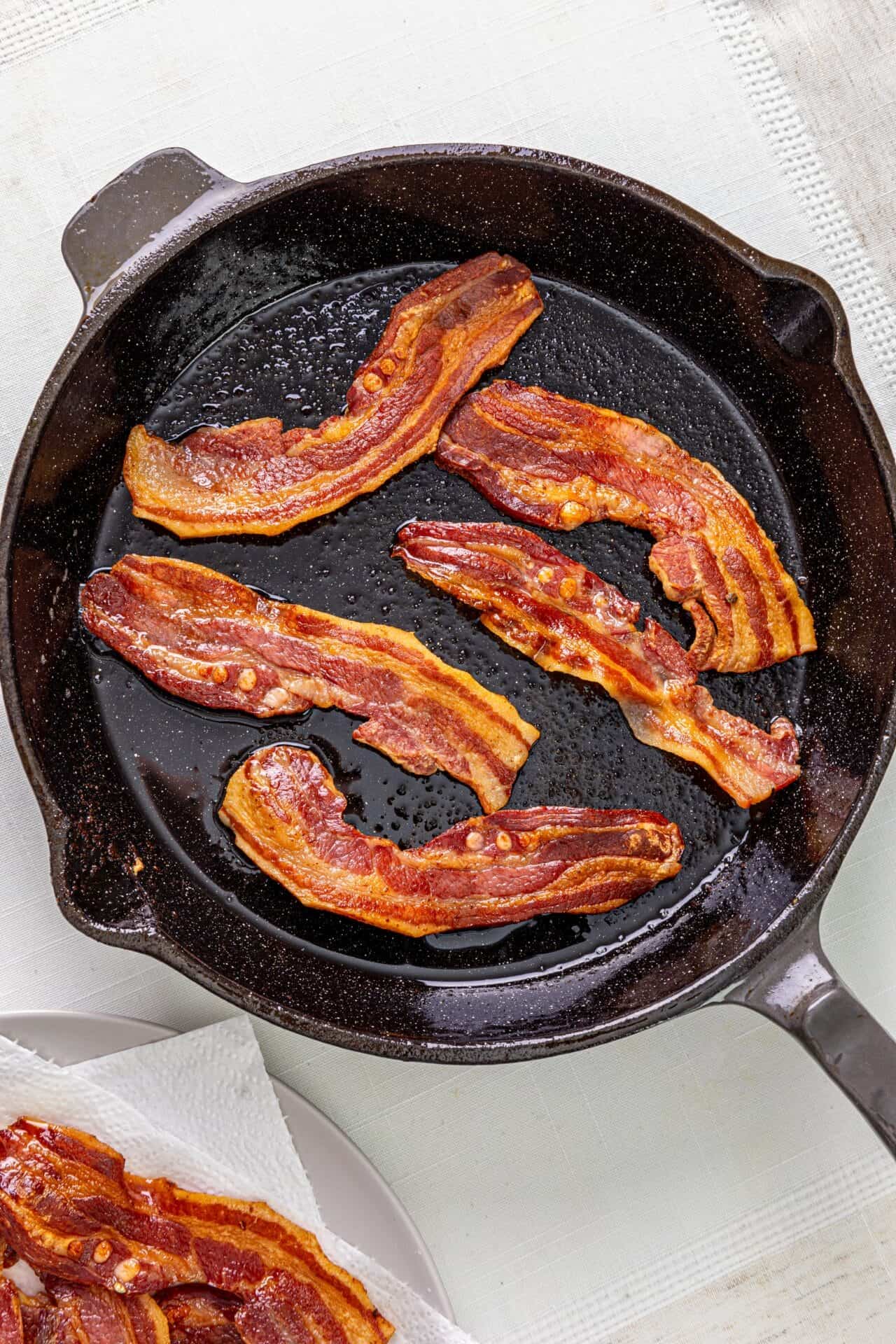
- Cast iron skillet: Retains heat well, gives even crispiness.
- Stainless steel pan: Good for browning, but can stick if not careful.
- Nonstick skillet: Easiest for beginners, less risk of burning.
Cast iron is preferred by many chefs because it builds up flavor over time.
Other Useful Tools
- Tongs: For flipping bacon safely.
- Paper towels: To drain excess fat.
- Splatter guard: Prevents grease from splashing.
- Thermometer: Optional, for checking fat temperature.
Comparison Table: Pan Types For Bacon
Let’s compare the main pans used to fry bacon:
| Pan Type | Heat Retention | Ease of Cleaning | Stick Risk | Price Range |
|---|---|---|---|---|
| Cast Iron | Excellent | Moderate | Low | $20–$50 |
| Stainless Steel | Good | Easy | Medium | $30–$80 |
| Nonstick | Fair | Easy | Very Low | $15–$40 |
Credit: bakedbree.com
Preparing Bacon For Pan-frying
How you prep bacon before cooking can make a big difference.
Bringing Bacon To Room Temperature
Taking bacon out of the fridge 10–15 minutes before cooking helps it cook evenly. Cold bacon may curl or cook unevenly.
Patting Bacon Dry
If the bacon is wet, pat it dry with paper towels. Too much moisture can cause splattering and less crispiness.
Separating Slices
Peel slices apart gently, especially with thin bacon. Overlapping slices will stick and cook unevenly.
Step-by-step Guide: How To Pan Fry Bacon
Now, let’s walk through the process of pan-frying bacon for perfect results.
Step 1: Place Bacon In A Cold Pan
Lay bacon strips side-by-side in a cold skillet. Don’t overlap. Starting cold lets fat render slowly, reducing splatter and curling.
Step 2: Turn Heat To Medium
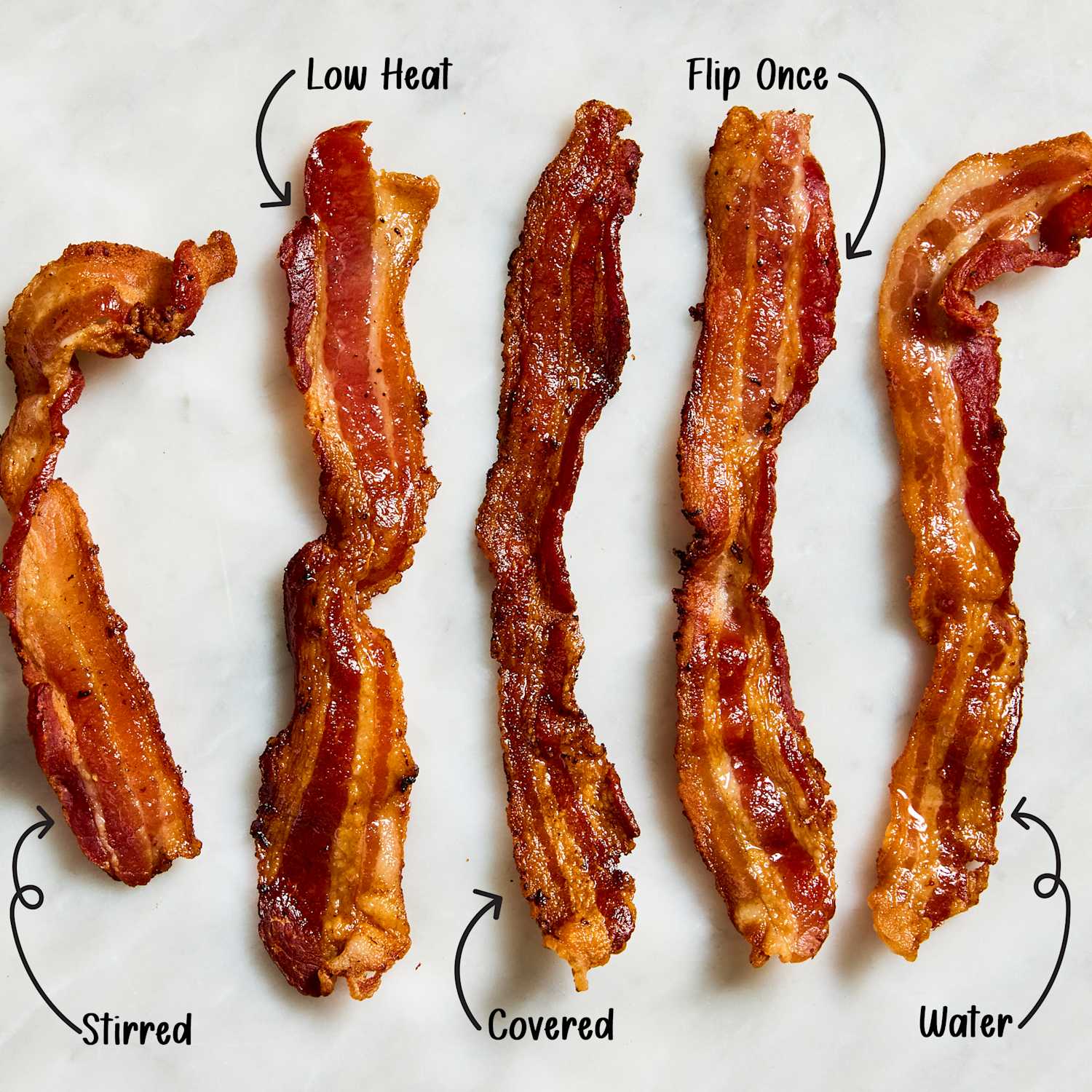
Set your stove to medium. Too high will burn the bacon; too low will make it greasy and soft. Medium is ideal for most kitchens.
Step 3: Let Bacon Render And Sizzle
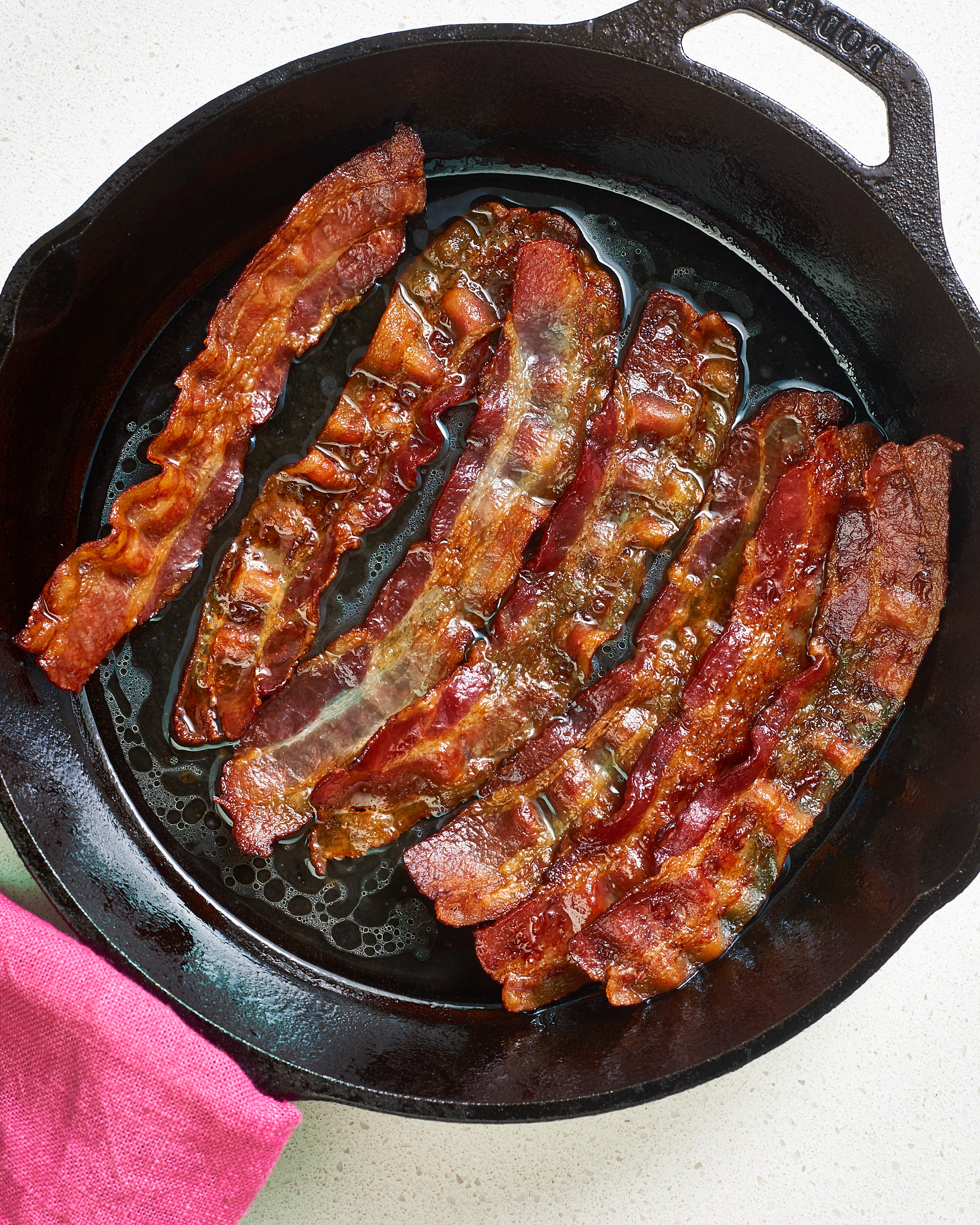
As bacon heats, fat will start to melt. Watch for gentle sizzling—not heavy smoking. The bacon will shrink and curl slightly.
Step 4: Flip Bacon Carefully
Use tongs to flip each slice after 2–4 minutes (thin) or 4–6 minutes (regular). Flip again as needed until both sides are golden brown.
Step 5: Drain And Rest
Transfer cooked bacon to paper towels. Let it rest for 1–2 minutes to drain excess grease and firm up.
Step 6: Save Bacon Fat (optional)
Pour leftover bacon fat into a heatproof container for future cooking. Bacon fat adds flavor to vegetables, eggs, and more.
Cooking Time Guide
Here’s a quick reference for bacon thickness and cooking times:
| Bacon Thickness | One Side | Total Cooking Time |
|---|---|---|
| Thin | 2–3 min | 4–6 min |
| Regular | 4 min | 8 min |
| Thick | 5–6 min | 10–12 min |
Tips For Perfect Pan-fried Bacon
Many people overlook small details that can make bacon better. Here are some tips you may not know:
- Don’t overcrowd the pan. Bacon needs space to cook evenly.
- Rotate the pan if your stove has hot spots; this avoids uneven crisping.
- Press down with a spatula if bacon curls too much. This helps it brown evenly.
- Wipe excess fat from the pan between batches to prevent burning.
- Don’t walk away. Bacon can burn quickly once it starts browning.
Non-obvious Insights
- If you cover the pan with a lid for the first minute, bacon will cook more evenly and splatter less. Remove the lid after fat starts rendering.
- Using a small amount of water (about 2 tablespoons) in a cold pan with bacon can help render fat gently and reduce splattering. The water evaporates as the bacon cooks.
Common Mistakes When Pan-frying Bacon
Even experienced cooks make errors. Avoid these pitfalls for better results.
Cooking At High Heat
Bacon burns easily at high heat. Medium is best for crispiness and flavor.
Overlapping Slices
Stacked slices cook unevenly and stick together. Always lay bacon flat.
Not Watching Closely
Bacon goes from perfect to burnt in seconds. Stay near the stove.
Using The Wrong Pan
Thin pans heat unevenly and can cause burning. Heavy pans distribute heat well.
Not Draining Properly
Skipping the draining step leaves bacon soggy and greasy.
How To Control Crispiness
Everyone likes their bacon a little differently. Here’s how to customize the texture:
Crispy Bacon
- Cook longer at medium heat.
- Press down gently with a spatula.
Chewy Bacon
- Cook less time.
- Use thicker cuts.
Extra-crispy
- Cook until deep golden brown.
- Drain on paper towels for extra time.
Example: Crispy Vs Chewy
If you want crispy bacon for salads, fry until the edges are dark. For chewy bacon in sandwiches, use thick slices and cook a bit less.
How To Reduce Grease And Splatter
Grease splatter is a common concern. Here’s how to manage it:
- Use a splatter guard over the pan.
- Start in a cold pan—this reduces sudden fat release.
- Pat bacon dry before cooking.
- Cook in smaller batches to keep splatter down.
Practical Insight
Some cooks place a sheet of paper towel over the pan (not touching the bacon) to catch splatter. Remove it before flipping bacon.
The Role Of Bacon Fat
Bacon fat is liquid gold. Many people throw it away, but it can be reused.
Uses For Bacon Fat
- Frying eggs for extra flavor.
- Sautéing vegetables.
- Making dressings or sauces.
Let bacon fat cool, then strain and store in the fridge for up to a month.
Safety Tip
Never pour hot bacon fat down the drain—it can clog pipes. Let it solidify, then dispose or store.
Pan-frying Bacon For Different Dishes
Bacon isn’t just for breakfast. It’s used in many recipes.
Bacon For Breakfast
Classic scrambled eggs, pancakes, or toast.
Bacon For Salads
Crispy bits add crunch and flavor to salads.
Bacon For Sandwiches
Layer bacon on BLTs, club sandwiches, or burgers.
Bacon For Pasta
Mix crispy bacon into carbonara or creamy pasta dishes.
Cooking Bacon With Additional Ingredients
You can add flavor by frying bacon with other ingredients.
- Black pepper: Sprinkle on bacon before cooking.
- Brown sugar: For sweet, candied bacon, coat strips before frying.
- Chili flakes: For spicy bacon, add flakes while frying.
Example: Candied Bacon
Coat bacon with brown sugar, fry at medium-low heat, and flip often. Watch closely—sugar burns easily.
Cleaning Up After Frying Bacon
Grease is messy. Here’s how to clean safely:
- Let pan and grease cool completely.
- Wipe excess fat with paper towels.
- Wash pan with warm, soapy water.
- For cast iron, wipe clean and oil lightly.
Non-obvious Insight
If you accidentally spill bacon grease, sprinkle baking soda to absorb it before wiping.
Health And Nutrition Facts
Bacon is delicious but should be eaten in moderation.
- 1 slice of regular bacon (approx. 12g) has about 42 calories and 3.3g fat.
- Most bacon is high in sodium—about 190mg per slice.
- Turkey bacon has about 25% less fat than pork bacon.
Healthier Choices
- Use turkey or Canadian bacon for less fat.
- Drain well and use paper towels to remove extra grease.
- Pair bacon with vegetables to balance meals.
Storing Leftover Bacon
Sometimes you make extra bacon. Here’s how to keep it fresh.
Refrigeration
Wrap cooked bacon in paper towels and store in an airtight container. Keeps for 4–5 days.
Freezing
Freeze cooked bacon in layers with wax paper. Keeps for up to 3 months. Reheat in a pan or microwave.
Reheating Tips
- Use a skillet for best texture.
- Microwave for 20–30 seconds per slice.
Credit: www.thekitchn.com
Bacon Safety Tips
Bacon is safe if cooked properly. Here’s what to watch for:
- Cook to at least 145°F (63°C).
- Don’t leave cooked bacon at room temperature for more than 2 hours.
- Store raw bacon below 40°F (4°C).
Handling Bacon
Wash hands after touching raw bacon. Clean surfaces and utensils thoroughly.
Bacon In Different Cultures
Bacon is enjoyed worldwide, but methods and flavors vary.
- In Japan, bacon is thinner and often used in stir-fries.
- In Italy, pancetta is cured pork belly, used in pasta and salads.
- In the UK, back bacon has more meat and less fat.
Example
Back bacon is popular in English breakfasts, while streaky bacon is more common in the US.
Bacon Myths And Facts
There are many myths about bacon. Let’s clear some up.
- Myth: Bacon must be cooked at high heat.
Fact: Medium heat is best for flavor and texture.
- Myth: Bacon is unhealthy in all forms.
Fact: Bacon can be part of a balanced diet if eaten in moderation.
- Myth: Only pork bacon is real bacon.
Fact: Turkey, beef, and even vegan bacon are alternatives.
Where To Learn More
If you want more details on bacon, curing, or cooking techniques, visit the Wikipedia page on bacon. It’s a reliable source for bacon history and science.
Credit: www.thekitchn.com
Frequently Asked Questions
How Can I Prevent Bacon From Curling In The Pan?
Bacon curls when heated quickly. To prevent this, start bacon in a cold pan and cook at medium heat. If it curls too much, press it down with a spatula or tongs for a few seconds.
What Should I Do With Leftover Bacon Grease?
Let bacon grease cool, then pour into a container. Store it in the fridge and use it for frying eggs, sautéing vegetables, or adding flavor to soups. Never pour hot grease down the sink.
Is It Safe To Eat Bacon That Is Slightly Pink?
Bacon should be cooked until the meat is no longer translucent and the fat is rendered. Slight pink is normal if the bacon is cooked through and reaches 145°F (63°C). If unsure, cook a bit longer.
Can I Pan Fry Bacon Without Any Oil?
Yes, you do not need extra oil. Bacon releases its own fat as it cooks. Adding oil can make bacon greasy and less crispy.
How Do I Reheat Cooked Bacon To Keep It Crispy?
Reheat bacon in a skillet on medium heat for 1–2 minutes per side, or use an oven at 350°F (180°C) for 5–7 minutes. Avoid microwaving for too long, which can make bacon rubbery.
Pan-frying bacon is simple once you know the right steps and secrets. With careful attention to detail—from choosing the right bacon to using the best pan—you can achieve delicious, crispy bacon every time. Remember to cook at medium heat, avoid overcrowding, and drain well for the best results.
Whether you’re making breakfast, adding flavor to salads, or preparing a special dish, pan-fried bacon brings joy and taste to every meal. Practice these tips, avoid common mistakes, and don’t forget to enjoy the process. Bacon may be humble, but when cooked with care, it’s truly a star in your kitchen.

Hello, This is Annie Walker, a 38-year-old blogger, founder, and editor of Cookware Guider from NY, USA. I am a cookware fanatic and passionate cooker. I love to cook with different types of cooking appliances (example: all types of cookware, rice cookers, slow cookers, etc) almost every day in my kitchen. I love to share my experience with my readers in my blog. Also, I enjoy helping people to solve their problems through my website. You can follow me on Twitter & Pinterest. To know details about my blog please check the about us page.