
Using a mandoline food slicer can change the way you prepare vegetables, fruits, and even cheeses. This kitchen tool is famous for its speed, precision, and ability to create uniform slices or julienne cuts. Whether you’re making salads, chips, or garnishes, a mandoline gives professional-looking results without much effort.
But many home cooks feel nervous about using one—mostly because of safety concerns, or not knowing which blade to use. With the right guidance, you can use a mandoline confidently and safely, making your cooking faster and more creative.
What Is A Mandoline Food Slicer?
A mandoline food slicer is a flat device with sharp blades that lets you slice food items quickly and evenly. Unlike a knife, which depends on your skill, a mandoline ensures that each slice is the same thickness. This is important for recipes that need even cooking, like potato chips or gratins.
Mandolines come in different designs, but most have a base, adjustable blade, and a hand guard for safety.
There are two main types:
- French mandoline: Often made of stainless steel, very durable, and suitable for heavy use.
- Japanese mandoline: Usually lighter, made from plastic, and easier to handle for smaller tasks.
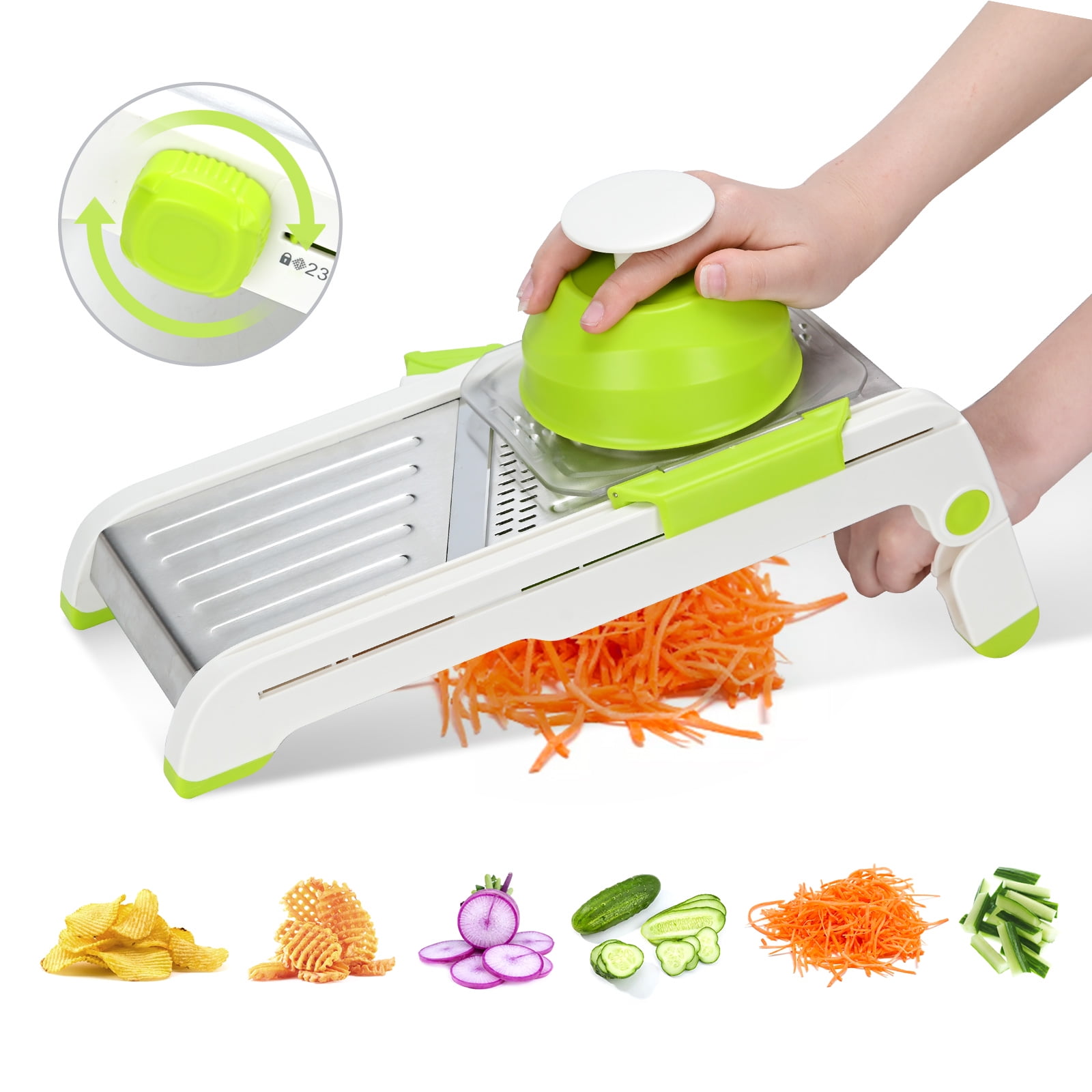
Some advanced models have extra blades for julienne, crinkle, or waffle cuts. Others offer adjustable thickness settings, letting you pick how thick or thin you want your slices.
Why Use A Mandoline Food Slicer?
Mandolines are not just for professional chefs. Here’s why home cooks love them:
- Speed: You can slice a whole potato in seconds.
- Uniformity: Every slice is the same thickness—great for presentation and cooking consistency.
- Versatility: Slice, julienne, or shred many foods (carrots, cucumbers, apples, cheese).
- Creativity: Try new shapes and textures, like crinkle fries or cucumber ribbons.
Restaurants use mandolines to save time and make dishes look appealing. For home cooks, using a mandoline means less prep work and better-looking meals.

Credit: www.amazon.com
Choosing The Right Mandoline Food Slicer
Picking the right mandoline for your kitchen is important. Here’s what to consider:
Material And Build
- Stainless steel models are sturdy and last longer.
- Plastic mandolines are lighter and easier to use, but may not last as long.
Adjustability
Look for slicers with adjustable blades. This lets you choose different thicknesses or types of cuts.
Safety Features
A good mandoline should include a hand guard or food holder. Some models offer non-slip feet, or a folding design for safer storage.
Price Range
Mandolines vary from $20 to over $100. Cheaper models are good for casual use. Higher-priced ones are more durable and have extra features.
Comparison Table: Popular Mandoline Models
Here’s a quick comparison of three popular mandolines:
| Model | Material | Blades | Price | Safety Features |
|---|---|---|---|---|
| OXO Good Grips | Plastic/Stainless | Adjustable, Julienne | $40 | Hand guard, non-slip feet |
| Benriner Japanese | Plastic | Flat, Julienne | $35 | Hand guard |
| Bron Coucke French | Stainless steel | Multiple, Crinkle | $110 | Hand guard, stable base |
Setting Up Your Mandoline Food Slicer
Before slicing, set up the mandoline correctly. This makes the process easier and safer.
- Clean the slicer: Wash all parts before first use.
- Choose your blade: Decide if you want flat slices, julienne strips, or crinkle cuts.
- Adjust thickness: Set the blade to your desired thickness (usually with a knob or lever).
- Attach the hand guard: Always use the guard to protect your fingers.
- Place the slicer on a flat surface: Many mandolines have non-slip feet. If not, place a damp cloth underneath.
Quick Tip
Start with softer vegetables (like zucchini or cucumber) until you get comfortable. Harder foods (like potatoes) need more pressure, so practice first.
How To Use A Mandoline Food Slicer: Step-by-step Guide
Using a mandoline is simple if you follow these steps:
- Prepare the food: Wash and peel vegetables or fruits. Cut them into sizes that fit the mandoline.
- Secure the slicer: Put it on a stable surface, like a cutting board.
- Set the blade and thickness: Adjust according to your recipe.
- Use the hand guard: Attach the food to the holder.
- Slide food across the blade: Move the food back and forth in a smooth motion.
- Collect the slices: Place a bowl or plate under the slicer to catch slices.
Example: Slicing A Potato
Let’s say you want to make homemade potato chips.
- Peel the potato, trim ends.
- Set the blade to 1/8 inch.
- Use the hand guard to hold the potato.
- Slide it back and forth over the blade.
- Collect the chips, then fry or bake as desired.
Common Mistakes And How To Avoid Them
- Not using the hand guard: Always protect your fingers.
- Applying too much force: Let the blade do the work.
- Not cleaning the slicer between uses: Food can stick and dull the blade.
- Ignoring blade adjustments: Check the thickness setting before slicing.
Safety Tips For Using A Mandoline
Mandolines are sharp—some cuts can happen quickly if you’re not careful. Follow these safety tips:
- Always use the hand guard: This is the most important rule.
- Keep your fingers away from the blade: Never reach under the slicer.
- Work slowly when nearing the end of the food: Don’t rush.
- Wear cut-resistant gloves: Many chefs use these for extra protection.
- Clean the mandoline carefully: Use a brush or cloth, not your hands, to avoid accidents.
Data: Mandoline Injury Statistics
According to kitchen safety studies, about 30% of home mandoline users report minor cuts. Most injuries occur when people slice quickly or ignore the guard. Using safety tools lowers injury risk by over 70%.
Types Of Cuts You Can Make
Mandolines are versatile. Here are the most common types of cuts:
- Straight slices: For chips, gratins, salads.
- Julienne strips: Thin matchsticks for stir-fries, salads.
- Crinkle cuts: Wavy slices for fries or decorative vegetables.
- Waffle cuts: Grid patterns for fancy chips.
Some advanced mandolines can also shred cheese or make ribbons.
Table: Cut Types And Their Uses
| Cut Type | Food Example | Common Use |
|---|---|---|
| Straight Slice | Potato, Cucumber | Chips, Salads |
| Julienne | Carrot, Zucchini | Stir-fry, Garnish |
| Crinkle | Sweet Potato | Crinkle Fries |
| Waffle | Potato | Waffle Chips |
Cleaning And Maintaining Your Mandoline
Proper cleaning keeps your mandoline sharp and safe.
- Wash immediately after use: Prevents food from drying on the blade.
- Use a brush: Never use your fingers to clean near the blades.
- Dry all parts: Moisture can cause rust, especially on steel models.
- Store safely: Keep blades covered or folded away.
Quick Tip
Some mandolines are dishwasher safe, but hand washing usually keeps the blade sharper for longer.
:max_bytes(150000):strip_icc()/mandolin-mld108619_sq.jpg1-9ff87b157a23430189f7f9ae1331cd74.jpg)
Credit: www.marthastewart.com
Practical Uses: Recipes And Meal Ideas
Mandolines help you make many dishes quickly and beautifully. Here are some ideas:
- Potato gratin: Thin, even slices cook perfectly.
- Coleslaw: Shred cabbage and carrots in seconds.
- Fruit chips: Slice apples or pears for healthy snacks.
- Salads: Uniform slices of cucumber, radish, or onion.
Try making carrot ribbons for decoration or zucchini strips for stir-fry. The uniformity makes your dishes look professional and ensures even cooking.
Example Recipe: Crispy Apple Chips
Ingredients:
- 2 apples
- Cinnamon (optional)
- Sugar (optional)
Instructions:
- Preheat oven to 225°F.
- Slice apples thinly using the mandoline (about 1/16 inch).
- Arrange slices on a baking sheet.
- Sprinkle with cinnamon or sugar if desired.
- Bake for 1.5–2 hours, flipping halfway.
Serves: 2–3 people. Prep time: 10 minutes. Cooking time: 2 hours.
Mandoline Vs. Other Slicing Tools
Mandolines are not the only option for slicing foods. Let’s compare:
| Tool | Speed | Uniformity | Safety | Versatility |
|---|---|---|---|---|
| Mandoline | Fast | High | Medium | High |
| Chef’s knife | Medium | Low | High | Medium |
| Food processor | Very fast | Medium | High | Low |
Mandolines offer the best combination of speed and uniformity. However, knives are safer and more versatile for different shapes. Food processors are fast, but less precise for thin slices.
Credit: www.walmart.com
Non-obvious Insights: What Most Beginners Miss
- Food moisture matters: Dry vegetables slice more easily. Wet foods can slip, making cutting harder and less safe.
- Blade care is key: A dull blade increases injury risk and makes slicing harder. Sharpen or replace blades as needed.
Many beginners also forget to adjust the thickness setting between foods. For example, potato chips need thinner slices than gratins. Always check the setting before you start.
Troubleshooting: Common Issues And Solutions
Food Gets Stuck
This happens if the food is too soft or not cut to size. Trim the food and dry it before slicing.
Slices Are Uneven
Check the thickness setting or make sure the food is attached firmly to the hand guard.
Blade Feels Dull
Replace the blade or sharpen it. Using a dull blade makes slicing dangerous.
Mandoline Slips
Place a damp towel under the slicer for better grip.
Advanced Techniques For Experienced Users
If you’re comfortable with basic slicing, try these:
- Waffle cuts: Rotate the food 90 degrees between passes.
- Stacking: Slice several items at once (like carrots and zucchini for stir-fry).
- Decorative slicing: Use crinkle or ribbon blades for creative presentations.
Experienced cooks sometimes skip the hand guard for more control, but this is risky. Instead, use cut-resistant gloves for protection.
Mandoline Food Slicer: Buying Mistakes To Avoid
- Choosing style over safety: Always pick safety features over design.
- Ignoring blade options: Some models don’t offer julienne or crinkle blades.
- Buying the cheapest model: Low-quality blades dull quickly.
- Not checking dishwasher compatibility: If you prefer machine washing, check the label.
Mandoline Food Slicer In Professional Kitchens
Mandolines are essential in restaurants for speed and quality. Chefs use them to prepare large quantities of vegetables, fruits, and garnishes. In professional settings, mandolines save hours of prep time and reduce waste because slices are uniform.
Restaurants use heavy-duty models that withstand daily use. Home cooks may not need these, but understanding their value shows why mandolines are respected in culinary circles.
Where To Learn More
If you want deeper information on mandoline slicers, their history, or safety, you can check the Wikipedia page for mandoline slicers.
Frequently Asked Questions
What Foods Can I Slice With A Mandoline?
You can slice potatoes, carrots, cucumbers, apples, pears, zucchini, onions, and even some cheeses. Avoid slicing very soft or sticky foods, as they may clog the blade.
How Do I Clean A Mandoline Safely?
Always use a brush or cloth to clean the blades. Never use your fingers. Some models are dishwasher safe, but hand washing keeps blades sharper.
Are Mandoline Slicers Safe For Beginners?
Mandolines can be safe if you use the hand guard and work slowly. Beginners should start with softer vegetables and always follow safety tips.
What Thickness Should I Use For Chips Or Gratins?
For chips, use a thin setting (about 1/16 inch). For gratin, set the blade a bit thicker (1/8 inch). Adjust according to your recipe.
Can I Sharpen Mandoline Blades?
Some mandoline blades can be sharpened, especially stainless steel ones. Others need to be replaced. Always check your model’s instructions.
Mandoline food slicers are powerful tools that transform everyday cooking. With practice, care, and attention to safety, you’ll prepare meals faster and with a professional touch. The right mandoline can boost your creativity and help you enjoy cooking at home.

Hello, This is Annie Walker, a 38-year-old blogger, founder, and editor of Cookware Guider from NY, USA. I am a cookware fanatic and passionate cooker. I love to cook with different types of cooking appliances (example: all types of cookware, rice cookers, slow cookers, etc) almost every day in my kitchen. I love to share my experience with my readers in my blog. Also, I enjoy helping people to solve their problems through my website. You can follow me on Twitter & Pinterest. To know details about my blog please check the about us page.