
If you own cast iron cookware, you know how valuable it is in your kitchen. But do you know the best way to wash it?
Washing cast iron isn’t like cleaning your regular pots and pans. If you don’t do it right, you could ruin the seasoning or even cause rust. You’ll discover simple, effective steps to keep your cast iron clean and ready for your next meal.
Follow these tips, and your cookware will last for years, cooking better with every use. Ready to learn how to care for your cast iron like a pro? Let’s dive in.

Credit: www.youtube.com
Choosing The Right Cleaning Tools
Choosing the right cleaning tools is key to keeping cast iron cookware in great shape. The wrong tools can damage the surface and ruin its seasoning. Proper tools clean well without harming the pan’s natural coating. This helps your cast iron last longer and cook better.
Avoiding Harsh Soaps
Harsh soaps remove the seasoning on cast iron. This makes the pan sticky and prone to rust. Use little or no soap when cleaning. Warm water and gentle scrubbing work best. Mild soap can be used rarely, but only if needed. Avoid detergents with strong chemicals or bleach.
Best Brushes And Scrubbers
Choose brushes and scrubbers made for cast iron. Soft-bristle brushes clean without scratching. Scrubbers with natural fibers remove stuck food gently. Avoid steel wool or metal scouring pads. These can strip the seasoning and leave scratches. Non-metal scrubbers keep your pan smooth and ready for cooking.
Cleaning After Each Use
Cleaning cast iron cookware after each use keeps it in great shape. Proper cleaning stops rust and keeps the seasoning strong. It also makes your pan ready for the next meal. Simple steps work best for daily care.
Removing Food Residue
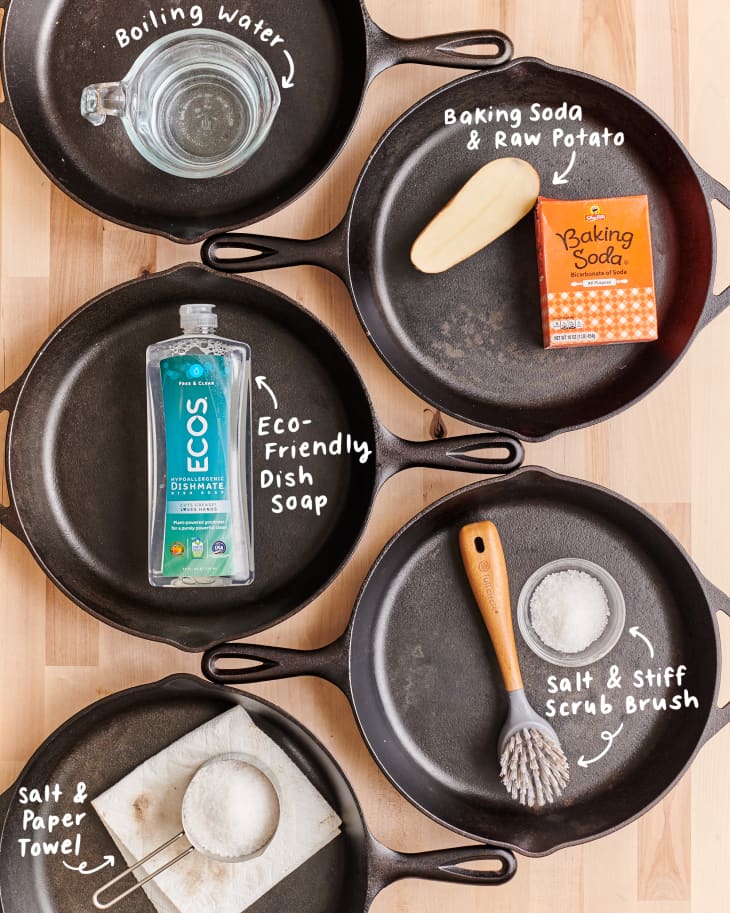
Start by scraping off leftover food with a spatula or brush. Avoid metal scrubbers that can damage the seasoning. Use a stiff brush or non-abrasive scrub pad instead. For stuck bits, pour coarse salt into the pan. Scrub gently to lift food without hurting the surface. Rinse the salt away with water.
Using Warm Water Safely
Use warm water to rinse your cast iron after scraping. Warm water helps remove oils and food particles well. Never soak your pan or use soap often. Soap can break down the seasoning layer. Dry the pan quickly with a towel to stop rust. Heat it on the stove for a few minutes to remove all moisture.
Dealing With Stubborn Stains
Stubborn stains on cast iron cookware can be tough to remove. These marks often come from burnt food or oil buildup. Cleaning them requires care to avoid damaging the seasoning. Gentle scrubbing and smart techniques help restore your pan’s surface without harsh chemicals.
Salt Scrub Method
Coarse salt works as a natural scrubber. Sprinkle a generous amount on the pan’s surface. Use a damp cloth or paper towel to rub the salt in circular motions. This action loosens stuck-on food and stains. Rinse the pan with warm water afterward. Dry the pan completely to stop rust from forming.
Boiling Water Technique
Fill the pan with water and bring it to a boil. Let it boil for a few minutes to soften tough residue. Use a spatula or wooden spoon to scrape off loosened bits. Pour out the water and wipe the pan clean. Dry the pan well, then apply a thin layer of oil to protect it.
Drying And Preventing Rust
Drying cast iron cookware correctly stops rust from forming. Cast iron holds moisture after washing. This moisture causes rust quickly. Careful drying is essential for a long-lasting pan.
Rust ruins the cooking surface. It makes food taste bad. It also damages the pan. Avoid rust by drying the pan well. Use these easy methods to keep your cast iron dry and rust-free.
Proper Drying Methods
After washing, wipe the pan with a clean towel. Remove all visible water drops. Air drying alone leaves moisture behind. Use a dry cloth to speed up the process. Make sure to dry inside and outside. Check the handle and edges carefully. These spots often hold water.
Heating To Remove Moisture
Place the pan on the stove over low heat. Heat it for 5 to 10 minutes. This step evaporates any hidden water. Heat also helps maintain the pan’s seasoning. Turn off the heat and let the pan cool. This method ensures no moisture stays inside. It also prepares the pan for oiling or storage.
Seasoning Cast Iron
Seasoning cast iron is key to keep your cookware non-stick and rust-free. It builds a protective layer that improves with use. Proper seasoning makes cooking easier and cleaning faster.
Without good seasoning, food can stick and the pan may rust quickly. This process involves coating the pan with oil and heating it. The oil bonds to the iron, creating a strong, smooth surface.
Applying Oil Correctly
Use a small amount of oil for seasoning. Too much oil creates a sticky, uneven layer. Choose oils with high smoke points like vegetable or flaxseed oil. Spread the oil thinly over the entire surface. Cover inside, outside, and handle if possible. Wipe off extra oil with a clean cloth or paper towel.
Baking For A Durable Coating
Preheat your oven to 450°F (230°C). Place the oiled pan upside down on the middle rack. Put a sheet of foil or a baking tray below to catch drips. Bake the pan for one hour to let the oil bond well. Turn off the oven and let the pan cool inside. This step hardens the seasoning and protects your cast iron.
:max_bytes(150000):strip_icc()/__opt__aboutcom__coeus__resources__content_migration__serious_eats__seriouseats.com__images__2016__09__20160817-cast-iron-pan-vicky-wasik-1-2-5ca3f25cf17a4a6aa97f4a8c878c63b3.jpg)
Credit: www.seriouseats.com
Long-term Care Tips
Long-term care is key to keeping cast iron cookware in great shape. Proper care helps maintain its non-stick surface and prevents rust. Simple habits can extend the life of your cast iron and make cooking easier.
Follow clear steps for storing and handling your cookware. Avoid mistakes that damage the seasoning or the metal. These tips help your cast iron stay strong and useful for years.
Storage Best Practices
Keep cast iron dry before storing it. Moisture causes rust quickly. Use a paper towel to wipe the surface clean and dry. Store in a cool, dry place with good air flow.
Place a paper towel or cloth between stacked pans. This stops scratching and traps moisture. Hang skillets if possible. This keeps them dry and safe from damage.
Avoiding Common Mistakes
Never soak cast iron in water for long. It leads to rust and weakens seasoning. Avoid using soap or harsh cleaners that strip oils. Instead, clean with hot water and a stiff brush.
Do not put cast iron in the dishwasher. The strong detergents and water ruin the seasoning. Avoid cooking acidic foods too often. They can eat away the protective layer.
Credit: www.thekitchn.com
Frequently Asked Questions
How Do You Clean Cast Iron Cookware Without Soap?
Use hot water and a stiff brush to clean cast iron. Avoid soap to preserve seasoning. Dry immediately to prevent rust. Reapply a thin oil layer after cleaning for protection.
Can You Soak Cast Iron Pans In Water?
No, soaking cast iron pans in water can cause rust. Clean them quickly after use and dry thoroughly. Prolonged water exposure damages the seasoning and metal surface.
Is It Safe To Use Soap On Cast Iron?
Light soap use is safe occasionally but not recommended regularly. Soap can break down the seasoning layer. Instead, use hot water and scrubbing tools for daily cleaning.
How Do You Remove Stuck-on Food From Cast Iron?
Scrape stuck food gently using a plastic scraper or coarse salt. Avoid metal tools that can damage seasoning. Rinse with hot water and dry immediately to maintain the pan.
Conclusion
Washing cast iron cookware is simple with the right steps. Use warm water and a soft brush to clean it gently. Avoid soap and harsh scrubbing to keep the seasoning intact. Dry the pan well to stop rust from forming.
Apply a thin layer of oil after each wash. This care helps your cast iron last for many years. Enjoy cooking with cookware that improves over time. Small efforts keep it strong and ready for every meal.

Hello, This is Annie Walker, a 38-year-old blogger, founder, and editor of Cookware Guider from NY, USA. I am a cookware fanatic and passionate cooker. I love to cook with different types of cooking appliances (example: all types of cookware, rice cookers, slow cookers, etc) almost every day in my kitchen. I love to share my experience with my readers in my blog. Also, I enjoy helping people to solve their problems through my website. You can follow me on Twitter & Pinterest. To know details about my blog please check the about us page.