
Are you wondering whether ceramic cookware or stainless steel is the better choice for your kitchen? Choosing the right cookware can change the way you cook, making meals easier, healthier, and more delicious.
But with so many options, it’s hard to know which one truly fits your needs. You’ll discover the real benefits and drawbacks of ceramic and stainless steel cookware. By the end, you’ll feel confident about which option will work best for your cooking style and lifestyle.
Keep reading to find out which cookware deserves a spot on your stove.
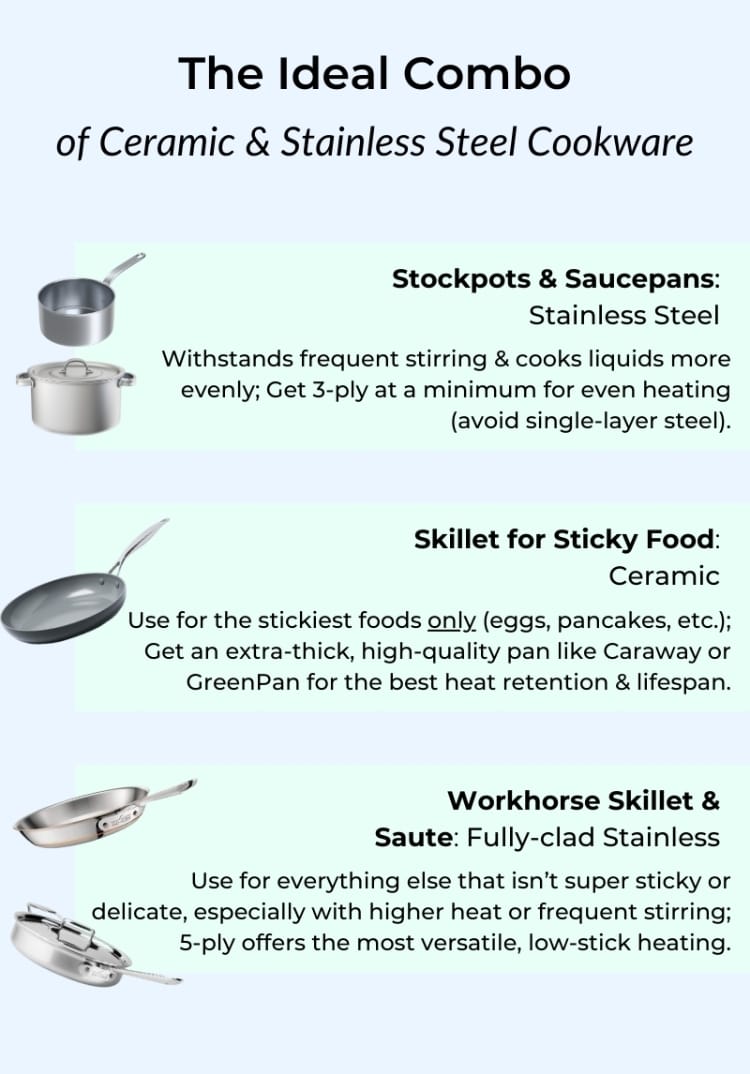
Credit: thegoodlifedesigns.com
Ceramic Cookware Features
Ceramic cookware has gained popularity as an alternative to stainless steel in many kitchens. Understanding its features helps decide if it suits your cooking needs. Ceramic cookware offers unique benefits through its material, nonstick surface, and heat handling. These features influence cooking performance and maintenance.
Material Composition
Ceramic cookware is typically made from a base metal, such as aluminum or steel, coated with a layer of ceramic. This ceramic layer is created from natural minerals, mainly silica, and fired at high temperatures.
- Base material: Usually aluminum for good heat conduction or stainless steel for durability.
- Ceramic coating: Made from inorganic materials, free from chemicals like PTFE or PFOA.
- Eco-friendly: Ceramic coatings are often considered safer for health and the environment.
The ceramic layer is hard and smooth, providing a protective surface that resists scratches and stains better than some other coatings. However, the thickness and quality of this layer can vary by brand and price.
| Component | Description | Benefits |
|---|---|---|
| Aluminum base | Lightweight metal with good heat conduction | Quick heating, easy handling |
| Stainless steel base | Durable metal, resistant to rust | Long-lasting, sturdy |
| Ceramic coating | Mineral-based, non-toxic surface | Nonstick, scratch-resistant, chemical-free |
Nonstick Properties
The ceramic coating on cookware creates a smooth, nonstick surface. This feature helps food release easily during cooking and cleaning. It reduces the need for oil or butter, promoting healthier meals.
- Natural nonstick effect: The ceramic layer offers slickness without synthetic chemicals.
- Easy cleaning: Food residue does not cling strongly, making washing simple.
- Durability: Ceramic coatings resist peeling and flaking if cared for properly.
Unlike traditional nonstick pans coated with PTFE, ceramic cookware does not emit harmful fumes at high temperatures. It works best on low to medium heat to keep the coating intact longer. Using wooden or silicone utensils also helps prevent damage to the surface.
| Feature | Benefit |
|---|---|
| Chemical-free coating | Safer cooking environment |
| Easy food release | Less oil needed, healthier meals |
| Scratch resistance | Longer-lasting nonstick surface |
Heat Distribution
Ceramic cookware heats up evenly, preventing hot spots that burn food. The base metal plays a key role in heat conduction. Aluminum bases provide fast and uniform heating, while stainless steel bases heat slower but retain warmth well.
- Even heating: The ceramic layer does not conduct heat but spreads it evenly across the surface.
- Temperature control: Ceramic pans respond well to changes in stove heat.
- Heat retention: Ceramic surfaces cool down slower than bare metal pans.
Using ceramic cookware ensures consistent cooking results. It suits recipes requiring gentle, steady heat like sauces and eggs. Avoid using very high heat settings to protect the ceramic coating and maintain performance.
| Heat Aspect | Characteristic | Impact on Cooking |
|---|---|---|
| Heat conduction | Fast with aluminum base | Even cooking, saves time |
| Heat retention | Moderate to high | Keeps food warm longer |
| Heat distribution | Uniform across surface | Prevents burning and uneven cooking |
Stainless Steel Cookware Features
Choosing between ceramic and stainless steel cookware depends on understanding their key features. Stainless steel cookware stands out for its strong build and lasting performance. This section explores stainless steel cookware features in detail, helping you see how it performs in durability, heat conductivity, and maintenance. These features often guide your decision for everyday cooking needs.
Durability And Strength
Stainless steel cookware is known for its exceptional durability and strength. It resists dents, scratches, and rust, making it ideal for long-term use. The metal is hard and holds up well under heavy use. Many professional kitchens prefer stainless steel because it can handle rough handling without damage.
Key points about durability:
- Rust-resistant: Stainless steel does not corrode or rust easily.
- Scratch-resistant: The hard surface resists scratches from metal utensils.
- Warp-resistant: Thick bases prevent warping from high heat.
- Long lifespan: Can last for years without losing quality.
Here is a comparison table of durability features:
| Feature | Stainless Steel | Ceramic |
|---|---|---|
| Rust Resistance | Excellent | Good |
| Scratch Resistance | High | Medium |
| Warp Resistance | Very Good | Moderate |
| Lifespan | 10+ years | 3-5 years |
Heat Conductivity
Heat conductivity is important for even cooking. Stainless steel alone is not the best at conducting heat. It tends to heat unevenly, which can cause hot spots and burn food. To fix this, many stainless steel pans have an aluminum or copper core. These metals spread heat quickly and evenly.
Benefits of this design:
- Even heat distribution: Prevents food from burning in some spots.
- Faster cooking: Heats up quickly with the help of the core.
- Better control: Easier to adjust cooking temperature.
Here is a simple explanation of layers in a typical stainless steel pan:
Stainless Steel (outer layer) Aluminum or Copper (core layer) Stainless Steel (inner cooking surface)The outer stainless steel layer protects the core and adds durability. The inner layer is safe for cooking and easy to clean. This combination makes stainless steel cookware reliable for many recipes.
Maintenance Needs
Stainless steel cookware requires some care to keep it looking good and working well. It is dishwasher safe, but hand washing is better to maintain shine. Food can stick to the surface, so proper preheating and oil use help reduce sticking.
Tips for easy maintenance:
- Clean with warm soapy water after each use.
- Use a non-abrasive sponge to avoid scratches.
- Remove stains with a paste of baking soda and water.
- Dry immediately to prevent water spots.
Common challenges and fixes:
| Issue | Cause | Solution |
|---|---|---|
| Food Sticking | Insufficient oil or low heat | Preheat pan, use oil, cook at medium heat |
| Water Spots | Air-dried cookware | Dry immediately after washing |
| Discoloration | High heat or mineral deposits | Use vinegar or baking soda to clean |
Stainless steel needs regular cleaning and proper use. This keeps it shiny and prevents damage. It works well for many cooking styles, making it a popular choice.
Health And Safety Factors
Choosing cookware impacts health and safety in daily cooking. Ceramic and stainless steel are popular choices. Both have unique features affecting food safety and potential health risks. Understanding these factors helps make a safer choice for your kitchen.
Chemical Leaching Risks
Ceramic cookware usually has a non-stick coating made from a silica-based material. This coating is free from harmful chemicals like PTFE and PFOA. These chemicals, found in some non-stick pans, can release toxic fumes when overheated. Ceramic pans are safer in this regard because they do not emit harmful gases.
Stainless steel is a metal alloy mainly made of iron, chromium, and nickel. It does not have a coating, so there is less chance of chemicals leaching into food. However, small amounts of metals can sometimes leach into acidic or salty foods, especially if the cookware is scratched or damaged.
Key points on chemical leaching:
- Ceramic pans do not release toxic chemicals when heated.
- Stainless steel may release trace metals, especially with acidic foods.
- Both types are generally safe when used properly and not damaged.
| Cookware Type | Chemical Leaching Risk | Notes |
|---|---|---|
| Ceramic | Very low | No PTFE or PFOA; coating can wear over time |
| Stainless Steel | Low to moderate | May leach metals with acidic foods or if damaged |
Allergen Considerations
Stainless steel contains nickel and chromium, two metals that can cause allergic reactions in some people. Nickel allergy is common and may cause skin irritation or digestive discomfort. People with known metal allergies should check cookware material carefully.
Ceramic cookware is usually free from metals like nickel, making it a better choice for allergy sufferers. The ceramic coating reduces direct contact with metals, lowering the chance of allergic reactions. Still, some ceramic pans have a metal base, so it is important to verify the product details.
Consider these points for allergens:
- Stainless steel may cause issues for people allergic to nickel.
- Ceramic is mostly hypoallergenic but verify the metal base.
- Use non-metal utensils to avoid scratches and reduce exposure.
Choosing the right cookware can reduce allergy risks and improve cooking safety. Reading labels and product specifications helps avoid unwanted allergens.

Credit: www.carawayhome.com
Cooking Performance Comparison
Choosing between ceramic cookware and stainless steel often depends on how well each performs during cooking. Cooking performance includes how they handle heat, how food reacts on their surfaces, and what cooking styles suit them best. This section compares ceramic and stainless steel cookware on these key points to help you understand their strengths and weaknesses.
Temperature Control
Ceramic cookware heats up quickly and holds heat well. This means it can cook food evenly without many hot spots. It also cools down faster once removed from heat. Stainless steel takes longer to heat but keeps heat steady for a longer time. It can handle very high temperatures without damage.
- Ceramic: Heats quickly, good for low to medium heat cooking.
- Stainless Steel: Takes longer to heat, great for high heat cooking and searing.
| Feature | Ceramic Cookware | Stainless Steel Cookware |
|---|---|---|
| Heat-up Speed | Fast | Moderate |
| Heat Retention | Moderate | High |
| Maximum Safe Temperature | Medium (around 450°F) | Very High (up to 600°F or more) |
Ceramic is best for gentle cooking and simmering. Stainless steel works well for frying and browning at high heat.
Food Release And Cleaning
Ceramic cookware usually has a non-stick surface, making food release easy. Foods like eggs or pancakes slide off smoothly, which reduces the need for oil. Cleaning ceramic pans is simple because food rarely sticks. They only need gentle washing with a soft sponge.
Stainless steel does not have a non-stick coating. Food can stick, especially proteins. This may require soaking or scrubbing to clean. Some people like the crusty bits that form when cooking on stainless steel, as it adds flavor.
- Ceramic: Non-stick, easy to clean, avoid metal utensils to prevent scratches.
- Stainless Steel: May stick, requires scrubbing, durable and scratch-resistant.
| Cleaning Aspect | Ceramic Cookware | Stainless Steel Cookware |
|---|---|---|
| Food Sticking | Low | High |
| Ease of Cleaning | Easy | Moderate |
| Durability of Surface | Can scratch easily | Very durable |
Suitability For Different Cooking Methods
Ceramic cookware suits low to medium heat cooking methods. It works well for steaming, simmering, and slow cooking. It is not ideal for broiling or very high heat frying because the coating can get damaged.
Stainless steel is versatile and can handle almost all cooking methods. It excels in searing, sautéing, frying, and even oven cooking at high temperatures. It can also be used on induction cooktops.
- Ceramic: Best for gentle cooking, baking, and non-stick needs.
- Stainless Steel: Ideal for high heat, browning, frying, and oven use.
| Cooking Method | Ceramic Cookware | Stainless Steel Cookware |
|---|---|---|
| Searing and Browning | Not recommended | Excellent |
| Simmering and Stewing | Excellent | Good |
| Oven Use | Limited temperature | High temperature safe |
| Induction Cooking | Depends on base | Fully compatible |
Cost And Longevity
Choosing between ceramic cookware and stainless steel often depends on cost and how long each type lasts. These factors play a big role in deciding which option fits your kitchen and budget best. Understanding the initial price and the durability of these materials helps make a smart purchase. Both types have different strengths and weaknesses that affect their value over time.
Initial Investment
Ceramic cookware usually costs less upfront than stainless steel. This makes it attractive for those who want good cooking tools without spending too much at first. Prices vary widely depending on brand and quality, but ceramic sets often come with a lower price tag.
- Ceramic cookware: Generally affordable, with many sets under $100.
- Stainless steel cookware: Tends to be more expensive, often starting around $150 for basic sets.
Here is a simple comparison of typical price ranges:
| Cookware Type | Price Range | Example Brands |
|---|---|---|
| Ceramic | $50 – $200 | GreenPan, T-fal |
| Stainless Steel | $150 – $500+ | All-Clad, Cuisinart |
Keep in mind, cheaper ceramic sets may have thinner materials and less even heating. Stainless steel usually offers better heat distribution but at a higher cost.
Wear And Tear Over Time
Ceramic cookware can wear down faster than stainless steel. The ceramic coating may chip or scratch if handled roughly. This reduces the non-stick quality and can shorten the cookware’s life.
- Scratches and chips are common with ceramic surfaces.
- High heat can damage ceramic coatings.
- Careful use helps maintain its non-stick properties.
Stainless steel is very durable and resists dents and scratches well. It does not have a coating that can wear off, so it can last many years. Stainless steel can discolor with heavy use but stays functional.
- Can withstand high heat without damage.
- Resistant to physical damage like scratches and dents.
- Requires polishing to maintain shine over time.
The table below summarizes how each type handles wear:
| Factor | Ceramic Cookware | Stainless Steel Cookware |
|---|---|---|
| Resistance to Scratches | Low – coating can chip or scratch | High – solid metal surface |
| Heat Durability | Moderate – avoid very high heat | High – withstands high temperatures |
| Maintenance | Requires gentle cleaning | May need polishing for shine |
| Expected Lifespan | 3 to 5 years with care | 10+ years with care |
Choosing cookware with durability in mind can save money over time. Stainless steel often lasts longer but costs more upfront. Ceramic offers a lower initial price but may need replacement sooner.
Environmental Impact
The environmental impact of cookware affects the planet from production to disposal. Choosing between ceramic and stainless steel cookware involves understanding their effects on nature. Both materials have different footprints in how they are made and how they can be recycled. This section explores these impacts to help make an informed choice.
Manufacturing Processes
The process to make ceramic cookware usually involves heating natural clay and minerals at very high temperatures. This process uses a significant amount of energy but relies mostly on natural materials.
- Raw materials: clay, sand, and other minerals
- Energy use: high heat in kilns for firing
- Emissions: some carbon emissions from fuel
Stainless steel production starts with mining iron ore and other metals like chromium and nickel. These metals are then melted together at very high temperatures to create a durable alloy. This process is energy-intensive and produces more emissions.
- Raw materials: iron ore, chromium, nickel, and carbon
- Energy use: large amounts of electricity and fuel
- Emissions: higher carbon dioxide and industrial waste
| Aspect | Ceramic Cookware | Stainless Steel Cookware |
|---|---|---|
| Raw Materials | Natural clay and minerals | Metal ores (iron, chromium, nickel) |
| Energy Consumption | High heat for firing kilns | High heat for metal melting and shaping |
| Carbon Emissions | Moderate, mainly from kiln fuel | High, from mining and processing metals |
Ceramic cookware uses natural materials with moderate emissions. Stainless steel requires mining and more energy, causing higher emissions.
Recyclability
Recycling helps reduce waste and saves energy by reusing materials. Stainless steel is widely recyclable and keeps its quality after many recycling cycles.
- It can be melted down and made into new products.
- Recycling stainless steel uses less energy than making new steel.
- Nearly 100% recyclable with strong recycling systems worldwide.
Ceramic cookware is harder to recycle because it is made from non-metallic minerals. It cannot be melted and reshaped like metals. Most ceramic pieces end up in landfills or are crushed for other uses.
- Ceramics break down slowly and are not biodegradable.
- Recycling options are limited and costly.
- Sometimes crushed ceramics are used in construction or road materials.
| Recyclability Factor | Ceramic Cookware | Stainless Steel Cookware |
|---|---|---|
| Ease of Recycling | Low; cannot be remelted or reshaped | High; can be recycled repeatedly |
| Recycling Infrastructure | Limited and costly | Well-established worldwide |
| Environmental Benefit | Low; mostly landfill or crushed use | High; reduces mining and energy use |
Stainless steel offers a clear advantage in recyclability. Ceramic cookware’s recycling challenges add to environmental waste.
Choosing The Right Cookware
Choosing the right cookware plays a key role in making cooking easier and more enjoyable. Both ceramic and stainless steel cookware offer unique benefits, but selecting the best one depends on your cooking needs, budget, and kitchen setup. Understanding these factors helps you pick cookware that matches your lifestyle and cooking habits.
Cooking Style Preferences
Your cooking style greatly influences the type of cookware you should use. Ceramic cookware is known for its non-stick surface, making it ideal for cooking delicate foods like eggs and fish without sticking. It heats evenly and retains heat well, which is great for slow cooking and simmering.
- Low to medium heat cooking: Ceramic cookware works best.
- Non-stick surface: Easier to clean and requires less oil.
- Gentle on food: Prevents burning or sticking.
Stainless steel cookware suits high-heat cooking and browning. It can handle searing, sautéing, and frying with better durability. Stainless steel reacts quickly to heat changes, giving you more control while cooking.
- High-heat cooking: Ideal for searing and frying.
- Durable and scratch-resistant: Lasts longer.
- Better for metal utensils: No damage to the surface.
| Feature | Ceramic Cookware | Stainless Steel Cookware |
|---|---|---|
| Best For | Low to medium heat, non-stick cooking | High heat, browning, searing |
| Heat Retention | Good | Excellent heat conduction |
| Maintenance | Gentle cleaning needed | Can be scrubbed hard |
Budget Considerations
Cookware prices vary based on material, brand, and quality. Ceramic cookware usually costs less upfront but may wear out faster. The non-stick coating can chip or lose effectiveness over time. Replacing ceramic pans often adds to long-term costs.
Stainless steel cookware tends to have a higher initial price. It is sturdy and lasts for many years without losing quality. This durability often makes stainless steel a better investment over time.
- Ceramic cookware: Lower initial cost, shorter lifespan.
- Stainless steel: Higher initial cost, long-lasting.
- Consider your cooking frequency: Frequent cooking favors durable options.
| Cookware Type | Initial Cost | Longevity | Replacement Frequency |
|---|---|---|---|
| Ceramic | Low to Medium | 3-5 years | Every 3-5 years |
| Stainless Steel | Medium to High | 10+ years | Rarely |
Kitchen Compatibility
Kitchen setup can limit or expand cookware choices. Ceramic cookware works well on most stovetops, including gas, electric, and glass. It is lightweight and easy to handle, making it good for small kitchens.
Stainless steel cookware is highly versatile and compatible with almost all cooking surfaces, including induction cooktops. It is heavier but offers excellent heat distribution and durability.
- Ceramic pans: Lightweight, easy to store.
- Stainless steel pans: Compatible with induction, gas, electric.
- Consider stove type: Match cookware to your burner.
| Cookware Type | Gas Stove | Electric Stove | Induction Stove | Oven Safe |
|---|---|---|---|---|
| Ceramic | Yes | Yes | No (usually) | Depends on manufacturer |
| Stainless Steel | Yes | Yes | Yes | Usually yes |

Credit: www.360cookware.com
Frequently Asked Questions
Is Ceramic Cookware Safer Than Stainless Steel?
Ceramic cookware is often safer as it is non-toxic and free from harmful chemicals. Stainless steel is durable but may leach metals if damaged. Both are generally safe with proper use and care.
Does Ceramic Cookware Heat Evenly Compared To Stainless Steel?
Ceramic cookware heats evenly but retains heat slower than stainless steel. Stainless steel heats quickly but can develop hot spots. Ceramic’s smooth surface offers consistent cooking, ideal for gentle heat.
Which Cookware Is Easier To Clean, Ceramic Or Stainless Steel?
Ceramic cookware is easier to clean due to its non-stick surface. Stainless steel requires more effort, especially with stuck-on food. However, stainless steel is dishwasher safe and more resistant to scratches.
Can Ceramic Cookware Replace Stainless Steel In Every Kitchen?
Ceramic cookware suits low to medium heat cooking and delicate foods. Stainless steel is better for high heat, searing, and browning. Both have unique strengths, so they complement each other well.
Conclusion
Choosing between ceramic and stainless steel cookware depends on your needs. Ceramic pans heat evenly and are easy to clean. Stainless steel is strong and lasts a long time. Both types work well for different cooking styles. Think about what you cook most and how you care for your pots.
This helps you pick the best fit for your kitchen. Either way, good cookware makes cooking more enjoyable and healthy. Your choice can make a big difference in your daily meals.

Hello, This is Annie Walker, a 38-year-old blogger, founder, and editor of Cookware Guider from NY, USA. I am a cookware fanatic and passionate cooker. I love to cook with different types of cooking appliances (example: all types of cookware, rice cookers, slow cookers, etc) almost every day in my kitchen. I love to share my experience with my readers in my blog. Also, I enjoy helping people to solve their problems through my website. You can follow me on Twitter & Pinterest. To know details about my blog please check the about us page.