
Choosing the right cookware can feel overwhelming. You want something safe for your health, easy to clean, and durable.
If you’ve been wondering whether ceramic cookware is safer than stainless steel, you’re not alone. This question matters because what you cook in can affect what ends up on your plate—and in your body. Keep reading to discover which option protects your health better and fits your kitchen needs.
Your next meal might depend on it.

Credit: www.carawayhome.com
Health Risks Of Ceramic Cookware
Ceramic cookware is popular for its non-stick surface and attractive design. Many choose it over stainless steel for cooking healthy meals. But safety questions arise about ceramic cookware’s health risks. Understanding these risks helps in making a smart choice for your kitchen and family. Below, explore important health factors linked to ceramic cookware.
Chemical Composition And Safety
Ceramic cookware mainly consists of natural materials like clay, sand, and minerals. It is coated with a ceramic layer, often made from silica and other inorganic compounds. This layer is free from harmful chemicals like PTFE and PFOA, which are common in some non-stick pans.
Key points about ceramic cookware’s chemical safety:
- Non-toxic surface: Ceramic coatings are usually free from lead, cadmium, and other heavy metals.
- FDA approval: Many ceramic cookware brands meet FDA standards for food safety.
- Natural ingredients: The materials used are often natural and eco-friendly.
Here is a simple comparison table of ceramic vs. stainless steel chemical safety:
| Aspect | Ceramic Cookware | Stainless Steel Cookware |
|---|---|---|
| Contains PTFE/PFOA | No | No |
| Contains Heavy Metals | Usually No | No |
| FDA Approved | Yes (Most Brands) | Yes |
Despite these benefits, always check the brand’s certification. Some cheap ceramic coatings may contain unsafe elements.
Potential For Coating Wear
Ceramic coatings can wear down over time. This wears off the non-stick surface and may expose the base material. The risk depends on usage and care.
Factors affecting ceramic coating wear:
- Using metal utensils that scratch the surface
- Cooking at very high temperatures
- Frequent washing in a dishwasher
- Cleaning with abrasive sponges or harsh chemicals
Signs of coating wear include:
- Chipping or flaking of the ceramic layer
- Food sticking to the surface more easily
- Changes in cookware color or texture
Once the ceramic coating wears off, the cookware can release small particles into food. These particles are mostly inert but may affect taste and texture.
To extend coating life:
- Use wooden, silicone, or plastic utensils
- Cook on low to medium heat settings
- Hand wash with gentle sponges and mild soap
Proper care reduces health risks and keeps cookware safe for longer.
Heat Resistance And Toxicity
Ceramic cookware handles heat differently from stainless steel. It can tolerate high temperatures but may crack or degrade if overheated.
Important points about heat resistance and toxicity:
- Safe cooking range: Most ceramic cookware is safe up to 450°F (230°C).
- Overheating risks: Above this, the ceramic coating can break down.
- Toxic fumes: Unlike PTFE coatings, ceramic does not release toxic fumes when heated properly.
- Cracking risk: Sudden temperature changes (thermal shock) can cause cracks, risking contamination.
Here is a brief table on temperature safety:
| Temperature | Effect on Ceramic Cookware | Health Impact |
|---|---|---|
| Below 450°F (230°C) | Safe use, no degradation | Minimal health risk |
| 450°F to 600°F (230°C to 315°C) | Risk of coating wear, slight damage | Possible release of particles |
| Above 600°F (315°C) | Cracking, coating breakdown | Potential contamination, avoid |
In summary, ceramic cookware is generally safe if used within recommended temperatures. Avoid overheating to prevent health risks.
Health Risks Of Stainless Steel Cookware
Choosing between ceramic and stainless steel cookware often raises questions about health safety. Stainless steel is popular for its strength and look, but some worry about its potential health risks. This section explores the health risks of stainless steel cookware, focusing on metal leaching, exposure to nickel and chromium, and its durability in relation to safety.
Metal Leaching Concerns
Stainless steel cookware is made from a mix of metals, mainly iron, chromium, and nickel. Metal leaching happens when small amounts of these metals enter food during cooking. This is more likely with:
- Cooking acidic foods like tomato sauce or vinegar-based dishes
- Using worn or scratched cookware
- Cooking at very high temperatures
Metal leaching varies by:
| Factor | Effect on Metal Leaching |
|---|---|
| Food Acidity | Increases leaching of metals into food |
| Cookware Condition | Scratches and damage increase metal release |
| Cooking Time | Longer cooking causes more leaching |
Most studies show the amount of metal leached is very low and usually safe for healthy adults. Still, people with metal allergies or kidney problems should be careful. Using high-quality stainless steel and avoiding damaged pots can reduce risks.
Nickel And Chromium Exposure
Nickel and chromium are key parts of stainless steel. Both are needed in small amounts by the body but can cause problems if too much enters the system.
Nickel exposure risks include:
- Allergic reactions like skin rash
- Possible stomach upset when ingested in large amounts
Chromium risks depend on the type:
- Trivalent chromium (Cr III): Essential nutrient, safe in small doses
- Hexavalent chromium (Cr VI): Toxic, but not found in stainless steel cookware
Stainless steel mostly releases trivalent chromium, which is safe in small doses. People with nickel allergies may experience reactions from cookware. Testing for nickel sensitivity helps avoid issues.
Durability And Safety
Stainless steel is known for its strength and long life. This durability plays a big role in safety:
- Resists rust and corrosion: Prevents harmful substances from entering food
- Maintains surface integrity: Less chance of metal leaching with intact cookware
- Handles high heat well: No coating breakdown, unlike some non-stick pans
Over time, stainless steel pots can develop scratches or discoloration. Proper care can extend their safe use:
- Clean with gentle scrubbers
- Avoid metal utensils that cause scratches
- Replace cookware when heavily damaged
Durability makes stainless steel a safe choice if maintained well. Compared to some other materials, it offers fewer chemical risks over time.
Performance And Cooking Quality
Choosing between ceramic cookware and stainless steel often comes down to how they perform during cooking. Performance and cooking quality play a big role in deciding which type suits your kitchen best. Both materials handle heat and food differently, affecting taste, texture, and ease of cooking. Understanding these differences can help you pick cookware that fits your needs and cooking style.
Heat Distribution And Retention
Ceramic cookware heats up quickly and offers even heat distribution. This means food cooks uniformly without hot spots. It holds heat well, keeping food warm longer after cooking. Ceramic’s ability to distribute heat evenly reduces the risk of burning or undercooking.
Stainless steel, by contrast, heats unevenly unless it has an aluminum or copper core. It takes longer to heat but retains heat efficiently once hot. Stainless steel pans may develop hot spots, making careful heat control necessary.
| Feature | Ceramic Cookware | Stainless Steel Cookware |
|---|---|---|
| Heat Up Speed | Fast | Moderate |
| Heat Distribution | Even | Varies; often uneven |
| Heat Retention | Good | Excellent |
| Risk of Hot Spots | Low | High without core |
- Ceramic is ideal for slow, even cooking.
- Stainless steel is better for high-heat searing.
- Both require attention to temperature for best results.
Non-stick Properties
Ceramic cookware usually has a natural non-stick surface. It allows cooking with less oil or butter, promoting healthier meals. The ceramic coating prevents food from sticking, making flipping and stirring easier.
Stainless steel has no non-stick coating. Food sticks easily, especially eggs and fish. Proper preheating and using enough oil can help, but food release is not as effortless as with ceramic.
Here’s a quick comparison:
- Ceramic: Smooth surface, easy food release, less fat needed.
- Stainless Steel: Requires oil, prone to sticking, needs technique.
Ceramic’s non-stick surface can wear off over time, especially with metal utensils. Stainless steel is very durable but demands more cooking skill to avoid sticking. Both need proper handling for best non-stick performance.
Cleaning And Maintenance
Ceramic cookware cleans easily due to its smooth, non-stick surface. Food residue usually wipes off with a soft sponge and mild detergent. Avoid abrasive scrubbers to keep the ceramic coating intact.
Stainless steel requires more effort to clean. Food often sticks to the surface, needing soaking or scrubbing. Scratches and stains can occur but can be polished out with special cleaners.
- Ceramic: Hand wash recommended, gentle cleaning, avoid metal tools.
- Stainless Steel: Dishwasher safe, tougher scrubbing needed, resistant to scratches.
Both types benefit from regular maintenance to extend their lifespan. Ceramic’s coating may degrade if overheated or cleaned roughly. Stainless steel can last decades but needs polishing to maintain shine.
Environmental Impact
Choosing between ceramic and stainless steel cookware involves more than just safety and cooking performance. The environmental impact plays a crucial role in making a responsible choice. This impact covers how cookware is made, how long it lasts, and what happens at the end of its life. Understanding these factors helps reduce harm to the planet while enjoying safe cooking.
Manufacturing Processes
The way ceramic and stainless steel cookware is made affects the environment differently. Ceramic cookware is often made by coating metal with a ceramic layer or by forming pure ceramic pieces. This process uses:
- High temperatures to bake the ceramic glaze
- Raw materials like clay, silica, and other minerals
- Energy mostly from electricity or gas
Stainless steel cookware is produced by melting and shaping metals such as iron, chromium, and nickel. This process requires:
- Mining and refining metals, which can cause soil and water pollution
- High energy use in furnaces and rolling mills
- Use of chemicals in metal finishing
| Factor | Ceramic Cookware | Stainless Steel Cookware |
|---|---|---|
| Energy Use | Moderate (high heat baking) | High (metal melting and shaping) |
| Raw Materials | Natural minerals | Metal ores |
| Environmental Pollution | Low to moderate | Moderate to high |
Ceramic cookware production tends to use fewer toxic chemicals. Stainless steel manufacturing involves more mining and energy, increasing pollution risks.
Longevity And Waste
Cookware lifespan affects waste and resource use. Stainless steel cookware is very durable. It can last for decades if cared for properly. It resists rust, dents, and scratches better than ceramic. This means less frequent replacement and less waste.
Ceramic cookware has a shorter lifespan. The ceramic coating can chip, crack, or wear out with regular use. Once damaged, it may no longer be safe or effective for cooking. People often throw away ceramic pans sooner than stainless steel ones.
- Stainless steel: lasts 10-30 years or more
- Ceramic: lasts 1-5 years depending on quality and care
Less durability means more waste for ceramic cookware. Frequent replacement leads to more packaging and landfill waste. Stainless steel’s long life reduces overall waste and resource use.
Here is a simple comparison:
| Aspect | Ceramic Cookware | Stainless Steel Cookware |
|---|---|---|
| Average Lifespan | 1-5 years | 10-30+ years |
| Waste Production | Higher (due to frequent replacement) | Lower (long-lasting product) |
Recyclability
Recycling cookware reduces landfill waste and conserves resources. Stainless steel is highly recyclable. It can be melted and reshaped into new products many times without losing quality. Recycling stainless steel saves energy compared to producing new metal from ore.
Ceramic cookware is less recyclable. The ceramic coating cannot be melted down easily. Pure ceramic pieces are brittle and hard to recycle in standard metal or glass recycling systems. Most ceramic cookware ends up in landfills.
- Stainless steel: 100% recyclable and widely accepted by recycling centers
- Ceramic: limited recycling options; often discarded as waste
Recycling stainless steel helps reduce mining and energy consumption. Ceramic cookware recycling is rare and not well developed. This makes stainless steel a more eco-friendly option at the end of its life cycle.
Cost And Value Comparison
Choosing between ceramic cookware and stainless steel often comes down to cost and value. Understanding these factors helps make a smarter purchase. Both types have pros and cons related to price, durability, and how often you replace them. This section breaks down the financial side clearly.
Initial Investment
The initial cost of ceramic and stainless steel cookware sets varies significantly. Ceramic cookware usually costs less upfront. This makes it attractive for those on a tight budget or just starting to build kitchen tools.
Here’s a quick comparison:
| Cookware Type | Price Range for a Set | Typical Features |
|---|---|---|
| Ceramic | $50 – $150 | Non-stick, colorful, lighter |
| Stainless Steel | $100 – $300 | Durable, heavy, professional look |
Ceramic cookware sets come in many styles and brands, often priced lower because of the materials used. Stainless steel cookware uses thicker metal and complex manufacturing, driving the price up.
- Ceramic sets suit casual cooks or those on a budget.
- Stainless steel sets appeal to serious cooks wanting long-lasting gear.
Long-term Durability
Durability affects how much value a cookware set offers over time. Stainless steel is known for its strong build. It resists dents, scratches, and stains well. Ceramic cookware has a coating that can chip or wear down.
Consider these points:
- Stainless steel lasts many years with proper care.
- Ceramic coating may degrade after repeated use or high heat.
- Both types require gentle cleaning to keep their finish.
This table shows durability differences:
| Aspect | Ceramic Cookware | Stainless Steel Cookware |
|---|---|---|
| Scratch Resistance | Low (coating can chip) | High (solid metal) |
| Heat Tolerance | Moderate (avoid very high heat) | High (suitable for all heat levels) |
| Cleaning | Hand wash recommended | Dishwasher safe |
Stainless steel
Replacement Frequency
How often cookware needs replacement impacts overall cost and value. Ceramic cookware usually wears out faster. The ceramic coating can peel or lose its non-stick power. This forces many to replace it sooner.
Stainless steel cookware can last decades with simple upkeep. Scratches or stains rarely affect cooking performance.
Typical replacement times:
- Ceramic cookware: 3 to 5 years on average.
- Stainless steel cookware: 10 to 20 years or more.
Replacing cookware often adds up. Replacing ceramic sets every few years may cost more over time. Stainless steel’s higher upfront price spreads out because it lasts longer.
Key tips to extend cookware life:
- Avoid metal utensils on ceramic surfaces.
- Use moderate heat on ceramic pans.
- Clean stainless steel carefully to avoid stains.
In the end, the replacement frequency affects total spending more than the initial price. Durable cookware reduces long-term costs.
Credit: xtrema.com
User Experiences And Expert Opinions
Choosing between ceramic and stainless steel cookware often depends on real user experiences and expert advice. Many people share their thoughts on safety, ease of use, and cooking results. Experts also weigh in on health impacts and material properties. Chefs reveal which cookware suits professional kitchens best. This section explores what consumers, health experts, and chefs say about ceramic and stainless steel cookware safety and performance.
Consumer Reviews
Consumers often compare ceramic and stainless steel cookware based on daily use and safety concerns. Many appreciate ceramic cookware for its non-stick surface and ease of cleaning. Users mention that ceramic heats evenly and reduces the need for oil, which makes meals healthier. Some consumers report ceramic coatings can chip or wear out quickly, affecting durability.
Stainless steel users highlight its robust build and long lifespan. They note that stainless steel can handle high heat and metal utensils without damage. However, some find stainless steel tricky to clean and prone to food sticking without proper technique.
- Ceramic Cookware: Easy to clean, good non-stick, less oil needed.
- Stainless Steel: Durable, heat resistant, requires skill to avoid sticking.
| Feature | Ceramic Cookware | Stainless Steel |
|---|---|---|
| Non-Stick Ability | Good initially, may wear out | None, requires oil or butter |
| Durability | Moderate, coating may chip | High, resists scratches |
| Ease of Cleaning | Easy | Moderate |
| Safety Concerns | No toxic chemicals if high-quality | Safe, no coating to degrade |
Health Expert Insights
Health experts emphasize the importance of cookware materials on food safety. Ceramic cookware is often praised for being free of harmful chemicals like PFOA and PTFE. These chemicals can release toxins at high temperatures. Experts warn to buy high-quality ceramic cookware to avoid poor coatings that may contain heavy metals.
Stainless steel is considered very safe since it contains no coatings that can flake off. Some experts mention that cooking acidic foods in stainless steel might cause small amounts of nickel or chromium to leach, but it is usually minimal and safe for most people.
- Ceramic: Chemical-free, but quality matters.
- Stainless Steel: Very safe, minor metal leaching possible.
Experts recommend these tips for safe cookware use:
- Avoid overheating ceramic cookware to preserve coating.
- Use stainless steel with care for acidic dishes.
- Replace cookware if coating chips or wears out.
- Choose reputable brands with safety certifications.
Chef Preferences
Professional chefs select cookware based on performance and durability. Many chefs prefer stainless steel for its ability to reach high temperatures and deliver consistent results. Stainless steel is excellent for searing, browning, and deglazing. It tolerates metal utensils and frequent cleaning without damage.
Some chefs choose ceramic cookware for delicate foods and easy cleanup. Ceramic’s non-stick surface helps cook eggs, fish, and sauces gently without sticking. Chefs note ceramic heats slower and cooler than stainless steel, which can limit certain cooking techniques.
| Aspect | Ceramic | Stainless Steel |
|---|---|---|
| Heat Conductivity | Moderate, heats evenly | High, heats quickly |
| Durability | Moderate, coating can wear | High, lasts years |
| Best For | Low heat, non-stick cooking | High heat, searing, frying |
| Cleaning | Easy | Requires effort |
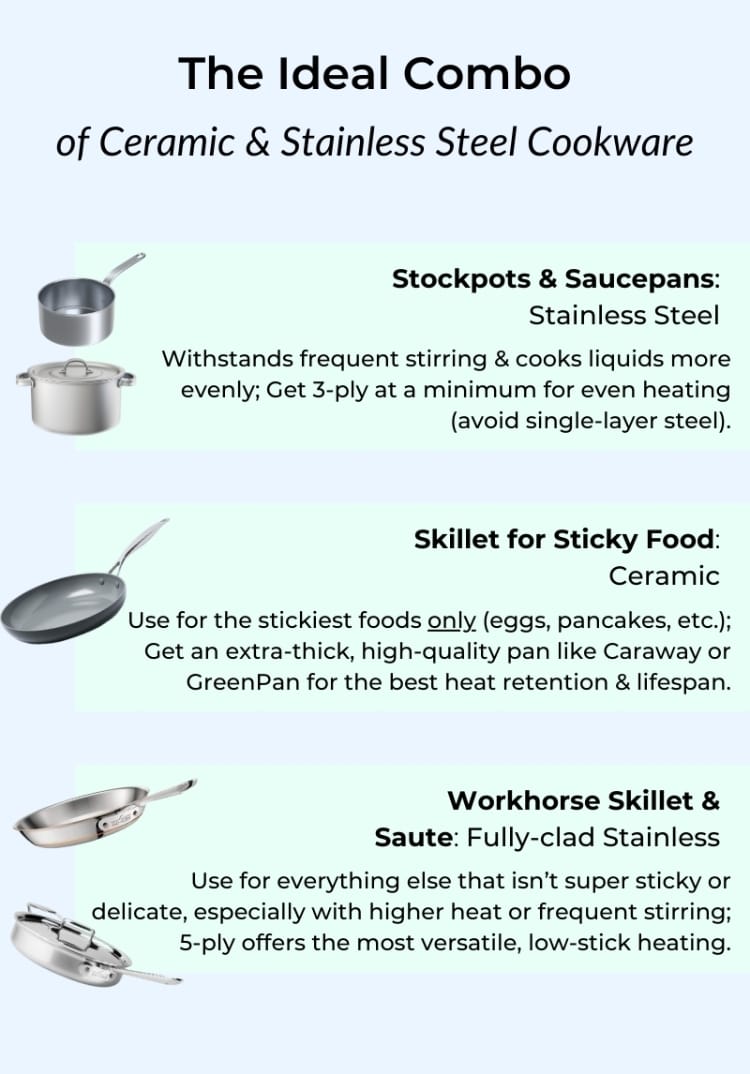
Chefs recommend using both types in the kitchen to suit different recipes and cooking styles.
Credit: thegoodlifedesigns.com
Frequently Asked Questions
Is Ceramic Cookware Healthier Than Stainless Steel?
Ceramic cookware is often considered healthier due to its non-toxic, non-reactive surface. It doesn’t leach metals or chemicals into food. Stainless steel can release small amounts of nickel or chromium, especially with acidic foods. Ceramic is a safer choice for those sensitive to metals.
Does Ceramic Cookware Contain Harmful Chemicals?
High-quality ceramic cookware is free from harmful chemicals like PTFE and PFOA. These substances are common in some non-stick coatings but absent in pure ceramic. This makes ceramic cookware a safer option for cooking without toxic fumes or chemical contamination.
How Durable Is Ceramic Compared To Stainless Steel?
Stainless steel is more durable and resistant to scratches and dents. Ceramic cookware can chip or crack if dropped or exposed to sudden temperature changes. However, ceramic coatings offer a good non-stick surface but require careful handling to maintain longevity.
Can Ceramic Cookware Handle High Heat Safely?
Ceramic cookware can handle moderate heat but may not withstand very high temperatures like stainless steel. Overheating ceramic can cause cracking or damage. Stainless steel is better suited for high-heat cooking methods like searing and frying.
Conclusion
Choosing between ceramic and stainless steel depends on your cooking needs. Ceramic cookware offers a non-stick surface and easy cleaning. Stainless steel is strong, durable, and resists scratches well. Both materials are safe when used correctly. Consider your cooking style and preferences.
Think about heat control, maintenance, and budget. Either choice can work for healthy cooking. The key is proper use and care. You can enjoy safe meals with both options. Simple, smart decisions lead to better cooking results.

Hello, This is Annie Walker, a 38-year-old blogger, founder, and editor of Cookware Guider from NY, USA. I am a cookware fanatic and passionate cooker. I love to cook with different types of cooking appliances (example: all types of cookware, rice cookers, slow cookers, etc) almost every day in my kitchen. I love to share my experience with my readers in my blog. Also, I enjoy helping people to solve their problems through my website. You can follow me on Twitter & Pinterest. To know details about my blog please check the about us page.