
When you’re shopping for cookware, you want to know exactly what goes into the pots and pans you’ll use every day. You might have heard about Caraway cookware and wondered, “What is Caraway cookware made of?” Knowing the materials can help you decide if it’s safe, durable, and right for your kitchen.
You’ll discover what makes Caraway stand out and why it might be the perfect addition to your cooking routine. Keep reading to find out how Caraway cookware could change the way you cook for good.
Caraway Cookware Materials
Caraway cookware materials define its quality, safety, and cooking performance. This cookware is designed to be both healthy and durable. The brand uses a blend of natural and safe materials that avoid harmful chemicals.
Non-Toxic Ceramic CoatingThe interior of Caraway pots and pans features a non-toxic ceramic coating. This coating is free from PTFE, PFOA, lead, and cadmium. It provides a smooth, non-stick surface that cooks food evenly. The ceramic layer is easy to clean and does not release harmful fumes.
Underneath the ceramic coating, Caraway cookware has an aluminum core. Aluminum heats up quickly and spreads heat evenly. This ensures food cooks consistently without hot spots. The aluminum used is lightweight, making the pans easy to handle.
Enamel-coated Exterior
The outside of Caraway cookware is coated with enamel. This coating gives the cookware a smooth, colorful finish. It protects the aluminum from scratches and dents. Enamel also resists stains and looks good over time.
Stainless Steel Handles
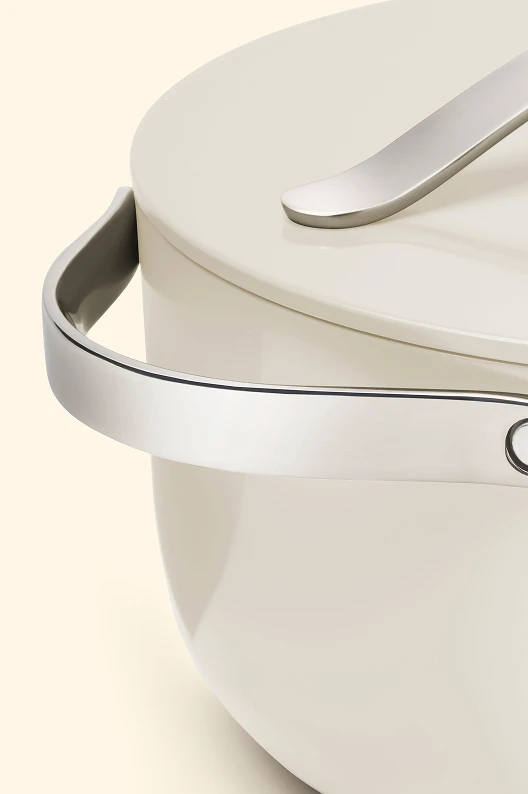
Caraway pots and pans have stainless steel handles. These handles stay cool during cooking. They are sturdy and securely attached to the cookware. The design allows a comfortable grip and safe handling.
| Material | Purpose | Key Feature |
|---|---|---|
| Non-Toxic Ceramic Coating | Cooking surface | Non-stick and chemical-free |
| Aluminum Core | Heat conduction | Lightweight and even heating |
| Enamel Coating | Exterior protection | Durable and stain-resistant |
| Stainless Steel Handles | Grip and safety | Cool-touch and sturdy |

Credit: www.carawayhome.com
Ceramic Nonstick Coating
Caraway cookware features a ceramic nonstick coating that sets it apart from traditional cookware options. This coating offers a smooth, naturally nonstick surface made without harmful chemicals. It allows food to cook evenly and release easily, reducing the need for oil or butter. The ceramic layer is also known for its eco-friendly nature and safe cooking experience. This makes Caraway an appealing choice for those seeking healthier cooking methods with less cleanup.
Composition And Benefits
The ceramic nonstick coating on Caraway cookware is primarily made from natural minerals like silica, derived from sand. It is free from toxic substances such as PTFE, PFOA, lead, and cadmium. This composition ensures a safe and clean cooking surface that does not release harmful fumes at high temperatures.
Key benefits include:
- Nonstick performance: Food slides off easily, reducing the need for extra fats.
- Eco-friendly materials: Made from sustainable and non-toxic components.
- Easy to clean: The smooth surface prevents food from sticking, speeding up washing.
- Even heat distribution: Ensures food cooks uniformly without hot spots.
- Metal utensil safe: More resistant to scratches than traditional nonstick coatings.
| Feature | Description | Benefit |
|---|---|---|
| Natural Minerals | Silica-based ceramic | Safe, non-toxic surface |
| PTFE & PFOA Free | No harmful chemicals | Healthier cooking |
| Smooth Texture | Nonstick finish | Easy food release and cleaning |
Durability And Safety
Caraway’s ceramic nonstick coating offers strong durability compared to traditional nonstick surfaces. It resists scratches, chipping, and peeling when used with proper care. The coating maintains its nonstick properties even after multiple uses and washes.
Important safety features include:
- Oven safe up to 550°F: Allows versatile cooking options.
- Free from toxic chemicals: No risk of harmful fumes or contamination.
- Scratch resistant: Can handle wooden, silicone, and some metal utensils.
- Non-reactive surface: Does not react with acidic or alkaline foods.
To preserve durability and safety, avoid sudden temperature changes and harsh cleaning tools. Use soft sponges and moderate heat for longer-lasting performance.
| Durability Feature | Impact |
|---|---|
| Scratch Resistance | Prevents coating damage, extends lifespan |
| Heat Tolerance | Allows oven use, prevents coating breakdown |
| Non-toxic Composition | Ensures safe cooking environment |
Aluminum Core
Caraway cookware is designed with a focus on performance and safety. One key feature is its aluminum core. This core sits between layers of ceramic non-stick coating and stainless steel, making the pans both durable and efficient. The aluminum core plays a crucial role in how the cookware heats and feels during use. It ensures even cooking and easy handling. Understanding the aluminum core helps explain why Caraway cookware stands out in the kitchen.
Heat Distribution
The aluminum core in Caraway cookware spreads heat evenly across the cooking surface. This even heat distribution prevents hot spots that burn food or leave it undercooked. Aluminum is a metal known for its excellent thermal conductivity. It heats up quickly and cools down fast, giving better control over cooking temperatures.
Benefits of the aluminum core for heat distribution include:
- Fast heating: Pans heat up quickly, saving time.
- Even cooking: No cold or hot spots, food cooks uniformly.
- Temperature control: Easier to adjust heat during cooking.
| Material | Heat Conductivity | Effect on Cooking |
|---|---|---|
| Aluminum Core | High | Fast and even heating |
| Stainless Steel Outer Layer | Low | Durability and protection |
Thanks to the aluminum core, Caraway cookware delivers consistent results. This means better-tasting meals and less frustration.
Lightweight Design
The aluminum core also keeps Caraway cookware light. Aluminum is much lighter than other metals like cast iron or pure stainless steel. This makes the cookware easier to lift, move, and clean. Lightweight pans reduce strain on your wrists and arms during cooking.
Key points about the lightweight design:
- Easy to handle: Move pans smoothly around the stove.
- Less fatigue: Cook longer without tired arms.
- Better control: Flip, stir, and toss food with ease.
Here is a comparison of typical cookware weights:
| Cookware Type | Weight (10-inch pan) |
|---|---|
| Caraway (Aluminum Core) | 2.5 lbs (1.13 kg) |
| Cast Iron | 5.5 lbs (2.5 kg) |
| Stainless Steel | 4.0 lbs (1.8 kg) |
With Caraway’s aluminum core, the cookware stays strong but feels light. This balance makes cooking more enjoyable and comfortable every day.
Credit: www.carawayhome.com
Magnetic Stainless Steel Base
Caraway cookware features a magnetic stainless steel base that enhances its cooking performance. This base combines durability with efficient heat distribution, making it a key part of the cookware’s design. The magnetic property allows the cookware to work on various cooktops, especially induction ones. The stainless steel material ensures resistance to rust and corrosion, extending the cookware’s lifespan. This base also adds a sleek, polished look to the pots and pans, making them stylish as well as practical.
Induction Compatibility
The magnetic stainless steel base makes Caraway cookware suitable for induction cooktops. Induction cooking uses magnets to heat pots and pans quickly and evenly. The base must be magnetic to work with this technology. Caraway’s base meets this requirement perfectly.
- Fast heating: The magnetic base heats up quickly, saving cooking time.
- Energy efficient: Less heat loss means less energy used.
- Precise temperature control: The base allows easy adjustment of heat levels.
Here is a simple comparison of how Caraway’s magnetic stainless steel base performs on different cooktops:
| Cooktop Type | Compatibility | Heat Efficiency |
|---|---|---|
| Induction | Fully Compatible | High |
| Gas | Compatible | Moderate to High |
| Electric Coil | Compatible | Moderate |
| Ceramic | Compatible | Moderate |
This compatibility allows users to switch cooktops without changing their cookware. The magnetic stainless steel base also prevents warping, which often happens with other materials on induction stoves.
Stability And Strength
The magnetic stainless steel base adds stability and strength to Caraway cookware. This base is thicker than typical stainless steel layers, which helps the cookware sit firmly on any stove.
Key benefits of this base for stability and strength:
- Prevents wobbling: The flat and solid base keeps the cookware steady while cooking.
- Durable construction: Stainless steel resists dents, scratches, and corrosion.
- Supports heavy contents: The base can hold thick soups or heavy stews without bending.
- Even heat spread: The base distributes heat to avoid hot spots, protecting the cookware from damage.
Here is a breakdown of the base’s physical properties:
| Property | Details |
|---|---|
| Material Thickness | Approximately 3-4 mm |
| Corrosion Resistance | High |
| Weight Support | Up to 10 kg without warping |
| Surface Finish | Polished for smoothness and easy cleaning |
The base’s strength adds to the cookware’s lifespan and user safety. It stands up to daily kitchen use without losing its shape or function. This makes Caraway cookware a reliable choice for many cooking styles.
Handles And Lids
Caraway cookware stands out not only for its non-toxic ceramic coating but also for the thoughtful design of its handles and lids. These parts play a crucial role in the cooking experience, ensuring safety, comfort, and durability. Understanding what Caraway uses for its handles and lids helps buyers see how the brand balances style with function.
Materials Used
The handles and lids of Caraway cookware are made from materials chosen for safety and strength. The handles are crafted from cast aluminum, which is lightweight but very sturdy. This choice helps keep the overall weight of the cookware low, making it easier to lift and move.
The lids are made from tempered glass with a stainless steel rim. Tempered glass is strong and can handle high cooking temperatures without breaking. The steel rim adds extra protection and prevents chipping, making the lids last longer.
Summary of materials:
| Component | Material | Benefits |
|---|---|---|
| Handles | Cast aluminum | Lightweight, strong, durable |
| Lids | Tempered glass with stainless steel rim | Heat resistant, durable, allows food monitoring |
The handle material resists warping and corrosion, keeping the cookware safe for years. The glass lids allow chefs to see food without lifting the lid, which helps keep heat and moisture inside.
Ergonomics And Heat Resistance
Caraway’s handles are designed for comfort and safety during cooking. They have a smooth, rounded shape that fits well in the hand, reducing strain even when lifting heavy pots. The handle design also keeps the grip cool, so burns are less likely.
The cookware uses a special heat-resistant coating on the handles. This coating ensures the handles stay cool on most stove types, including gas and electric. However, it is best to use oven mitts for very high temperatures or when cooking in the oven above 350°F (175°C).
Lids fit snugly to trap heat and moisture, which helps food cook evenly and retain flavor. The tempered glass lid can withstand high heat, but users should avoid sudden temperature changes to prevent damage.
- Handles are comfortable and reduce hand fatigue.
- Heat-resistant coating protects hands from burns.
- Glass lids allow visual monitoring without heat loss.
- Stainless steel rims prevent lid damage and warping.
Caraway cookware balances heat resistance with user comfort. The thoughtful design of handles and lids improves cooking safety and control.

Credit: kitchenbap.com
Environmental And Health Considerations
Caraway cookware stands out for its attention to both environmental impact and user health. The materials used avoid harmful chemicals, making it safe for daily cooking. These products also reflect a commitment to sustainable production methods. Understanding these aspects helps users choose cookware that benefits their health and the planet.
Non-toxic Components
Caraway cookware uses materials free from toxic substances. This makes cooking safer by preventing harmful chemicals from entering your food. The surface is coated with a ceramic-based non-stick layer, which contains no PTFE, PFOA, lead, or cadmium. These chemicals are common in many non-stick pans but pose health risks over time.
The ceramic coating offers:
- Safe cooking: No toxic fumes released at high heat.
- Durability: Resistant to scratches and wear.
- Easy cleaning: Food slides off without harsh scrubbing.
Here’s a quick comparison of Caraway’s cookware components with traditional non-stick options:
| Feature | Caraway Cookware | Traditional Non-stick Cookware |
|---|---|---|
| Non-stick Coating | Ceramic-based, PTFE & PFOA-free | PTFE-based, may contain PFOA |
| Toxic Chemicals | None detected | May release fumes when overheated |
| Durability | High scratch resistance | Moderate, prone to peeling |
| Health Safety | Safe for everyday use | Concerns with long-term exposure |
Caraway prioritizes health by avoiding harmful substances. This approach suits families and individuals wanting safer cookware.
Eco-friendly Manufacturing
Caraway focuses on reducing its environmental footprint during production. The company uses sustainable practices to minimize waste and energy use. For example, their factories aim to limit emissions and recycle materials whenever possible.
Key eco-friendly practices include:
- Use of recycled materials: Some parts of the cookware packaging are made from recycled paper and cardboard.
- Energy-efficient production: Modern machinery reduces electricity consumption.
- Minimal waste policy: Scraps and leftovers are recycled or reused.
- Low carbon footprint: Efforts to cut down greenhouse gas emissions.
Caraway also designs cookware to last longer, reducing the need for frequent replacements. Longer lifespan means less waste and fewer resources used overall.
Here is a summary of Caraway’s eco-friendly manufacturing benefits:
- Less environmental pollution
- Reduced use of non-renewable resources
- Lower energy consumption
- Support for recycling systems
Choosing cookware made with these standards helps protect the planet. It also supports companies committed to green practices.
Frequently Asked Questions
What Materials Are Used In Caraway Cookware?
Caraway cookware is made from ceramic-coated aluminum. This combination offers excellent heat conduction and a non-toxic, non-stick surface. The ceramic coating is free from PTFE, PFOA, and other harmful chemicals, ensuring safe and eco-friendly cooking.
Is Caraway Cookware Non-toxic And Safe?
Yes, Caraway cookware is non-toxic and safe to use. It contains no PTFE, PFOA, lead, or cadmium. The ceramic coating ensures a chemical-free cooking experience, promoting healthier meals without harmful fumes or toxins.
How Durable Is Caraway Cookware Material?
Caraway cookware is highly durable due to its hard-anodized aluminum base and ceramic coating. It resists scratches and chips with proper care. This durability ensures long-lasting performance and maintains non-stick properties over time.
Does Caraway Cookware Conduct Heat Well?
Yes, Caraway cookware conducts heat evenly and quickly. The aluminum core provides excellent heat distribution, reducing hot spots. This ensures consistent cooking results and improved energy efficiency on all stovetops.
Conclusion
Caraway cookware uses ceramic non-stick coating and aluminum. This makes it light and easy to handle. The materials are free from harmful chemicals. They help cook food evenly and clean up fast. The design focuses on safety and durability. You get good heat distribution without sticking problems.
This cookware suits everyday cooking needs well. It combines style with practical features. Choosing Caraway means choosing simple, safe cookware. A smart choice for healthy cooking.

Hello, This is Annie Walker, a 38-year-old blogger, founder, and editor of Cookware Guider from NY, USA. I am a cookware fanatic and passionate cooker. I love to cook with different types of cooking appliances (example: all types of cookware, rice cookers, slow cookers, etc) almost every day in my kitchen. I love to share my experience with my readers in my blog. Also, I enjoy helping people to solve their problems through my website. You can follow me on Twitter & Pinterest. To know details about my blog please check the about us page.