
Are you tired of unevenly cooked meals or pans that warp after just a few uses? If so, understanding what clad cookware is could change the way you cook forever.
Clad cookware is designed to give you even heat, better durability, and a cooking experience that feels professional right in your kitchen. Keep reading to discover how clad cookware works and why it might be the best upgrade your kitchen needs.
Your meals—and your patience—will thank you.
Clad Cookware Basics
Clad cookware basics help understand why this type of cookware is popular among both home cooks and professional chefs. Clad cookware consists of multiple layers of different metals bonded together. This design improves heat distribution, durability, and cooking performance. It avoids hot spots and ensures even cooking across the surface. Many people choose clad cookware for its strength and ability to work well on various stovetops.
Materials Used
Clad cookware combines several metals, each serving a specific purpose. The most common metals include:
- Stainless Steel: The outer layers are usually stainless steel. It is durable, resistant to rust and corrosion, and easy to clean.
- Aluminum: The core layer is often aluminum. It conducts heat quickly and evenly, preventing hot spots.
- Copper: Some high-end clad cookware uses copper as the core for even faster heat conduction.
Each material adds value:
| Material | Role | Benefits |
|---|---|---|
| Stainless Steel | Outer layers | Durable, non-reactive, easy to clean |
| Aluminum | Core layer | Excellent heat conductor, lightweight |
| Copper | Core layer (optional) | Superior heat control, quick response to temperature changes |
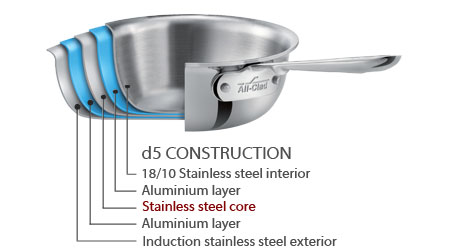
Most clad cookware uses a three-layer design called tri-ply. It sandwiches aluminum between two stainless steel layers. More layers mean better heat control but also higher price and weight.
Construction Process
The construction of clad cookware involves bonding metals under high heat and pressure. This process fuses the layers into one solid piece. It prevents peeling and warping during use. Here’s how it works:
- Layer Preparation: Sheets of stainless steel, aluminum, and sometimes copper are cut to size.
- Lamination: The layers are stacked in the correct order.
- Bonding: Heat and pressure are applied to fuse the metals together permanently.
- Shaping: The bonded sheet is shaped into pans or pots using machines or molds.
- Finishing: Handles are attached, and the surface is polished or brushed.
The bonding process ensures excellent heat transfer and strong durability. Clad cookware resists warping and lasts many years. It also allows the cookware to work on induction stoves if the outer layer is magnetic stainless steel.
Here is a simple overview of the process in a table:
| Step | What Happens | Purpose |
|---|---|---|
| 1. Layer Preparation | Cut metal sheets | Get correct size and shape |
| 2. Lamination | Stack layers | Arrange metals for bonding |
| 3. Bonding | Apply heat and pressure | Fuse layers into one piece |
| 4. Shaping | Form cookware shape | Create pots and pans |
| 5. Finishing | Attach handles, polish | Complete cookware |
Credit: www.williams-sonoma.com
Types Of Clad Cookware
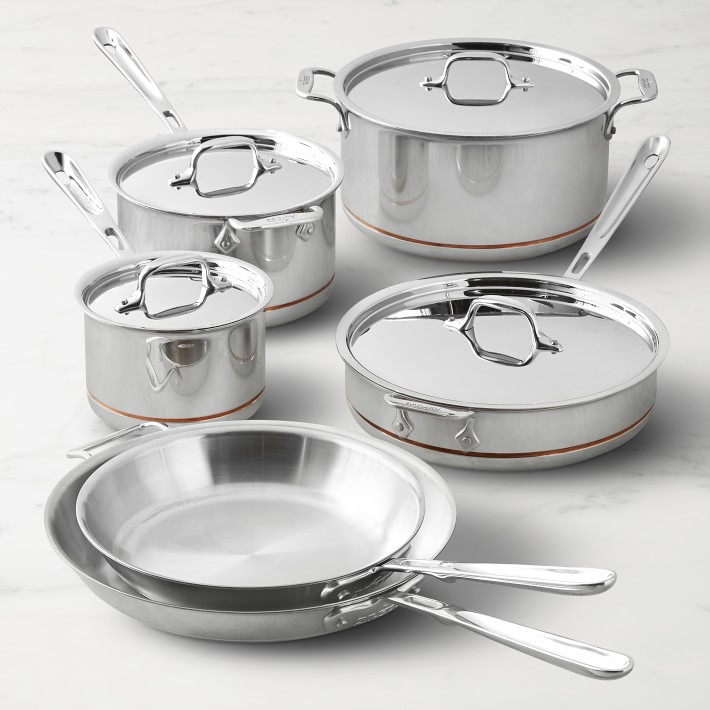
Clad cookware means pots and pans made from layers of different metals. These layers help spread heat evenly and make cooking easier. There are several types of clad cookware, each designed for specific uses and budgets. Understanding these types helps choose the right set for your kitchen needs.
Fully Clad
Fully clad cookware has metal layers covering the entire body of the pot or pan, not just the bottom. This design allows heat to move evenly across the whole surface. It reduces hot spots and helps food cook uniformly.
Here are key features of fully clad cookware:
- Layers usually include stainless steel and an aluminum or copper core for better heat conduction.
- The sides heat up evenly, good for sauces and delicate foods.
- Durable and often oven-safe to high temperatures.
Fully clad sets are popular among chefs and home cooks because they offer:
| Advantages | Considerations |
|---|---|
| Even heat distribution on sides and bottom | Usually more expensive than other types |
| Better cooking control | Heavier than disk bottom cookware |
| Oven and broiler safe | Requires gentle cleaning to keep layers intact |
Disk Bottom
Disk bottom cookware has a layered metal disk attached only to the base. The sides are usually a single metal layer, like stainless steel. This design makes the cookware lighter and less costly.
Key points about disk bottom cookware:
- Heat spreads well on the base but less so on the sides.
- Good for boiling and frying where side heat is less important.
- Often found in budget-friendly cookware sets.
This type suits cooks who want:
- Lighter pots and pans for easy handling.
- Decent heat conduction without full layering.
- Affordable cookware options with some benefits of clad design.
Here is a quick comparison:
| Feature | Fully Clad | Disk Bottom |
|---|---|---|
| Heat distribution | Even on sides and bottom | Only on bottom |
| Weight | Heavier | Lighter |
| Price | Higher | Lower |
Tri-ply Vs Multi-ply
Clad cookware layers vary in number and type. Tri-ply and multi-ply are common terms describing this.
Tri-ply cookware has three layers:
- Stainless steel on the inside for food safety and durability.
- A middle layer of aluminum or copper for heat conduction.
- Stainless steel on the outside for strength and compatibility with all stovetops.
Multi-ply cookware has more than three layers, often five or seven. These extra layers improve heat control and durability.
| Type | Layers | Heat Performance | Price |
|---|---|---|---|
| Tri-Ply | 3 (Steel-Aluminum-Steel) | Good, even heat | Moderate |
| Multi-Ply | 5 to 7 layers | Excellent, precise control | Higher |
Choosing between tri-ply and multi-ply depends on:
- Cooking style and heat precision needed.
- Budget available.
- Preference for weight and durability.
Multi-ply sets often feel sturdier and heat more evenly. Tri-ply cookware offers great performance at a lower price.
Benefits Of Clad Cookware
Clad cookware is made by bonding layers of different metals together. This design combines the best qualities of each metal. It offers many benefits that improve cooking performance and durability. These advantages make clad cookware popular among home cooks and chefs. Below are the main benefits of clad cookware, explaining why it is a smart choice for your kitchen.
Heat Distribution
One of the biggest advantages of clad cookware is its excellent heat distribution. The layers of metal, often aluminum or copper sandwiched between stainless steel, spread heat evenly across the cooking surface. This means food cooks uniformly without hot spots.
Even heat helps in:
- Preventing food from burning in certain spots
- Cooking food faster and more efficiently
- Maintaining a consistent temperature for better results
Here is a simple comparison of heat conduction in different materials:
| Material | Heat Conductivity (W/m·K) | Heat Distribution Quality |
|---|---|---|
| Aluminum | 205 | Excellent |
| Copper | 385 | Superior |
| Stainless Steel | 16 | Poor |
Clad cookware uses layers of aluminum or copper inside stainless steel. This combination ensures fast, even heating while keeping the cookware durable and easy to clean.
Durability
Clad cookware is built to last. The outer layer is typically stainless steel, known for its strength and resistance to rust and corrosion. Inside, metals like aluminum or copper provide excellent heat conduction but are softer on their own. Bonding these metals creates a cookware that is both tough and functional.
Durability benefits include:
- Resistance to scratches and dents
- Longer lifespan compared to single-metal pans
- Maintains appearance and performance over years
- Safe for use with metal utensils
Clad cookware can handle high heat and frequent use without warping or losing its shape. This quality makes it a reliable tool for everyday cooking and professional kitchens alike.
Versatility
Clad cookware works well on many heat sources. It is suitable for gas, electric, induction stoves, and even ovens. The stainless steel exterior gives it a sleek look that fits any kitchen style.
Reasons clad cookware is versatile:
- Can move from stovetop to oven safely
- Compatible with induction cooking
- Suitable for searing, sautéing, simmering, and more
- Easy to clean and maintain
This cookware supports a variety of cooking methods. Whether frying eggs or preparing a roast, clad cookware adapts well. Its balanced design makes it a practical and flexible choice.
Credit: www.cookwarenmore.com
Care And Maintenance
Clad cookware combines layers of different metals to offer even heat and durability. This type of cookware needs proper care to keep its performance and look. Good care and maintenance extend the life of your clad pots and pans. Simple cleaning and smart storage protect the surface and prevent damage.
Cleaning Tips
Cleaning clad cookware correctly keeps it shiny and working well. Always let the cookware cool before washing. Sudden temperature changes can cause warping. Use warm water and mild dish soap to clean the surface. Avoid harsh chemicals and abrasive scrubbers, which can scratch the metal layers.
- Use a soft sponge or cloth for gentle cleaning.
- For stuck food, soak the cookware in warm soapy water for 15-20 minutes.
- Use a nylon scrubber or a plastic scraper for tough spots.
- Do not put clad cookware in the dishwasher often; hand washing is better.
To remove discoloration or stains, try this simple method:
Mix equal parts water and white vinegar in the pan. Heat the mixture to a simmer for 5 minutes. Let it cool, then wash as usual.This helps remove heat stains without damaging the metal. For a natural shine, use a small amount of baking soda on a soft cloth. Rub gently and rinse well.
Storage Advice
Proper storage keeps clad cookware safe from scratches and dents. Store pots and pans in a dry place to stop rust or corrosion on the metal layers. Stack cookware carefully to avoid scratching the cooking surface. Use protective pads or cloths between stacked items.
- Place a soft cloth or paper towel between pans when stacking.
- Hang larger pans by their handles if space allows.
- Keep lids separate or store them upside down to save space.
Use a cookware rack or hooks to keep pieces organized and easy to access. Avoid storing cookware with food inside to prevent odors and stains. Regularly check and clean cookware before storing for a long time.
| Storage Method | Benefits | Notes |
|---|---|---|
| Stack with cloth between pans | Prevents scratches | Use soft, clean cloths |
| Hang by handles | Saves space, easy access | Ensure sturdy hooks |
| Use cookware rack | Organized and protected | Choose racks with soft supports |
Choosing The Right Clad Cookware
Choosing the right clad cookware can enhance your cooking experience and kitchen efficiency. Clad cookware features layers of metals bonded together, often stainless steel and aluminum, providing excellent heat distribution and durability. Selecting the best set depends on factors like budget, cooking habits, and brand reputation. Understanding these aspects helps find cookware that fits your needs and lasts for years.
Budget Considerations
Clad cookware prices vary widely. You can find affordable sets under $100, while premium options cost several hundred dollars. Setting a clear budget helps narrow choices and avoid overspending.
- Basic clad sets often have fewer layers and lighter construction.
- Mid-range cookware offers better heat control and durability.
- High-end sets use multiple layers and thicker materials for superior cooking.
Consider long-term value. Expensive cookware may last decades, saving money over time. Cheaper sets might need replacing sooner.
| Price Range | Features | Typical Lifespan |
|---|---|---|
| Under $100 | 3-ply, thinner layers, basic handles | 2-5 years |
| $100-$300 | 3-5 ply, better construction, ergonomic handles | 5-15 years |
| Over $300 | 5-7 ply, heavy gauge, professional design | 15+ years |
Remember, spending more upfront often means better cooking results and less frequent replacement.
Cooking Needs
Understanding your cooking style guides the right clad cookware choice. Different sets suit various kitchen tasks.
- Everyday cooking: Medium-weight 3-ply pans work well for most recipes.
- High-heat searing: Heavy 5-ply or more clad pans provide even heat and durability.
- Slow cooking and simmering: Sets with thick bases keep temperatures steady.
- Oven use: Choose cookware with oven-safe handles and lids.
Consider the types of food you cook often. Stainless steel interiors resist sticking and handle acidic dishes well.
Size variety matters. Having small, medium, and large pans lets you cook different meals efficiently.
- Start with a basic skillet and saucepan.
- Add a stockpot for soups and stews.
- Include a sauté pan for stir-frying and frying.
Think about cleaning too. Dishwasher-safe cookware saves time, but some prefer hand washing to maintain finish.
Brand Comparisons
Brands differ in quality, warranty, and design. Comparing top brands helps find trusted options.
| Brand | Price Range | Material Quality | Warranty | Best For |
|---|---|---|---|---|
| All-Clad | High | Premium 5-ply stainless steel | Limited lifetime | Professional and home cooks |
| Cuisinart | Mid | 3-ply stainless steel | Limited lifetime | Everyday cooking |
| Calphalon | Mid to high | Multi-ply stainless steel | Limited lifetime | Durability and style |
| Tramontina | Low to mid | 3-ply stainless steel | Limited lifetime | Affordable quality |
Check customer reviews for real-life experiences. Look at handle comfort, weight, and heat performance.
Choose a brand offering good support and warranty. This ensures help if defects appear.

Credit: www.lagostina.ca
Frequently Asked Questions
What Is Clad Cookware Made Of?
Clad cookware consists of multiple metal layers bonded together. Usually, it combines stainless steel with aluminum or copper. This design improves heat distribution and durability. The core metal spreads heat evenly, preventing hot spots and enhancing cooking performance.
How Does Clad Cookware Improve Cooking?
Clad cookware offers superior heat conduction and retention. Its layered metals ensure even cooking temperatures across the surface. This prevents food from burning or sticking. It also provides better control over heat adjustments, resulting in consistent and efficient cooking results.
Is Clad Cookware Better Than Non-stick?
Clad cookware is more durable and versatile than non-stick. It withstands high heat and metal utensils without damage. However, non-stick pans are easier to clean and ideal for delicate foods. Clad cookware excels in browning, searing, and general cooking tasks.
Can Clad Cookware Be Used On All Stovetops?
Yes, clad cookware works on all stovetops including induction. Its stainless steel exterior is magnetic, making it induction-compatible. It also performs well on gas, electric, and ceramic cooktops. This versatility makes it a practical choice for any kitchen.
Conclusion
Clad cookware offers even heat and strong durability for cooking. It combines metals to help food cook well without burning. This type of cookware suits many recipes and kitchens. It saves time and energy by heating quickly and evenly. Choosing clad cookware means better cooking results every day.
Simple, smart, and built to last. A good step for anyone wanting reliable pots and pans. Easy to clean and made for regular use. Cooking becomes smoother with the right tools like these.

Hello, This is Annie Walker, a 38-year-old blogger, founder, and editor of Cookware Guider from NY, USA. I am a cookware fanatic and passionate cooker. I love to cook with different types of cooking appliances (example: all types of cookware, rice cookers, slow cookers, etc) almost every day in my kitchen. I love to share my experience with my readers in my blog. Also, I enjoy helping people to solve their problems through my website. You can follow me on Twitter & Pinterest. To know details about my blog please check the about us page.