
Choosing the right cookware can change the way you cook and enjoy your meals. But with so many brands out there, how do you know which one is the best for you?
You want pots and pans that last, cook evenly, and feel comfortable in your hands. Picking the wrong set can lead to frustration, wasted money, and less tasty food. You’ll discover the top cookware brands that stand out for quality, durability, and performance.
By the end, you’ll feel confident about making the best choice for your kitchen and your cooking style. Keep reading to find the perfect cookware that fits your needs and makes every meal better.

Credit: www.moast.io
Top Cookware Brands
Choosing the right cookware brand makes a big difference in cooking results. Good cookware lasts long and cooks food evenly. Many brands offer different materials and styles. Some focus on durability, others on design or price. Here is a list of top cookware brands known for quality and performance.
All-clad
All-Clad is famous for its high-quality stainless steel cookware. Made in the USA, it offers excellent heat distribution and durability. The brand suits serious cooks who want reliable, long-lasting pots and pans. All-Clad pieces often feature a tri-ply construction for even heating.
T-fal
T-fal is popular for affordable non-stick cookware. It uses a special coating that prevents food from sticking and makes cleaning easy. T-fal pans heat quickly and evenly, perfect for everyday cooking. This brand suits those who want value without sacrificing quality.
Le Creuset
Le Creuset is best known for its colorful cast iron pots. These Dutch ovens keep heat well and offer excellent cooking control. The brand combines style with function, ideal for slow cooking and baking. Le Creuset cookware is durable and often passed down through generations.
Calphalon
Calphalon offers a wide range of cookware, from non-stick to hard-anodized aluminum. Known for its durability and modern design, Calphalon is a favorite for everyday use. Its cookware heats evenly and handles high temperatures well.
Greenpan
GreenPan focuses on healthy cooking with ceramic non-stick coatings. The brand avoids harmful chemicals in its products. GreenPan cookware heats evenly and cleans up easily. Ideal for cooks who want eco-friendly and safe options.
| Brand | Material | Best For | Price Range |
|---|---|---|---|
| All-Clad | Stainless Steel (Tri-ply) | Professional Cooking, Durability | High |
| T-fal | Non-stick Aluminum | Everyday Use, Easy Cleanup | Low to Medium |
| Le Creuset | Cast Iron | Slow Cooking, Baking | High |
| Calphalon | Hard-Anodized Aluminum, Non-stick | Durability, Versatility | Medium to High |
| GreenPan | Ceramic Non-stick | Healthy Cooking, Eco-Friendly | Medium |
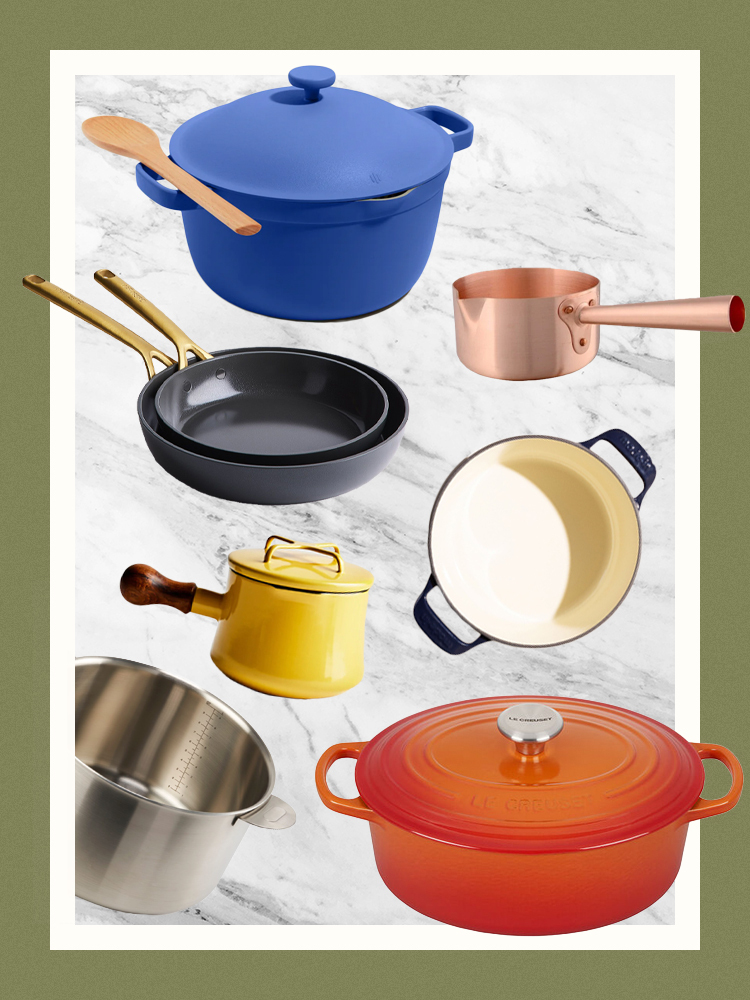
Credit: www.domino.com
Materials Used In Cookware
Choosing the best brand of cookware depends a lot on the materials used. Different materials offer unique benefits for cooking, heat distribution, and durability. Understanding these materials helps pick the right set for your kitchen needs. Each material has strengths and weaknesses that affect cooking performance and maintenance.
Stainless Steel
Stainless steel cookware is popular for its durability and sleek look. It does not rust or stain easily. This material works well for many cooking styles, especially searing and sautéing.
Key features of stainless steel cookware include:
- Durability: Resistant to scratches and dents.
- Non-reactive surface: Does not change food flavor.
- Easy maintenance: Dishwasher safe and simple to clean.
Many stainless steel pans have an aluminum or copper core. This core improves heat distribution and prevents hot spots. Without this core, stainless steel can heat unevenly.
| Pros | Cons |
|---|---|
| Long-lasting and strong | Can be expensive |
| Non-reactive to food | Food may stick without enough oil |
| Works on all cooktops | Heavier than some materials |
Cast Iron
Cast iron
Benefits of cast iron include:
- Excellent heat retention: Keeps heat steady for long cooking times.
- Natural nonstick surface: Develops seasoning with use.
- Versatile: Safe for oven, stovetop, and even campfires.
Cast iron needs special care to avoid rust. It requires seasoning—a process of coating with oil and heating. This creates a protective layer and improves cooking quality.
| Pros | Cons |
|---|---|
| Very durable and long-lasting | Heavy and bulky |
| Improves with seasoning | Requires regular maintenance |
| Great heat distribution | Can react with acidic foods |
Nonstick
Nonstick cookware
Important points about nonstick pans:
- Low-fat cooking: Requires less oil or butter.
- Easy to clean: Food slides off easily.
- Lightweight: Usually lighter than cast iron or stainless steel.
Nonstick coatings can wear out over time. Avoid metal utensils and high heat to protect the surface. Many brands use safer, PFOA-free coatings today.
| Pros | Cons |
|---|---|
| Simple cleanup | Coating can scratch or peel |
| Healthier cooking with less fat | Not suitable for high heat cooking |
| Good for beginners | Shorter lifespan than other materials |
Copper
Copper cookware
Advantages of copper include:
- Fast heat conduction: Reacts immediately to temperature changes.
- Attractive appearance: Shiny and elegant in any kitchen.
- Durable: Can last a lifetime with proper care.
Pure copper can react with acidic foods. Most copper pans have a stainless steel or tin lining to prevent this. Copper cookware needs polishing to keep its shine.
| Pros | Cons |
|---|---|
| Excellent temperature control | Expensive to buy |
| Beautiful design | Requires regular polishing |
| Lasts many years | Not dishwasher safe |
Aluminum
Aluminum cookware
Key points about aluminum include:
- Good heat conductivity: Cooks food evenly.
- Lightweight: Easy to handle and maneuver.
- Cost-effective: Budget-friendly option.
Raw aluminum can react with acidic foods and change taste. Most aluminum cookware is anodized or coated to prevent this. Anodized aluminum is harder and more durable.
| Pros | Cons |
|---|---|
| Affordable and lightweight | Can react with certain foods |
| Good heat distribution | Scratches easily if uncoated |
| Widely available | Not ideal for induction cooktops unless layered |
Factors To Consider When Choosing Cookware
Choosing the best brand of cookware depends on many important factors. These factors affect how well your cookware performs, how long it lasts, and how easy it is to use. Knowing what to consider helps pick the right set for your kitchen needs and budget. Below are key points to think about when selecting cookware.
Durability
Durability is one of the most important qualities in cookware. It means how well the pots and pans can resist wear and tear over time. Durable cookware stays in good shape even after frequent use.
Materials affect durability:
- Stainless steel: Very strong and resists rust and corrosion.
- Cast iron: Heavy but can last decades if cared for properly.
- Aluminum: Lightweight but can dent or warp easily.
- Copper: Durable but may require polishing to keep its shine.
Consider the cookware’s thickness. Thicker materials usually last longer and handle heat better. Look for solid handles and strong lids too. Cheap cookware often has thin walls and loose handles, which break faster.
| Material | Durability | Common Issues |
|---|---|---|
| Stainless Steel | High | May discolor over time |
| Cast Iron | Very High | Rust if not seasoned |
| Aluminum | Medium | Warps and dents easily |
| Copper | High | Tarnishes quickly |
Good durability means less replacement and better cooking experience.
Heat Conductivity
Heat conductivity tells how fast and evenly cookware heats up. Cookware with good heat conductivity cooks food uniformly, preventing hot spots.
Common cookware materials and their heat conductivity:
- Copper: Excellent conductor, heats quickly and evenly.
- Aluminum: Also heats fast and spreads heat well.
- Stainless steel: Poor heat conductor on its own but often layered with copper or aluminum.
- Cast iron: Heats slowly but retains heat for a long time.
Choosing cookware with proper heat conductivity depends on cooking style. For fast cooking, copper or aluminum works best. For slow cooking, cast iron is ideal.
Use this simple scale to compare heat conductivity:
| Material | Heat Conductivity |
|---|---|
| Copper | Very High |
| Aluminum | High |
| Cast Iron | Medium |
| Stainless Steel | Low |
Good heat conductivity saves energy and improves cooking results.
Maintenance
Maintenance means how easy it is to clean and care for cookware. Some materials require more work than others.
Here are maintenance tips for common materials:
- Stainless steel: Dishwasher safe and easy to clean. May need special cleaners to remove stains.
- Cast iron: Needs seasoning to keep the surface non-stick and to prevent rust. Avoid soap and drying immediately after washing.
- Aluminum: Can discolor if not cleaned properly. Use mild detergents and avoid abrasive scrubbers.
- Copper: Requires polishing to maintain shine. Avoid dishwasher and harsh cleaners.
Non-stick coatings make cleaning easier but can wear off over time. Avoid metal utensils on non-stick surfaces to extend lifespan.
Consider your available time for upkeep. Low-maintenance cookware suits busy cooks better.
Price
Cookware price varies widely based on material, brand, and quality. Setting a budget helps narrow choices.
Price ranges for cookware materials:
- Budget-friendly: Aluminum and basic stainless steel sets.
- Mid-range: Higher-quality stainless steel, non-stick coated pans.
- Premium: Copper, heavy cast iron, and multi-ply stainless steel.
Consider long-term value. Durable cookware may cost more upfront but lasts longer.
| Material | Price Range | Value Notes |
|---|---|---|
| Aluminum | Low | Good for beginners, less durable |
| Stainless Steel | Medium | Balanced cost and durability |
| Cast Iron | Medium to High | Lasts decades, requires care |
| Copper | High | Expensive but excellent performance |
Look for sales or sets to get better deals.
Compatibility With Cooktops
Cookware must match your cooktop type for best results. Not all cookware works on every cooktop.
Common cooktop types and compatible cookware:
- Gas: Works with almost all cookware.
- Electric coil: Best with flat-bottomed pans for even contact.
- Glass/ceramic: Requires smooth, flat-bottom cookware to avoid scratching.
- Induction: Only works with magnetic cookware like cast iron or stainless steel with magnetic base.
Check if cookware has an induction-compatible symbol if using an induction stove.
| Cooktop Type | Compatible Cookware | Notes |
|---|---|---|
| Gas | All types | No restrictions |
| Electric Coil | Flat-bottom pots and pans | Ensures proper heat transfer |
| Glass/Ceramic | Flat, smooth-bottom cookware | Prevents scratching |
| Induction | Magnetic cookware | Look for induction-compatible mark |
Choosing cookware that fits your cooktop improves safety and cooking efficiency.
Popular Cookware Lines And Their Features
Choosing the best cookware brand depends on many factors like price, durability, and material. Popular cookware lines offer a range of features to fit different cooking needs and budgets. This section breaks down key cookware lines and what makes them stand out. Understanding these features helps pick the right set for your kitchen.
Premium Collections
Premium cookware collections focus on quality and performance. They use high-grade materials like stainless steel, copper, or hard-anodized aluminum. These sets often include features that improve cooking results and last for years.
- Materials: Heavy-gauge stainless steel, copper cores, or multi-layered construction for even heat distribution.
- Durability: Scratch-resistant surfaces and strong handles designed for daily use.
- Design: Ergonomic handles, tight-fitting lids, and polished finishes that look great in any kitchen.
- Oven and Dishwasher Safe: Many premium lines can go from stovetop to oven and dishwasher without damage.
Here is a quick comparison of popular premium lines:
| Brand | Material | Key Feature | Price Range |
|---|---|---|---|
| All-Clad | Stainless Steel with Aluminum Core | Even heat, professional grade | High ($300+) |
| Le Creuset | Enamel-coated Cast Iron | Excellent heat retention, colorful design | High ($250+) |
| Calphalon | Hard-Anodized Aluminum | Durable, non-stick options | Medium-High ($150+) |
Premium collections suit serious cooks who want cookware that lasts and performs well. They cost more but often deliver better results and durability.
Affordable Options
Affordable cookware lines offer good value for everyday cooking. They use simpler materials and focus on basic features without extra bells and whistles. These sets work well for beginners or those on a budget.
- Materials: Non-stick aluminum, basic stainless steel, or ceramic-coated pans.
- Weight: Lightweight and easy to handle.
- Care: Usually dishwasher safe but may require gentle use to avoid damage.
- Variety: Sets often include multiple pieces for all cooking needs.
Some affordable brands offer surprisingly good quality for the price. They may not last as long as premium sets but still provide reliable cooking performance.
| Brand | Material | Key Feature | Price Range |
|---|---|---|---|
| T-fal | Non-stick Aluminum | Thermo-spot heat indicator | Low ($50-$100) |
| Cuisinart | Stainless Steel | Dishwasher safe, durable | Low-Medium ($70-$150) |
| GreenLife | Ceramic Non-stick | Easy cleanup, colorful | Low ($40-$80) |
Affordable cookware suits those starting out or cooking casually. It balances cost and function without complex technology.
Eco-friendly Choices
Eco-friendly cookware focuses on sustainability and safe materials. These lines use recycled or natural materials and avoid harmful chemicals. They appeal to cooks concerned about health and the environment.
- Materials: Recycled stainless steel, ceramic coatings, cast iron, or natural clay.
- Non-toxic: Free from PTFE, PFOA, lead, and other toxins.
- Durability: Made to last long, reducing waste over time.
- Energy Efficient: Some offer fast, even heating to save energy.
Eco-friendly cookware may cost more but supports greener cooking habits and safer food preparation.
| Brand | Material | Key Feature | Price Range |
|---|---|---|---|
| Lodge | Cast Iron | Long-lasting, natural non-stick | Medium ($30-$100) |
| GreenPan | Ceramic Non-stick | PTFE and PFOA free | Medium ($50-$150) |
| Earth Pan | Recycled Stainless Steel | Eco-conscious, durable | Medium-High ($100-$200) |
Choosing eco-friendly cookware supports health and the planet. These sets combine safety and quality for everyday use.
Customer Reviews And Ratings
Customer reviews and ratings reveal honest opinions about cookware brands. They help you find products that suit your needs and budget. Real users share their experiences, highlighting both strengths and weaknesses. This feedback guides your choice and ensures satisfaction after purchase.
Understanding Customer Ratings
Ratings show how well a cookware brand meets user expectations. Most sites use a 5-star scale. A higher rating means better quality and satisfaction. Look for brands with consistent 4-star or higher ratings. Check the number of reviews too. More reviews make ratings more reliable.
Common Themes In Customer Reviews
- Durability: Customers often mention how long cookware lasts.
- Heat distribution: Even heating is a top concern for cooks.
- Ease of cleaning: Non-stick surfaces get many positive remarks.
- Price vs. value: Reviews often compare cost to performance.
- Customer service: Support experience affects brand reputation.
Sample Customer Ratings For Top Cookware Brands
| Brand | Average Rating (out of 5) | Number of Reviews | Popular Features |
|---|---|---|---|
| T-fal | 4.3 | 12,500+ | Non-stick, affordable, easy to clean |
| All-Clad | 4.7 | 8,200+ | Durable, even heat, professional quality |
| Cuisinart | 4.1 | 6,800+ | Stainless steel, dishwasher safe, good price |
| Calphalon | 4.4 | 9,000+ | Hard-anodized, scratch resistant, modern design |
Tips For Using Customer Reviews
- Read both positive and negative reviews for balance.
- Focus on reviews that mention features you care about.
- Check recent reviews to see if quality changes over time.
- Ignore extreme opinions unless they are common.
- Use reviews to set realistic expectations about the product.

Credit: www.purewow.com
Care And Maintenance Tips
Care and maintenance are key to keeping cookware in top shape. Proper cleaning and storage can extend the life of pots and pans. Good care also keeps food tasting fresh and cookware looking new. Simple steps make a big difference.
Cleaning Your Cookware Correctly
Always let cookware cool before washing. Hot pans can warp or crack if washed with cold water. Use warm water and mild dish soap. Avoid harsh scrubbers that can scratch surfaces.
- Use a soft sponge or cloth
- Remove stuck food by soaking the pan
- For tough stains, use baking soda paste
- Never use steel wool on nonstick or coated pans
Seasoning And Oiling Tips
Some cookware, like cast iron, needs regular seasoning. Seasoning creates a nonstick surface and prevents rust. Apply a thin layer of cooking oil after cleaning.
- Dry the cookware completely
- Rub a small amount of vegetable oil inside
- Heat the pan on low for a few minutes
- Wipe off excess oil with a paper towel
Proper Storage To Avoid Damage
Store cookware carefully to avoid dents and scratches. Stack pans with soft cloth or paper towels between them. Hang pots to save space and prevent damage.
| Storage Method | Benefits |
|---|---|
| Stack with liners | Prevents scratches and dents |
| Hang pots and pans | Saves space and avoids stacking damage |
| Keep lids separate | Prevents chipping and warping |
Handling Tips For Longevity
Use wooden or silicone utensils to protect cookware surfaces. Avoid metal tools that can scratch and ruin coatings. Handle cookware gently to prevent bending or warping.
- Do not drop or bang pots and pans
- Use correct burner size to prevent heat damage
- Check handles regularly for tightness
Frequently Asked Questions
What Factors Determine The Best Cookware Brand?
The best cookware brand depends on material quality, durability, heat distribution, and price. User needs and cooking style also matter. Brands with positive reviews and good warranties often stand out. Choosing the right cookware ensures better cooking results and long-term satisfaction.
Which Cookware Brand Offers The Best Value For Money?
Brands like T-fal and Cuisinart offer excellent value with durable, versatile cookware at affordable prices. They balance quality and cost, making them ideal for everyday cooking. Investing in these brands provides reliable performance without breaking the budget.
Is Non-stick Or Stainless Steel Cookware Better?
Non-stick cookware is easy to clean and ideal for low-fat cooking. Stainless steel offers durability and even heat but requires more maintenance. The choice depends on cooking preferences, food types, and care willingness. Both types have top brands specializing in their products.
How Important Is Cookware Material In Brand Selection?
Cookware material affects heat conduction, durability, and cooking results. Brands specializing in stainless steel, cast iron, or aluminum cater to different needs. Selecting a brand based on material ensures optimal performance and longevity, matching your cooking style and maintenance preference.
Conclusion
Choosing the best cookware brand depends on your needs and budget. Quality, durability, and ease of use matter most. Some brands suit beginners, while others fit experienced cooks. Think about the types of cooking you do often. Pick materials that match your style, like stainless steel or non-stick.
Good cookware makes cooking easier and more fun. Take your time to find what feels right for you. Your kitchen will thank you.

Hello, This is Annie Walker, a 38-year-old blogger, founder, and editor of Cookware Guider from NY, USA. I am a cookware fanatic and passionate cooker. I love to cook with different types of cooking appliances (example: all types of cookware, rice cookers, slow cookers, etc) almost every day in my kitchen. I love to share my experience with my readers in my blog. Also, I enjoy helping people to solve their problems through my website. You can follow me on Twitter & Pinterest. To know details about my blog please check the about us page.