
Choosing the right cookware can make a big difference in your health. You might not realize it, but some pots and pans can release harmful chemicals or metals into your food.
So, how do you know which is the healthiest cookware for you and your family? You’ll discover the safest options that protect your well-being without sacrificing taste or convenience. Keep reading to find out how to cook smarter and healthier every day.
Health Risks In Cookware
Choosing the right cookware matters for your health. Some pots and pans release harmful substances during cooking. These substances can mix with food and enter your body. Understanding these health risks helps you make safer choices in the kitchen.
Toxic Chemicals To Avoid
Certain cookware contains chemicals that harm your health. Avoid pans with PFOA, a chemical found in some non-stick coatings. Lead and cadmium can appear in cheap ceramics or painted cookware. These toxins can cause serious health problems over time.
How Cookware Affects Food Safety
Cookware can change the safety of your food. Scratched or damaged surfaces may release metals like aluminum or nickel. High heat can break down coatings, letting chemicals enter your meals. Safe cookware keeps your food pure and free from harmful substances.
Common Health Concerns
Exposure to toxic cookware chemicals can cause health issues. Problems include hormone disruption, allergies, and even cancer risks. Sensitive groups like children and pregnant women face higher dangers. Choosing safe cookware reduces these health risks significantly.
Credit: www.organicauthority.com
Popular Cookware Materials
Choosing the right cookware affects your health and cooking results. Different materials have unique features, benefits, and risks. Understanding popular cookware types helps pick safer options for your kitchen.
Stainless Steel Benefits And Drawbacks
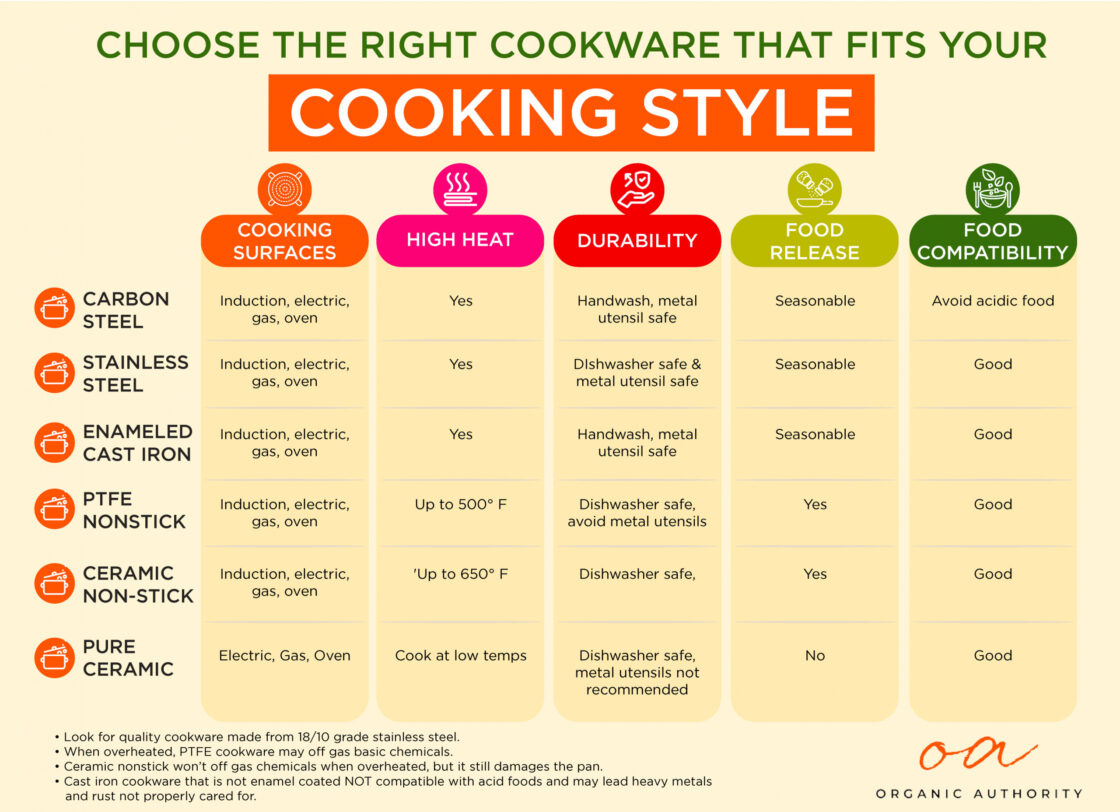
Stainless steel is strong and does not react with food. It heats evenly and lasts long. It does not release harmful chemicals, making it safe for cooking. Cleaning is simple, and it resists rust and stains. Some stainless steel pans may have a heavy weight. Food can stick if the pan is not hot enough or lacks oil.
Nonstick Coatings And Safety
Nonstick pans make cooking and cleaning easy. They require less oil for healthy meals. Some coatings contain chemicals that may release fumes when overheated. Choose high-quality, PFOA-free nonstick pans to reduce risks. Nonstick pans tend to wear out faster than other types. Avoid using metal utensils to protect the surface.
Cast Iron Pros And Cons
Cast iron cookware holds and spreads heat very well. It adds iron to your food, which can be beneficial. It is durable and can last for decades. Cast iron needs seasoning to keep food from sticking. It can be heavy and requires special care to avoid rust. Not ideal for acidic foods, which can damage the surface.
Ceramic Cookware Features
Ceramic cookware has a smooth, nonstick surface free of harmful chemicals. It distributes heat evenly and looks attractive. Ceramic is easy to clean and safe for high heat. Some ceramic coatings may chip or wear over time. It is lighter than cast iron but less durable. Ceramic pans work well for gentle cooking tasks.
Glass Cookware Uses
Glass cookware does not react with food or chemicals. It is perfect for baking and slow cooking. Glass lets you see your food while cooking. It does not release toxins or metals into meals. Glass pans do not conduct heat well, so cooking times may be longer. Handle with care as glass can break or crack easily.
Comparing Cookware For Health
Choosing the right cookware affects your health and cooking results. Different materials react differently to heat and food. Some can release harmful chemicals, while others keep your meals safe and tasty. Comparing cookware helps find the best option for healthy cooking.
Durability And Chemical Leaching
Durability means how long cookware lasts without damage. Some pans chip or scratch easily. These can release chemicals into food. Non-stick coatings often wear off and may contain harmful substances. Stainless steel and cast iron are very durable and safe. They do not release chemicals even after years of use.
Heat Distribution And Food Quality
Good heat distribution cooks food evenly. This avoids burning and undercooking. Copper and aluminum heat up fast and spread heat well. Cast iron holds heat for a long time. Uneven heating can cause food to lose nutrients. Cookware that heats well keeps food tasty and healthy.
Ease Of Cleaning And Maintenance
Easy-to-clean cookware saves time and effort. Some materials need special care to avoid damage. Cast iron requires seasoning to stay non-stick and rust-free. Stainless steel and ceramic are simple to clean with soap and water. Clean cookware prevents bacteria and keeps food safe.
Credit: www.cleaneatingkitchen.com
Choosing Cookware For Your Needs
Choosing the right cookware matters for your health and cooking success. Each type of cookware offers different benefits and risks. Knowing your needs helps pick the best option. Consider your budget, cooking style, and any allergies. These factors guide you to safe and useful cookware.
Budget Considerations
Cookware prices vary widely. Some materials cost more but last longer. Others are cheaper but wear out fast. Set a budget before shopping. Balance cost with quality. Spending a little more can mean safer, healthier cooking. Avoid very cheap cookware that may release harmful chemicals.
Cooking Style And Preferences
Think about how you cook daily. Do you fry, boil, or bake often? Non-stick pans suit low-fat cooking and easy cleaning. Stainless steel works well for searing and browning. Cast iron adds iron to food and holds heat well. Choose cookware that fits your common cooking methods. This makes cooking easier and more enjoyable.
Allergy And Sensitivity Factors
Some people react to metals like nickel or aluminum. If you have allergies, pick hypoallergenic cookware. Ceramic and glass are good options for sensitive individuals. Avoid cookware that may leach metals into food. Safe cookware helps prevent allergic reactions and keeps meals healthy.
Care Tips For Safe Cookware Use
Using safe cookware helps keep your food healthy and tasty. Proper care extends the life of your pots and pans. Follow these simple tips for safe cookware use. They help keep your kitchen tools in good shape.
Proper Cleaning Techniques
Clean cookware after every use. Use warm water and mild soap. Avoid harsh chemicals that can damage surfaces. Soft sponges work best to prevent scratches. For stubborn food, soak the cookware before cleaning. Dry thoroughly to stop rust or stains.
Avoiding Damage And Wear
Use wooden or silicone utensils to protect non-stick coatings. Avoid high heat that can warp or ruin cookware. Never use metal scrubbers on delicate surfaces. Check for cracks or chips regularly. Replace cookware if it shows signs of wear to stay safe.
Storage Recommendations
Store cookware in a dry place to prevent rust. Stack pots and pans carefully to avoid scratches. Use protective liners or cloth between pieces. Keep lids separate or upside down to save space. Proper storage keeps your cookware ready for use.

Credit: www.healthierhomes.com
Frequently Asked Questions
What Is The Healthiest Cookware Material?
The healthiest cookware materials are stainless steel, cast iron, and ceramic. They avoid harmful chemicals and provide even heat distribution. These options do not leach toxins into food, ensuring safe and nutritious cooking for your family.
Is Non-stick Cookware Safe For Health?
Most non-stick cookware is safe if used correctly. Avoid overheating to prevent toxic fumes. Choose PFOA-free and high-quality brands for safer cooking. Proper care extends the lifespan and maintains its health benefits.
Why Avoid Aluminum Cookware For Health?
Aluminum cookware can leach metal into food, especially with acidic ingredients. This may pose health risks with long-term exposure. It is best to choose anodized aluminum or other safer alternatives to minimize potential harm.
How Does Cast Iron Cookware Benefit Health?
Cast iron cookware adds dietary iron to food, which is good for many people. It’s durable and naturally non-stick when seasoned properly. This type of cookware promotes even cooking without harmful chemicals.
Conclusion
Choosing healthy cookware helps protect your food and body. Materials like stainless steel, cast iron, and ceramic offer safe cooking options. Avoid cookware that can release harmful chemicals when heated. Keep your pots and pans clean to stay healthy. Small changes in your kitchen can improve your overall well-being.
Make smart choices for your health and taste buds. Cook with care, eat with joy. Your health deserves the best cookware.

Hello, This is Annie Walker, a 38-year-old blogger, founder, and editor of Cookware Guider from NY, USA. I am a cookware fanatic and passionate cooker. I love to cook with different types of cooking appliances (example: all types of cookware, rice cookers, slow cookers, etc) almost every day in my kitchen. I love to share my experience with my readers in my blog. Also, I enjoy helping people to solve their problems through my website. You can follow me on Twitter & Pinterest. To know details about my blog please check the about us page.