
If you love cooking with a cast iron skillet, you know how important it is to keep it clean and well-maintained. But cleaning cast iron can be tricky if you don’t know the right way.
Using the wrong method might damage your skillet or ruin its natural non-stick surface. You’ll discover the best way to clean your cast iron skillet so it stays in perfect shape for years. Keep reading to learn simple steps that save you time and protect your favorite kitchen tool.
Your cast iron deserves the best care, and you’re just one read away from mastering it.

Credit: www.youtube.com
Choosing The Right Cleaning Tools
Caring for a cast iron skillet starts with choosing the right cleaning tools. The tools you use can protect the skillet’s seasoning and extend its life. Using harsh or improper cleaners can damage the surface and cause rust. It is important to select tools that clean effectively yet gently. This section focuses on picking the best tools to keep your cast iron skillet in top shape.
Avoiding Harsh Detergents
Harsh detergents can strip away the skillet’s seasoning, which is the natural non-stick layer. Most cast iron experts recommend skipping strong soaps and detergents. These chemicals remove the oils baked into the pan over time. Without this seasoning, food will stick and the skillet may rust faster.
Here are reasons to avoid harsh detergents:
- Strips seasoning: Harsh soaps break down the oil layer.
- Causes rust: Removing seasoning exposes the metal to moisture.
- Damages finish: The pan may lose its smooth cooking surface.
Instead of strong detergents, mild dish soap can be used sparingly. Or better yet, clean with hot water and gentle tools. Soap is not always necessary if the pan is cleaned immediately after use.
| Detergent Type | Effect on Cast Iron |
|---|---|
| Harsh detergents | Remove seasoning and cause rust |
| Mild dish soap | Safe in small amounts and gentle use |
| No soap, just water | Best for daily cleaning if done quickly |
Using Natural Scrubbers
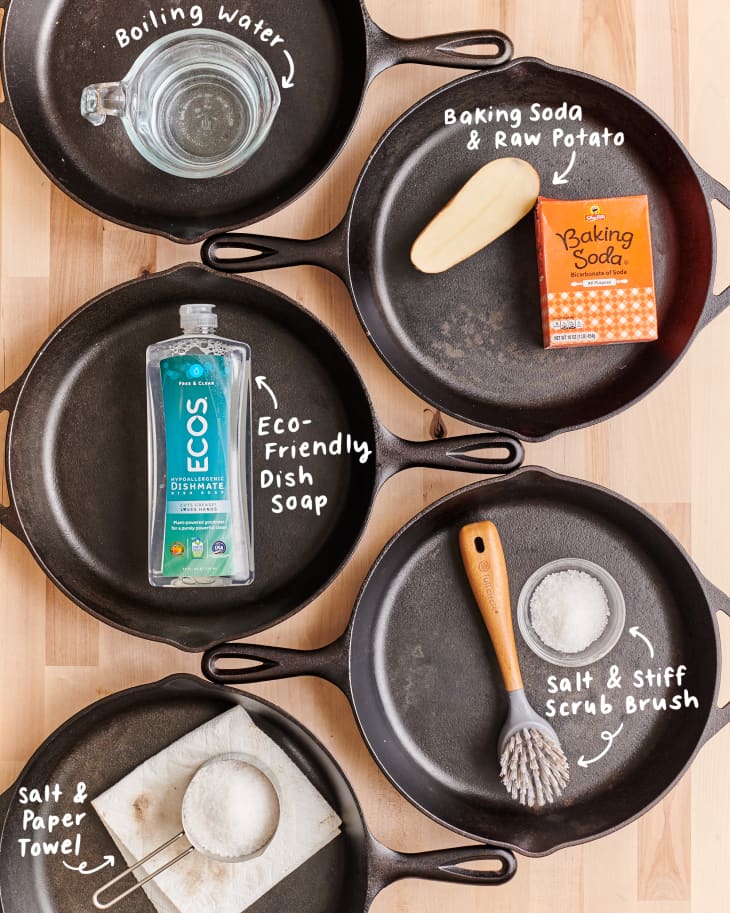
Natural scrubbers clean the skillet without damaging the seasoning. They remove stuck-on food and grease gently. Materials like coarse salt and baking soda work well. These act as mild abrasives but do not scratch the surface deeply.
Benefits of natural scrubbers:
- Non-toxic: Safe for food contact and your health.
- Preserves seasoning: Cleans without removing oils.
- Easy to find: Common kitchen ingredients.
How to use natural scrubbers:
- Sprinkle coarse salt or baking soda over the skillet.
- Add a small amount of water to make a paste.
- Scrub gently with a soft cloth or brush.
- Rinse with warm water and dry immediately.
These methods keep the skillet clean and ready for the next use. Avoid steel wool or harsh scouring pads, as they can damage the skillet’s finish.
Selecting Soft Brushes And Sponges
Soft brushes and sponges clean the skillet without scratching it. They help remove food residue and grease safely. Choose brushes with natural bristles or soft synthetic ones. Sponges should be non-abrasive and gentle on the surface.
Key points for selecting brushes and sponges:
- Natural bristles: Gentle on seasoning, durable.
- Soft synthetic bristles: Effective and safe.
- Non-abrasive sponges: Avoid rough textures that scratch.
Tips for use:
- Use soft brushes for stuck-on bits.
- Sponges work well for light cleaning and wiping.
- Rinse tools after use to prevent bacteria build-up.
Keep these tools clean and dry between uses. Replace sponges often to maintain hygiene. Soft cleaning tools protect the skillet’s seasoning and prolong its life.
Step-by-step Cleaning Process
Cleaning a cast iron skillet properly keeps it in great shape and improves cooking results. The step-by-step cleaning process helps remove stuck-on food, prevents rust, and preserves the skillet’s seasoning. Following simple, careful steps ensures the skillet lasts for years. This guide breaks down the best cleaning method into easy stages for every cook.
Removing Food Residue
Start by clearing leftover food. Use a scraper, brush, or coarse salt to lift stuck bits without harming the skillet’s surface. Avoid metal scrubbers that can strip seasoning.
- Use a plastic or wooden spatula to gently scrape off large food pieces.
- Sprinkle coarse kosher salt inside the skillet to act as a natural abrasive.
- Scrub with a damp cloth or soft brush in circular motions to remove residue.
If food is very stuck, heat the pan with some water on medium heat for a few minutes. The heat loosens residue, making it easier to clean. Pour out the water carefully and wipe the skillet.
| Tool | Purpose | Note |
|---|---|---|
| Plastic/wooden spatula | Scrapes food gently | Prevents scratching |
| Coarse salt | Abrasive for stuck bits | Natural and safe |
| Soft brush or cloth | Removes loosened residue | Non-damaging |
Washing Without Soap
Soap can break down the skillet’s seasoning layer. Clean the skillet with hot water only. Use a brush or sponge to scrub gently. For tough spots, coarse salt works well as a scrub.
Follow these tips:
- Use warm water to help dissolve grease and food particles.
- Scrub with a non-metal brush or sponge to avoid damage.
- Apply coarse salt as a scrub for stubborn residue.
- Rinse thoroughly to remove all salt and food bits.
After washing, avoid soaking the skillet in water for long periods. Prolonged water contact may cause rust. Keep washing quick and efficient.
Drying Thoroughly
Proper drying stops rust from forming. Cast iron holds water, which can ruin the seasoning. Use these steps for drying:
- Wipe the skillet with a clean towel right after washing.
- Heat the skillet on the stove over low heat for 5-10 minutes.
- Remove from heat and allow it to cool completely.
Heating evaporates any leftover moisture inside pores and crevices. Once dry, apply a thin layer of cooking oil to the surface. This keeps the skillet seasoned and guards against rust.
Use a paper towel or cloth to spread oil evenly. Store the skillet in a dry place with good airflow.
Seasoning Your Skillet
Seasoning your cast iron skillet is key to keeping it non-stick and rust-free. This process builds a strong, natural coating on the skillet’s surface. It protects the metal and improves cooking performance. Proper seasoning also makes cleaning easier. Without it, food tends to stick, and the skillet can rust quickly. Learning how to season your skillet well saves money and extends the skillet’s life. It takes a little time but offers great rewards in taste and skillet care.
Why Seasoning Matters
Seasoning forms a protective layer on the cast iron. This layer stops moisture from causing rust. It also creates a smooth surface that helps food slide off easily. Each time you cook with oil, the seasoning gets stronger. Skillets without seasoning can be sticky and hard to clean.
- Prevents rust: The oil layer blocks water and air from reaching the metal.
- Creates non-stick surface: Food cooks evenly and does not stick.
- Improves flavor: Some foods taste better cooked on well-seasoned skillets.
- Lasts longer: Proper care extends the skillet’s life.
Here is a simple comparison of a seasoned and unseasoned skillet:
| Feature | Seasoned Skillet | Unseasoned Skillet |
|---|---|---|
| Rust Resistance | High | Low |
| Non-stick Quality | Excellent | Poor |
| Cleaning Ease | Easy | Hard |
| Cooking Performance | Better | Inconsistent |
Applying Oil Correctly
Choosing the right oil and applying it properly is vital for good seasoning. Use oils with a high smoke point. Examples include vegetable oil, flaxseed oil, or grapeseed oil. Avoid low smoke point oils like olive oil for seasoning. They can leave sticky residue.
Follow these steps for best results:
- Clean the skillet with warm water and dry it completely.
- Pour a small amount of oil onto the skillet surface.
- Use a cloth or paper towel to spread the oil evenly.
- Rub the oil into the entire skillet, including the sides and handle.
- Wipe off excess oil until the skillet looks almost dry.
Too much oil causes a sticky surface. Too little oil means weak seasoning. The goal is a thin, even coat. This helps the oil bond well with the cast iron.
Heating Techniques For Seasoning
Heating the skillet after oiling helps the oil bond to the surface. This process is called polymerization. It creates the hard, black seasoning layer. Use an oven or stovetop for heating.
Oven method:
- Preheat oven to 400°F (204°C).
- Place the oiled skillet upside down on the middle rack.
- Put a sheet of foil on the rack below to catch drips.
- Bake for 1 hour, then turn off the oven.
- Let the skillet cool inside the oven.
Stovetop method:
- Heat skillet on medium heat for 10-15 minutes.
- Move skillet around so heat spreads evenly.
- Turn off heat and let skillet cool slowly.
Repeat heating steps 2-3 times for stronger seasoning. Avoid overheating; smoke means oil is burning. Proper heating creates a smooth, durable coating that improves with use.

Credit: www.youtube.com
Maintaining Cast Iron Over Time
Maintaining cast iron over time ensures your skillet stays in great shape for years. Proper care protects its non-stick surface and prevents rust. Small habits and timely actions keep your skillet cooking smoothly and looking good. This section covers how to clean, store, and re-season your cast iron skillet.
Regular Cleaning Habits
Cleaning your cast iron skillet right after use is key. Avoid soaking it in water or using harsh detergents. These can remove the seasoning layer and cause rust. Instead, follow these simple steps:
- Wipe out leftover food: Use a paper towel or cloth while the pan is still warm.
- Scrub with a brush or sponge: Use warm water and a soft scrubber to remove stuck bits.
- Use salt for tough spots: Coarse salt works as a gentle abrasive without harming seasoning.
- Dry completely: Heat the skillet on low stove heat to evaporate all moisture.
Here is a quick guide table for regular cleaning:
| Step | Action | Reason |
|---|---|---|
| 1 | Wipe leftover food | Prevents buildup and rust |
| 2 | Scrub with warm water | Removes food without damaging seasoning |
| 3 | Use salt for stuck food | Acts as a natural abrasive |
| 4 | Dry fully on stove | Stops rust by removing moisture |
Storing Properly To Prevent Rust
Storing cast iron properly keeps it rust-free and ready to use. Moisture and improper stacking cause rust spots quickly. Follow these tips to store your skillet safely:
- Keep it dry: Always dry the skillet well after cleaning and before storage.
- Use a paper towel: Place a paper towel inside the skillet to absorb any moisture.
- Store in a dry place: Avoid humid areas like under the sink or near the dishwasher.
- Separate from other cookware: Use a pan protector or cloth if stacking with other pans.
Proper storage helps maintain the seasoning and prevents damage from scratches or moisture.
Re-seasoning When Necessary
Re-seasoning your cast iron skillet restores its non-stick surface. It is necessary when food starts sticking or the skillet looks dull or rusty. Follow these steps to re-season effectively:
- Clean the skillet: Remove all rust and old seasoning with steel wool and soap.
- Dry completely: Heat on the stove or in the oven to remove moisture.
- Apply oil: Rub a thin layer of vegetable oil or flaxseed oil all over the skillet.
- Bake the skillet: Place upside down in a preheated oven at 375°F (190°C) for 1 hour.
- Cool in oven: Let the skillet cool completely before use or storage.
Repeat this process if the skillet loses its smooth surface or develops rust. Proper re-seasoning keeps your cast iron skillet performing well and lasting for decades.
Common Mistakes To Avoid
Cleaning a cast iron skillet properly keeps it in great shape and improves cooking. Many people make simple mistakes that damage the skillet or cause rust. Avoiding these common errors helps maintain the skillet’s non-stick surface and flavor. Knowing what not to do is as important as knowing the right cleaning steps.
Using Too Much Soap
Many believe soap is needed to clean cast iron well. But using too much soap can strip the skillet’s seasoning. The seasoning is a thin layer of oil baked onto the pan. It protects the skillet from rust and creates a natural non-stick surface. Strong soaps remove this layer, making the skillet prone to rust and food sticking.
Best practice:
- Use only a small amount of mild dish soap if needed.
- Often, hot water and a stiff brush clean the skillet well without soap.
- Avoid harsh detergents or dishwashers.
Here is a quick comparison of soap use:
| Soap Use | Effect on Skillet | Cleaning Result |
|---|---|---|
| Too Much Soap | Strips seasoning | Prone to rust, sticky surface |
| Minimal Soap | Preserves seasoning | Clean and protected skillet |
| No Soap | Best for seasoning | Effective cleaning with hot water |
Use soap sparingly, only if oil or food residue remains after rinsing. This keeps your skillet in top shape.
Soaking The Skillet
Soaking a cast iron skillet in water is a common mistake. Cast iron is porous and can absorb water. Long soaking causes rust and damages the seasoning. Rust ruins the pan’s surface and makes cooking difficult.
Tips to avoid soaking problems:
- Clean the skillet immediately after use.
- Use a brush or sponge with warm water to remove food.
- Do not leave the skillet in water or the sink for long.
Quick cleaning steps without soaking:
- Scrape off stuck food with a plastic or wooden spatula.
- Rinse with warm water.
- Dry immediately.
- Apply a thin oil layer to protect the surface.
Soaking damages cast iron in these ways:
| Soaking Time | Possible Damage | Cleaning Outcome |
|---|---|---|
| Few minutes | Minimal risk | Safe if dried quickly |
| 30 minutes or more | Rust formation | Needs re-seasoning |
| Hours or overnight | Severe rust | Damaged skillet surface |
Keep your skillet dry and clean it right after cooking. This prevents rust and extends its life.
Neglecting To Dry Completely
Not drying a cast iron skillet fully is a big problem. Water left on the skillet causes rust fast. Rust weakens the pan and ruins its seasoning. Even small drops of water can start rust spots.
Steps to dry your skillet properly:
- Wipe the skillet with a clean towel after washing.
- Heat the skillet on low stove heat for a few minutes.
- Let all moisture evaporate before storing.
- Apply a light coat of cooking oil after drying.
Benefits of drying well:
- Prevents rust and corrosion.
- Keeps seasoning intact.
- Maintains non-stick surface.
- Extends skillet’s lifespan.
Common drying mistakes include:
- Air-drying without wiping.
- Storing the skillet while still damp.
- Skipping oiling after drying.
Follow these simple steps:
wash skillet & rinse with warm water wipe dry with towel heat on stove low for 5 minutes remove from heat, apply thin oil layer store in dry place Complete drying keeps your cast iron skillet ready for the next use.
Credit: www.thekitchn.com
Frequently Asked Questions
How Do I Clean A Cast Iron Skillet Without Soap?
Use hot water and a stiff brush to scrub the skillet. Avoid soap to maintain the seasoning. Dry it immediately and apply a thin layer of oil to prevent rust.
Can I Use Steel Wool On A Cast Iron Skillet?
Steel wool can remove rust but may strip seasoning. Use it only for tough rust spots. Re-season the skillet afterward to restore its non-stick surface.
What Is The Best Way To Remove Stuck-on Food?
Boil water in the skillet for a few minutes. Use a wooden spatula to gently scrape off food. This method loosens residue without damaging the seasoning.
How Often Should I Re-season My Cast Iron Skillet?
Re-season your skillet after every few uses or if food starts sticking. Apply a thin layer of oil and bake it to maintain a smooth, non-stick surface.
Conclusion
Cleaning your cast iron skillet the right way keeps it strong and long-lasting. Avoid soap and harsh scrubbing to protect its seasoning. Use warm water, a soft brush, and dry it well after washing. Apply a thin layer of oil to stop rust.
This simple care helps your skillet cook better every time. Enjoy great meals and save money by taking good care of your cast iron skillet. Easy steps make a big difference. Try these tips and see the results yourself.

Hello, This is Annie Walker, a 38-year-old blogger, founder, and editor of Cookware Guider from NY, USA. I am a cookware fanatic and passionate cooker. I love to cook with different types of cooking appliances (example: all types of cookware, rice cookers, slow cookers, etc) almost every day in my kitchen. I love to share my experience with my readers in my blog. Also, I enjoy helping people to solve their problems through my website. You can follow me on Twitter & Pinterest. To know details about my blog please check the about us page.