
Want to cook salmon that’s juicy, flavorful, and ready in minutes? You’re in the right place.
Cooking salmon in a frying pan is quick and simple, even if you’ve never tried it before. With a few easy steps, you’ll get perfectly crispy skin and tender meat every time. Keep reading, and you’ll discover the secrets to making salmon that will impress your taste buds and anyone you serve it to.
Let’s get started!
Credit: www.pantsdownapronson.com
Choosing Fresh Salmon
Choosing fresh salmon is the first step for a delicious meal. Fresh fish tastes better and cooks well. Picking the right salmon also ensures good texture and flavor. A few simple tips help to find the best fish for frying.
Types Of Salmon
Salmon comes in several types. Atlantic salmon is common and mild in flavor. Sockeye has a deep red color and strong taste. King salmon is large and rich in fat. Each type suits different recipes and cooking styles.
Checking Freshness
Fresh salmon should look moist, not dry. The flesh must be firm and bounce back when pressed. Avoid fish with a strong fishy smell. Clear eyes and bright skin are good signs. Smell and feel help to choose fresh fish.
Portion Sizes
Salmon portions vary by appetite and recipe. A typical serving is 4 to 6 ounces per person. Cut salmon into even pieces for even cooking. Smaller pieces cook faster and are easier to handle. Choose portion sizes that fit your meal plan.
Credit: www.foodnetwork.com
Preparing Salmon Fillets
Preparing salmon fillets well makes a big difference in taste and texture. Careful preparation helps the fish cook evenly and stay moist. Simple steps before cooking save time and improve your meal.
Removing Pin Bones
Pin bones are small and hard to spot. Run your fingers gently along the fillet to find them. Use clean tweezers or needle-nose pliers to pull each bone out. Pull in the same direction as the bone to avoid tearing the fish.
Patting Dry
Pat the salmon dry with paper towels. This removes extra moisture from the surface. Dry fillets brown better and cook more evenly. Avoid rubbing to keep the flesh intact.
Seasoning Tips
Keep seasoning simple to highlight salmon’s flavor. Use salt and pepper first. Add lemon zest or garlic for extra taste. Season both sides evenly before cooking. Let the fillets rest a few minutes after seasoning.
Selecting The Right Pan
Selecting the right pan is key to cooking salmon perfectly in a frying pan. The pan affects heat distribution and the fish’s texture. A good pan helps achieve a crispy outside and tender inside. Choosing between different types and sizes matters for best results.
Non-stick Vs Cast Iron
Non-stick pans are easy to use and clean. They need less oil and prevent salmon from sticking. Great for gentle cooking and quick meals. Cast iron pans hold heat well. They create a nice crust on the salmon. These pans require seasoning to keep food from sticking. They take longer to heat but stay hot evenly.
Pan Size Considerations
Pick a pan size that fits your salmon fillets without crowding. Overcrowding causes steaming, not frying. A 10 to 12-inch pan works well for two fillets. Smaller pans limit space and heat control. Larger pans give room for air circulation and even cooking. Make sure the pan matches your stove size for best heat.
Heating The Pan
Heating the pan is a crucial step in cooking salmon perfectly on the stove. The right heat helps to create a crispy skin and cook the fish evenly inside. Too low heat makes the salmon stick and cook slowly. Too high heat burns the outside while the inside stays raw.
Start with a clean, dry pan. Let it warm up before adding oil or salmon. This ensures even cooking and a nice sear on the fish.
Ideal Temperature
Set the stove to medium-high heat. The pan should feel hot but not smoking. To test, sprinkle a few drops of water on the pan. They should sizzle and evaporate quickly. This heat level cooks salmon evenly without burning.
Keep the heat steady. Avoid sudden changes to prevent uneven cooking. A well-heated pan locks in juices and flavors.
Choosing Cooking Oils
Pick oils with a high smoke point. Olive oil, avocado oil, or canola oil work best. These oils handle heat without burning or smoking.
Avoid butter alone. It burns fast and can ruin the salmon’s taste. Use butter combined with oil for flavor and better heat control.
Cooking Techniques
Cooking salmon in a frying pan is simple and quick. Using the right techniques makes the fish tasty and moist. This section explains key cooking steps to get perfect salmon every time.
Focus on the texture, color, and cooking time. These affect the final dish a lot. Let’s explore the main steps for cooking salmon in a frying pan.
Skin-on Vs Skinless
Salmon can be cooked with or without skin. Skin-on salmon holds together better during cooking. The skin also crisps up nicely in the pan.
Skinless salmon cooks faster but is more delicate. It needs gentle handling to avoid breaking. Choose skin-on for easy flipping and extra flavor.
Searing The Salmon
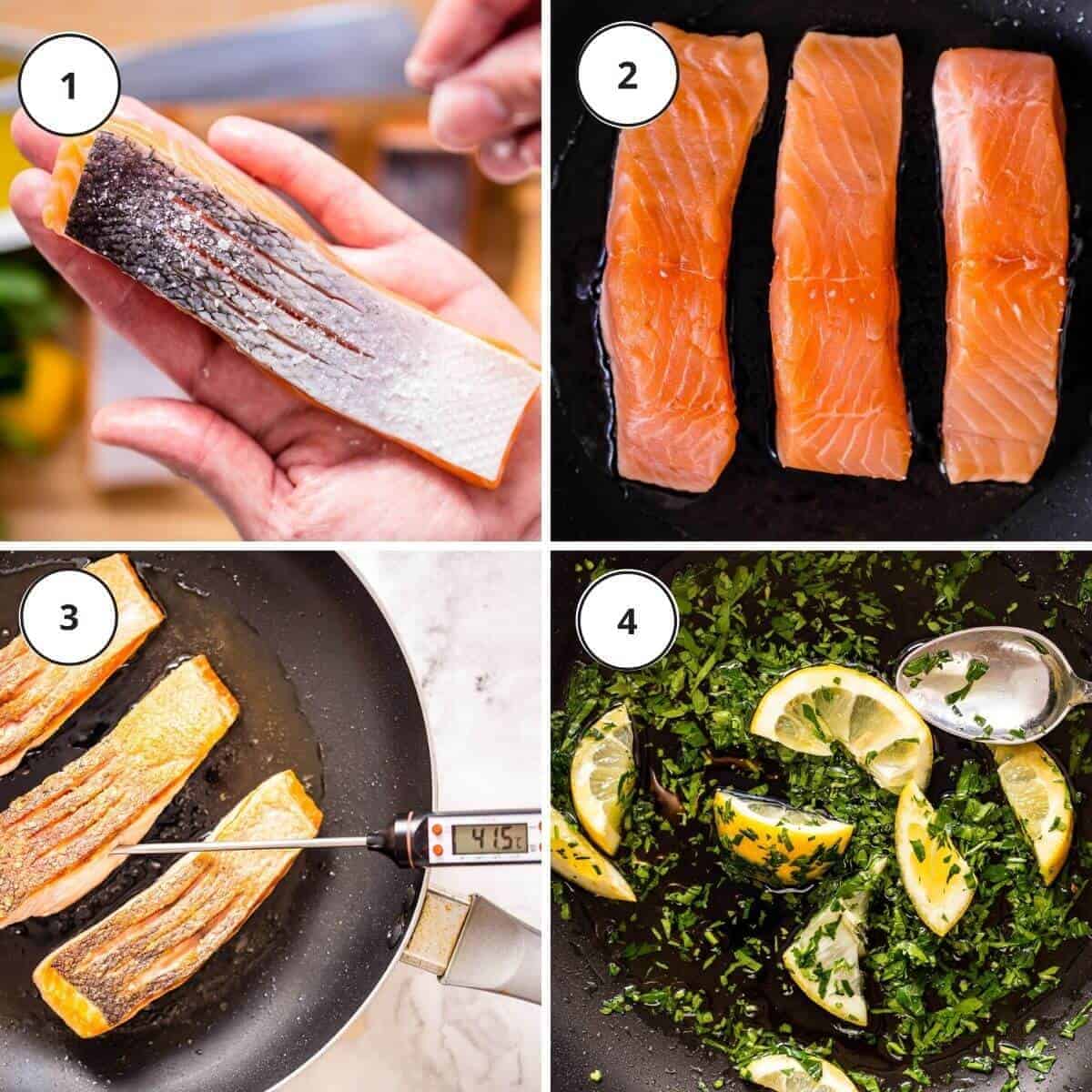
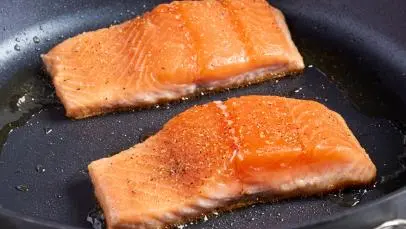
Heat the pan on medium-high. Add a small amount of oil to prevent sticking. Place the salmon skin-side down or flat side if skinless.
Press gently to keep contact with the pan. Sear for 3-4 minutes until the edges turn golden. This step locks in the juices and adds color.
Flipping And Timing
Flip the salmon carefully using a spatula. Cook the other side for 2-3 minutes. The fish should feel firm but still moist inside.
Do not overcook. Salmon flakes easily when done. Remove from heat and let rest for a minute before serving.
Checking Doneness
Checking doneness is important to cook salmon perfectly. Overcooked salmon becomes dry. Undercooked fish feels raw and unsafe. Knowing when salmon is ready helps serve tasty meals every time.
Visual Cues
Look at the salmon’s color. It should change from translucent to opaque. The flesh turns light pink. The edges start to flake easily with a fork. A shiny, moist surface shows it is cooked.
Check the thickness. The salmon shrinks slightly during cooking. The inside looks firm but still soft. Avoid a dry or chalky texture. These signs help decide doneness without tools.
Using A Thermometer
A food thermometer gives precise results. Insert it into the thickest part of the salmon. The ideal temperature is 125°F (52°C) for medium doneness. For well done, cook to 145°F (63°C).
This method ensures safety and taste. It prevents overcooking or undercooking. A quick temperature check helps serve salmon perfectly every time.
Serving Suggestions
Serving salmon cooked in a frying pan can be simple yet delicious. The right garnishes and side dishes make your meal more enjoyable. These ideas help highlight the rich flavor of the salmon without overpowering it.
Simple Garnishes
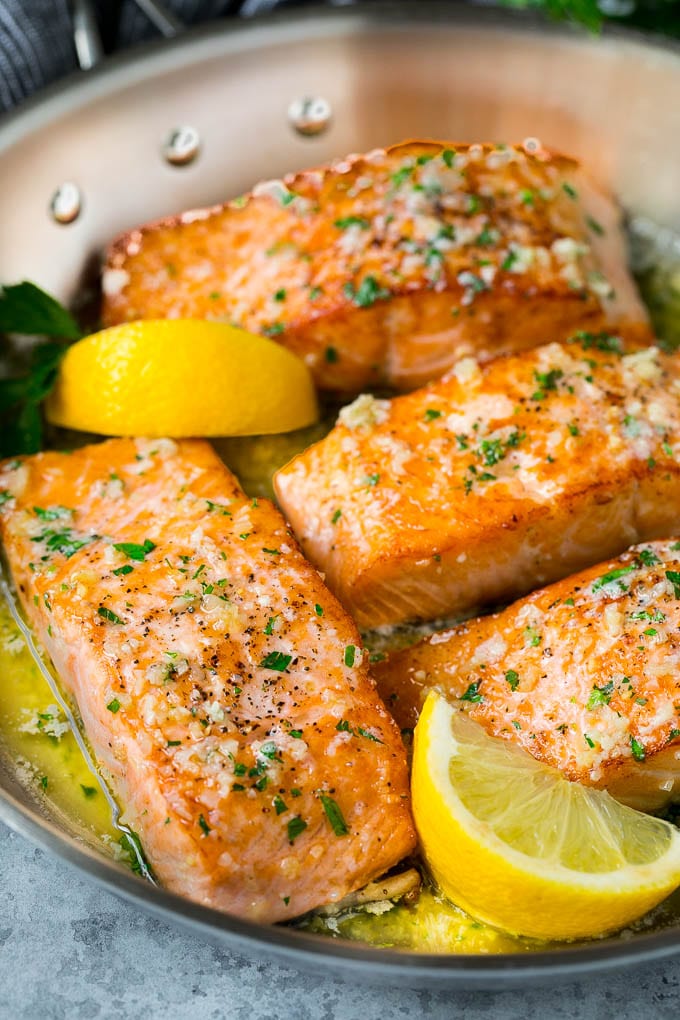
A squeeze of fresh lemon brightens the taste. Fresh herbs like dill, parsley, or chives add a nice touch. A light drizzle of olive oil or a sprinkle of sea salt enhances the flavor. Thin slices of cucumber or radish add crunch and color. Keep garnishes fresh and light to balance the salmon’s richness.
Side Dish Ideas
Steamed or roasted vegetables pair well with salmon. Try asparagus, green beans, or broccoli. Rice or quinoa offer a soft, filling base. Mashed potatoes or sweet potatoes work as comfort sides. A simple salad with mixed greens and a light dressing adds freshness. Choose sides that complement but do not compete with the salmon’s flavor.
Common Mistakes To Avoid
Cooking salmon in a frying pan is quick and tasty. But some common mistakes can spoil the dish. Avoid these errors for the best results. Simple changes make your salmon juicy and flavorful.
Overcooking
Salmon cooks fast, so watch the time. Overcooking makes it dry and tough. Check for a slightly pink center to keep it moist. Use medium heat to cook evenly without burning. Remove the salmon from the pan as soon as it flakes easily with a fork.
Crowding The Pan
Give each piece of salmon enough space in the pan. Crowding causes the fish to steam, not sear. This stops the skin from getting crispy and makes the salmon mushy. Cook in batches if needed. A hot, uncrowded pan creates a perfect golden crust.
Storing Leftovers
Storing leftover salmon properly keeps it fresh and safe to eat. It helps keep the taste and texture good for your next meal. Follow simple steps for cooling and reheating to enjoy your salmon again.
Cooling Tips
Cool the salmon quickly after cooking. Leave it on the counter for no more than two hours. Use a shallow container to spread the fish out. This helps it cool faster. Cover the container with a lid or plastic wrap. Put it in the fridge as soon as it reaches room temperature.
Reheating Methods
Reheat salmon gently to keep it moist. Use a low heat setting on the stove or microwave. Add a small splash of water or broth to keep it from drying out. Heat until warm but not hot. Avoid overcooking, which makes salmon tough. Serve immediately after reheating for best taste.
Credit: www.dinneratthezoo.com
Frequently Asked Questions
How Long To Cook Salmon In A Frying Pan?
Cook salmon for 4-5 minutes per side on medium heat. This ensures a crispy exterior and tender interior. Avoid overcooking to keep it moist and flavorful.
What Oil Is Best For Frying Salmon?
Use oils with high smoke points like olive oil or avocado oil. They prevent burning and add a subtle flavor to the salmon. Avoid butter initially to prevent burning; add it later for taste.
Should I Cook Salmon Skin-side Down First?
Yes, start cooking salmon skin-side down for 4-5 minutes. This crisps the skin and helps hold the fish together. Flip carefully to cook the other side evenly.
How To Know When Salmon Is Fully Cooked?
Salmon is done when it flakes easily with a fork and is opaque inside. The internal temperature should reach 145°F (63°C). Avoid overcooking to maintain a juicy texture.
Conclusion
Cooking salmon in a frying pan is simple and quick. Use medium heat to avoid burning. Keep the skin on for extra flavor and crispiness. Cook each side for a few minutes until the fish flakes easily. You can add herbs or lemon for taste.
This method keeps salmon juicy and tender. Perfect for any meal, breakfast to dinner. Try it today and enjoy a healthy, delicious dish.

Hello, This is Annie Walker, a 38-year-old blogger, founder, and editor of Cookware Guider from NY, USA. I am a cookware fanatic and passionate cooker. I love to cook with different types of cooking appliances (example: all types of cookware, rice cookers, slow cookers, etc) almost every day in my kitchen. I love to share my experience with my readers in my blog. Also, I enjoy helping people to solve their problems through my website. You can follow me on Twitter & Pinterest. To know details about my blog please check the about us page.