
Cooking a perfect medium rare steak in a pan feels like a rite of passage for home cooks. The sizzle, aroma, and that first juicy bite—few kitchen achievements are so satisfying. But getting it right? That’s where many struggle. Undercook and it’s chewy, overcook and you lose the magic pink center. With the right approach and a few professional tips, you can pan fry steak that rivals your favorite steakhouse, all from your own kitchen.
Why Pan Frying Works For Steak
Pan frying brings out the best in steak, especially if you aim for medium rare. The direct heat creates a beautiful brown crust, while the inside stays juicy and tender. Unlike grilling, pan frying is more forgiving and you can better control temperature. Plus, you can cook year-round—no outdoor grill required.
A heavy skillet (cast iron is best) holds heat evenly, letting you sear the meat quickly. This method also lets you add flavors, like butter and herbs, directly to the pan. For many, this is the secret to restaurant-quality steak at home.
Choosing The Right Steak
Not all steaks are equal for pan frying. Some cuts work better than others. Here’s what matters:
Best Cuts For Pan Frying
- Ribeye: Rich in marbling, juicy, and flavorful.
- Strip Steak (New York Strip): Tender and leaner than ribeye, but still has good flavor.
- Filet Mignon: Very tender, milder flavor, usually thicker.
- Sirloin: Affordable, good beefy taste, but a bit firmer.
- T-bone/Porterhouse: Combines strip and tenderloin—great, but needs a large pan.
What To Look For
- Thickness: Aim for 1 to 1.5 inches thick. Thinner steaks cook too fast and can overcook before you get a good sear.
- Marbling: Look for small white fat streaks inside the meat. More marbling means juicier steak.
- Freshness: Bright red color, not brown or gray. Avoid meat with an off smell.
Steak Cut Comparison
| Cut | Tenderness | Flavor | Fat Content |
|---|---|---|---|
| Ribeye | Very Tender | Rich/Beefy | High |
| Strip Steak | Tender | Beefy | Medium |
| Filet Mignon | Extremely Tender | Mild | Low |
| Sirloin | Medium | Beefy | Low-Medium |
Tip: For your first try, choose ribeye or strip steak. They are forgiving and full of flavor.
Preparing The Steak
Steps Before Cooking
- Bring to Room Temperature: Take the steak out of the fridge 30-60 minutes before cooking. Cold steak cooks unevenly.
- Pat Dry: Use paper towels to remove surface moisture. Dry steak sears better.
- Season Generously: Salt and pepper are classic. Salt just before cooking for best crust. Optionally, add garlic powder or a sprinkle of smoked paprika.
- Trim Excess Fat: If there’s a thick fat cap, trim it down to about 1/4 inch. Too much fat can cause flare-ups or uneven cooking.
Common Mistakes
- Over-seasoning: Too many spices can burn in the pan.
- Cooking Straight from the Fridge: Leads to gray, uneven steak.
- Skipping the Drying Step: Moisture prevents browning.
Essential Tools And Ingredients
Here’s what you need for a perfect pan-fried medium rare steak:
Tools
- Heavy skillet (cast iron or stainless steel)
- Tongs (not forks, which pierce and lose juices)
- Instant-read thermometer (for best results)
- Paper towels
- Spoon (for basting)
Ingredients
- 1 boneless steak (1–1.5 inches thick, ribeye or strip recommended)
- Salt (kosher or sea salt)
- Black pepper (freshly ground)
- 1–2 tablespoons vegetable oil (high smoke point: Canola, grapeseed, or sunflower)
- 2 tablespoons unsalted butter
- 2 garlic cloves (crushed)
- 2–3 sprigs fresh thyme or rosemary (optional)
Tip: Don’t use olive oil for high-heat searing; it smokes and burns quickly.
How To Pan Fry Steak Medium Rare: Step-by-step
Cooking steak is a balance of heat, timing, and patience. Here’s how to do it right:
1. Heat The Pan
Place your skillet on medium-high heat for 3–5 minutes. It should be very hot, almost smoking. A properly heated pan is crucial for a good sear.
2. Add Oil
Pour in just enough oil to thinly coat the pan (about 1–2 tablespoons). Swirl to cover the surface.
3. Sear The Steak
- Place the steak in the pan away from you to avoid oil splatter.
- Don’t move it for at least 2 minutes. This forms the crust.
- Sear for 2–3 minutes per side for a 1-inch steak. Thicker steaks (1.5 inches) need 3–4 minutes per side.
4. Baste With Butter And Aromatics
- Turn heat to medium.
- Add butter, garlic, and herbs to the pan.
- Tilt the pan and use a spoon to baste melted butter over the steak.
- Do this for 1–2 minutes per side.
5. Check Temperature
- Insert the thermometer in the thickest part.
- Medium rare: 130–135°F (54–57°C).
- Remove from heat 5°F below target. It will rise as it rests.
6. Rest Before Slicing
Transfer steak to a plate or cutting board. Rest at least 5 minutes (10 for thick cuts). This keeps juices inside.
7. Slice And Serve
- Cut against the grain for tenderness.
- Serve immediately with your favorite sides.
Cooking Steps Overview
| Step | Action | Time |
|---|---|---|
| Heat Pan | Medium-high heat | 3–5 min |
| Sear Steak | Each side | 2–4 min/side |
| Baste Butter | After flipping | 1–2 min/side |
| Rest | Off heat | 5–10 min |
How To Know When Steak Is Medium Rare
Not everyone has a thermometer. Here’s how to check doneness:
Touch Test
Press the steak with your finger or tongs. Medium rare feels like the base of your thumb when your hand is relaxed—soft but springy.
Visual Signs
- Medium rare: Warm red center, juices run slightly pink.
- Crust is golden brown, not burnt.
Internal Temperature Reference
| Doneness | Internal Temp (°F) | Color |
|---|---|---|
| Rare | 120–125 | Cool red center |
| Medium Rare | 130–135 | Warm red center |
| Medium | 140–145 | Pink center |
| Well Done | 155–160 | Little or no pink |
Pro Insight: Let steak rest until it stops steaming. Cutting too soon can cause juices to escape, making your steak dry.
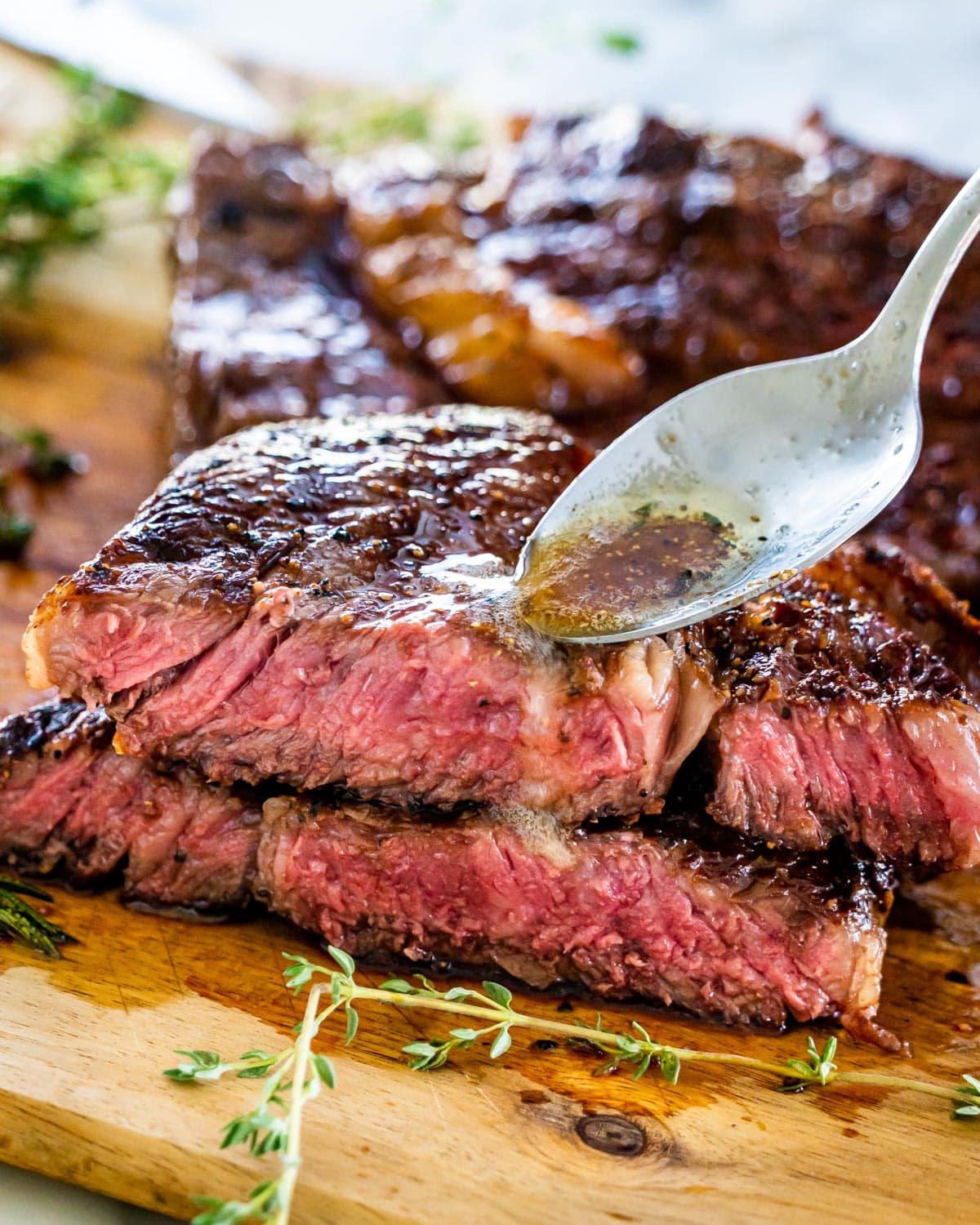
Credit: www.jocooks.com
Common Mistakes To Avoid
Even experienced cooks make errors. Here’s what to watch for:
- Overcrowding the Pan: Cook one or two steaks at a time. Too many lower the pan’s heat, causing steaming instead of searing.
- Flipping Too Often: Let each side sear undisturbed for a good crust.
- Using Low Heat: Steak needs high heat at first for browning.
- Skipping Rest Time: Resting is not optional—juices need time to settle.
- Cutting with the Grain: Always slice against the muscle fibers for tenderness.
Non-obvious tip: If your steak is thick and the crust forms before the inside is done, finish in a 400°F oven for a few minutes.
Variations And Advanced Tips
Once you master the basics, try these ideas:
- Reverse Sear: Cook steak gently in the oven first, then sear in a hot pan for extra control.
- Compound Butter: Mix butter with herbs, garlic, or blue cheese. Add a slice on top before serving for more flavor.
- Marinating: For tougher cuts, marinate in oil, acid (lemon/vinegar), and herbs for 1–2 hours.
Beginner insight: Over-marinating can break down texture—never marinate tender cuts (like ribeye) for more than 2 hours.

Credit: kalejunkie.com
Serving Suggestions
A great steak deserves the right sides. Some classics:
- Mashed potatoes
- Grilled vegetables
- Green salad
- Red wine or sparkling water
Let the steak be the star—keep sides simple.
Cleaning And Pan Care
After cooking, let your pan cool a bit. For cast iron:
- Wipe out excess fat with paper towels.
- Rinse with hot water, avoid soap.
- Dry thoroughly and rub with a little oil.
Taking care of your pan keeps it non-stick and rust-free for years.
Final Thoughts
Cooking steak medium rare in a pan is part science, part art. Start with a good cut, master your heat, and don’t rush the process. Even if your first steak isn’t perfect, keep practicing—your skills (and your tastebuds) will thank you. And remember, a great steak is less about fancy ingredients and more about careful technique.
For more background on steak doneness, see this guide from Wikipedia.
Frequently Asked Questions
How Long Should I Cook Each Side For Medium Rare?
For a 1-inch thick steak, cook each side for 2–3 minutes over high heat. Thicker steaks (1. 5 inches) may need 3–4 minutes per side. Always check with a thermometer for best accuracy.
Should I Oil The Steak Or The Pan?
Oiling the pan is better for high-heat searing. Use an oil with a high smoke point like canola or grapeseed. Avoid olive oil for this step.
Can I Use A Nonstick Pan?
You can, but heavy skillets (cast iron or stainless steel) give a better crust. Nonstick pans don’t get as hot and can wear out quickly with high heat.
Why Let Steak Rest After Cooking?
Resting allows juices to redistribute inside the steak. If you cut too soon, juices run out, making the steak dry.
What Should I Do With Leftovers?
Let leftover steak cool, then refrigerate in an airtight container. For reheating, slice and warm gently in a pan with a bit of butter, or use it cold in salads or sandwiches.
:max_bytes(150000):strip_icc()/perfect-pan-seared-steaks-recipe-step-beauty-c7a9ca69ad9e4d4cb783f845fd429251.JPG)
Credit: www.seriouseats.com

Hello, This is Annie Walker, a 38-year-old blogger, founder, and editor of Cookware Guider from NY, USA. I am a cookware fanatic and passionate cooker. I love to cook with different types of cooking appliances (example: all types of cookware, rice cookers, slow cookers, etc) almost every day in my kitchen. I love to share my experience with my readers in my blog. Also, I enjoy helping people to solve their problems through my website. You can follow me on Twitter & Pinterest. To know details about my blog please check the about us page.