
A cast iron frying pan is more than just a kitchen tool; it’s a piece of cooking tradition. Many people love cast iron for its durability, heat retention, and unique ability to develop a natural, non-stick surface over time. However, caring for cast iron properly is essential. Without the right steps, your pan can rust, lose its non-stick quality, or even crack. If you want your cast iron to last for generations, it pays to learn the basics—and some expert tips. Let’s explore how to clean, season, store, and use your cast iron frying pan so it performs at its best.
Why Cast Iron Frying Pans Need Special Care
Cast iron is different from other cookware. It’s heavy, porous, and reacts with water and air. Unlike stainless steel or non-stick pans, cast iron can rust quickly if left wet. The surface also needs a layer of seasoning—baked-on oil—that acts as a barrier against food sticking and moisture. Many beginners think cast iron is high-maintenance, but with the right routine, it’s simple to keep your pan in top shape.
First Steps: Seasoning Your New Cast Iron Pan
Most new cast iron pans come “pre-seasoned,” but this coating is often thin. For the best results, add a few extra layers yourself.
How To Season A Cast Iron Pan
- Wash and Dry: Rinse the new pan with hot water. Scrub with a small amount of mild soap if needed (only this first time). Rinse well and dry completely.
- Apply Oil: Rub a thin layer of vegetable oil or flaxseed oil over the entire surface, inside and out. Too much oil can make the pan sticky.
- Bake: Place the pan upside-down in an oven at 450°F (232°C) for one hour. Put a sheet of foil below to catch drips.
- Cool: Turn off the oven and let the pan cool inside.
Non-obvious tip: Repeating the oiling and baking step 2–3 times creates a stronger, more even seasoning. Don’t rush—let the pan cool fully between rounds.
Oils For Seasoning: What Works Best?
Not all oils are equal. Here’s a comparison of common seasoning oils:
| Oil Type | Smoke Point (°F) | Seasoning Quality | Notes |
|---|---|---|---|
| Flaxseed Oil | 225 | Excellent (hard coating) | Expensive, can flake if overused |
| Vegetable Oil | 400–450 | Good | Affordable, widely used |
| Canola Oil | 400 | Good | Neutral flavor, easy to find |
| Crisco (Shortening) | 360 | Average | Traditional choice |
Insight: Oils with high smoke points (like vegetable or canola) work well for most kitchens. Flaxseed oil creates a harder finish but is more sensitive to temperature and can flake if over-applied.
Cleaning Your Cast Iron Pan After Each Use
Proper cleaning keeps your seasoning strong and prevents rust. Forget what you know about scrubbing other pans; cast iron is unique.
Step-by-step Cleaning Routine
- Let the Pan Cool Slightly: Don’t plunge a hot pan into cold water. Sudden temperature changes can cause cracking.
- Wipe or Scrape Off Food: Use a paper towel or a nylon scraper to remove stuck-on bits.
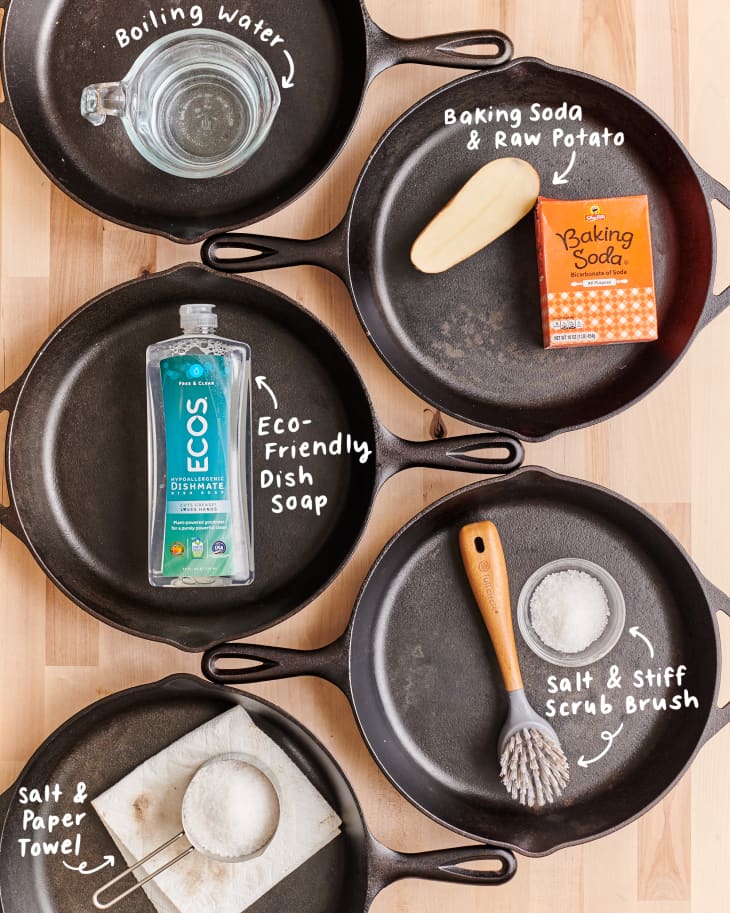
- Rinse with Hot Water: Most of the time, hot water alone is enough.
- Scrub Gently If Needed: If food is really stuck, use coarse salt and a damp cloth as a scrub. Avoid steel wool unless you plan to re-season.
- Dry Completely: Place the pan on low heat for a few minutes to make sure all moisture is gone.
- Add a Thin Oil Layer: While still warm, rub a small amount of oil inside the pan. Wipe off the excess.
Non-obvious tip: If you ever use soap, do it rarely and gently—it won’t ruin your pan if your seasoning is strong, but frequent soap can weaken the layer over time.
Comparing Cleaning Tools For Cast Iron
| Cleaning Tool | Effectiveness | Seasoning Safe? | Notes |
|---|---|---|---|
| Nylon Scraper | High | Yes | Removes stuck food without damage |
| Chainmail Scrubber | Very High | Yes (if used gently) | Great for tough residue |
| Steel Wool | Too Harsh | No | Removes seasoning, use only for rust removal |
| Sponge/Cloth | Moderate | Yes | Ideal for daily cleaning |
Drying And Oiling: The Most Important Step
Leaving water on cast iron is the fastest way to create rust. After washing, always dry your pan right away.
- Heat to Dry: Put your pan on the stove over low heat for 3–5 minutes.
- Oil While Warm: Once dry, add a drop of oil and spread it around with a paper towel. This keeps the surface smooth and shiny.
Expert insight: Even a few drops of water can create rust spots overnight. Never air-dry your pan.

Credit: www.youtube.com
Storing Your Cast Iron Pan
Where and how you store your pan matters. Cast iron is heavy and can damage surfaces if dropped. Moisture in the air can also lead to rust.
Best Practices For Storage
- Store your pan in a dry spot, away from humidity (not under the sink).
- If stacking pans, place a paper towel or cloth between them to prevent scratches.
- Leave the pan uncovered for airflow; avoid sealing in a plastic bag or airtight container.
- If you live in a humid area, add a small packet of silica gel or uncooked rice nearby to absorb moisture.
Hidden danger: Storing a damp pan in a closed cabinet is a common cause of hidden rust.
Cooking With Your Cast Iron Pan
Cast iron heats slowly but keeps its temperature steady. It’s perfect for frying, searing, and baking. However, some foods and techniques require care.
Foods To Avoid (at First)
- Acidic foods (tomatoes, vinegar, wine) can strip seasoning if your layer is new. Wait until your pan is well-seasoned.
- Boiling water for long periods can weaken seasoning and lead to rust.
Best Foods For Building Seasoning
- Fry bacon, sausage, or potatoes. The natural fats help build up the seasoning layer.
- Use the pan often. The more you cook, the better the surface becomes.
Cooking Tips
- Always preheat your pan before adding food for even cooking.
- Use a bit more oil than you would in a non-stick pan, especially in the beginning.
- Avoid high-acid foods until the seasoning is well established.
Practical example: Making cornbread or skillet pizza is ideal for new pans—these recipes help create a tough, non-stick finish.
Credit: www.thekitchn.com
Dealing With Common Problems
Even with the best care, issues like rust, sticky surfaces, or flaking can happen. Don’t panic—they’re fixable.
Rust Spots
- Scrub rust with a bit of steel wool or a chainmail scrubber.
- Rinse, dry, and re-season as described above.
Sticky Or Gummy Surface
- This happens from too much oil during seasoning.
- Wash the pan with hot water and a little soap.
- Bake in the oven at 400°F for 1 hour to harden the finish.
Flaking Seasoning
- Flakes mean the seasoning layer is too thick or poorly bonded.
- Strip the pan down to bare metal (using steel wool).
- Re-season with thin layers of oil, repeating the process.
Comparing Cast Iron To Other Common Pans
Understanding what makes cast iron unique can help you appreciate its care needs.
| Pan Type | Heat Retention | Non-Stick Ability | Care Level | Best For |
|---|---|---|---|---|
| Cast Iron | Excellent | Improves with use | Moderate | Searing, frying, baking |
| Stainless Steel | Good | Low | Easy | Sauces, browning |
| Non-Stick | Low | High (at first) | Easy | Eggs, pancakes |
| Carbon Steel | Good | Improves with use | Moderate | Stir-fry, sauté |
Pro tip: Cast iron outlasts non-stick pans and, with care, becomes more non-stick over time instead of less.
Long-term Maintenance
A well-maintained cast iron pan can last for decades—even centuries. Here’s how to keep yours in the best shape over the years.
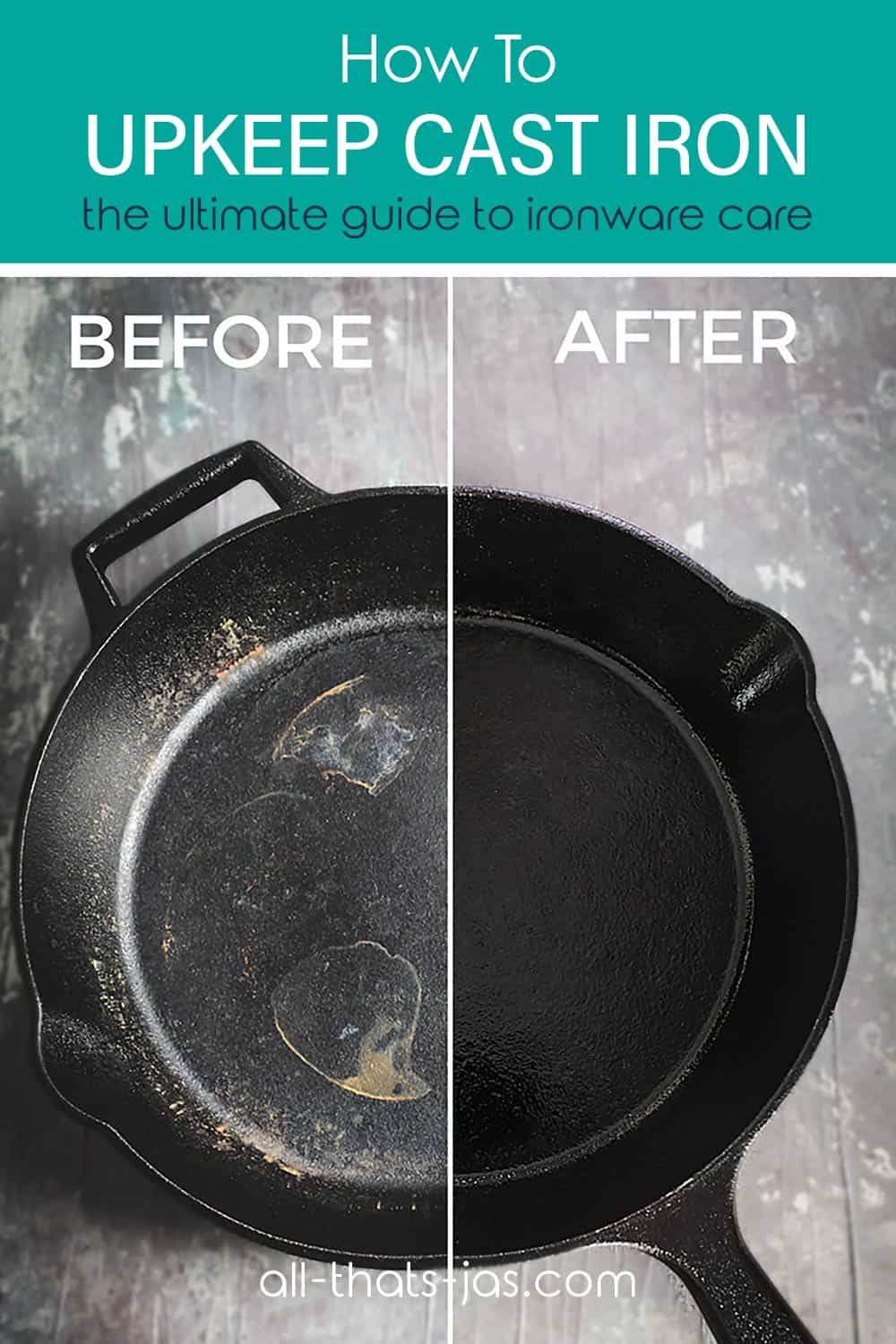
- Re-season regularly: If food starts to stick or the surface looks dull, repeat the seasoning process.
- Avoid sudden temperature changes: Going from cold to hot too fast can crack your pan.
- Check for cracks: Never use a pan with a visible crack; it can break during cooking.
- Use often: Regular use keeps your seasoning fresh and strong.
Advanced tip: If your pan develops stubborn rust or sticky residue, you can strip the seasoning entirely using oven cleaner or a self-cleaning oven cycle. Always re-season immediately after.
Credit: www.all-thats-jas.com
Frequently Asked Questions
How Do I Know If My Cast Iron Pan Is Properly Seasoned?
A well-seasoned pan has a shiny, smooth, dark surface and feels slightly slick. Food should not stick easily, and water should bead on the surface. If your pan looks dull or feels rough, add another layer of seasoning.
Can I Use Soap To Clean My Cast Iron Pan?
Yes, but sparingly. Mild soap won’t destroy a good seasoning layer, but frequent use can wear it down. For tough messes, it’s fine to use soap—just re-oil the pan afterward.
What Should I Do If My Cast Iron Pan Rusts?
Don’t worry. Scrub the rust with steel wool, rinse and dry the pan, and apply a fresh layer of oil. Bake the pan in the oven as described above to re-season.
Why Does My Cast Iron Pan Have Black Flakes?
Black flakes are pieces of loose seasoning. This can happen if you use too much oil during seasoning or don’t bake it long enough. Remove loose flakes by scrubbing, then re-season with a thinner oil layer.
Is Cast Iron Safe For All Types Of Cooking?
Cast iron is safe and versatile, but avoid boiling acidic foods for long periods, especially in a new pan. Once your seasoning is strong, you can cook almost anything. Learn more about cast iron care at Wikipedia.
Caring for a cast iron frying pan can seem complex at first, but with a simple routine, it soon becomes second nature. By seasoning, cleaning, drying, and storing your pan properly, you’ll enjoy better cooking results and a tool that improves with every meal.
With a little attention, your cast iron pan will be ready for a lifetime—and maybe even the next generation.

Hello, This is Annie Walker, a 38-year-old blogger, founder, and editor of Cookware Guider from NY, USA. I am a cookware fanatic and passionate cooker. I love to cook with different types of cooking appliances (example: all types of cookware, rice cookers, slow cookers, etc) almost every day in my kitchen. I love to share my experience with my readers in my blog. Also, I enjoy helping people to solve their problems through my website. You can follow me on Twitter & Pinterest. To know details about my blog please check the about us page.