
Cooking a perfect steak in a cast iron frying pan is a skill that brings restaurant-quality results to your kitchen. Many believe only professional chefs can make a delicious steak with a crispy crust and juicy inside. The truth is, with the right tools and steps, anyone can master this technique at home. Using a cast iron pan gives you high heat, even cooking, and a rich flavor that other pans cannot match.
This guide breaks down everything you need to know, from choosing the right steak to finishing it with butter. You’ll learn what makes cast iron special, how to avoid common mistakes, and get practical tips for every stage. If you want a steak that impresses your family or guests, this article will give you the confidence and knowledge to do it right.
Let’s get started.
Why Use A Cast Iron Frying Pan For Steak?
A cast iron frying pan is often called the steak lover’s secret weapon. Unlike thin pans, cast iron holds heat for a long time and spreads it evenly. This is important because a good steak needs a quick sear at high temperature. If the pan loses heat, your steak steams instead of browning. Cast iron creates that famous, flavorful crust.
Another advantage is versatility. You can move a cast iron pan from stove to oven without worry. This is helpful if you want to finish a thick steak in the oven. With good care, cast iron pans last for decades, sometimes even generations.
Choosing The Right Steak
Not all steaks are equal. The cut, thickness, and marbling (fat inside the meat) make a big difference. Here’s how to pick the best steak for pan-cooking:
| Steak Cut | Best Thickness | Flavor | Notes |
|---|---|---|---|
| Ribeye | 1 to 1.5 inch | Rich, beefy | Great marbling, juicy |
| New York Strip | 1 to 1.5 inch | Beefy, firm | Easy to cook evenly |
| Filet Mignon | 1.5 to 2 inch | Mild, tender | Less fat, very soft |
| Sirloin | 1 to 1.5 inch | Lean, strong | Affordable, less juicy |
Ribeye is a favorite for cast iron because the fat melts and adds flavor. New York Strip is also easy for beginners. Filet Mignon is very soft but needs careful cooking because it has less fat. For best results, choose a steak at least 1 inch thick.
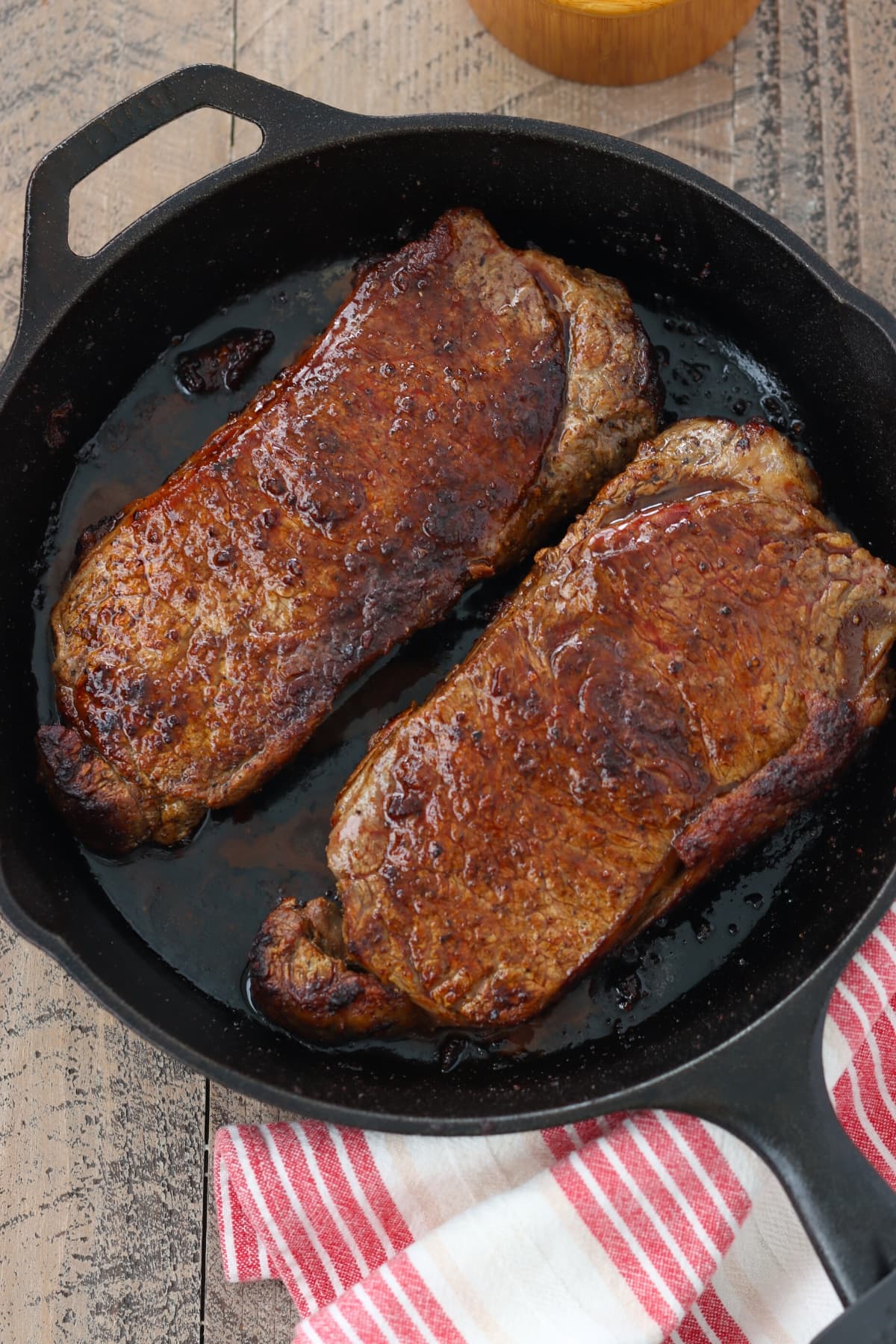
Credit: www.olgasflavorfactory.com
Ingredients And Tools You’ll Need
Cooking steak in a cast iron pan does not require many things, but each part matters. Here’s what you need:
- 1 high-quality steak (Ribeye, Strip, or your choice), 1–1.5 inches thick
- Kosher salt (or coarse sea salt)
- Freshly ground black pepper
- 1–2 tablespoons high smoke point oil (canola, grapeseed, or avocado oil)
- 2–3 tablespoons unsalted butter
- 2–3 cloves garlic, smashed
- Fresh herbs (like thyme or rosemary, optional)
Tools:
- Cast iron frying pan (10–12 inches)
- Tongs (not a fork)
- Paper towels
- Instant-read thermometer (for best accuracy)
- Aluminum foil (for resting)
Preparing The Steak
Great steak starts before it hits the pan. Follow these steps for better results:
1. Bring To Room Temperature
Take the steak out of the fridge 30–60 minutes before cooking. This helps it cook evenly. Cold steak can cook unevenly, leaving the center raw.
2. Pat Dry
Use paper towels to dry the steak well. Removing surface moisture is key for a crisp crust. Even a little water will steam the meat.
3. Season Generously
Sprinkle both sides with plenty of kosher salt and black pepper. Don’t be shy—some falls off during cooking. Salt also helps form the crust.
4. Optional: Marinate Or Dry Brine
For more flavor, you can dry brine the steak by salting it and leaving it uncovered in the fridge for 2–24 hours. This step is not required, but it adds depth.
Heating The Cast Iron Pan
Getting the pan hot enough is one of the most common mistakes. A cast iron pan needs time to heat up. Here’s how to do it right:
- Place the pan on the stove and turn the heat to medium-high.
- Let it heat for 5–10 minutes. The pan should be very hot, almost smoking.
- To test, flick a drop of water into the pan. It should sizzle and disappear quickly.
Tip: Do not add oil until the pan is hot. Oil heats faster than the pan and can burn if added too soon.
Cooking The Steak: Step-by-step
Now it’s time to cook. Here’s a clear, step-by-step method for a perfect steak:
- Add Oil
- Pour 1–2 tablespoons of oil into the hot pan. Swirl to coat the surface.
- Place the Steak
- Lay the steak in the pan away from you to avoid splashes. You should hear a loud sizzle.
- Sear Without Moving
- Let the steak cook undisturbed for 2–3 minutes. This builds the crust. Moving the steak too soon prevents browning.
- Flip and Sear
- Turn the steak with tongs. Sear the other side for another 2–3 minutes.
- Add Butter and Aromatics
- Lower the heat to medium. Add butter, smashed garlic, and herbs to the pan. As the butter melts, spoon it over the steak (this is called basting).
- Check Doneness
- Use an instant-read thermometer to check the center. For medium-rare, aim for 130–135°F (54–57°C). For medium, 140–145°F (60–63°C). Remember, the steak keeps cooking a little after you remove it.
- Rest the Steak
- Transfer the steak to a plate and cover loosely with foil. Let it rest for 5–10 minutes. This keeps juices inside, making the steak tender.
Steak Doneness Chart
Here’s a quick guide to internal temperatures and appearance:
| Doneness | Temperature (°F) | Color Inside |
|---|---|---|
| Rare | 120–125 | Red, cool center |
| Medium Rare | 130–135 | Warm red center |
| Medium | 140–145 | Pink center |
| Medium Well | 150–155 | Slightly pink center |
| Well Done | 160+ | Brown, no pink |
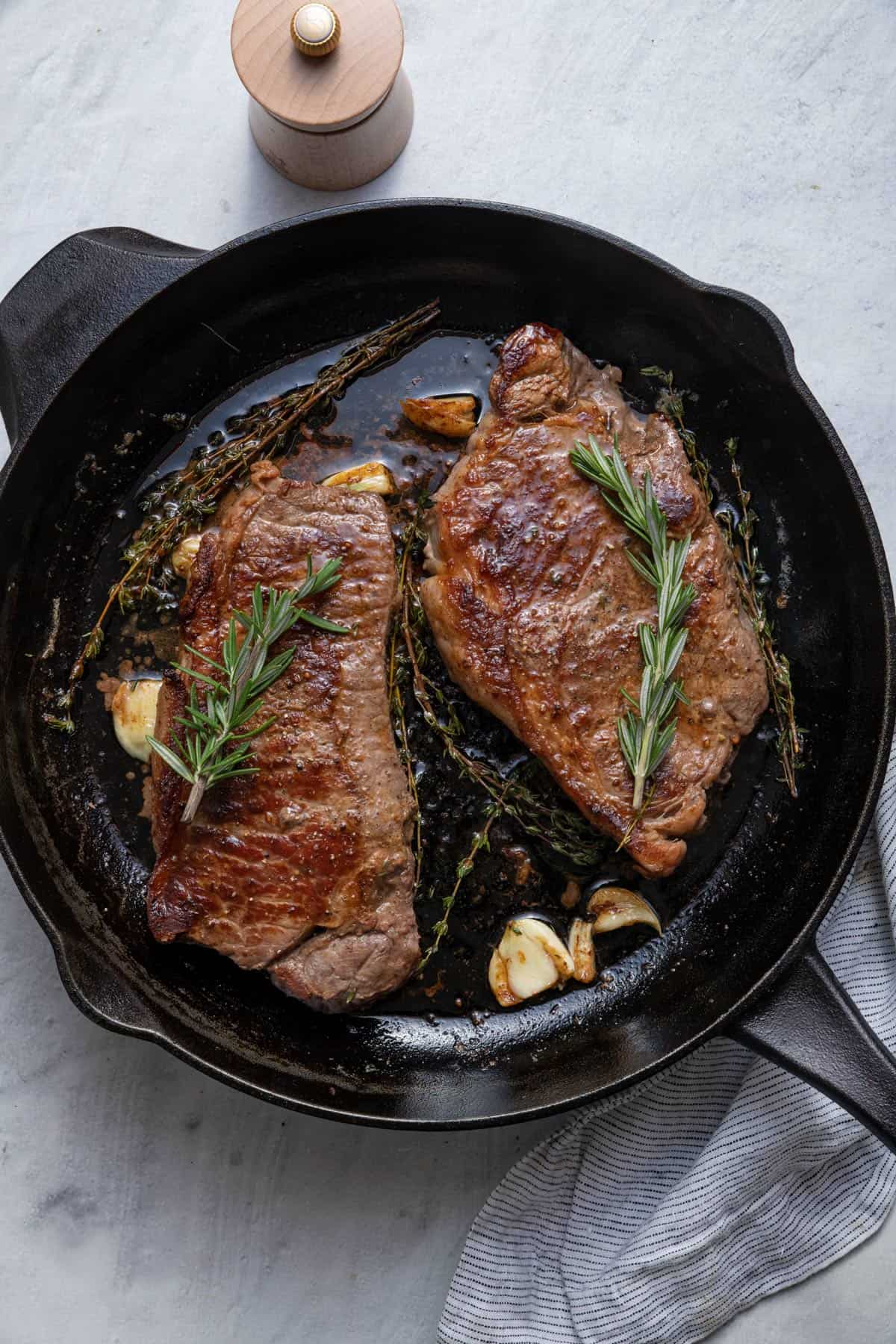
Credit: feelgoodfoodie.net
Common Mistakes And How To Avoid Them
Many home cooks make small errors that ruin a good steak. Here are the main things to watch out for:
1. Pan Not Hot Enough
If the pan is not fully heated, you won’t get a good sear. Always preheat until almost smoking.
2. Using Too Little Salt
Salt is important for flavor and crust. Don’t use just a pinch—cover the steak evenly.
3. Pressing Or Poking The Steak
Pressing with a spatula or poking with a fork lets juices escape. Use tongs and resist pressing down.
4. Skipping The Rest
Resting allows juices to spread. Cutting too soon makes the steak dry.
5. Not Using A Thermometer
Guessing doneness is hard. An instant-read thermometer is the easiest way to avoid overcooking.
6. Overcrowding The Pan
Cooking more than one steak in a small pan lowers the temperature. Cook in batches if needed.
Tips For Even Better Results
Sometimes, small changes make a big difference. Here are two pro tips that many beginners miss:
- Let the Steak Air Dry
If you have time, leave the salted steak uncovered in the fridge for up to 24 hours. This dries the surface and improves the crust even more.
- Finish with Compound Butter
Mix soft butter with herbs or spices, then add a slice on top of the hot steak. It melts and gives extra flavor.
Also, try different oils—avocado oil works well because of its high smoke point and neutral taste.
Cleaning And Caring For Your Cast Iron Pan
A well-maintained cast iron pan gets better with time. After cooking steak:
- Let the pan cool slightly but not fully.
- Wipe out excess fat with a paper towel.
- Rinse with hot water and scrub gently (no soap if possible).
- Dry completely, then rub with a thin layer of oil.
- Store in a dry place.
Never soak cast iron or put it in the dishwasher. If you take care of it, your pan will always be ready for great steaks.
Nutritional Value Of Pan-seared Steak
Steak is rich in protein, iron, and vitamin B12. It’s a filling meal and can fit into many diets. However, the nutritional value changes with the cut and amount of added butter or oil. Here’s an example for a 6-ounce cooked ribeye steak:
- Calories: 420
- Protein: 42g
- Fat: 28g
- Saturated fat: 12g
- Iron: 2.7mg (15% Daily Value)
Pairing steak with vegetables or a salad balances the meal and adds vitamins.
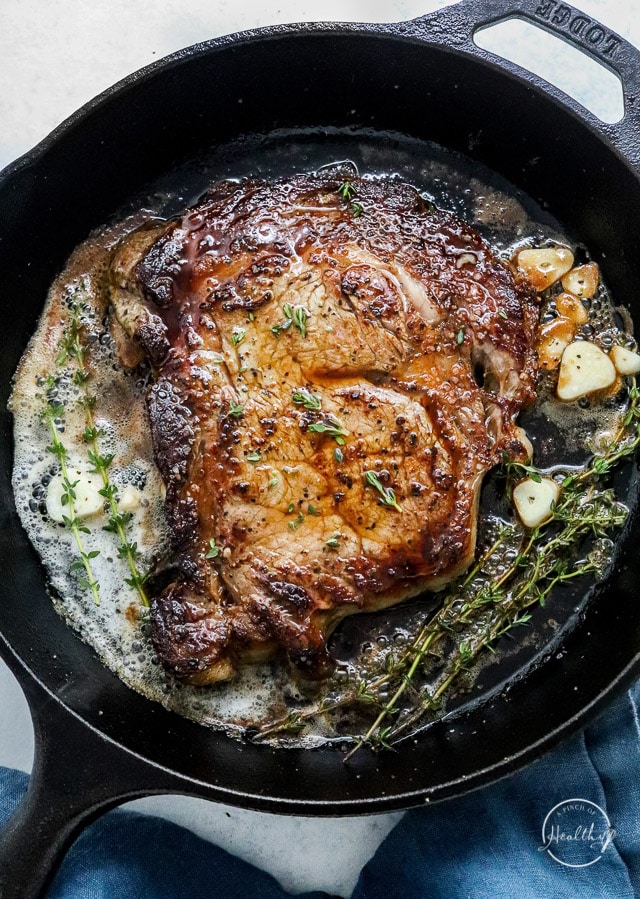
Credit: www.apinchofhealthy.com
Comparing Pan-seared Steak To Other Methods
How does cooking steak in a cast iron pan compare to grilling or oven methods? Here’s a simple comparison:
| Method | Crust Quality | Juiciness | Ease for Home Cooks |
|---|---|---|---|
| Cast Iron Pan | Excellent | High | Easy |
| Grill | Good (with grill marks) | Varies (can dry out) | Medium (needs outdoor grill) |
| Oven (broiler) | Fair | Medium | Easy |
Cooking steak in a cast iron pan gives you control and consistent results, even in a small kitchen.
Frequently Asked Questions
How Do I Know When My Cast Iron Pan Is Hot Enough?
A simple test is to flick a drop of water onto the pan. If it sizzles and disappears right away, the pan is ready. You can also hold your hand a few inches above the pan—if you feel strong heat, it’s hot enough.
Can I Cook Steak In A Cast Iron Pan Without Oil?
You need a small amount of oil for even browning and to stop sticking. Choose oils with a high smoke point, like canola or avocado. Butter alone can burn, so add it later for flavor.
Why Does My Steak Stick To The Pan?
If the pan isn’t hot enough or the steak is too wet, it can stick. Always dry the steak well and let the pan heat fully. Don’t move the steak until it naturally releases after a crust forms.
How Do I Clean Cast Iron After Cooking Steak?
Let the pan cool a little, then wipe out fat and food bits. Rinse with hot water, scrub with a brush or salt if needed, dry completely, and rub with oil. Avoid soap and never soak the pan.
What Is The Best Steak Cut For Beginners?
New York Strip is a good choice for beginners. It’s easy to cook evenly and has good flavor and fat balance. Ribeye is also forgiving, but has more fat.
Cooking steak in a cast iron frying pan is a classic technique that rewards practice. With the right preparation, heat, and care, you can create a steak that’s better than many restaurants. Remember to use a thermometer, let the steak rest, and enjoy the rich flavors that only cast iron can deliver. To explore more about steak science and cooking methods, you can visit Wikipedia’s steak page for further reading. Happy cooking!

Hello, This is Annie Walker, a 38-year-old blogger, founder, and editor of Cookware Guider from NY, USA. I am a cookware fanatic and passionate cooker. I love to cook with different types of cooking appliances (example: all types of cookware, rice cookers, slow cookers, etc) almost every day in my kitchen. I love to share my experience with my readers in my blog. Also, I enjoy helping people to solve their problems through my website. You can follow me on Twitter & Pinterest. To know details about my blog please check the about us page.