
Choosing the right frying pan can change your cooking experience. But before you buy or replace a pan, you need to know its exact size. Many people guess, but measuring a frying pan is not as simple as it seems.
Getting the size right helps you cook evenly, match lids, and use the right amount of ingredients. Let’s dive into the steps, tools, and tips to measure a frying pan accurately, and why it matters.
Why Frying Pan Size Matters
The size of your frying pan affects cooking in several ways. A pan that’s too small can cause crowding, leading to steaming instead of frying. A pan that’s too large wastes energy and may burn food. Pan size also determines:
- How much food you can cook at once
- The right lid fit for steaming or simmering
- Whether the pan fits on your stove burner
- Proper heat distribution
For example, if a recipe calls for a “10-inch skillet,” using a 12-inch pan spreads the food out too thin, which can dry out dishes. Getting the size right means better results in the kitchen.
Common Frying Pan Sizes
Frying pans come in a range of sizes, typically measured in inches (US) or centimeters (Europe/Asia). The most common sizes are:
- 8 inches (20 cm): Good for 1-2 eggs or a sandwich
- 10 inches (25 cm): Most recipes for 2-4 servings
- 12 inches (30 cm): Large meals, family portions
You may also see smaller or larger pans, but these three sizes cover most home cooking needs.
Here’s a quick comparison of typical frying pan sizes and their uses:
| Pan Size (inches) | Approx. Food Capacity | Best For |
|---|---|---|
| 8″ | 2 eggs, 1 sandwich | Singles, small sides |
| 10″ | 4 eggs, 2 chicken breasts | Couples, most meals |
| 12″ | 6 eggs, 3-4 chicken breasts | Families, big dishes |

Credit: razab.com
How Frying Pans Are Measured
Most brands and stores measure frying pans by their diameter across the top rim—not the cooking surface or the base. This detail confuses many buyers. A “10-inch pan” often has a cooking surface closer to 8-9 inches, because the sides slope upward.
It’s also important to know that some European brands use the base diameter. Always check the label or measure yourself if you’re unsure.
Example
If you buy a “10-inch” pan, the top rim should measure about 10 inches across, but the flat area where food sits is smaller. This difference is key when matching lids or following recipes.
Tools You Need For Measuring
You don’t need fancy equipment to measure a frying pan. Here’s what helps:
- Measuring tape (flexible, for curved surfaces)
- Ruler (for smaller pans)
- Paper and pen (for notes)
- A flat surface to place the pan
If you have a digital caliper, that’s even more precise, but not necessary for home cooks.
Step-by-step: Measuring The Diameter
- Clean and dry the pan – This helps you get an accurate reading.
- Place the pan on a flat surface – The top rim should face up.
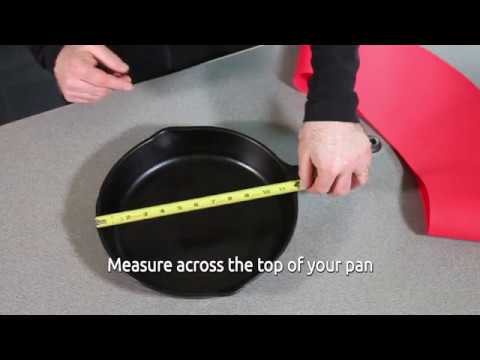
- Stretch the measuring tape across the widest part, from one outer rim to the opposite outer rim. Do not include handles.
- Read the measurement at the widest point. This is the “official” pan size.
- Note the result – Write down the diameter in inches (or centimeters).
Tip: If using a ruler, make sure it sits flat across the pan and reaches both edges of the rim.
Measuring The Cooking Surface
Sometimes, recipes talk about the cooking surface—the flat area where food actually touches. This is usually less than the full pan diameter because of sloped sides.
To measure the cooking surface:
- Place the pan upside down.
- Measure across the flat circle on the bottom, not including any sloping sides.
- This gives you the true usable area.
This number is useful if you want to know how much food you can cook at once without crowding.
Credit: www.youtube.com
Measuring Pan Depth
Pan depth affects how much liquid or food you can add without spilling. Some pans are shallow (for frying), others are deeper (for sautéing).
To measure depth:
- Stand the pan upright.
- Place the ruler inside, touching the bottom center.
- Measure up to the top rim (not above it).
Note: Ignore any domed or rounded lids—just measure the pan itself.
Measuring Handle Length
While not part of the “size,” the handle length matters for storage and oven use. To measure:
- Start at the base where the handle meets the pan.
- Measure straight to the end of the handle.
Longer handles can make pans harder to fit in the oven or dishwasher.

Credit: www.dimensions.com
Matching Lids To Pans
A common frustration: buying a lid that doesn’t fit. Lids are also measured by the top rim, so use your earlier rim measurement when shopping for a lid.
Tip: Glass lids often show the size etched on the edge, but always double-check.
Understanding Manufacturer Labels
Manufacturers sometimes list both the top diameter and base diameter. In US stores, the size usually means the top rim. In Europe, you may see the base diameter, especially for induction cookware.
If you see “10-inch/26 cm,” it may refer to the top rim or the cooking surface. When in doubt, measure yourself.
How To Measure Non-round Frying Pans
Some pans are oval, square, or rectangular. The method is similar, but:
- For ovals: Measure the longest and shortest diameters.
- For squares/rectangles: Measure the length and width across the top.
Here’s a comparison of round vs. square pan measurements:
| Shape | How to Measure | Common Uses |
|---|---|---|
| Round | Across top rim | General frying |
| Square | Side to side | Grilling sandwiches, steaks |
| Oval | Longest and shortest points | Fish, long cuts of meat |
Mistakes To Avoid When Measuring
Many people make small errors that lead to buying the wrong size. Here are common mistakes:
- Including the handle in the diameter
- Measuring the bottom instead of the top rim (unless your brand uses base size)
- Guessing size by eye—sizes can be deceiving
- Forgetting about sloped sides, which reduce cooking area
- Using the wrong units—inches vs centimeters
Double-check your measurements and the product description to avoid buying pans or lids that don’t fit your needs.
When To Measure Your Frying Pan
- Before buying a new lid: Ensure a proper fit
- Replacing a pan: Match your old size for familiar results
- Following recipes: Some dishes depend on spreading ingredients evenly
- Buying induction burners: These often require an exact base size
- Storing pans: Check if new pans will nest with what you own
How Pan Size Affects Cooking
A 2-inch difference in pan size can make a big change in your results. Here’s why:
- Heat distribution: Larger pans may heat unevenly on small burners.
- Evaporation rate: More surface area means sauces reduce faster.
- Searing meat: Crowding in a small pan leads to steaming, not browning.
Here’s a quick look at how changing pan size affects cooking:
| Pan Size | Cooking Result | Common Issue |
|---|---|---|
| Too Small | Crowding, steaming | Pale, soft food |
| Just Right | Even cooking, browning | Best flavor |
| Too Large | Food dries out | Burning edges |
Non-obvious Insights For Accurate Measurement
Many beginners miss these points:
- Rim thickness varies: Some pans have thick rims, which can add up to half an inch to the diameter. Always measure from the very outer edge.
- Shape matters for volume: A deep, sloped-sided pan holds more than a shallow one of the same diameter. If you often cook saucy dishes, measure depth as well as width.
- Not all lids are universal: Even if two pans are labeled “10 inches,” their rims might be shaped differently, causing lids to wobble or not seal.
Buying Tips For The Right Size
When shopping for a new frying pan, consider these factors:
- Your stove burner size: Pick a pan that matches your most-used burner for even heating.
- Usual meal portions: Cook for one? An 8-inch pan is enough. For families, go for 12 inches.
- Storage space: Larger pans take up more room.
- Oven compatibility: Some handles are too long for standard ovens.
If you are unsure, bring your measuring tape to the store or check exact product specs on trusted sites like Wikipedia.
Frequently Asked Questions
How Do I Measure A Frying Pan For A Replacement Lid?
Measure straight across the top rim from one side to the other, not including handles. This gives you the correct diameter to match the lid size.
Why Is The Cooking Surface Smaller Than The Pan Size?
Most frying pans have sloped sides. The cooking surface is the flat area, which is usually 1-2 inches less than the full rim diameter. This is normal and helps with tossing and even heating.
Can I Use A Bigger Lid On A Smaller Pan?
It’s not recommended. A larger lid won’t seal properly, leading to heat and moisture loss. Choose a lid that matches your pan’s top rim diameter for the best fit.
Are Pan Sizes Standard In All Countries?
No. The US and UK usually measure by the top rim, while some European brands use the base. Always check the measurement method before buying.
Does Handle Length Matter When Measuring Pan Size?
Handles are not included in frying pan size. But handle length can affect storage and oven use. Measure the handle separately if these are concerns for you.
Choosing the right frying pan size makes cooking easier and more enjoyable. With the right measurements, you’ll avoid mismatched lids, uneven cooking, and wasted space. Use these steps and tips to confidently measure any frying pan in your kitchen.

Hello, This is Annie Walker, a 38-year-old blogger, founder, and editor of Cookware Guider from NY, USA. I am a cookware fanatic and passionate cooker. I love to cook with different types of cooking appliances (example: all types of cookware, rice cookers, slow cookers, etc) almost every day in my kitchen. I love to share my experience with my readers in my blog. Also, I enjoy helping people to solve their problems through my website. You can follow me on Twitter & Pinterest. To know details about my blog please check the about us page.