
Cooking a juicy hamburger in a pan is a simple skill that brings delicious results, whether you have a backyard grill or not. Many people think burgers taste best on a grill, but you can achieve incredible flavor, texture, and juiciness right on your stovetop.
In fact, frying hamburgers in a pan gives you more control over temperature, crust, and doneness. This guide will show you the exact steps to pan-fry burgers, including how to shape, season, and cook them for the perfect bite every time.
Why Fry Hamburgers In A Pan?
Not everyone owns a grill or wants to cook outdoors, especially in bad weather. Pan-frying hamburgers works well in kitchens of any size and lets you enjoy burgers all year round. The pan creates a delicious, brown crust—sometimes called the Maillard reaction—which boosts flavor. You can also collect drippings for sauces or toppings, and adjust the heat instantly for perfect results.
Another advantage is flexibility. You can cook for one or a family, use different types of meat, and control the fat content. If you want to make classic cheeseburgers or gourmet patties, pan-frying gives you more options than grilling.
Choosing The Right Ingredients
The secret to a great burger starts with your ingredients. Picking the right ground beef, seasonings, and extras makes a huge difference.
Best Meat For Pan-frying
The most popular choice is ground beef. For juicy burgers, look for:
- 80/20 beef (80% lean, 20% fat): Best balance of flavor and juiciness
- 85/15 beef: Leaner, but still moist if cooked carefully
Avoid using extra-lean (90/10 or higher) unless you want a drier burger. Fat helps keep the patty moist during frying.
You can also use other meats, such as ground turkey, chicken, or pork. These are leaner and cook faster but can dry out quickly. Mixing meats (like beef and pork) adds flavor and fat.
Fresh Vs. Frozen
Fresh ground beef gives the best texture and taste. If you use frozen patties, thaw them overnight in the fridge, not in the microwave.
Essential Seasonings
Keep it simple: salt and pepper are enough for classic burgers. For extra flavor, add:
- Garlic powder
- Onion powder
- Smoked paprika
- Worcestershire sauce
Avoid overmixing or adding too many wet ingredients, which can make burgers dense.
Bun And Topping Choices
Soft, slightly sweet buns like brioche or potato rolls work well. Toasting buns in the pan for a minute adds texture.
Common toppings:
- Cheese (American, cheddar, Swiss)
- Lettuce, tomato, onion
- Pickles
- Ketchup, mustard, mayonnaise
Tools And Equipment Needed
Pan-frying burgers does not require fancy equipment. Here are the basics:
- Heavy skillet or frying pan: Cast iron is best for even heat and crust, but any sturdy pan works.
- Spatula: Metal with a sharp edge helps flip burgers cleanly.
- Tongs: Useful for moving patties and buns.
- Meat thermometer: Ensures safe doneness (especially with poultry or if you like medium-rare beef).
- Paper towels: For draining excess fat.
Optional: Burger press for shaping patties evenly.
How To Shape And Season Burger Patties
Well-shaped patties cook evenly and taste better.
- Divide the meat: Use about 4-6 ounces (113-170 grams) per patty. Most classic burgers are 1/4 to 1/3 pound.
- Shape gently: Roll into a ball, then flatten into a disk about 3/4 inch (2 cm) thick. Do not pack too tightly.
- Make a dimple: Press your thumb in the center of each patty. This helps them cook flat and prevents puffing.
- Season just before frying: Sprinkle both sides with salt and pepper. If you season too early, salt draws out moisture and makes burgers tough.
Example: Shaping Four Patties
- 1 pound (450 g) ground beef → four 4-ounce burgers
- Shape into balls, flatten, make a dimple, season
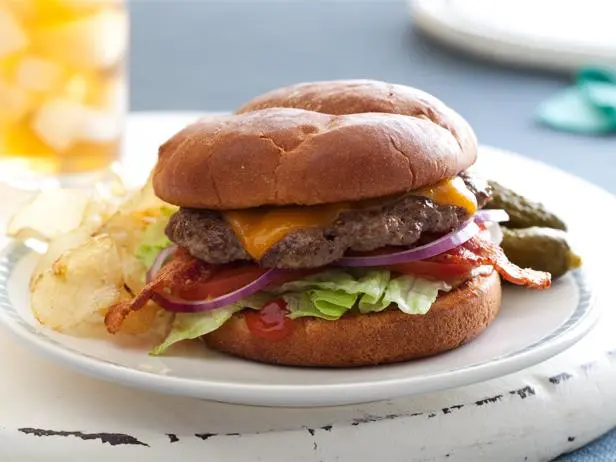
Credit: www.foodnetwork.com
Step-by-step Guide To Frying Hamburgers In A Pan
Cooking burgers in a pan is all about heat control, timing, and technique. Follow these steps for the best results.
1. Preheat The Pan
Place your skillet on the stove over medium-high heat. Let it get hot for 2-3 minutes. A drop of water should sizzle on contact.
Pro tip: Do not add the burgers before the pan is hot. This helps form a tasty crust.
2. Add Oil (if Needed)
If your beef is 20% fat, the burgers will release enough grease. For leaner meat or nonstick pans, add 1-2 teaspoons of neutral oil (canola, vegetable, or sunflower).
3. Place Patties In The Pan
Add the patties, leaving space between them. Do not overcrowd—the pan should not be full. This ensures even browning.
4. Cook Without Pressing
Let the burgers cook undisturbed for 3-4 minutes. Do not press down with the spatula—this squeezes out juices and dries out the meat.
5. Flip Once
Use a spatula to flip each patty. Cook for another 3-5 minutes, depending on thickness and desired doneness.
Tip: For cheeseburgers, add cheese during the last minute, cover the pan, and let it melt.
6. Check Doneness
Use a meat thermometer if possible. For safety, the USDA recommends:
- Beef: 160°F (71°C) for well done (no pink)
- Poultry: 165°F (74°C)
- For medium burgers: 145-150°F (63-66°C) and rest for a few minutes
7. Rest The Burgers
Remove patties to a plate and let them rest for 2-3 minutes. This helps juices redistribute and keeps burgers moist.
8. Toast Buns (optional)
Place buns cut-side down in the hot pan for 1 minute until golden.
9. Assemble And Serve
Add burgers to buns, layer with your favorite toppings, and enjoy.
Cooking Times And Doneness Levels
The time needed depends on thickness, meat type, and how well you like your burger cooked. Here’s a quick comparison:
| Burger Thickness | Cook Time Each Side | Doneness | Internal Temp |
|---|---|---|---|
| 3/4 inch (2 cm) | 3-4 min | Medium | 145°F (63°C) |
| 3/4 inch (2 cm) | 4-5 min | Well Done | 160°F (71°C) |
| 1 inch (2.5 cm) | 5-6 min | Medium | 145°F (63°C) |
Note: Times are per side and may vary depending on your stove and pan.

Credit: www.themountainkitchen.com
Common Mistakes To Avoid
Frying hamburgers seems easy, but small errors can ruin the result. Watch out for these:
- Overcrowding the pan: This lowers the temperature and causes steaming, not searing. Work in batches if needed.
- Pressing the patties: You lose juices and flavor. Let the burgers cook undisturbed.
- Flipping too often: Only flip once for the best crust.
- Underseasoning: Salt brings out flavor—do not skip it.
- Cooking straight from the fridge: Cold meat cooks unevenly. Let patties rest at room temperature for 10-15 minutes before frying.
Comparing Pan-frying Vs. Grilling
Some burger lovers debate the best cooking method. Here’s how pan-frying and grilling compare:
| Method | Pros | Cons |
|---|---|---|
| Pan-Frying | – Easy temperature control – Juicy, flavorful crust – Can cook in any weather | – No smoky flavor – Kitchen gets greasy |
| Grilling | – Smoky, charred taste – Outdoor cooking | – Harder to control heat – Weather dependent |
If you want a burger with a crisp, flavorful crust, pan-frying is an excellent choice—especially indoors.
Tips For Even Better Pan-fried Hamburgers
To take your burgers to the next level, try these tips:
- Use a mix of meats: Combine beef with pork or lamb for complex flavor.
- Add cold butter: Place a small cube of butter in the center of each patty for extra juiciness.
- Try different cheeses: Blue cheese or pepper jack can surprise your taste buds.
- Deglaze the pan: After cooking, pour in a bit of broth or wine and scrape up the browned bits for a quick sauce.
- Use high heat at first: Sear the outside, then lower the heat to cook through.
Nutritional Information
Burgers can be part of a balanced diet if you pay attention to size, fat, and toppings. Here’s a general nutrition breakdown for a basic 4-ounce (113g) beef patty (pan-fried, no bun or cheese):
| Nutrient | Amount |
|---|---|
| Calories | 290 |
| Protein | 19g |
| Total Fat | 23g |
| Saturated Fat | 9g |
| Sodium | 75mg |
Toppings and buns add more calories, so adjust portions if you’re watching your diet.
Clean-up And Safety
After frying, your pan and kitchen may be greasy. Here’s how to clean up safely:
- Let the pan cool before washing.
- Pour out excess fat (not down the drain—use a heatproof container).
- Wash with hot, soapy water.
- Wipe down stovetops and counters to prevent grease buildup.
Always wash hands and utensils that touched raw meat. For more on food safety, the USDA Food Safety and Inspection Service has useful guidelines.
Frequently Asked Questions
How Do I Keep Burgers From Shrinking In The Pan?
Make a small dimple in the center of each patty before frying. Use meat with a little fat, and do not overwork the mix. Cooking at medium-high heat also helps minimize shrinkage.
What Oil Is Best For Frying Burgers?
Use a neutral oil with a high smoke point, such as canola, vegetable, or sunflower oil. Olive oil can add flavor but may burn at high temperatures.
Can I Cook Frozen Burgers In A Pan?
Yes, you can pan-fry frozen burgers, but they take longer and may cook unevenly. For best results, thaw patties in the fridge first. If cooking from frozen, use lower heat and cover the pan to help cook through.
Is It Safe To Eat Burgers With A Little Pink Inside?
For beef, some pink is safe if the internal temperature reaches at least 160°F (71°C). For poultry, always cook to 165°F (74°C) with no pink. Use a thermometer for safety.
What Toppings Go Best With Pan-fried Burgers?
Classic options include cheddar cheese, lettuce, tomato, onion, and pickles. For gourmet twists, try sautéed mushrooms, fried eggs, or spicy sauces.
Cooking hamburgers in a pan is a reliable, tasty way to enjoy this classic meal—no grill required. With the right ingredients, simple techniques, and a little practice, you’ll master perfect pan-fried burgers every time.

Credit: www.omahasteaks.com

Hello, This is Annie Walker, a 38-year-old blogger, founder, and editor of Cookware Guider from NY, USA. I am a cookware fanatic and passionate cooker. I love to cook with different types of cooking appliances (example: all types of cookware, rice cookers, slow cookers, etc) almost every day in my kitchen. I love to share my experience with my readers in my blog. Also, I enjoy helping people to solve their problems through my website. You can follow me on Twitter & Pinterest. To know details about my blog please check the about us page.