
Keeping your kitchen clean is important, but some surfaces need special care. If you have a glass cooktop, you probably enjoy its smooth look and easy-to-wipe surface. However, after a few cooking sessions, you may notice stains, burnt-on food, and streaks that seem hard to remove. The good news: you don’t need expensive cleaners or harsh chemicals. Baking soda can become your secret weapon for a sparkling cooktop.
This guide will show you how to clean a glass cooktop with baking soda step by step. You’ll also learn why baking soda works so well, how to avoid damage, and what mistakes to watch for. Even if you’re new to this, you’ll soon have a cooktop that shines like new.
Why Choose Baking Soda For Glass Cooktops?
Baking soda is a popular household cleaner. But why is it so effective for glass cooktops?
First, baking soda is a mild abrasive. This means it can scrub away stuck food and stains without scratching the surface. Glass cooktops are tough, but they can scratch if you use rough tools or harsh cleaners. Baking soda is gentle enough to clean without causing damage.
Second, it’s a natural deodorizer. When you cook, spills can leave behind smells. Baking soda helps remove odors along with stains.
Third, it’s non-toxic and affordable. Many store-bought cleaners contain chemicals that could be harmful if you inhale them or if they touch your skin. Baking soda is safe for you and your family. It’s also inexpensive and easy to find in any grocery store.
Many people don’t realize that baking soda can also help break down grease. Its alkaline nature reacts with oils, making them easier to wipe away.
Understanding Glass Cooktop Stains
Not all stains are the same. Knowing what you’re dealing with will help you clean better and protect your cooktop.
Common Types Of Stains
- Light stains: These come from water spots, minor spills, or oils. They usually wipe off easily.
- Burnt-on food: When food spills and cooks onto the surface, it leaves a brown or black mark. These are harder to clean.
- Mineral deposits: If you use hard water, white or cloudy spots can appear.
- Grease streaks: Frying foods can leave a thin, shiny film.
Why Some Stains Are Tough
Glass cooktops can get very hot. If you don’t clean up a spill quickly, it can bake onto the surface. Over time, these stains build up. Using the wrong cleaner or rough tools can make things worse, creating permanent scratches or haze.
A common mistake: using a razor blade too soon or pressing too hard. Even though it’s tempting, this can easily scratch your cooktop.
Credit: www.thekitchn.com
What You Need: Supplies And Preparation
Before you start, gather everything you need. This makes the process smoother and prevents accidents.
Essential Supplies
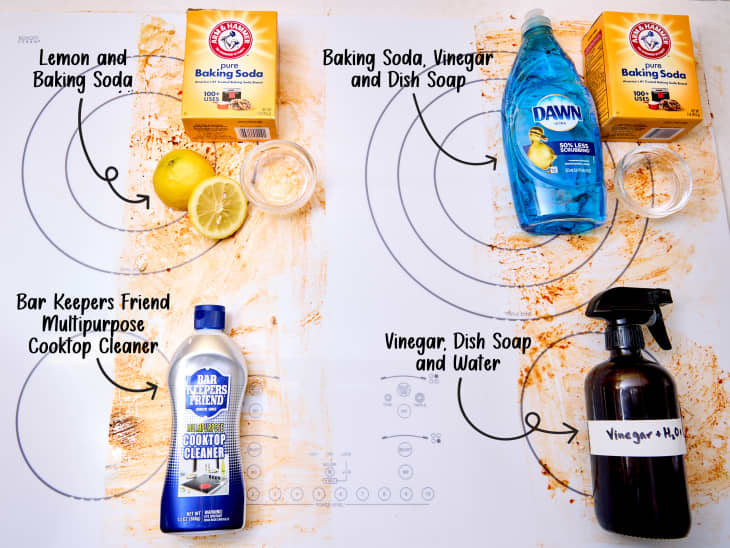
- Baking soda: The main cleaning agent
- White vinegar: Helps with mineral deposits and adds shine
- Spray bottle: For applying vinegar or water
- Microfiber cloths: Soft and lint-free for wiping and buffing
- Soft sponge or non-abrasive scrub pad: Never use steel wool or rough pads
- Plastic scraper: For lifting stubborn residues (optional)
- Paper towels: For drying or picking up debris
- Warm water: To help loosen stains
Many people skip the microfiber cloth, but it makes a big difference. It polishes the glass without leaving streaks or fibers behind.
Preparation Steps
- Turn off the cooktop and make sure it’s completely cool. Cleaning a hot cooktop can cause burns and make stains harder to remove.
- Remove loose debris. Use a dry cloth or paper towel to pick up crumbs or burnt bits.
- Unplug or move nearby appliances to avoid splashes.
Step-by-step Guide: Cleaning Your Glass Cooktop With Baking Soda
Now, let’s get into the cleaning process. You’ll find this method simple and effective.
1. Sprinkle Baking Soda
Cover the stained areas of your cooktop with a generous layer of baking soda. You don’t need to coat the whole surface—just the spots that need attention. Baking soda won’t damage the glass even if you use a little extra.
2. Apply Warm, Damp Cloth
Wet a microfiber cloth with warm water. Wring it out so it’s damp, not soaking. Lay the cloth over the baking soda. The warmth helps soften burnt-on spots, and the cloth keeps the baking soda in place.
Let the cloth sit for 10–15 minutes. This step is important. It gives baking soda time to break down the stains.
3. Wipe And Scrub Gently
After waiting, use the same cloth to gently rub the baking soda in circular motions. Don’t press too hard. The baking soda will help lift stains as you wipe.
For stubborn spots, you can use a plastic scraper. Hold it at a 45-degree angle and gently scrape off residue. Never use metal scrapers—they can scratch your cooktop.
4. Rinse And Remove Baking Soda
Dampen another clean cloth with water. Wipe away all baking soda and loosened debris. You may need to rinse the cloth a few times.
Check the surface in bright light. If you see white powder or residue, keep wiping until it’s gone.
5. Polish With Vinegar (optional)
For extra shine, spray a small amount of white vinegar over the cooktop. Wipe with a dry microfiber cloth. Vinegar helps remove any streaks or mineral spots and leaves the glass glossy.
Common Mistakes To Avoid
Many beginners make the same cleaning errors. Here’s what to watch out for:
- Using rough scrubbers: Steel wool or scouring pads will scratch the glass.
- Cleaning while hot: This can cause burns and set stains permanently.
- Skipping the soak: Baking soda needs time to work. Don’t rush the process.
- Leaving residue: If you don’t rinse well, baking soda can leave a white film.
- Too much vinegar: Vinegar is great for shine, but using too much can dull the surface over time.
An often-missed tip: Always check your manufacturer’s guide. Some brands have specific cleaning rules or recommend certain products.
Comparing Cleaning Methods
You might wonder how baking soda compares to other popular cleaning methods. Here’s a quick look at the pros and cons.
| Method | Effectiveness | Safety | Cost |
|---|---|---|---|
| Baking Soda | High for most stains | Very safe | Very low |
| Store-bought cleaner | High (some brands) | Safe if non-abrasive | Medium to high |
| Vinegar only | Medium (not for burnt food) | Very safe | Low |
| Razor blade | High for hard spots | Risk of scratches | Low |
Baking soda offers a balance of safety, cost, and cleaning power. It won’t damage your cooktop if used properly.
Credit: cleanzen.com
Dealing With Tough Stains
Some stains are stubborn. If you’ve tried the basic method and still see marks, here’s what to do:
For Burnt-on Food
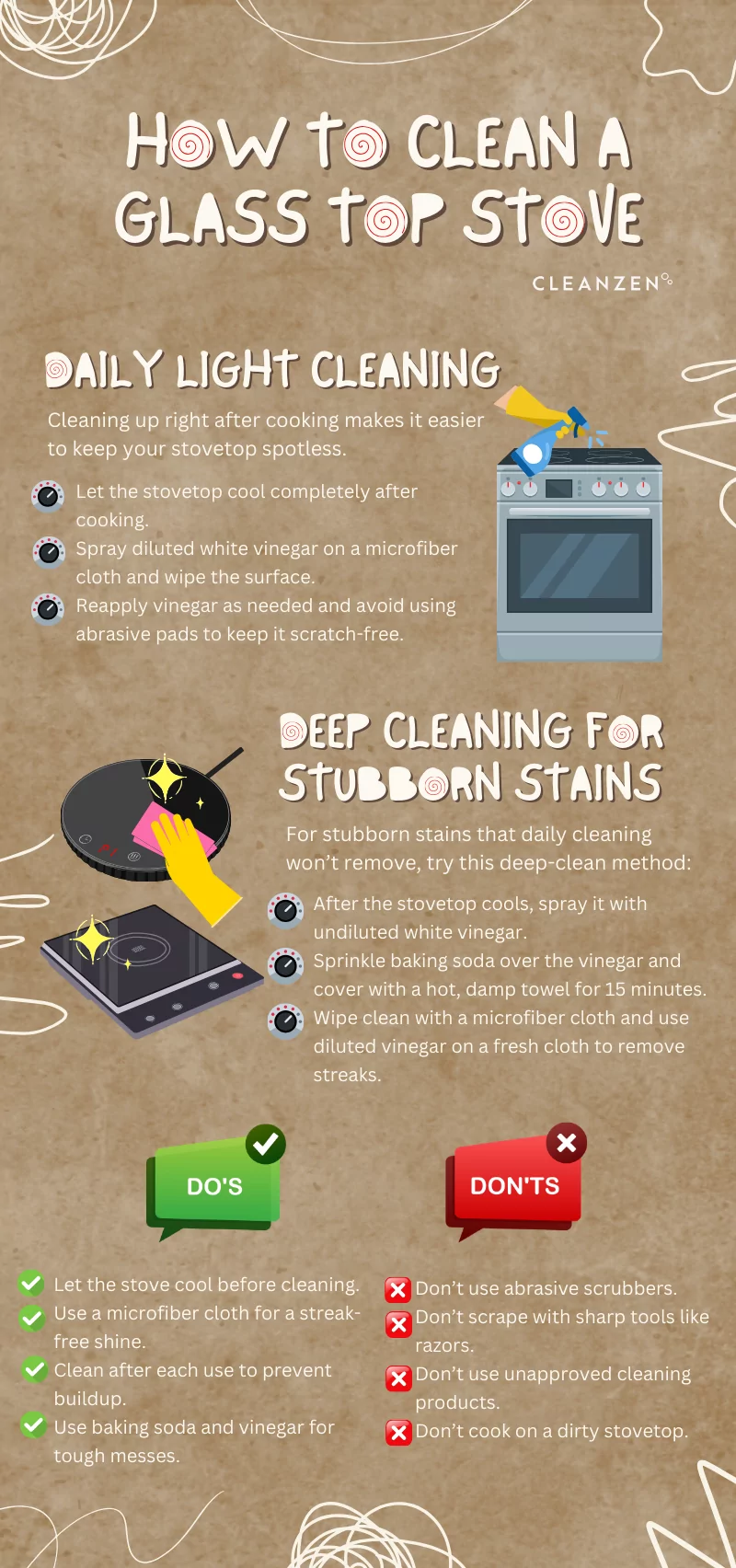
- Sprinkle baking soda directly on the burnt area.
- Spray a little white vinegar on top. It will fizz—this is normal.
- Place a damp, warm cloth over the area for 15–20 minutes.
- Use a plastic scraper if needed.
For Mineral Deposits
Mineral spots (usually white or cloudy) often need extra vinegar. Spray vinegar, let it sit for 5 minutes, then wipe with a microfiber cloth.
For Old, Set Stains
Repeat the baking soda method. Some stains need two or three treatments. Patience pays off—never use excessive force.
An extra tip: For very old stains, try mixing a little hydrogen peroxide with baking soda to form a paste. Apply it, let it sit, then wipe away.
How Often Should You Clean Your Glass Cooktop?
Regular cleaning is the best way to keep your cooktop looking new and prevent stubborn stains.
- After every use: Wipe with a damp microfiber cloth to remove light stains or spills.
- Weekly: Use the baking soda method for a deeper clean.
- Monthly: Polish with vinegar and check for buildup around burners or controls.
If you cook a lot, you might need to clean more often. The key is consistency—waiting too long makes cleaning harder.
Preventing Scratches And Damage
Glass cooktops are strong, but they’re not scratch-proof. Here’s how to keep yours in top shape:
- Don’t drag pots and pans. Lift them instead of sliding.
- Use flat-bottom cookware. Uneven pans can scratch the surface.
- Wipe up spills quickly. Sugary spills can cause pitting or permanent marks.
- Avoid harsh chemicals. Never use oven cleaner, ammonia, or abrasive powders.
- Check cookware for rough edges. Old or chipped pans can scratch glass.
A less-known tip: Avoid using colored sponges. Some dyes can transfer to the glass when wet.
Quick Reference: Cleaning Time And Effort Comparison
How does the baking soda method compare in terms of time and effort? Here’s a practical comparison.
| Method | Typical Time | Required Effort | Best For |
|---|---|---|---|
| Baking Soda | 20–25 minutes (with soak) | Low to Medium | Everyday and tough stains |
| Razor Blade | 10–15 minutes | High (risk of scratches) | Burnt, thick stains only |
| Store-bought Cleaner | 10–20 minutes | Low | Quick cleaning |
Baking soda takes a bit longer but is safer and more thorough, especially for regular care.
When To Use Other Tools Or Products
Sometimes, baking soda alone isn’t enough. Here’s when to try other options:
- Plastic scraper: For thick, hard food buildup. Always use gently.
- Cooktop cleaning cream: For extra shine, use a product designed for glass.
- Ceramic cooktop pads: These are soft pads made for glass. Useful for buffing.
Never mix baking soda with strong chemical cleaners. They can react and damage the surface.
If you have deep scratches or pitting, consult your manufacturer’s guide or a professional. Not all damage can be fixed at home.
Real-life Example: Cleaning A Tough Cooktop
Let’s look at a real scenario. Maria, a home cook, spilled pasta sauce on her glass cooktop and forgot to clean it right away. The next day, she found a brown, sticky stain that wouldn’t come off with water.
Maria tried the baking soda method:
- She sprinkled baking soda on the stain.
- Placed a warm, damp cloth over it for 15 minutes.
- Rubbed gently with the cloth.
- Used a plastic scraper to lift the stubborn part.
- Wiped away residue with clean water.
- Finished with a quick spray of vinegar and a dry cloth.
The stain was gone without any scratches. Maria now cleans her cooktop weekly and hasn’t had any tough stains since.
Eco-friendly And Health Benefits
Cleaning with baking soda isn’t just effective—it’s better for your home and the planet.
- No harsh chemicals: Safe for kids, pets, and allergy sufferers.
- Low environmental impact: Baking soda is biodegradable.
- Odor neutralization: Removes smells as it cleans.
Studies show that regular use of natural cleaners like baking soda reduces indoor air pollution. For more on natural cleaning benefits, visit the EPA Safer Choice program.
Troubleshooting: If Your Cooktop Still Looks Cloudy
Sometimes, even after cleaning, your glass cooktop looks dull or cloudy. What can you do?
- Buff with a dry microfiber cloth: This removes water spots and streaks.
- Try a vinegar rinse: Spray and wipe again to cut through haze.
- Repeat the baking soda treatment: Especially for old buildup.
- Check for scratches: Cloudiness can also come from tiny scratches. These can’t always be fixed, but regular polishing can help hide them.
A smart tip: Always dry your cooktop after cleaning. Air-drying can leave mineral spots, especially in areas with hard water.

Credit: www.youtube.com
Cost And Convenience: Why Baking Soda Wins
How much does it cost to keep your glass cooktop clean with baking soda? Let’s compare.
| Cleaning Product | Average Cost per Use | Availability |
|---|---|---|
| Baking Soda | Less than $0.10 | All grocery stores |
| Glass Cooktop Cleaner | $0.50–$1.00 | Specialty or online |
| Vinegar | Less than $0.10 | All grocery stores |
Baking soda is not only effective but very affordable. You can clean your cooktop for pennies per week.
Frequently Asked Questions
Is Baking Soda Safe For All Glass Cooktops?
Yes, baking soda is safe for most glass cooktops. It’s a mild abrasive that cleans without scratching. Always check your manufacturer’s care guide, especially if your cooktop has a special coating.
Can I Mix Baking Soda With Dish Soap For Extra Cleaning?
You can add a drop of mild dish soap for greasy stains. However, don’t use too much—soap can leave a film if not rinsed well. Always rinse and dry thoroughly after cleaning.
What Should I Avoid When Cleaning A Glass Cooktop?
Avoid steel wool, abrasive powders, and harsh chemicals like oven cleaner or ammonia. Never use a metal scraper, as it can scratch and damage the glass.
How Do I Remove Melted Plastic Or Sugar From My Glass Cooktop?
For melted plastic or sugar, turn off the cooktop and let it cool slightly (but not fully hard). Carefully use a plastic scraper to lift the substance, then clean the area with baking soda and a damp cloth. If unsure, check your cooktop’s manual.
How Often Should I Deep Clean With Baking Soda?
Deep clean your glass cooktop with baking soda once a week for best results. Wipe spills daily to prevent buildup and make deep cleaning easier.
A clean glass cooktop keeps your kitchen looking great and your cooking more enjoyable. With baking soda, you have a safe, effective, and affordable tool right in your pantry. Stick to these steps, avoid common mistakes, and your cooktop will stay shiny and scratch-free for years.

Hello, This is Annie Walker, a 38-year-old blogger, founder, and editor of Cookware Guider from NY, USA. I am a cookware fanatic and passionate cooker. I love to cook with different types of cooking appliances (example: all types of cookware, rice cookers, slow cookers, etc) almost every day in my kitchen. I love to share my experience with my readers in my blog. Also, I enjoy helping people to solve their problems through my website. You can follow me on Twitter & Pinterest. To know details about my blog please check the about us page.