
Sharpening scissors is a skill that can save you money, time, and frustration. Many people throw away dull scissors, thinking they cannot be fixed. But with the right tools and knowledge, you can restore their sharpness at home. One tool you may already have is a knife sharpener. Knowing how to use a knife sharpener for scissors can make your life easier, whether you use scissors for sewing, crafts, gardening, or in the kitchen.
This guide will show you how to sharpen scissors with a knife sharpener. You’ll learn which types of knife sharpeners work best, step-by-step instructions, safety tips, and how to avoid common mistakes. We’ll also look at the science of sharpening, what to do if your scissors are very damaged, and compare different sharpening tools.
By the end, you’ll know exactly how to bring your scissors back to life—without needing a professional.
Understanding Scissors And Knife Sharpeners
Before sharpening, it’s important to know how scissors and knife sharpeners work. Scissors have two blades that meet at an angle. Each blade is sharpened on one side, unlike knives which are usually sharpened on both sides.
Knife sharpeners come in several types:
- Manual sharpeners (handheld or pull-through)
- Electric sharpeners
- Sharpening stones (whetstones)
- Rod sharpeners (honing rods)
Not all knife sharpeners are good for scissors. Some are designed only for knives. The angle and shape of the sharpener must match the scissor blade. This is a detail many beginners miss—the wrong sharpener can damage your scissors.
Choosing The Right Knife Sharpener For Scissors
Selecting the correct sharpener is critical. Here’s what to look for:
- Adjustable angle: Scissors are sharpened at a different angle than knives. Look for sharpeners that let you change the angle.
- Wide slot: Scissor blades are thicker and wider than most knives. A narrow slot may not fit.
- Sturdy build: Sharpening scissors requires more force. Flimsy sharpeners can slip or break.
- Sharpening stone: Whetstones are universal and work for almost any blade, including scissors.
- Electric sharpeners: Some have scissor settings. Check the manual.
| Sharpener Type | Works for Scissors? | Ease of Use | Cost Range |
|---|---|---|---|
| Manual Pull-Through | Sometimes (check slot width) | Easy | $10-$30 |
| Electric Sharpener | Yes (if scissor setting) | Very easy | $40-$100 |
| Sharpening Stone | Yes (universal) | Medium (needs skill) | $15-$50 |
| Honing Rod | No (not for scissors) | N/A | $10-$25 |
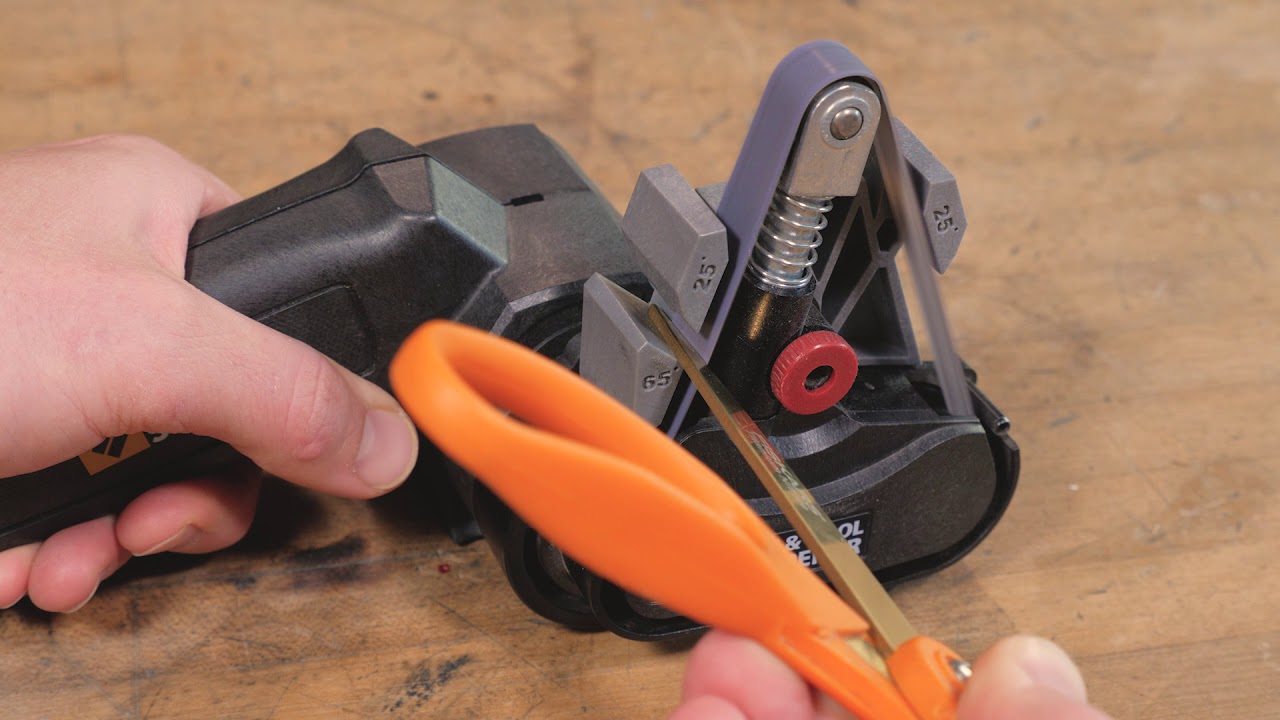
Non-obvious insight: Some knife sharpeners have removable guides. If you remove the guide, you can fit scissors in the slot more easily. But this makes sharpening harder, so be careful.
Credit: www.youtube.com
Preparing Your Scissors
Preparation is often overlooked, but it matters. Start by cleaning your scissors. Dirt, glue, or rust will affect sharpening and may damage the sharpener.
- Wash with warm water and soap.
- Dry completely. Moisture can cause rust.
- Inspect for damage. If the blades are chipped, sharpening will not fix them.
- Disassemble if possible. Many scissors have a screw in the middle. Taking them apart lets you sharpen each blade separately.
Tip: If your scissors are very dirty or rusty, soak them in vinegar for 10 minutes, then scrub with a soft brush.
Step-by-step Sharpening With Different Knife Sharpeners
There are several methods, depending on which sharpener you have. Here’s how to use each type:
Manual Pull-through Knife Sharpener
Manual sharpeners are popular and easy to use. They have slots with sharpening surfaces.
- Open the scissors fully.
- Place one blade in the wide slot, with the beveled edge facing down.
- Pull the blade through the slot, applying gentle pressure.
- Repeat 5–10 times. Test after each set.
- Switch blades and repeat.
Common mistake: Many people press too hard. This can damage both the sharpener and the scissors. Use gentle, steady pressure.
Electric Knife Sharpener
Electric sharpeners are fast and safe, but not all are made for scissors.
- Check manual for a scissor slot or setting.
- Insert the blade into the scissor slot.
- Let the sharpener do the work.
- Repeat as needed.
Pro tip: If your sharpener has no scissor slot, don’t use it. You can ruin your scissors.
Sharpening Stone (whetstone)
Whetstones give you the most control. This method needs more skill.
- Wet the stone (if using a water stone).
- Hold the blade at a 30–40 degree angle.
- Drag the beveled edge across the stone, moving away from your body.
- Repeat 10–15 times per blade.
- Flip and repeat for the other blade.
Non-obvious insight: Most scissors are sharpened only on the beveled side. The flat side should not be sharpened, or you may ruin the cutting angle.
Honing Rod
Honing rods are not recommended for scissors. They do not remove enough material to sharpen the blade.
:max_bytes(150000):strip_icc()/SPR-how-to-sharpen-scissors-7969755-02-ddc12310d290418aab5a8f0a3cc8b37a.jpg)
Credit: www.thespruce.com
Checking Sharpness And Testing
After sharpening, you must check if your scissors are actually sharp. Many people skip this step and end up with blades that still don’t cut well.
Testing methods:
- Paper test: Cut through a sheet of paper. Sharp scissors should slice cleanly.
- Fabric test: Try cutting a thin cloth. If the scissors snag, they need more sharpening.
- Visual inspection: Look for shiny, reflective spots on the edge. These are dull areas.
Bonus tip: Use a magnifying glass to inspect the blade. A sharp edge should look smooth, not jagged.
Safety Tips For Sharpening Scissors
Sharpening is safe if you follow the right steps. But accidents can happen if you rush or use the wrong tools.
- Wear gloves: Protect your hands from sharp blades.
- Work on a stable surface: Avoid slips.
- Do not force the blade: If the sharpener does not fit, stop.
- Keep children and pets away: Sharpening tools are dangerous.
Stat: According to the US Consumer Product Safety Commission, over 10,000 injuries each year are related to sharp tools like scissors and knives.
How Often Should You Sharpen Scissors?
The answer depends on how often you use them and what you cut. For regular household use, sharpen every 6–12 months. For heavy use (sewing, crafts, gardening), sharpen every 2–3 months.
Signs scissors need sharpening:
- They snag or tear paper.
- You must use more force to cut.
- Blades look dull or have nicks.
Some professionals (hairdressers, tailors) sharpen scissors weekly. If you use scissors daily, keep a sharpener nearby.
Comparing Knife Sharpeners For Scissors
Choosing the best sharpener can be tricky. Here’s a comparison of the main types:
| Sharpener | Best For | Pros | Cons |
|---|---|---|---|
| Manual Pull-Through | Basic household scissors | Easy, quick, affordable | May not fit thick blades |
| Electric Sharpener | High-volume or frequent sharpening | Fast, safe, consistent | Expensive, not for all scissors |
| Sharpening Stone | Professional or specialized scissors | Precise, works for any blade | Needs skill, time-consuming |
Non-obvious insight: If you sharpen scissors often, consider buying a sharpener made specifically for scissors. Knife sharpeners are convenient, but specialized tools give better results for certain types (like hairdressing or fabric scissors).
The Science Behind Sharpening
Sharpening works by removing tiny amounts of metal from the blade. The goal is to create a fine, sharp edge. Scissors are sharpened on one side (the beveled edge), which lets the two blades meet and cut cleanly.
Angle matters: Most scissors are sharpened at 30–40 degrees. Knives are usually 20–25 degrees. Using the wrong angle can make your scissors dull or cause them to cut poorly.
Material matters: Scissors are made from different metals. Cheaper scissors use soft steel, which dulls quickly but is easy to sharpen. High-end scissors use harder steel, which lasts longer but needs a better sharpener.
Statistic: Studies show that scissors sharpened at the correct angle last up to 50% longer than those sharpened at the wrong angle.
What If Your Scissors Are Damaged?
Sharpening works for dull blades, but not for broken or chipped scissors. If your scissors have a large nick or the blades are bent, sharpening will not fix them.
What to do:
- If the blades are chipped, use a coarse sharpening stone to remove the damage, then finish with a fine stone.
- If the blades are bent, try to straighten them. Use pliers gently, but be careful not to break them.
- If the screw is loose, tighten it before sharpening.
For serious damage, it’s best to replace the scissors. Some local hardware stores offer repair services.
When Not To Use A Knife Sharpener
Some scissors should not be sharpened with a knife sharpener:
- Serrated scissors: These have a wavy edge. Sharpening with a knife sharpener will ruin them.
- Very small scissors: The blade may not fit in the sharpener.
- High-end hairdressing scissors: These need professional sharpening.
Alternative: Use a sharpening stone or send them to a professional.
Practical Tips For Better Results
Sharpening scissors is not just about the tool. Technique and patience matter.
- Sharpen slowly: Rushing can cause uneven edges.
- Check after each pass: Stop once the blade is sharp.
- Clean the sharpener: Metal shavings can block the slots.
- Lubricate the blades: After sharpening, add a drop of oil to the joint. This makes cutting smoother.
Example: After sharpening, wipe the blades with a cloth. This removes metal dust and prevents rust.
Common Mistakes Beginners Make
Even the best tool won’t help if you make these mistakes:
- Sharpening both sides: Only sharpen the beveled side.
- Using too much force: Gentle pressure gives better results.
- Skipping cleaning: Dirt can ruin the sharpener.
- Sharpening serrated blades: This destroys the serration.
- Not testing sharpness: Always check before finishing.
Bonus tip: If you’re unsure about the angle, start at 35 degrees. This works for most scissors.
Maintenance: Keeping Scissors Sharp Longer
Sharpening is only part of the solution. Good maintenance keeps scissors sharp.
- Store properly: Keep scissors in a dry place. Moisture causes rust.
- Cut only what scissors are made for: Don’t use kitchen scissors for metal or plastic.
- Clean regularly: Wipe blades after each use.
- Oil the joint: Once a month, add a drop of oil.
Statistic: Proper maintenance can double the life of your scissors.
Sharpening Specialty Scissors
Some scissors need special care. For example:
- Left-handed scissors: These have the beveled edge on the opposite side. Make sure to sharpen the correct side.
- Pinking shears: These have zigzag blades. Do not use a knife sharpener. Use a professional sharpener.
- Embroidery scissors: Very small, so use a sharpening stone.
Non-obvious insight: Always check the manual or packaging. Some scissors say “do not sharpen.” These are disposable.
Comparing Knife Sharpeners With Scissor-specific Sharpeners
Is it worth buying a scissor-specific sharpener? Let’s compare.
| Feature | Knife Sharpener | Scissor Sharpener |
|---|---|---|
| Price | $10-$100 | $15-$60 |
| Versatility | Knives & some scissors | Scissors only |
| Ease of Use | Easy for knives, medium for scissors | Easy for scissors |
| Blade Angle | Fixed or adjustable | Optimized for scissors |
| Result Quality | Good, but depends on fit | Excellent for scissors |
If you sharpen scissors often, a scissor-specific sharpener is a good investment. For occasional sharpening, a knife sharpener is fine.
Environmental Benefits Of Sharpening Scissors
Sharpening scissors instead of replacing them helps the environment. Manufacturing new scissors uses energy and creates waste. Keeping old scissors sharp reduces landfill.
Statistic: Americans throw away over 100 million pairs of scissors each year. Sharpening reduces waste and saves money.
When To Replace Scissors
Sometimes sharpening is not enough. If your scissors are too damaged, bent, or rusted, it’s time to buy new ones.
Signs to replace:
- Blades are missing large chunks.
- The joint is broken.
- They cannot be sharpened (disposable models).
Tip: High-quality scissors last years if cared for properly.
Real-life Example: Sharpening Kitchen Scissors
Let’s walk through a real example. Imagine you have a pair of dull kitchen scissors.
- Clean the scissors: Wash and dry.
- Disassemble: Remove the screw.
- Sharpen with manual sharpener: Pull each blade through the slot 8 times.
- Test: Cut paper and cloth.
- Lubricate: Add oil to the joint.
- Reassemble: Tighten the screw.
Result: Sharp scissors that cut smoothly. This process takes less than 10 minutes.
Alternative Sharpening Methods
If you don’t have a knife sharpener, there are other methods:
- Aluminum foil: Fold foil and cut it with scissors. This polishes the edge, but does not truly sharpen.
- Sandpaper: Cut sandpaper with scissors. Use fine grit (600+). This sharpens lightly.
- Glass jar: Open scissors and rub the blade along the rim of a glass jar. This hones the edge.
Note: These methods are for light touch-ups. For real sharpening, use a proper sharpener.
Sharpening Scissors For Different Uses
Scissors are used for many tasks. Some need a sharper edge than others.
- Kitchen scissors: Sharpen regularly. Food dulls the blade fast.
- Craft scissors: Sharpen every few months.
- Garden scissors: Sharpen often, as plant sap dulls the edge.
- Hairdressing scissors: Sharpen weekly or biweekly.
Non-obvious insight: For garden scissors, clean sap off before sharpening. Sap can clog the sharpener.
Sharpening Scissors For Left-handed Users
Left-handed scissors are sharpened on the opposite side. Many people forget this and sharpen the wrong edge.
How to sharpen:
- Hold the blade so the beveled edge faces up.
- Use the sharpener only on the beveled edge.
- Test after each pass.
Tip: If you’re left-handed, buy a sharpener with an adjustable angle.
Credit: www.youtube.com
Troubleshooting: If Scissors Still Don’t Cut
Sometimes sharpening doesn’t help. Here’s what to check:
- Blade alignment: If blades don’t meet, tighten the screw.
- Blade damage: Chips or bends need repair.
- Wrong sharpener: Some sharpeners don’t fit scissors.
- Sharpening angle: Try a different angle (start at 35 degrees).
Non-obvious insight: If the blades are misaligned, sharpening won’t help. Fix the alignment first.
Expert Advice: When To Seek Professional Sharpening
For expensive or specialty scissors, professional sharpening is best. Professionals use special machines and know the correct angle.
Cost: Professional sharpening costs $5–$15 per pair.
Tip: If you use scissors for hair, tailoring, or surgery, get them sharpened by a pro.
Frequently Asked Questions
Can I Sharpen Any Scissors With A Knife Sharpener?
You can sharpen most household scissors, but not all. Avoid sharpening serrated scissors, very small scissors, or high-end hairdressing scissors with knife sharpeners. Use a sharpening stone or professional service for these.
How Do I Know If My Scissors Are Sharp Enough?
Test by cutting paper or fabric. If the scissors slice cleanly without snagging, they are sharp. Also, check for a smooth, shiny edge. If you see dull spots or the blade catches, sharpen more.
Will Sharpening Scissors With A Knife Sharpener Damage Them?
If you use the right angle and gentle pressure, it will not damage them. But using too much force, sharpening the wrong side, or using a sharpener not meant for scissors can harm the blades.
How Many Times Can I Sharpen Scissors?
You can sharpen scissors many times. Most household scissors last for years with regular sharpening. However, each sharpening removes a small amount of metal. If the blade gets too thin, it will need to be replaced.
Is Professional Sharpening Better Than Diy?
Professional sharpening gives the best results, especially for expensive or specialty scissors. But for regular household scissors, DIY sharpening with a knife sharpener is effective and saves money. If you are unsure, seek professional help for valuable scissors. For more information, see Scissors – Wikipedia.
Sharpening scissors with a knife sharpener is a practical skill that anyone can learn. With the right tools and a little patience, you can restore sharpness and extend the life of your scissors. Remember to use the correct angle, sharpen only the beveled side, and always test after sharpening.
Proper maintenance will keep your scissors cutting smoothly for years. Whether you use scissors for crafts, cooking, gardening, or work, a sharp pair makes every task easier—and saves you money and waste.

Hello, This is Annie Walker, a 38-year-old blogger, founder, and editor of Cookware Guider from NY, USA. I am a cookware fanatic and passionate cooker. I love to cook with different types of cooking appliances (example: all types of cookware, rice cookers, slow cookers, etc) almost every day in my kitchen. I love to share my experience with my readers in my blog. Also, I enjoy helping people to solve their problems through my website. You can follow me on Twitter & Pinterest. To know details about my blog please check the about us page.